How power works in Japan: the Diet, the LDP, the families who hold the seats and the arguments over the constitution.
The Liberal Democratic Party has governed Japan for all but about four years since 1955, and many of the people who sit in the National Diet inherited their seats from a father or grandfather. The articles here show how that works: the support groups behind a candidate, the factions inside the party, how a prime minister is chosen and why so few last long.
They also follow the arguments that keep coming back, from Article 9 and the Self-Defense Forces to the imperial succession, and the politicians who make the news, Tokyo's governor among them.
Jiban, kanban and kaban: the support base, the name and the money that let Japanese politicians hand their seats to their children, how many Diet members inherit them, and why the LDP's 2009 limit and the 2024 funds reforms changed little.
What kaketsuke keigo, the SDF's "rush to protect" duty, means in Japanese law, how it was given to Japanese engineers in South Sudan in 2016, the daily-logs affair that ended a defence minister's tenure, and where Japanese peacekeeping stands now.
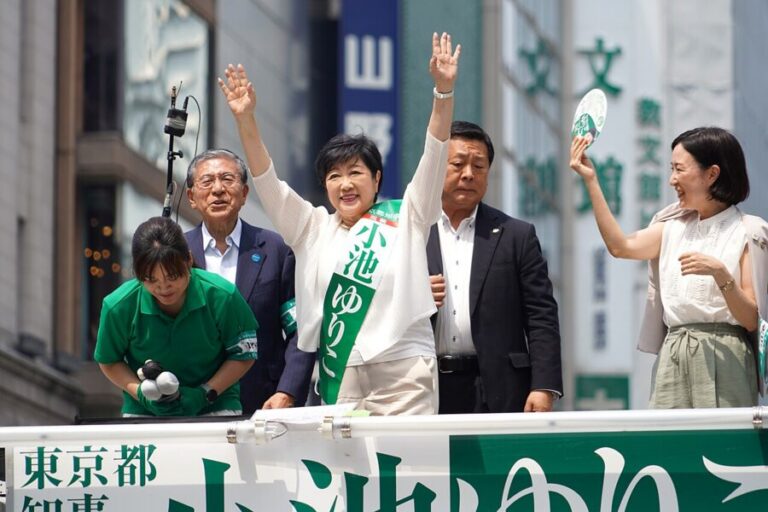
The life and record of Yuriko Koike: Ashiya and Cairo, TV news, five parties in the Diet, Cool Biz, the defence ministry and three terms as Tokyo governor, with her FCCJ appearances and the dispute over her Cairo degree.