
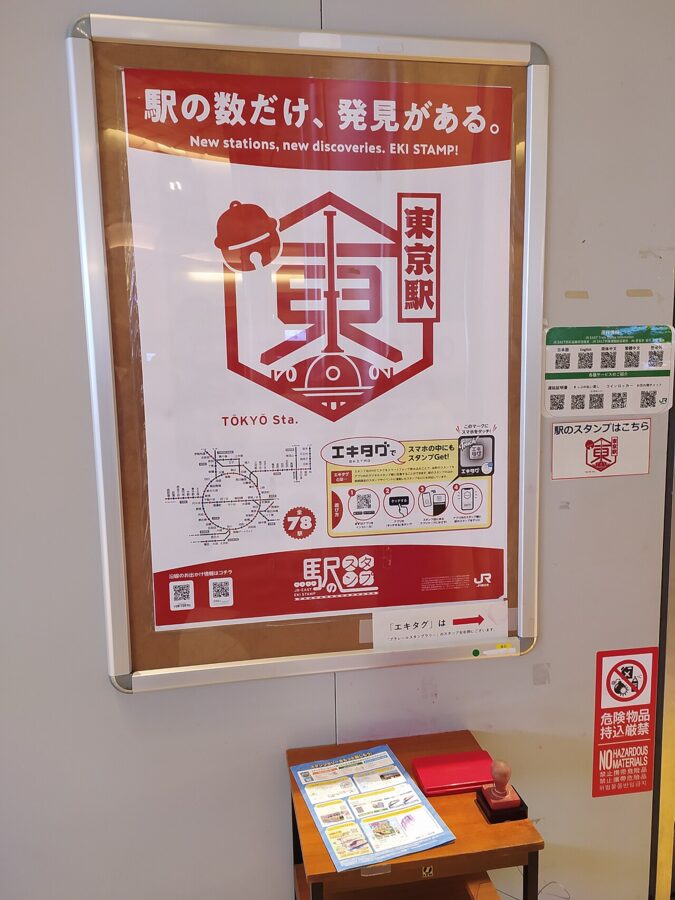

The stamp at Tokyo Station is a red hexagon built around one character, 東, with the red-brick station building drawn inside it. It sits on a small table with an ink pad and a sheet of scrap paper, and it costs nothing. Press it once and the page in front of you says you stood in Tokyo Station on that day, which is all a station stamp has ever claimed to do.
Japan has thousands of these. The eki sutanpu (駅スタンプ, “station stamp”) is a rubber stamp kept at the station for anyone to use, and it has cousins wherever a Japanese traveller might want proof of having been: the shrine, the castle, the roadside rest stop, even the sewer department. Railways also run the sutanpu rarī (スタンプラリー, “stamp rally”), a timed game in which you collect a set of stamps along a line and trade the full sheet for a prize.

In November 2017 the Tokyu Toyoko Line ran one of the better-remembered rallies, built around Star Wars: The Last Jedi. It makes more sense once you know what the ordinary stamp is, and why a railway would bother.
In this article
What an eki stamp is, and where the pad sits
The literal sense is plain: a station stamp. In practice it is a small piece of local publicity. A typical design carries the station name and a picture of something the area wants to be known for: a castle, a mountain, a festival float, a local dish, a train.
JR East’s Tokyo branch shows how a modern set is put together. On 8 July 2020 it replaced the stamps at 78 stations for the first time in 17 years, as the JR group’s travel site reported. Each combines a single kanji from the station name with a symbol of the place, set in a hexagon, circle, octagon or four rings, in one of five colours. Shibuya’s carries the Hachiko statue and the scramble crossing.
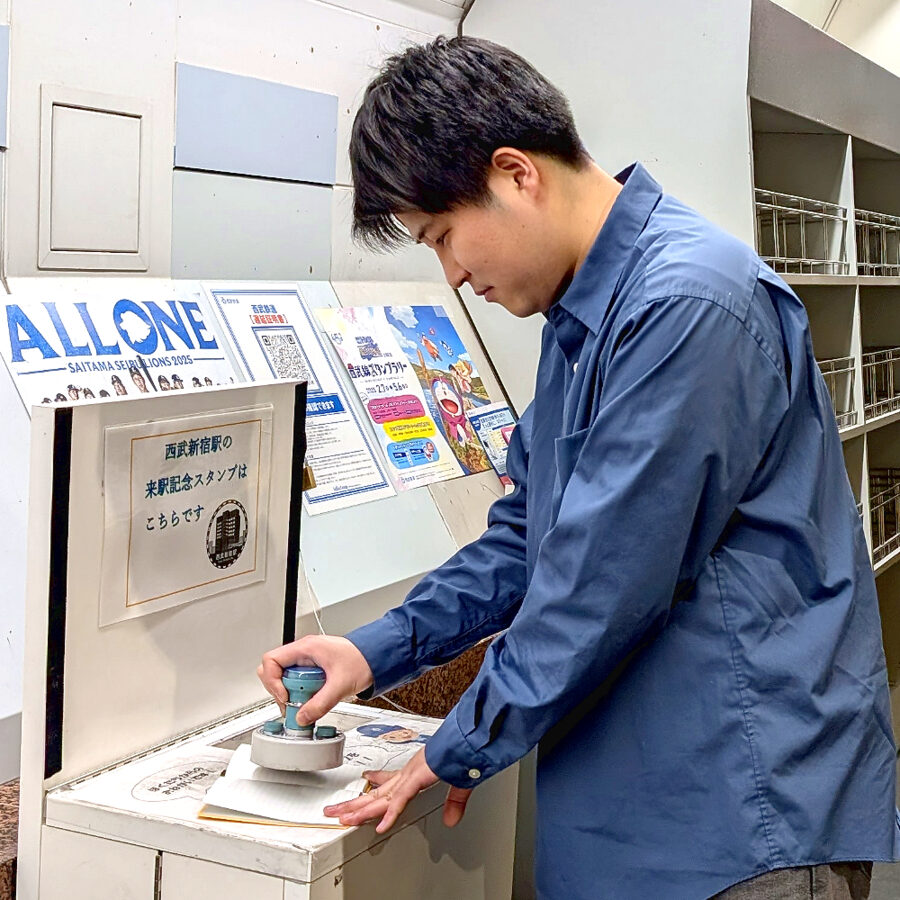
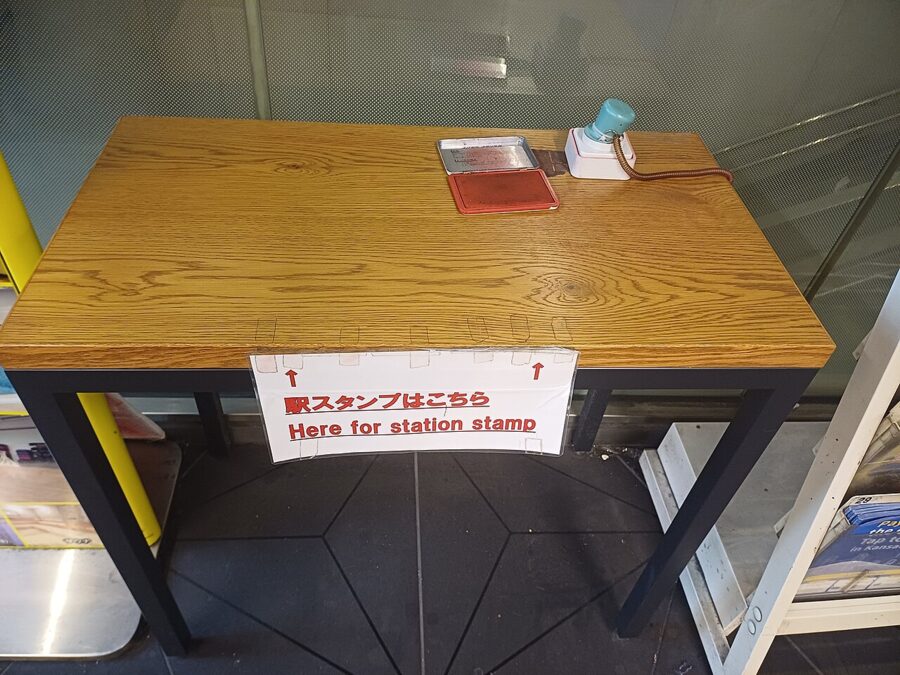
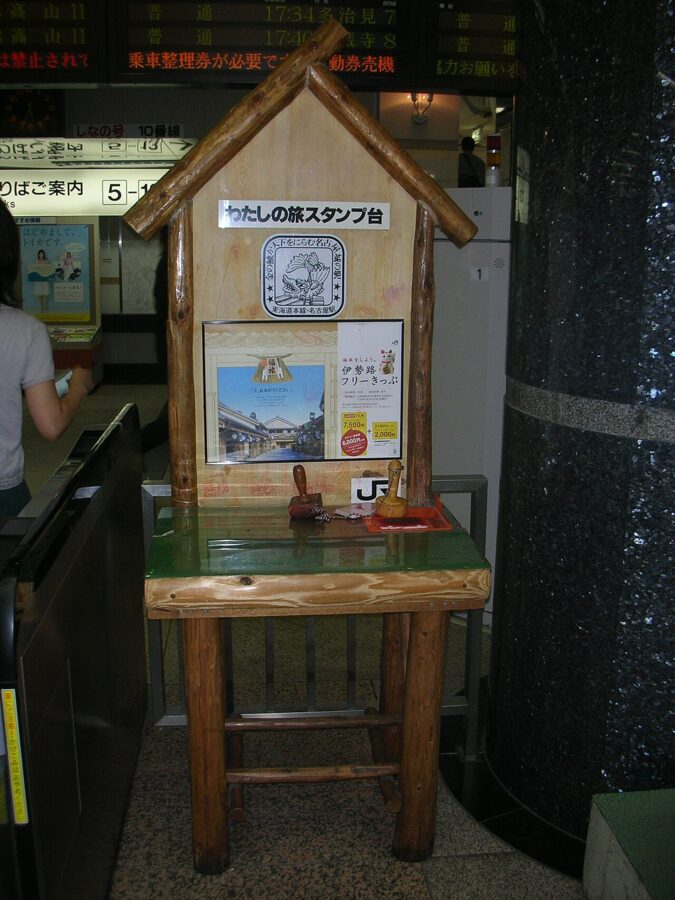
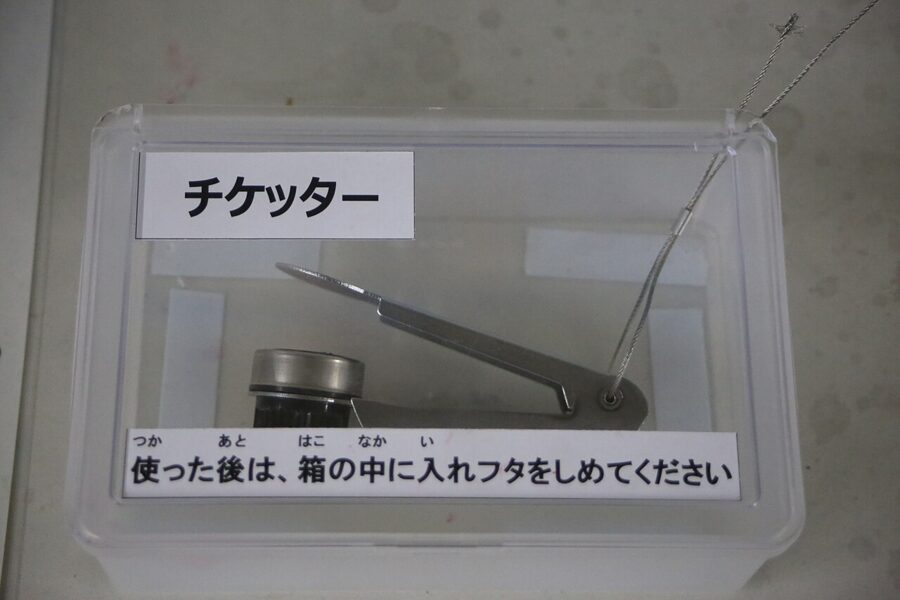
Most stamps sit near the ticket gates, on a small stand or table with a pad and scrap paper. At larger stations the stamp may be kept at the staffed gate or the ticket office and handed over on request. The phrase is sutanpu wa arimasu ka? (“is there a stamp?”).
Not every station has one, which answers the question first-time collectors ask most. Unstaffed stations often have none, or the stamp is kept at a nearby staffed station, a tourist office or a shop. If a station matters to you, check before you travel there just for the ink.
From Fukui, 1931
The railway press and collectors agree on a starting point: Fukui Station, then on the Hokuriku Main Line, in 1931 (Showa 6). The credit usually goes to the stationmaster, a man named Tominaga. Hiroshi Tanaka, an editor of Shinchosha’s railway atlas, notes that the travel magazine Tabi (旅) introduced the Fukui stamp in its June 1931 issue, and that the idea spread quickly to state and private railways alike.

By Tanaka’s count Tabi printed more than 500 station stamps between about 1931 and 1935, most with a note explaining the picture. The notes were needed. The 1933 stamp of Ozawa Station on the Hakodate Main Line, drawn by assistant stationmaster Kenkichi Murakami, uses a train to stand for a tunnel and a steep climb that local railwaymen knew and visitors did not.
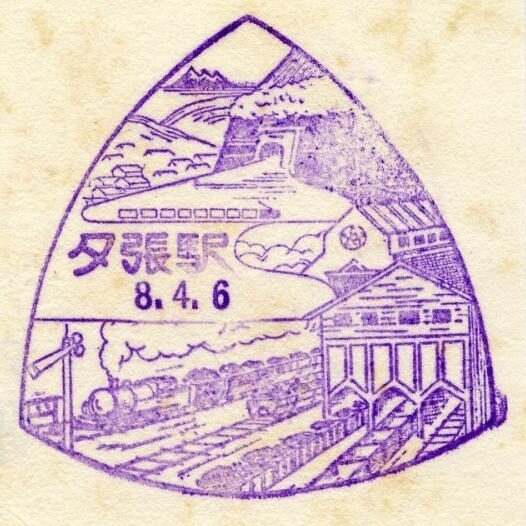
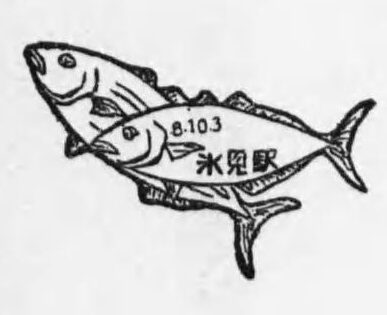
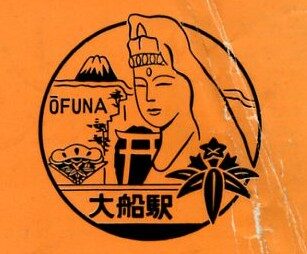
These were souvenirs in the plain sense: you stamped what you passed through. Station and tourist stamps carried on after the war, and a 1958 stamp from Ofuna, south of Yokohama, crams in the white Kannon statue on the hill above the station, a torii, Mount Fuji and the town’s name in Latin letters.
Discover Japan, and the national campaigns
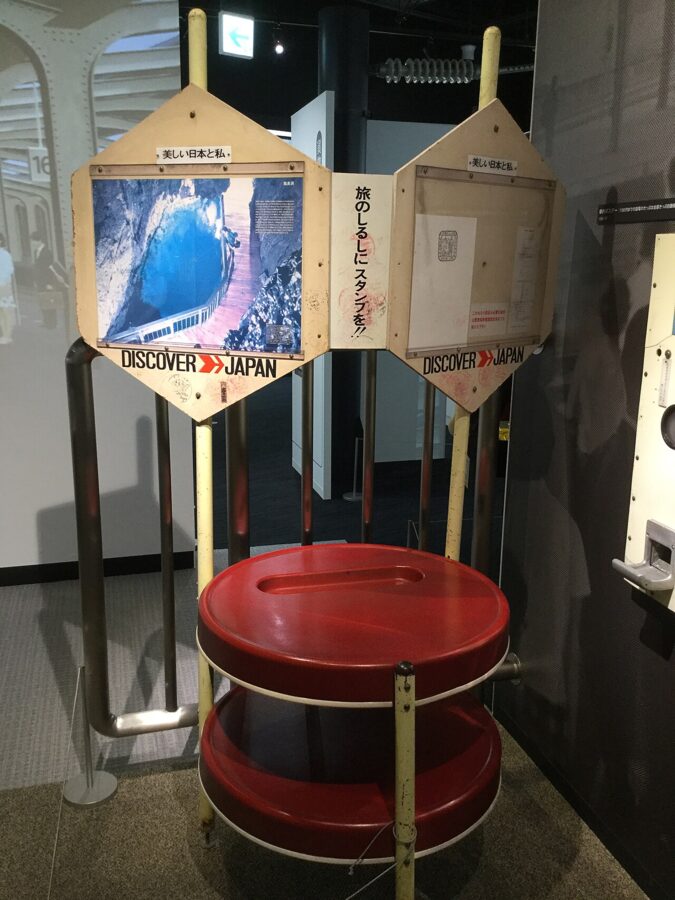
The stamp became a national habit in the 1970s, when Japanese National Railways (JNR) used it to sell travel. Its Discover Japan campaign began in October 1970, just after the Osaka Expo closed, and collectors’ tallies put the stamps carrying its logo at about 1,400 stations. JNR wanted the people who had filled its trains for the fair to keep riding them.

The campaign with the longest shadow came in November 1980. Under the Watashi no Tabi (わたしの旅, “my journey”) banner, about 740 stations received a stamp of a standard size, about 7 cm, in one of three inks (black, red or purple) and one of four shapes. Shogakukan published a pocket catalogue of the set in 1982. For a generation of children it was the first thing worth collecting on a train.

Those designs still draw people. In early 2022 JR East ran a nostalgia rally across 50 stations in and around Tokyo with reissued Watashi no Tabi stamps, and one collector who had kept impressions from around 1980 compared them line by line and found them identical. I would read that as the clearest sign of what the eki stamp is to most people: less a hobby than a memory of school holidays.
The stamp rally
The stamp rally takes the station stamp and gives it rules. Sutanpu rarī is wasei-eigo, English made in Japan, and the format barely varies. You pick up a sheet or buy a booklet, visit the listed points before a closing date, and take the full sheet to a counter that hands out a prize.
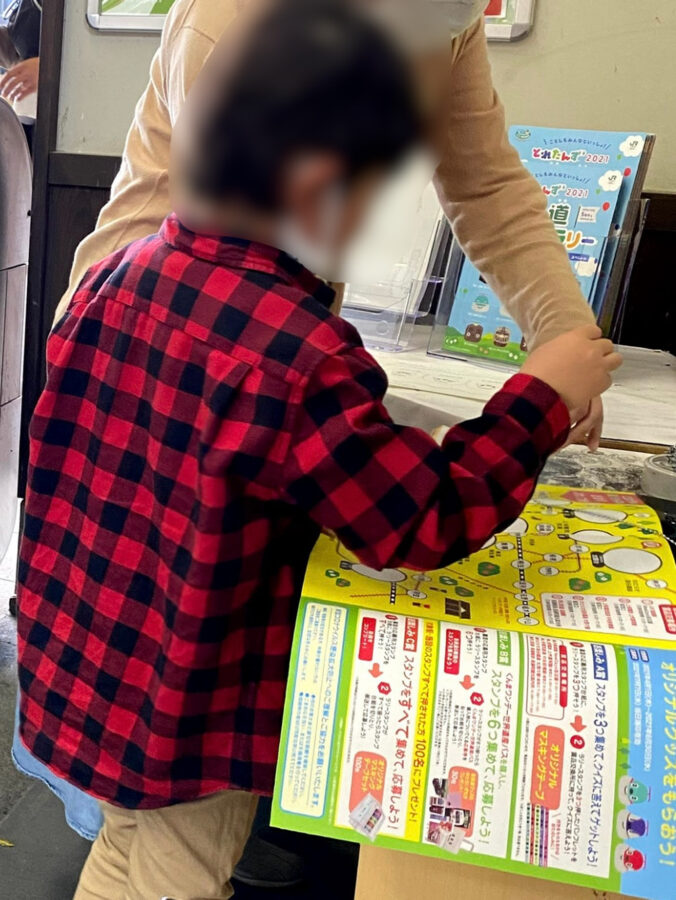
The stamps are free; the trains are not. A rally sends families out at weekends and in the school holidays to ride a line end to end, and the railway sells the day pass that makes it affordable. The prizes are cheap to make and the fares are not, which is why operators keep running them.
JR East’s summer Pokémon rally
The best-known rally in the country is JR East’s Pokémon rally, run in the Tokyo area most summers since 1997. It grew to cover close to a hundred stations in the mid-2000s, and in its busiest years drew long queues at the most popular stamps.
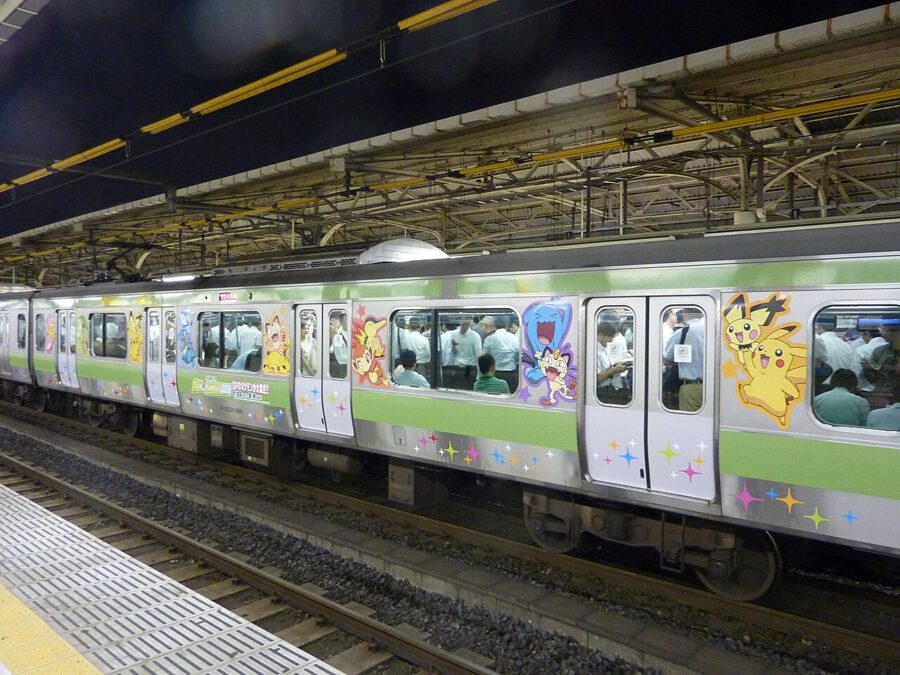

The 2026 edition, for Pokémon’s 30th anniversary, ran from 16 July to 31 August, with prizes handed out until 1 September. According to Shogakukan’s summary of the rally details, it had stamps at 36 stations in the Tokyo area (35 JR East stations and one on the Tokyo Monorail) and at seven Shinkansen stations: Shin-Aomori, Morioka, Sendai, Akita, Yamagata, Niigata and Nagano. Most stamps were out from first train to last, and JR East’s own write-up pointed riders to a one-day Suica pass for the area.
There were four courses: any six of the Tokyo stamps, a set of nine, all 36, or a single stamp at one of the Shinkansen stations. The prizes ran from a sticker for six to a keyholder for all 36 and a medal for the Shinkansen course. The basic stamp book was free; a special edition with a Pokémon pass case cost ¥2,420 (about $16) at some NewDays shops and had sold out everywhere by 24 August.
Star Wars on the Toyoko Line, 2017
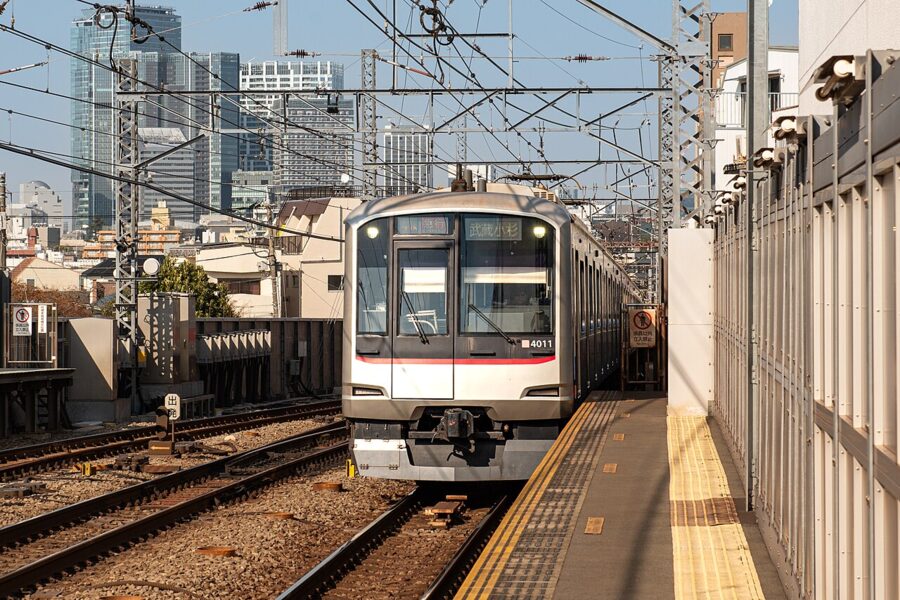
Tokyu ran its Star Wars rally in two stages ahead of the Japanese release of The Last Jedi on 15 December 2017. The first stage ran from 10 November to 3 December, the second from 4 December to Christmas Day, and each had its own designs, with Rey, Kylo Ren, BB-8, R2-D2 and C-3PO among them.
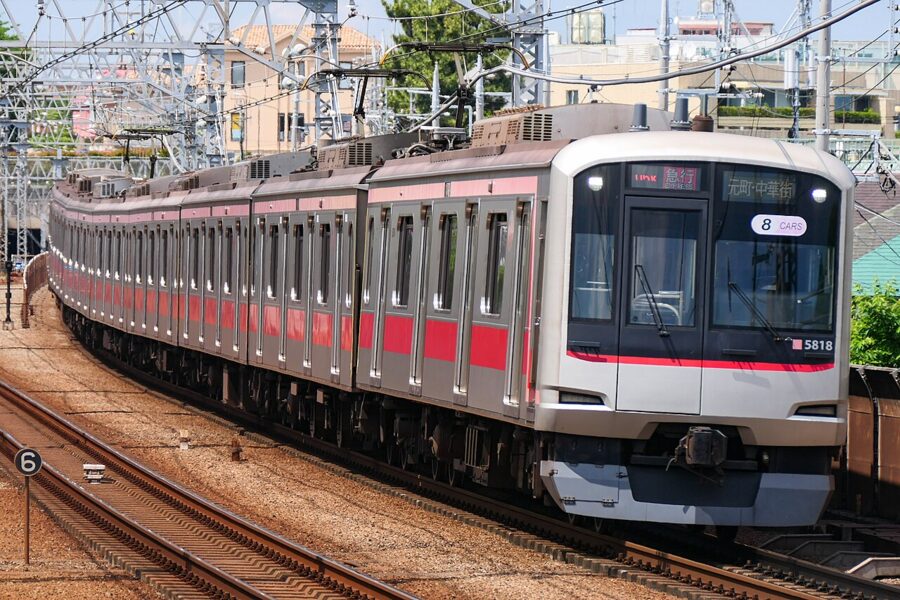
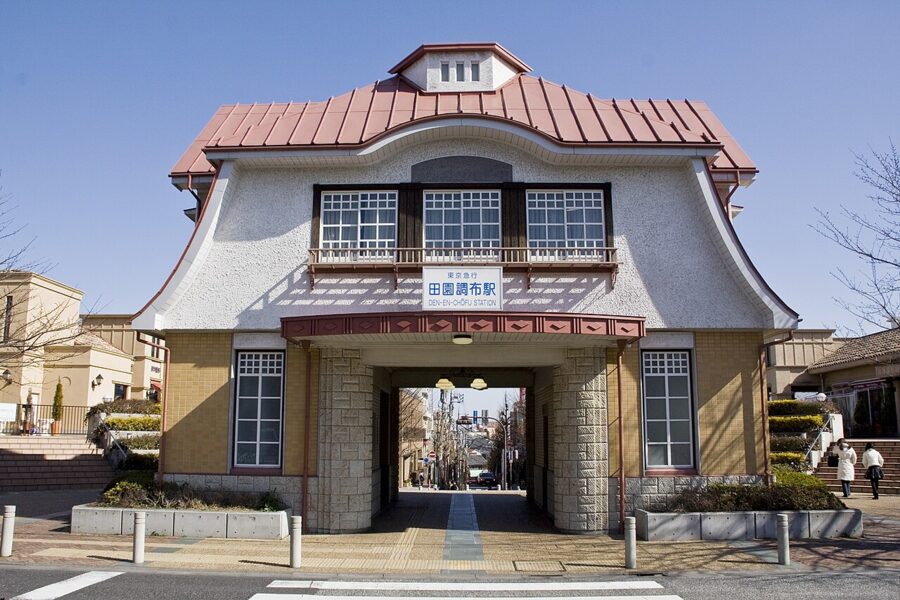
It is often remembered as a nine-station rally, and the short reports at the time said so. The full list of stamp points shows nine locations: seven stations (Shibuya at the Hikarie 2 gate, Jiyugaoka, Den-en-chofu, Tamagawa, Musashi-Kosugi, Hiyoshi and Yokohama) and two shops, PickUp Ranking in the Shibuya Chikamichi passage and 109MEN’S.

A stage earned a clear file, both stages a poster, and finishers went into a draw for something better. The shop stops were the giveaway: the rally belonged to a wider Tokyu Group promotion for the film, and it walked people past shops between trains.
Other rallies, as of 2026
Most operators run something. Private railways tie rallies to anniversaries, new lines and anime; city subways mark renamed stations; groups of companies band together so one sheet sends you across several networks. The details change every season, and the operator’s news page is the only reliable guide.

The collectors and the pad
Serious collectors are called oshitetsu (押し鉄), built on tetsu, the slang for railway fans: they are the fans who press. Most use a dedicated stamp book, and the railways sell their own. When JR East redrew its Tokyo stamps in 2020, its retail arm launched an official book with a page for each of the 78 stations and tips on pressing; it cost ¥770 (about $5) at launch.
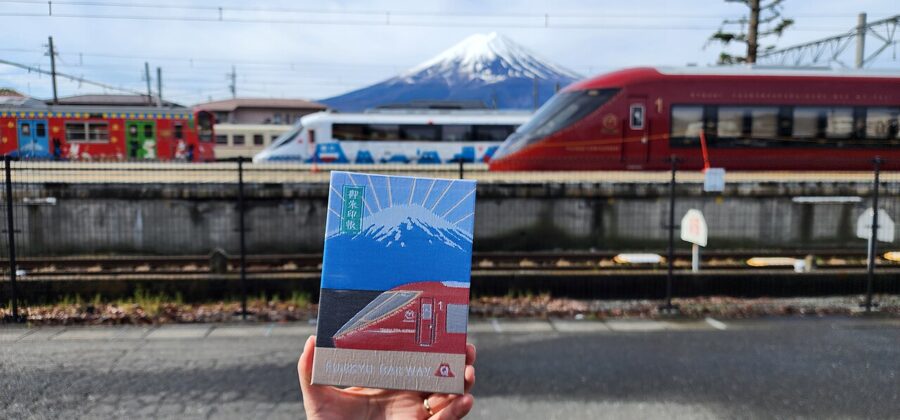

How big should the book be? Most station stamps fit inside about 6 to 7 cm, the size the 1980 campaign fixed, so an A6 notebook takes one per page and an A5 book two. Rally boxes are smaller: those on the 2022 JR East nostalgia sheet were 5 cm square.
The etiquette at the pad is short:
- Test on the scrap paper first. A dry pad gives a pale impression, an over-inked one a blot.
- Press straight down with even pressure and lift straight up. Rocking blurs the edges.
- Lay tissue over a fresh impression before you close the book.
- Leave the stamp on its table and the lid on the pad.
- If there is a queue, stamp once and step aside. A little reading the air goes a long way in a rush-hour concourse.
Keep one book for station stamps and another for anything from a shrine or temple. That second rule is not a matter of taste.
Goshuin, road stations, manhole cards and castles
The station stamp belongs to a wider habit of proving you were somewhere with ink on paper. One of its cousins is not a stamp at all.
Goshuin: not a stamp rally
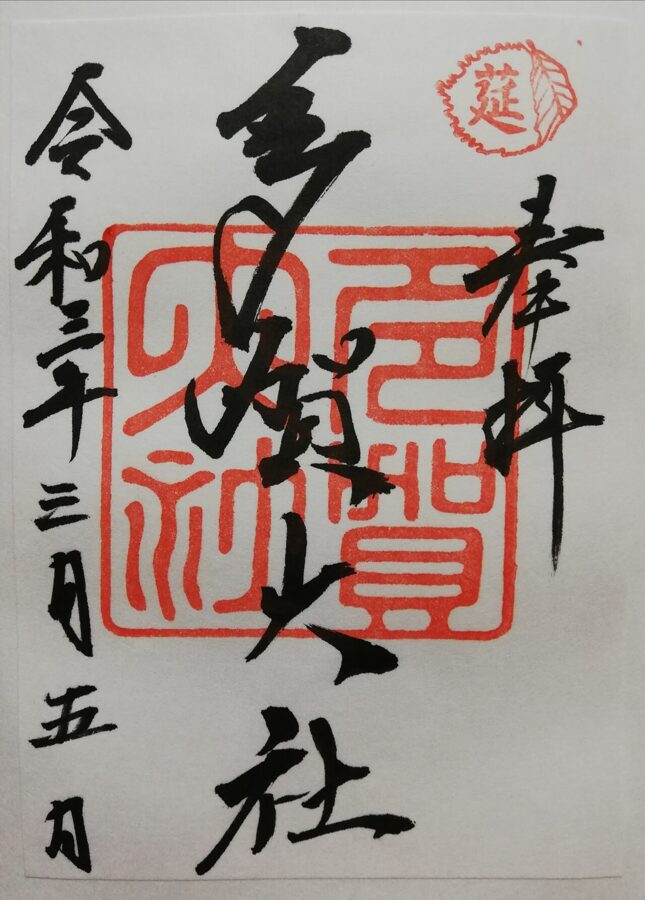
A goshuin (御朱印, “honourable red seal”) is given by a shrine or temple. It combines a red seal with brushwork naming the place and the date, usually in a goshuinchō (御朱印帳), the folding book made for it. You ask for one after praying, not instead of it, and you pay a small fixed offering.
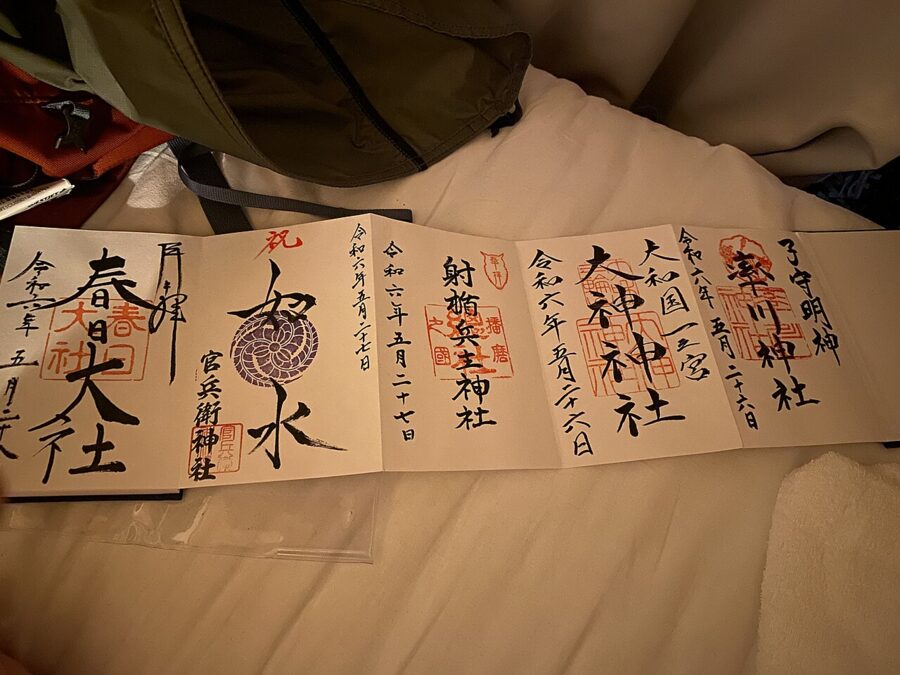

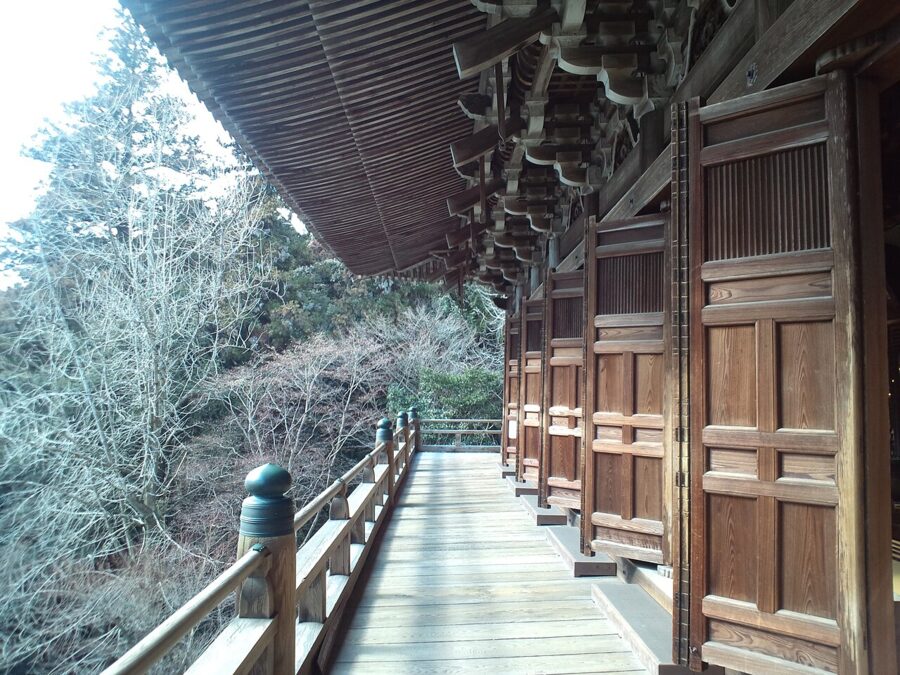
The Japan Tourism Agency’s note on Engyoji’s seals sets out the origin. A goshuin began as a receipt: proof that a pilgrim had copied a Buddhist sutra and offered it to a temple, or paid for it to be copied. Sutra offerings faded in the late Edo period, but the seals stayed. Collecting them as souvenirs is common, but a goshuin is understood to stand for the shrine or temple’s object of worship, which is why it does not belong in a book beside a Pokémon stamp.

Michi-no-eki stamps
The road has its own stations. Michi-no-eki (道の駅, “roadside stations”) are rest stops with toilets, local produce and information, registered by the transport ministry on a town’s application. The national michi-no-eki association listed 1,234 of them as of September 2026.
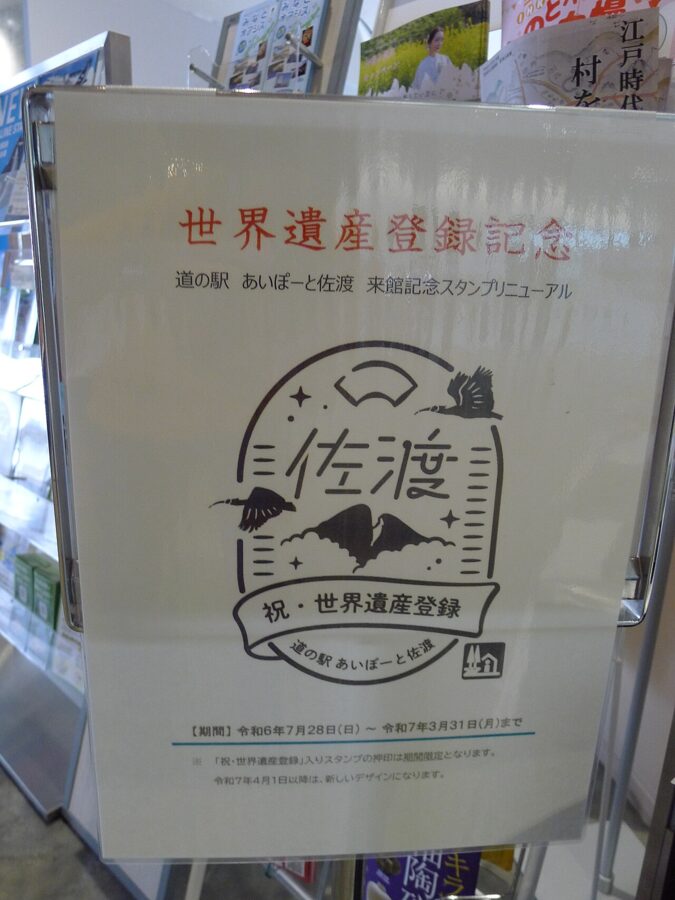
Road stations commonly keep a stamp, regional associations run stamp rallies, and there is now a nationwide digital stamp service. It is the eki stamp with a car park instead of a platform.
Manhole cards
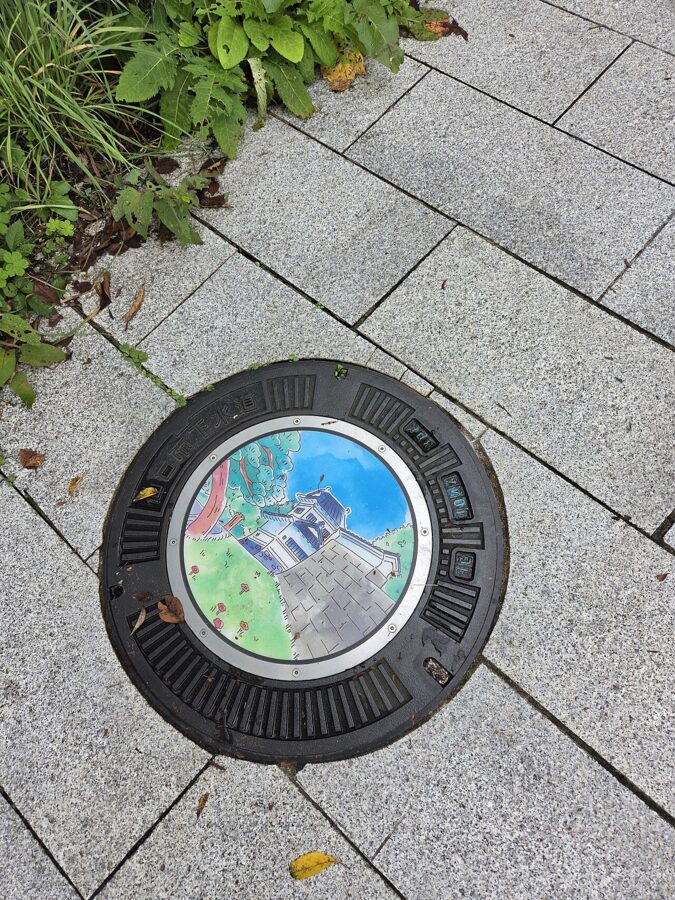
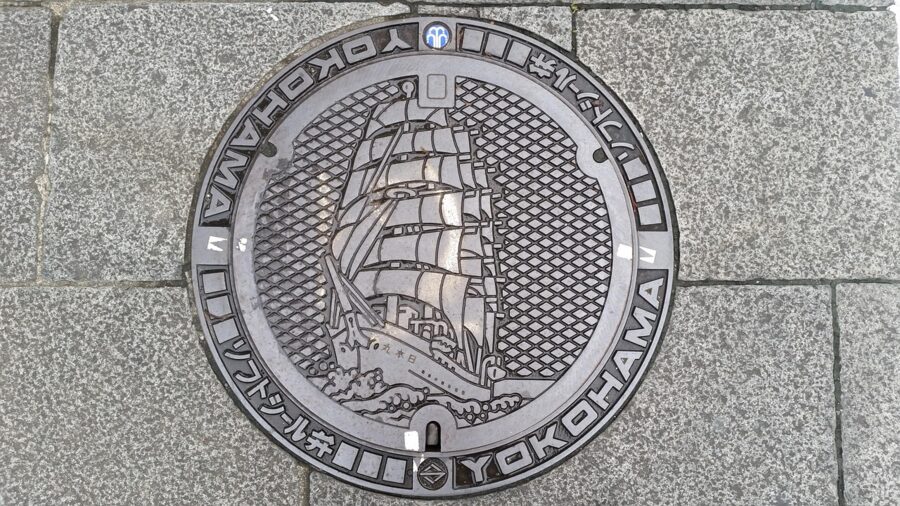
Many Japanese towns cast their sewer covers with local designs, and the Sewerage Public Relations Platform (GKP) turned them into collectable cards, each built around a real cover and handed out, never sold, in the town where it lies. The first went out in April 2016.
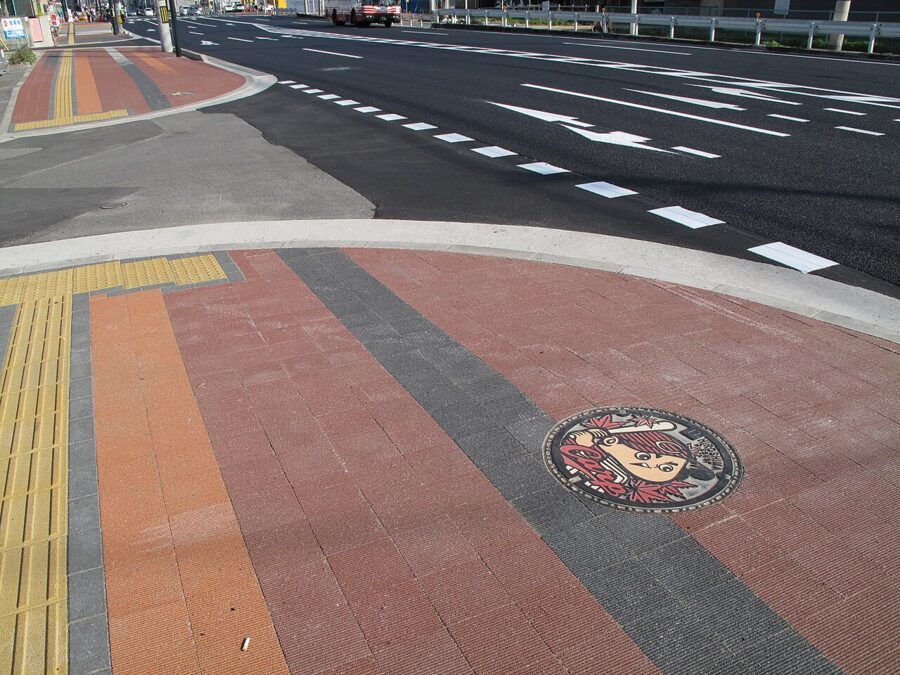

Hiroshima City’s manhole card page spells out the rules: in person only, one per person, no requests by post, and no reselling. By the 24th batch in December 2024, 727 local governments and bodies had produced 1,113 designs, and the ministry’s 2023 release put the cards issued at about 10.5 million.
Castle stamps
The Japan Castle Association named its 100 Fine Castles of Japan in 2006 and started a stamp rally for them on 2 June 2007. Each castle keeps its own stamp, and the official book comes with the association’s guidebook. A second list, the Continued 100 Fine Castles, followed in 2017.
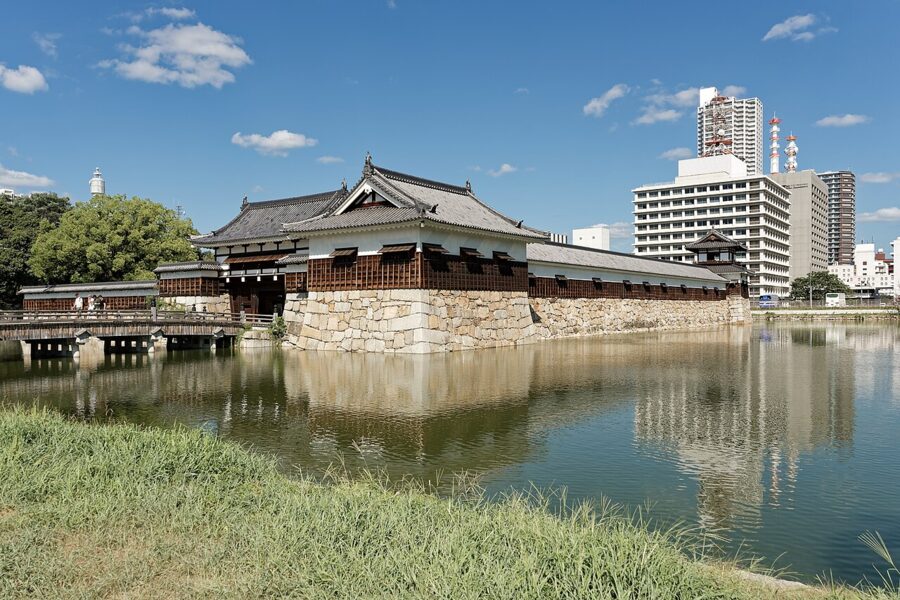

Finishing is formal: you send the full book to the association, which stamps it complete, records your place among the finishers and returns it. In November 2026 the association noted that the stamp at Yatsushiro Castle in Kumamoto, on the second list, was back in place after a temporary arrangement.
Tap instead of press: the digital rallies
The newest stamps have no ink. The Ekitag app, run by JR East Planning, works with NFC tags fixed at stations: hold your phone to the tag and the station’s design drops into a digital stamp book. It never runs dry, and a tag needs no one to look after it.
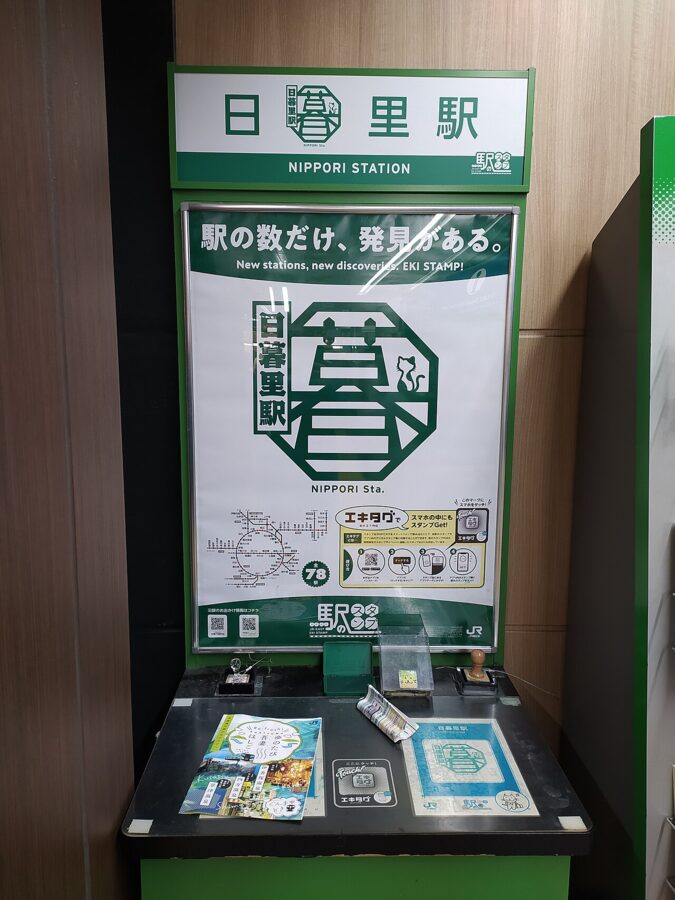

It has spread well beyond JR East. On 28 August 2026 three Nagano companies joined: Nagano Electric Railway at seven stations from Nagano to Yudanaka, Ueda Electric Railway at three, and Shinano Railway at six, including Karuizawa. Rallies run on the app too, and the 2026 Pokémon rally sent some prize coupons through LINE.
I do not think the tag will replace the pad, and the railways seem to agree: Tokyo’s stations put the Ekitag panel on the same poster as the rubber stamp. The tag is for the station you pass through; the stamp is for the station you meant to visit.
The tag is for the station you pass through; the stamp is for the station you meant to visit.
Collecting as a visitor
You need very little. A plain notebook with uncoated paper does the job, a few sheets of tissue keep fresh ink off the facing page, and a minute at each stop is enough.
- Find it. Look near the gates, then ask at the staffed gate or ticket office.
- Check the dates. Rallies have fixed dates and goal counters with their own hours.
- Buy a pass. Rallies are built around one-day tickets, and the rally page usually names one.
- Keep books apart. Station and rally stamps in one; goshuin in a goshuinchō.
- Go early. Rally prizes are first come, first served.
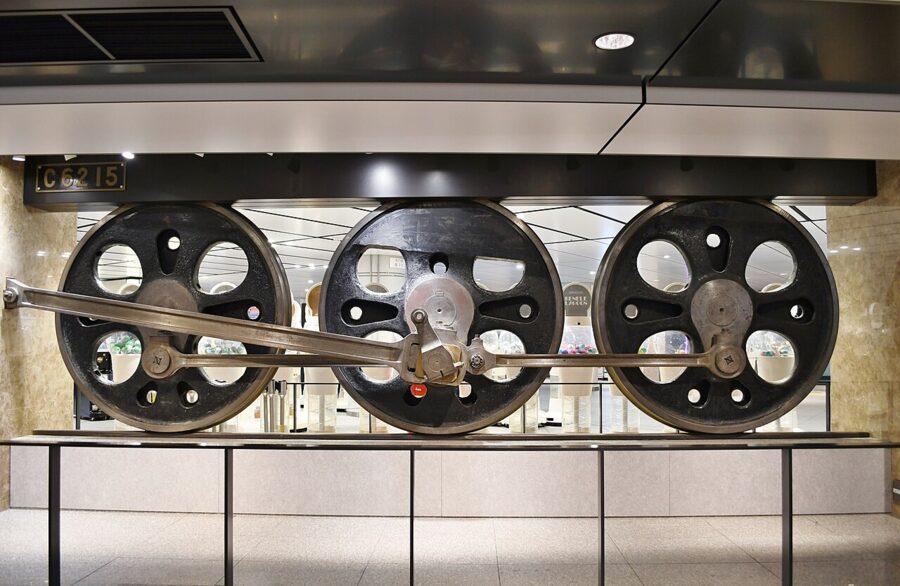
For a first stamp, make it Tokyo Station’s. Take any JR line to Tokyo, head for the Marunouchi side and ask at the gates; the Driving Wheel Plaza, outside the Marunouchi underground south gate, is a few steps from there.
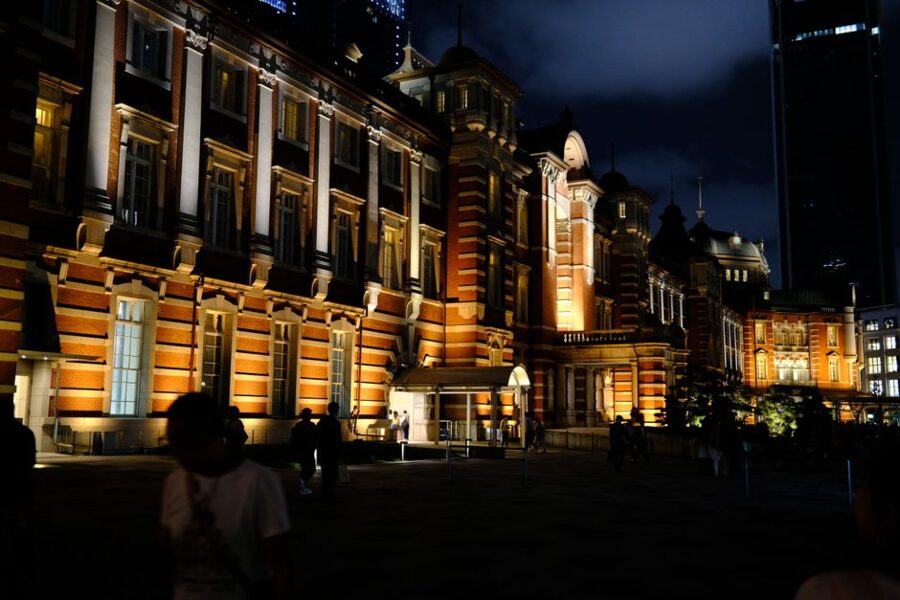
The stamp will give you a red hexagon, the character 東 and a small red-brick building. It will have cost you nothing but the fare, which, as the railways worked out in 1931, is the point.