
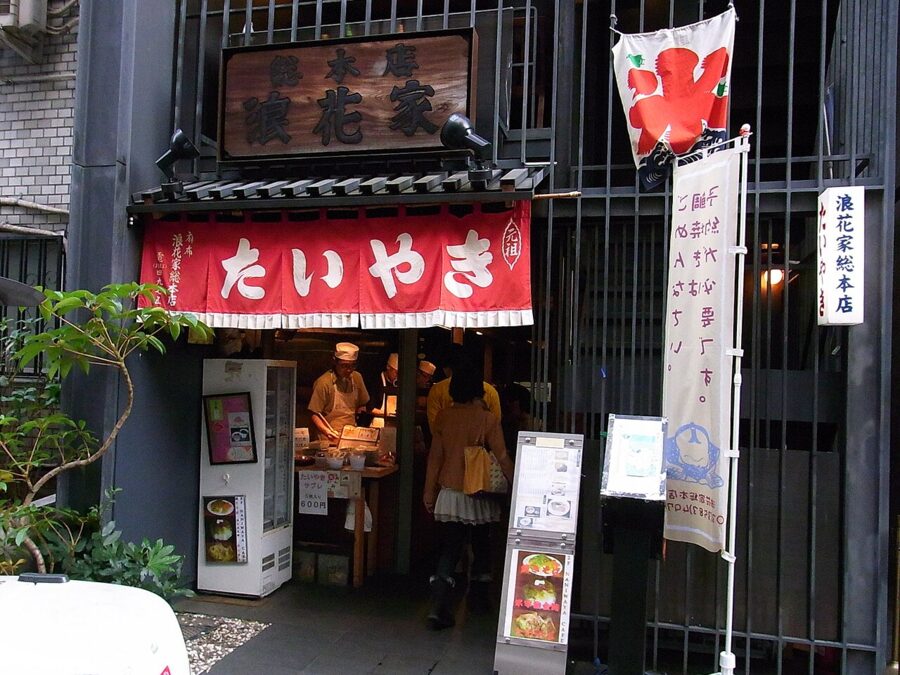

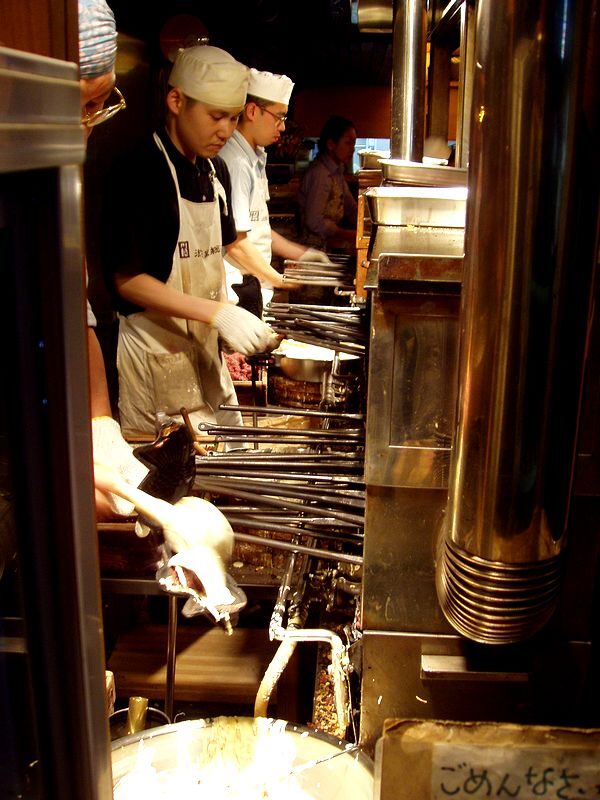
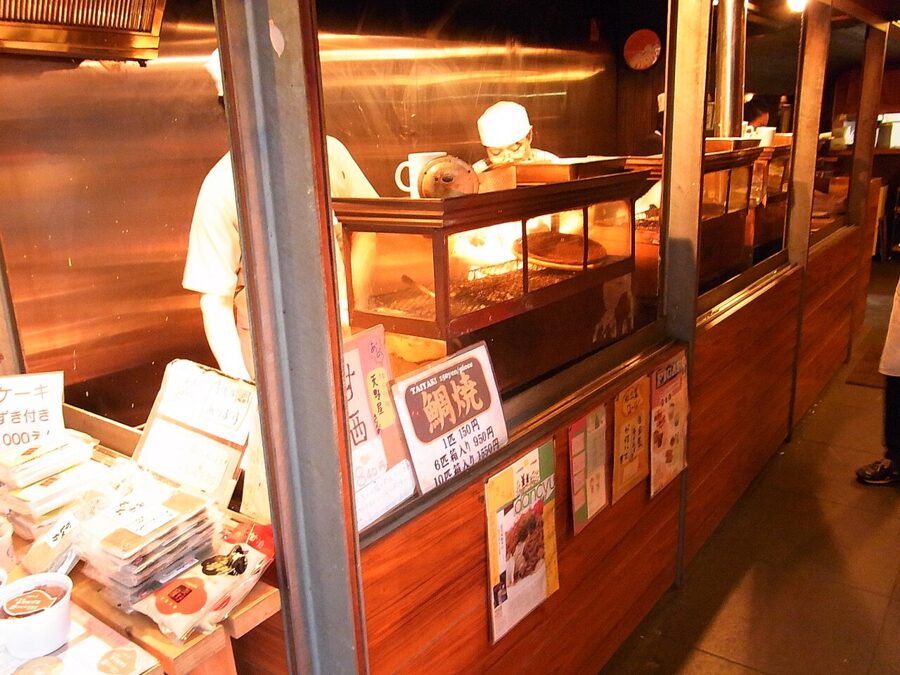
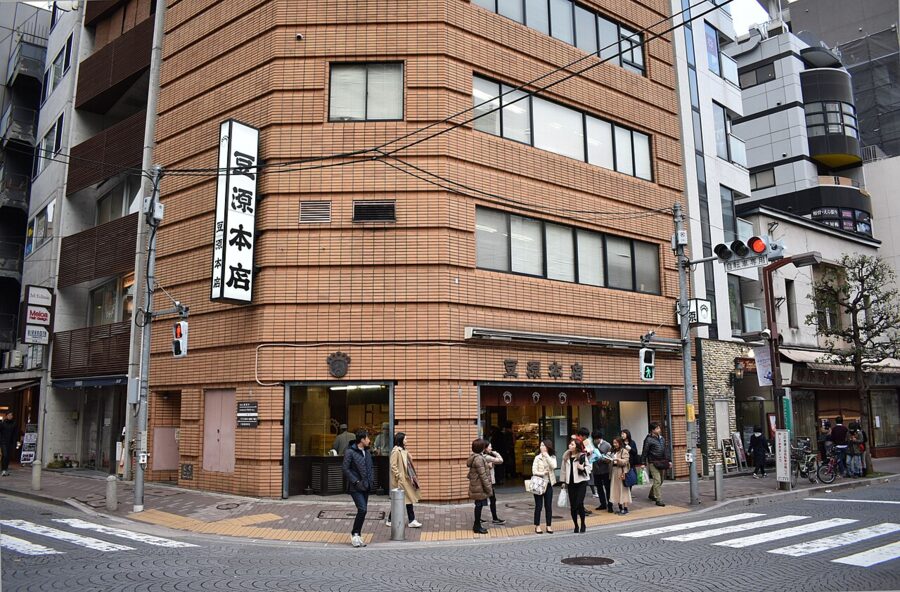
At Naniwaya Sohonten (浪花家総本店) in Azabu-Juban, every taiyaki is baked in its own iron mould, one fish at a time, which is why the Saturday queue barely seems to move. You give your order at the window, someone tells you when to come back, and behind the glass a baker swings a long pair of iron tongs over the flame and back.
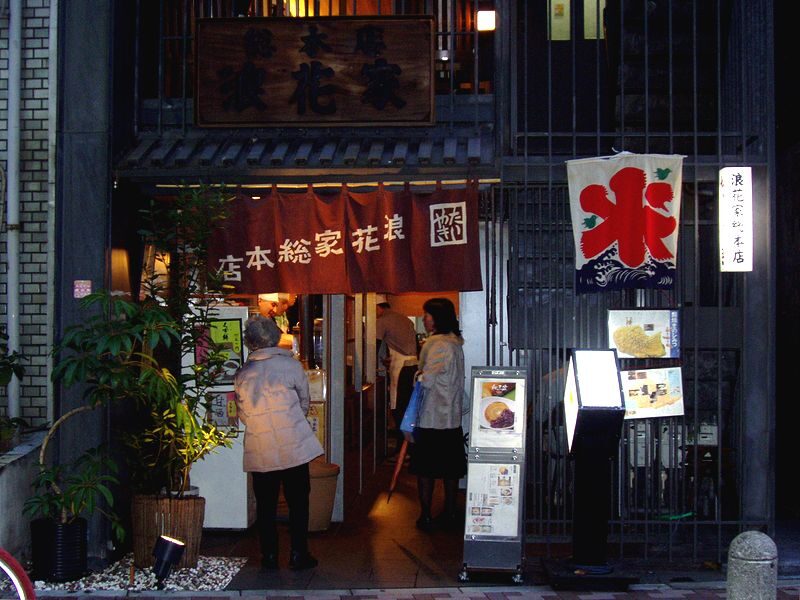
The curtain over the door reads ganso taiyaki (元祖たいやき, “the original taiyaki”). The shop’s second claim is louder in Japan than the first: the shopkeeper in the cartoon for “Oyoge! Taiyaki-kun”, the best-selling single in the history of the Japanese charts, was drawn from the man who ran this counter.


In this article
- A Meiji shop that calls itself the original
- One fish, one iron: how the taiyaki is made
- "Oyoge! Taiyaki-kun": the song and the man behind the counter
- Taiyaki in brief: the big three, and which end first
- Upstairs at Naniwaya Café: yakisoba and kakigori
- Azabu-Juban, the street around the shop
- The other Naniwaya shops
- Getting to Naniwaya Sohonten
A Meiji shop that calls itself the original
The second word of the name, sōhonten (総本店), means “head shop”, a title that only makes sense once there are branches. According to the shopping street’s listing for the shop, Seijiro Kanbe (神戸清次郎) came from Naniwa, the old name for Osaka, named the business after home and opened it in 1909 (Meiji 42).
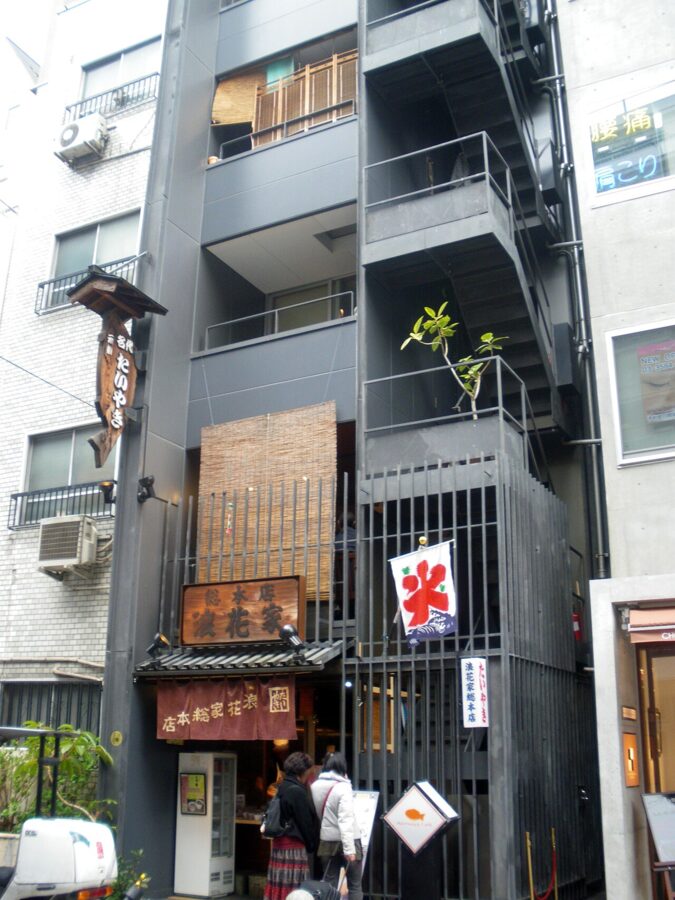
It did not open here. The first shop stood in Kudan, near today’s Kudanshita. By the family’s count it once had about 150 outlets across Tokyo, run on something like a franchise, until the war years shrank it, and around 1948 the head shop moved to Azabu-Juban.
The fish came out of a canteen menu. In a 2022 interview, the fourth-generation owner, Masamori Kanbe (神戸将守), described taiyaki as “one of the desserts” of a shokudō (食堂, a cheap eating house) that also sold round imagawayaki, turtle-shaped kame-no-ko-yaki and, at one point, an airship-shaped “Zeppelin-yaki”. With single moulds, a new shape only needed a few new irons.
The sea bream won because of a pun and a price. Tai (鯛) echoes medetai (めでたい, “auspicious”), and a whole bream, head and tail, was a wedding-banquet fish most families could not afford. Kanbe’s explanation is that the shop turned a luxury into a cheap, hot snack at a time when few homes were properly heated.
Is it really the first? Kanbe himself says nobody can be sure about events more than a century ago; the shop uses ganso because no taiyaki maker still trading is older. Japanese reference works add that the word turns up in late-Meiji writing and that a few press items hint at sellers before 1909.
A rival claim from a canteen in Tsu, Mie Prefecture, fell apart when it emerged that shop started selling taiyaki only after the Second World War. I would read “the original” as “the oldest still standing”, which is claim enough.
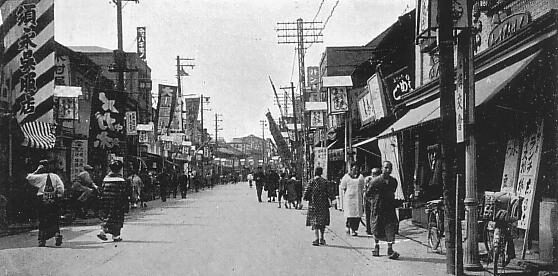
One fish, one iron: how the taiyaki is made
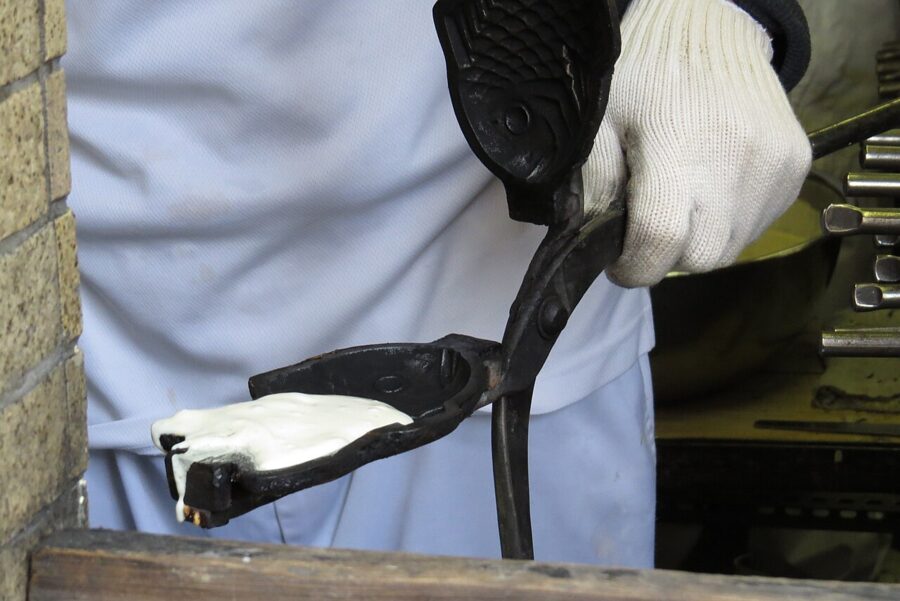
Japanese bakers split taiyaki by how they are cooked. Ippon-yaki (一本焼き) or itchō-yaki (一丁焼き) means one fish in one cast-iron mould on the end of a pair of long handles; each iron weighs more than two kilograms and has to be turned by hand. Renshiki-yaki (連式焼き) means a hinged plate that bakes a row of fish at once. Naniwaya calls its tongs hashimono.
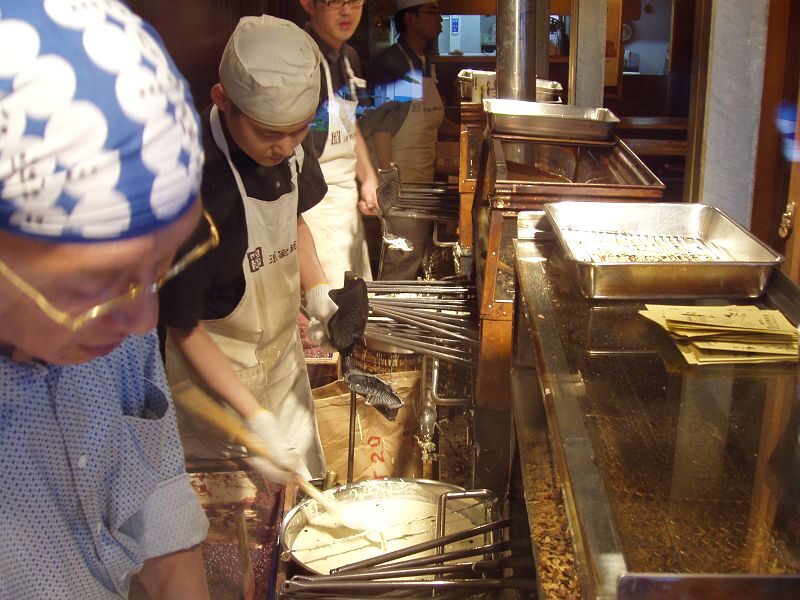

Fans have a joke for the difference. In the 1990s the photographer Yasuhiko Miyajima (宮嶋康彦) started calling single-mould taiyaki tennen (天然, “wild-caught”) and plate-baked ones yōshoku (養殖, “farmed”), and the labels stuck. Kanbe has his own version. A single mould is the fish landed on a pole and line, he says; the plate is the beach seine, where the fish rub against each other and bruise.
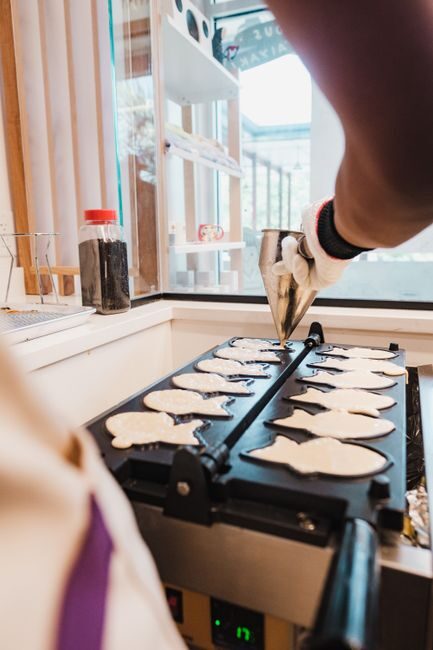
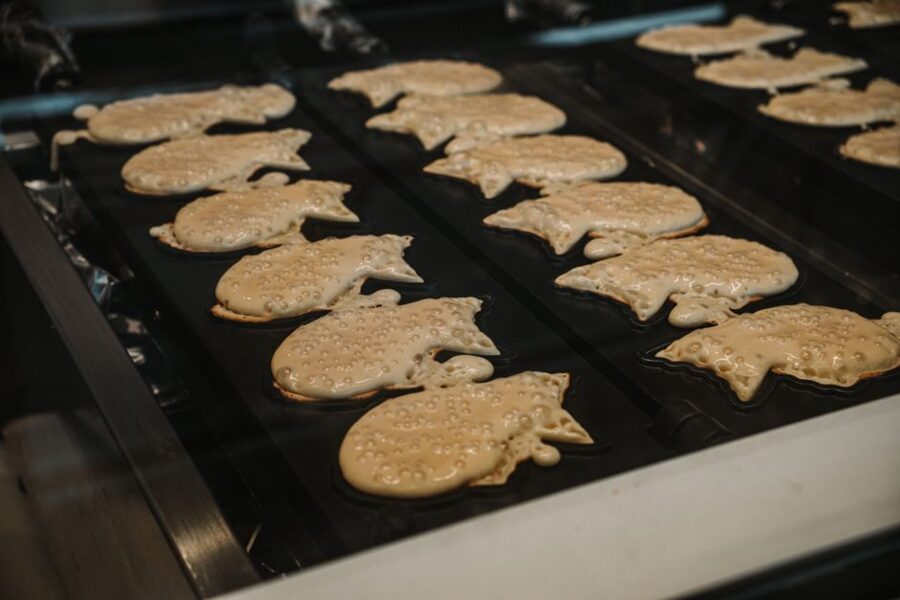
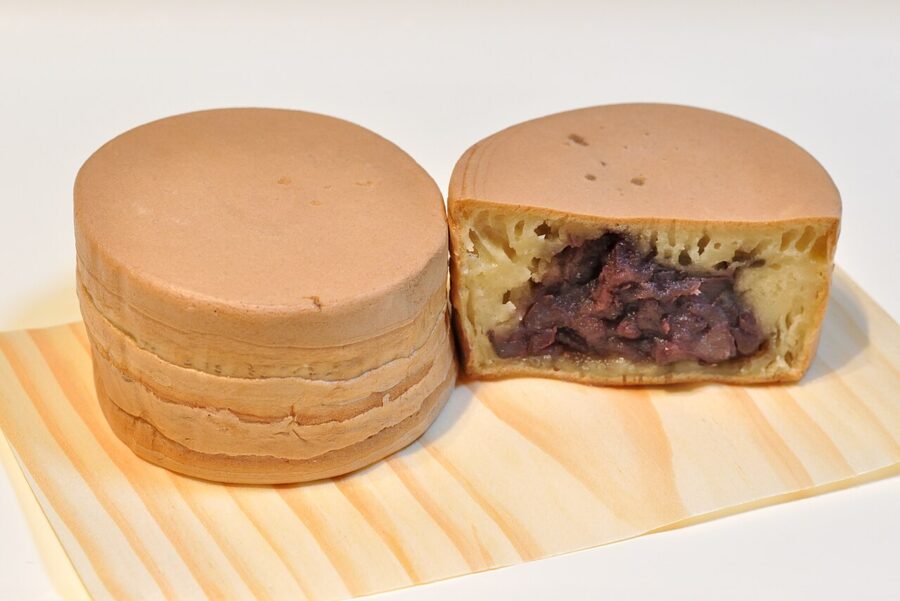
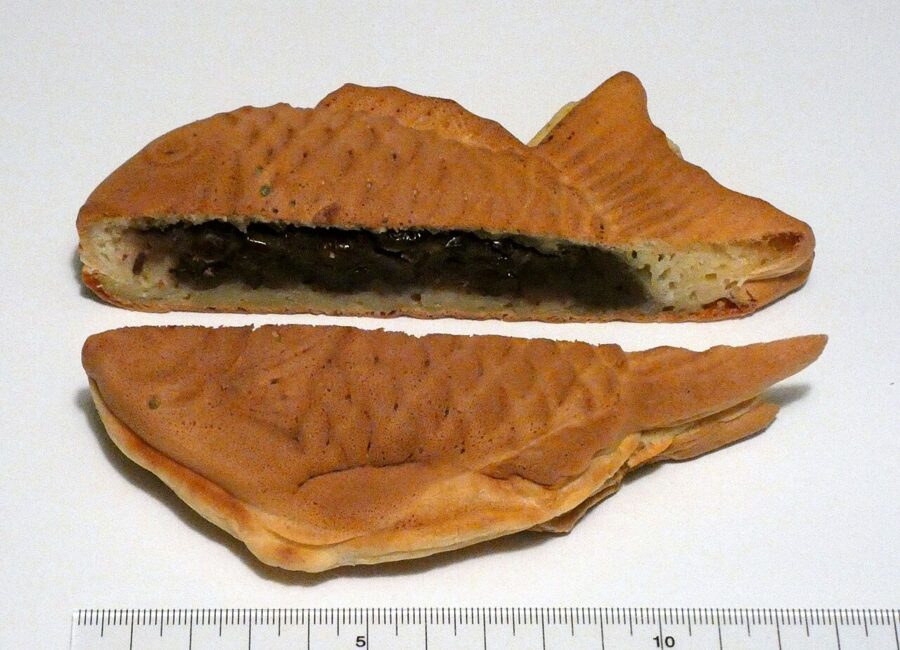
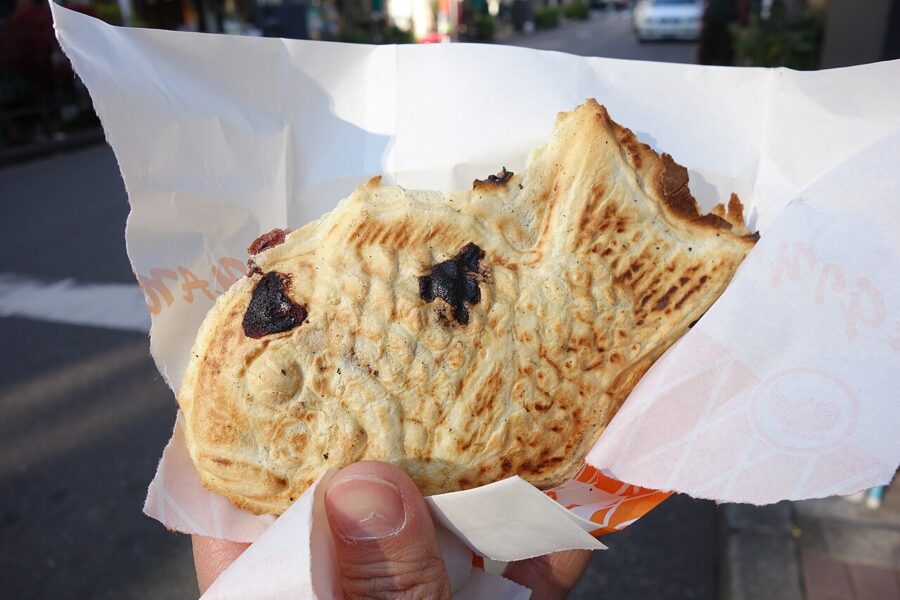
The difference shows in the crust. At Naniwaya the skin is roughly a millimetre thick, crisp where it touched the iron and soft where it touched the bean paste. The filling is tsubuan (粒あん), coarse paste with the skins left in, made from Tokachi azuki from Hokkaido. Kanbe says the newer bean varieties are too clean-tasting for taiyaki, so he buys from particular fields that still give a little bitterness; the paste is lightly salted and packed out to the tail.
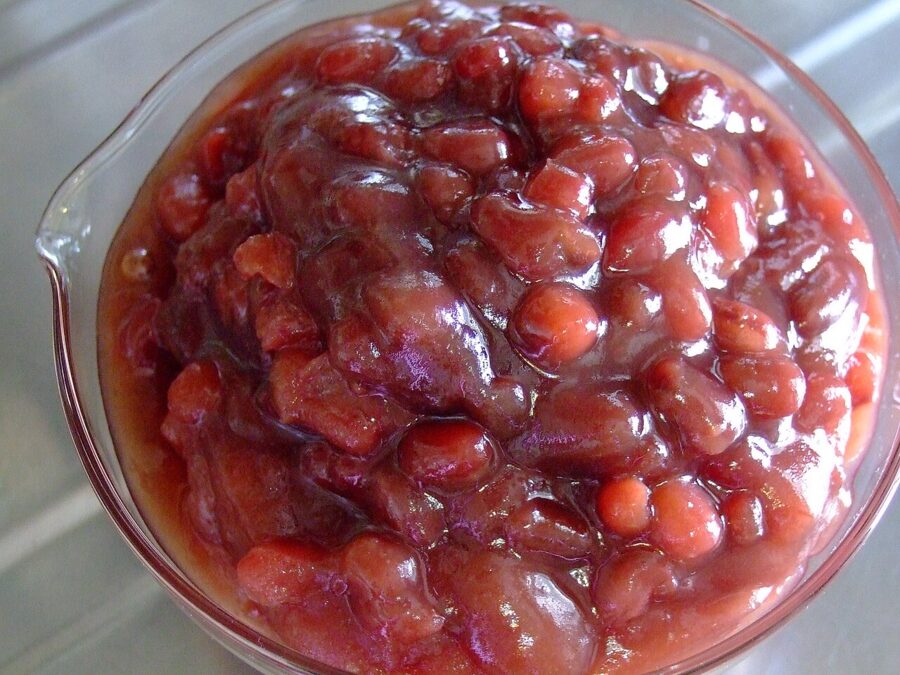

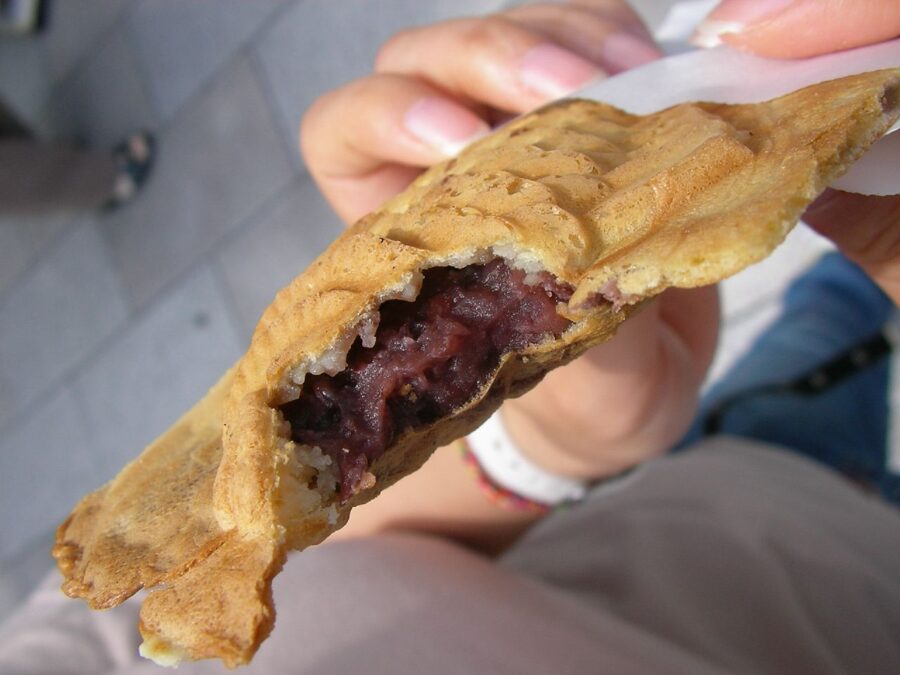

A single mould is the fish landed on a pole and line; the plate is the beach seine.
“Oyoge! Taiyaki-kun”: the song and the man behind the counter
The song is about a taiyaki who is sick of being baked on the same iron plate every morning. He quarrels with the shop’s owner, runs off and jumps into the sea, and swims free until an angler catches him and eats him. Children loved it. Adults bought it too, as a song about walking out on the daily grind.
That double audience became a tax case. In February 1976 the authorities had to decide whether it was a children’s song, exempt from the commodity tax on records, or a taxable popular one, and ruled it a children’s song.
“Oyoge! Taiyaki-kun” (およげ!たいやきくん, “Swim! Taiyaki-kun”) was written for Fuji TV’s children’s programme Hirake! Ponkikki (Open Up! Ponkikki), with words by Hiroo Takada (高田ひろお) and music by Juichi Sase (佐瀬寿一). Canyon Records released the single on 25 December 1975, sung by Masato Shimon (子門真人), after advance orders of around 300,000.
It became the first single to enter the Oricon chart at number one and held the top spot for eleven weeks. By Oricon’s count it has sold more than 4.5 million copies, and no single has overtaken it on Oricon’s count since. Guinness World Records listed it as Japan’s best-selling single in its 2009 edition. Shimon, hired on a flat fee, was paid ¥50,000 (about $330 at today’s rate) for the session and no royalties.

Where does Naniwaya come in? Not the words. Takada said the idea came after a night out near Nerima Station, when a taiyaki seller’s stall brought back a Kushiro childhood of walking home from the bathhouse with a hot taiyaki against his stomach.
The Naniwaya connection is the picture. The cartoon that ran with the song on Ponkikki every morning had a shopkeeper, the taiyaki ojisan, and the Kanbe family says he was modelled on Moriichi Kanbe (神戸守一), the third-generation owner, who died in May 2010 aged 86.
That is narrower than the claim repeated in guidebooks, where the shop becomes “the model for the song”, and the family’s version is the one I would trust. Either way, the effect on the counter was real: the family recalls queues forming before opening time, and taiyaki plates sold strongly across the country.

Taiyaki in brief: the big three, and which end first
Tokyo food writers speak of the taiyaki gosanke (たい焼き御三家), the city’s big three single-mould makers. Naniwaya is the oldest. The others are Yanagiya in Ningyocho, founded in 1916, and Wakaba in Yotsuya, which dates from the 1950s. All three still bake one fish per iron and fill to the tail.
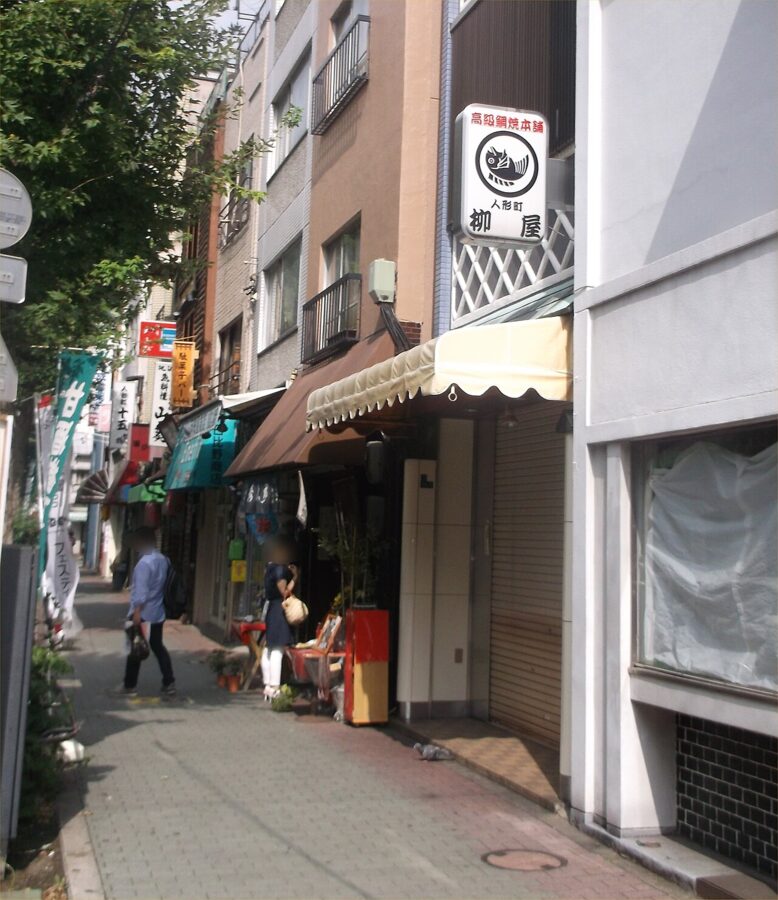

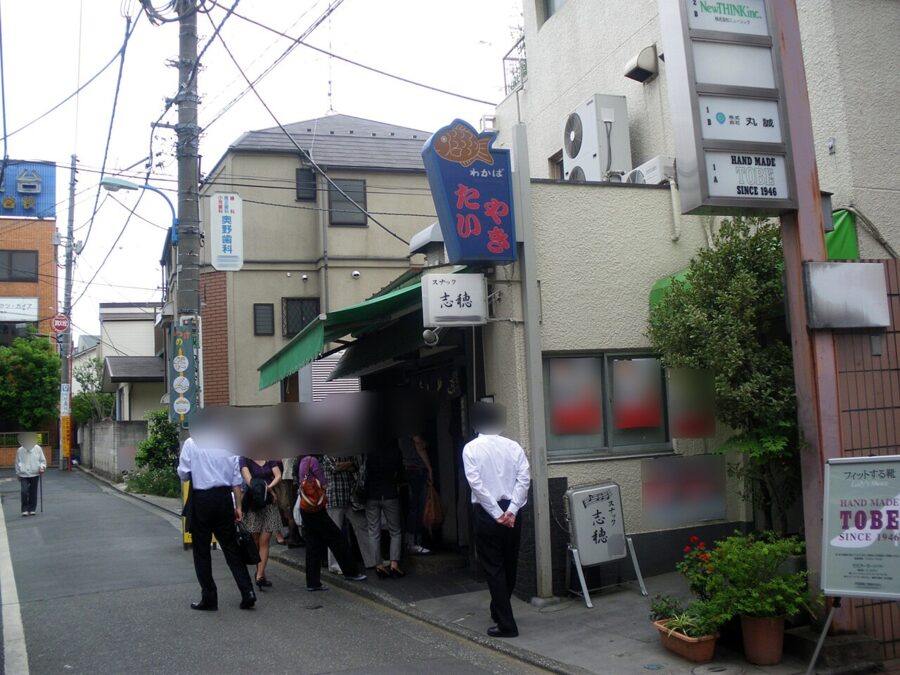


Taiyaki come with a fixed set of arguments. The oldest is over the tail. The writer Tsuruo Ando (安藤鶴夫) once wrote in the Yomiuri Shimbun that a proper taiyaki has paste right to the end of the tail, and readers wrote back for and against: the tail is a handle, said one side; a palate-cleanser after the sweetness, said another; paste to the tip, said a third, or you feel cheated.
Then there is the question of which end to eat first. Kanbe treats the choice as part of the fun. He also says the paste tastes sweeter when very hot, so a fish left a minute or two shows its flavour better, and that at home he crisps taiyaki briefly in a toaster oven. I start at the head, because the head has the most paste and the tail stays crisp longest.
The counting is looser than you might expect. Naniwaya counts fish as hiki (匹), the counter for animals, but customers ask for three ko or ten mai and nobody minds.
Upstairs at Naniwaya Café: yakisoba and kakigori
The ground floor sells fish to take away. The stairs inside the door lead to Naniwaya Café, a plain room of about 20 seats. Regulars order the yakisoba first: thin noodles, cabbage and very little meat in a light, stock-flavoured sauce with aonori seaweed on top, a long way from the heavy street-stall version. The taiyaki follows, hot, as dessert.
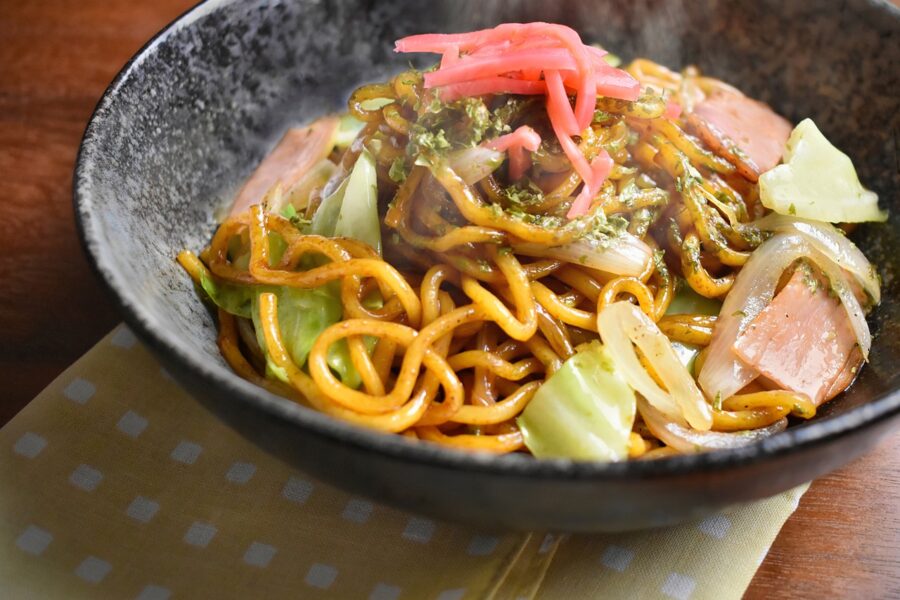
The rest of the menu is old-fashioned amamidokoro (甘味処, sweet-shop) food: anmitsu, oshiruko sweet bean soup in winter, and kakigori shaved ice in summer. The shopping street’s listing for Naniwaya notes that the café has no air conditioning, which it offers as a reason to try the kakigori. The essayist Hinako Sugiura (杉浦日向子) wrote about it in Yoji no Oyatsu (Four O’Clock Snacks, 2004).
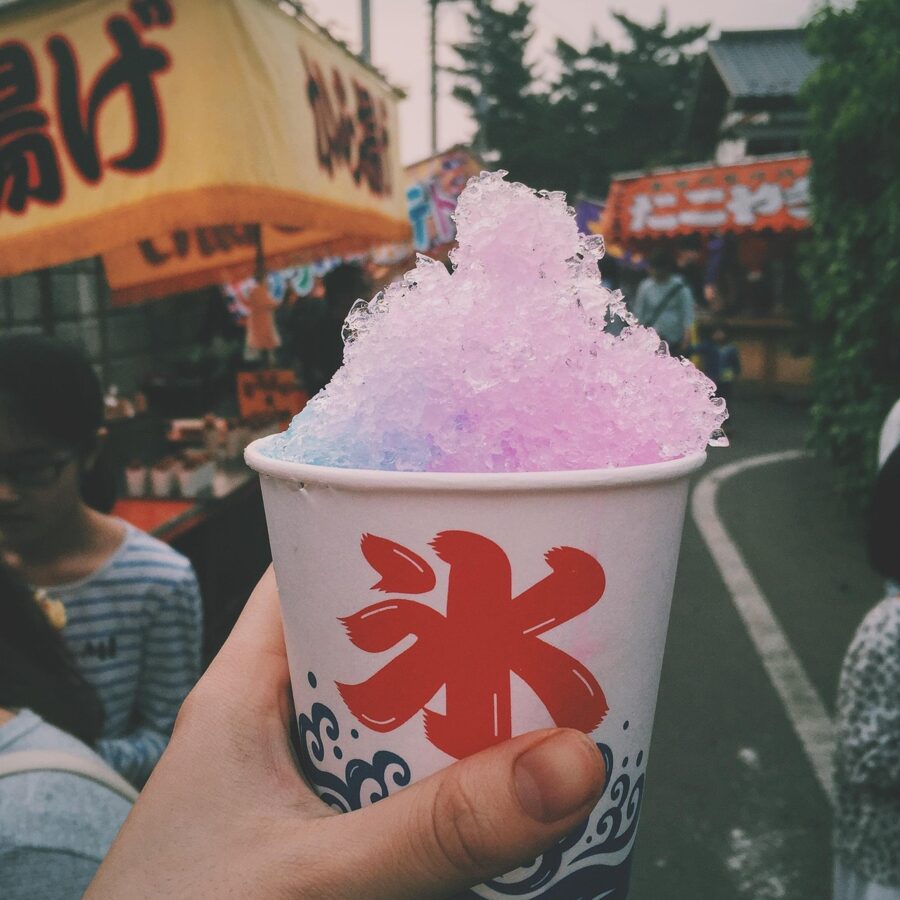
A taiyaki with a melon milk upstairs came to ¥700 (about $4.70) as of summer 2026. Check the board for single-fish prices before you queue.
The queue itself works on trust. At the window you give your number of fish and are told roughly when they will be ready; then you go for a walk and come back. The shop has long taken telephone orders as well, useful in winter, when waits can run past an hour. The café upstairs is often the quicker way to get a single fish.

| Naniwaya Sohonten | As of October 2026 |
|---|---|
| Address | 1-8-14 Azabu-Juban, Minato, Tokyo |
| Taiyaki counter | 11:00–19:00 |
| Closed | Tuesdays, and the third Wednesday of the month |
| Upstairs | Naniwaya Café: taiyaki, yakisoba, anmitsu, kakigori in summer |
Azabu-Juban, the street around the shop
Azabu-Juban is a low-rise shopping street in a high-rent district, and it has worked to stay that way. When the Hibiya subway line was planned in 1956, shopkeepers here campaigned against a station for fear their customers would ride off to Ginza. The line went to Roppongi instead, and for more than three decades the neighbourhood was known as a riku no kotō (陸の孤島), “an island on dry land”, until the Namboku and Oedo lines arrived in 2000.
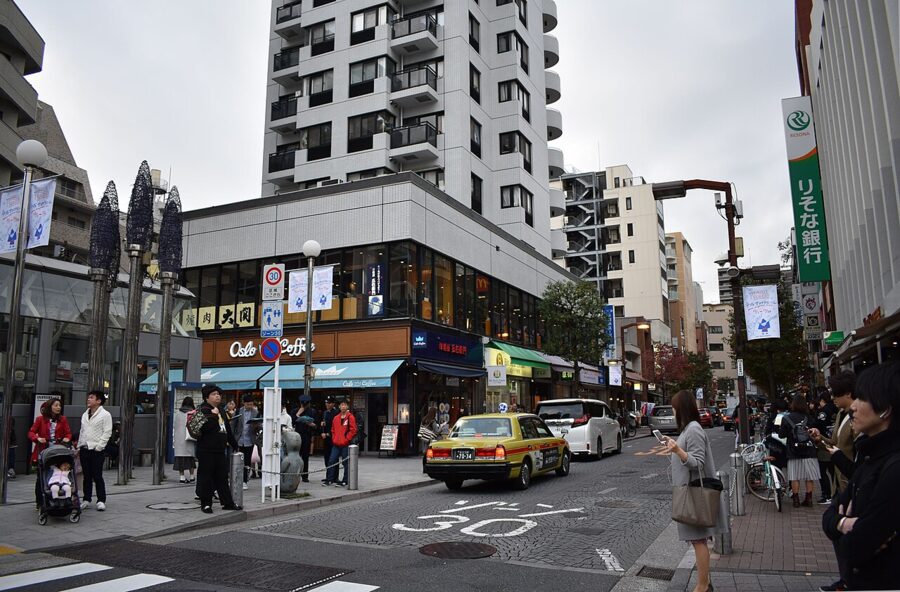

The shopping street association still sets ten house rules for members. No sandwich boards or flags on the pavement, colours that suit the stone paving, no touts, and a quiet street at night: most shops close by eight and restaurants by eleven. It reads like a parish newsletter, and the street still looks like one.


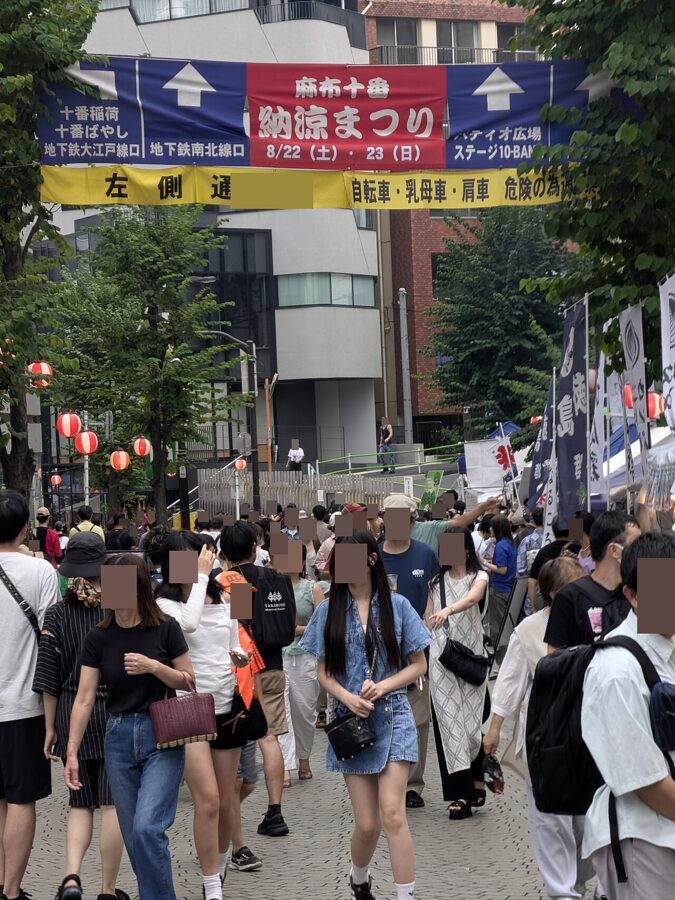
The biggest day of the year is the Azabu-Juban Noryo Matsuri, a summer festival in late August that fills the street with food stalls from around the country. Naniwaya’s queue on those two days is best avoided.
The other Naniwaya shops
“Naniwaya” is a common shop name, since Naniwa simply means Osaka, so not every Naniwaya sign leads back to Azabu-Juban. Many guides also write the name with a different ya (浪花屋); the shop writes 家. In the 2022 interview Masamori Kanbe counted about ten shops in Tokyo run by people trained here under noren-wake (暖簾分け), the old custom of granting a former apprentice the right to the shop’s name, plus others in Kamakura and Osaka. Two are easy to find.
- Asakusa Naniwaya (浅草浪花家), 2-12-4 Asakusa, Taito, about three minutes on foot from Asakusa Station on the Tsukuba Express. It opened on 17 December 2010 and sold single-mould taiyaki at ¥230 (about $1.50) each as of February 2026; cash only. To eat inside you order a drink or another sweet with the fish. If you are in Asakusa for the golden flame across the river, it is within walking distance.
- Kamakura Naniwaya (鎌倉浪花家), 1-7-8 Komachi, Kamakura, about three minutes from the east exit of Kamakura Station. Its owner trained for around ten years under the third-generation Kanbe and opened in 2015. As of July 2026 a taiyaki cost ¥220 (about $1.50), hours were 11:00–18:00 and the shop closed on Tuesdays and some other days. It takes phone orders, even for a single fish, and serves kakigori from late April to November.

Getting to Naniwaya Sohonten
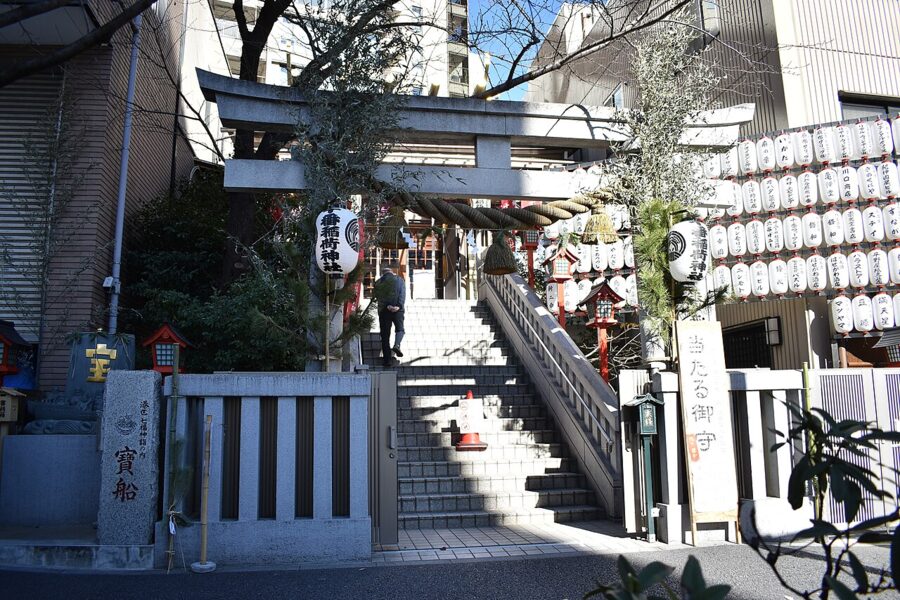
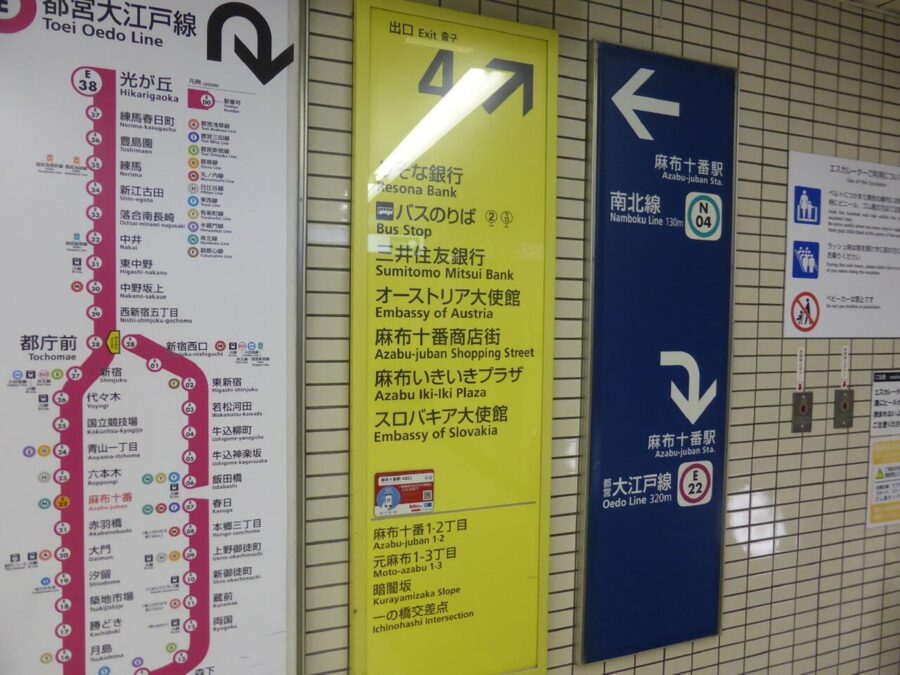
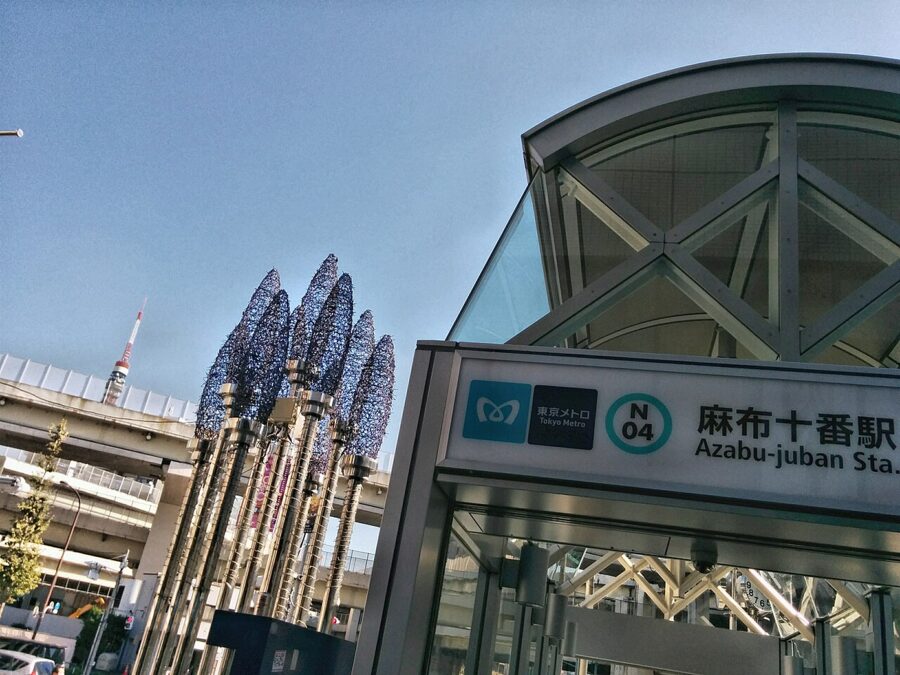
The nearest station is Azabu-juban Station (Namboku and Oedo lines). Tokyo Metro’s exit guide for the station marks exit 4 for the Azabu-Juban shopping street; from there the shop is a walk of two or three minutes into the street. From the Oedo line platforms, exit 7 comes up beside Juban Inari Shrine, a short walk from the shop. Roppongi Station on the Hibiya line is about fifteen minutes on foot, most of it downhill.


Go on a weekday afternoon if you can; avoid Tuesdays, when the shop is shut. Order two. Eat the first on the pavement outside while it is still too hot to hold, and keep the second for the train.