

For eleven Tuesday nights in the autumn of 2016, a TBS drama about a fake marriage ended the same way. The theme song started, and the cast took turns dancing through the couple’s flat: Yui Aragaki hiding her face behind her hands and opening them like curtains, Gen Hoshino, who played a shy systems engineer, moving far more sharply than his character ever could. Within a fortnight people all over Japan were filming themselves doing it.
The routine became the Koi dansu (恋ダンス), the “Koi dance”, after Hoshino’s song “Koi” (恋). The drama was Nigeru wa Haji da ga Yaku ni Tatsu (The Full-Time Wife Escapist, shown abroad as We Married as a Job), Nigehaji (逃げ恥) for short, and the two took over the season: dance clubs, figure skaters, city halls, an American ambassador dressed as Santa Claus. Five years later the leads announced they were marrying for real.
The Japanese title is a Hungarian proverb, Szégyen a futás, de hasznos: running away is shameful, but it works. The drama’s English logo swapped it for “We married as a job!”, which is a fair summary of a story in which an out-of-work young woman and a man who would rather be alone decide that marriage is the most sensible contract on offer.




In this article
The manga, the drama and the numbers
The story began as a manga by Tsunami Umino (海野つなみ), serialised in Kodansha’s women’s magazine Kiss from 2012. It won the Kodansha Manga Award in the shōjo category in 2015 and, by May 2021, had sold more than 4.5 million copies.
Mikuri Moriyama has a postgraduate degree in psychology and no job: she has just been let go as a temp, the fate the press calls haken-giri (派遣切り, “cutting the dispatch workers”). Her father finds her a weekly housekeeping job with Hiramasa Tsuzaki, 35, a Kyoto University graduate who calls himself a puro no dokushin (プロの独身), a “professional bachelor”. When her parents retire to the country, Mikuri proposes that she marry him, live in and keep house as a salaried employee. He agrees, because the numbers work.


TBS cast Yuriko Ishida as Mikuri’s unmarried aunt Yuri, with Ryohei Otani and Arata Furuta as Hiramasa’s colleagues, and Akiko Nogi (野木亜紀子) wrote the scripts. The series ran from 11 October to 20 December 2016, and its ratings did something Japanese television had nearly forgotten how to do. They never fell.
| Broadcast | Date | Household rating |
|---|---|---|
| Episode 1 | 11 October 2016 | 10.2% |
| Episode 5 | 8 November 2016 | 13.3% |
| Episode 8 | 29 November 2016 | 16.1% |
| Episode 11 (final) | 20 December 2016 | 20.8% |
| Series average | 11 episodes | 14.5% |
| New Year special | 2 January 2021 | 15.5% |
These are Video Research’s Kanto household ratings, as reported with the final episode’s 20.8%, the first time a drama in that slot had passed 20%. A drama that never loses viewers is rare enough. One that gains ten points over a season is a phenomenon.
Ninety seconds in Hiramasa’s flat
The dance came from the song’s music video, posted on 20 September 2016, where the dancers of ELEVENPLAY perform it around Hoshino on a giant turntable. The choreographer was MIKIKO, who has made nearly every routine Perfume has danced since the group were children at her Hiroshima school, and who that summer had staged the artistic part of the Tokyo handover at the Rio Olympics closing ceremony.
For the ending, Aragaki, Hoshino, Ishida, Otani and Furuta covered her routine in turn on the set of Hiramasa’s flat. It lasts about a minute and took about three months from idea to film. The producers had told Hoshino they pictured a theme song people could dance to, and he wanted to write one anyway.
The contrast did the rest. Aragaki dances it like someone trying hard and enjoying it; Hoshino dances it with no embarrassment at all. Asked on TBS’s morning show what she liked best, Aragaki picked the moment when the hands cover the eyes and then part. Hoshino picked the shoulder roll, because it felt good to do.
TBS posted the full ending on YouTube for a limited period from 13 October. When it came down on 18 October it had about 6.09 million views, the most for anything the network had posted. After that a new version went up each week with the next trailer, and by mid-December the official videos had passed 75 million views.
Everyone else’s Koi dance
The copies were odotte mita (踊ってみた, “I tried dancing it”) videos, a genre Japanese video sites had run for years, and few routines had suited it so well: short, done on the spot, with parts a group could share. One survey counted about 80 million views across the top 100 such videos on YouTube in a single month to mid-December 2016.
Japan had done this before, with AKB48’s “Koisuru Fortune Cookie” in 2013 and 8.6 Second Bazooka’s Rassungorerai in 2015. This time TBS’s network stations had their announcers dance it, and the Shizuoka cities of Mishima and Izu filmed versions to court tourists. Hello Kitty, Funassyi and the robot Pepper danced too.

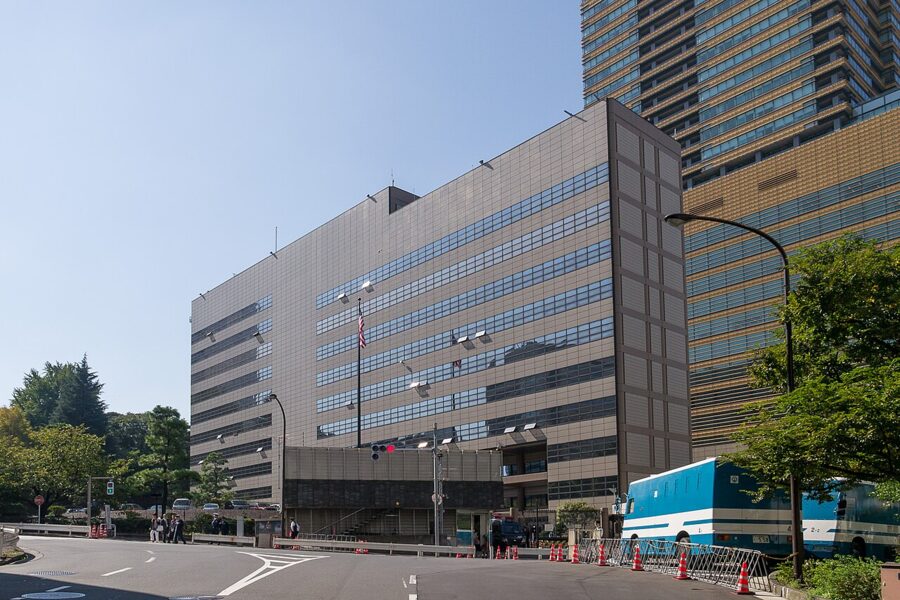
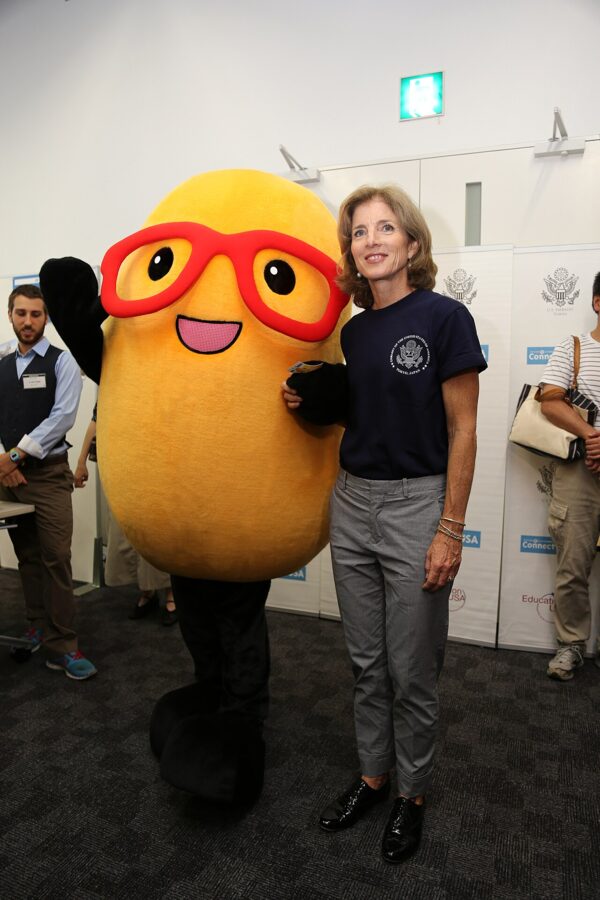
The one that travelled furthest came from the American embassy in Tokyo. On 20 December 2016, the day of the final episode, the embassy posted its own version, danced by Ambassador Caroline Kennedy with diplomats and staff at the embassy and the consulates in Sapporo, Nagoya, Osaka-Kobe, Fukuoka and Naha. Kennedy, in a Santa outfit, took Aragaki’s opening part. The embassy’s mascot Tom-kun appeared, and so did Kumamon.

I would call it the most effective piece of public diplomacy Japan saw that year. It was also a farewell: a month later the Obama administration ended, and Kennedy’s posting with it.


There was a legal catch. In November 2016 Hoshino’s label, Victor Entertainment, issued terms rather than takedowns: use a bought copy of the official recording, keep it to about 90 seconds, post it on YouTube while the drama was on air, and make no money from it. From the end of August 2017 the label began removals and asked people to delete their videos themselves. In May 2020 Hoshino said on his radio show that the rights issues had been cleared, and that personal versions using the recording were fine again.
“Koi”: the song that carried it
“Koi” was Hoshino’s ninth single, released on CD on 5 October 2016 by Speedstar Records, a Victor label, and as a download from 11 October, the night of the first episode. It is fast dance-pop at 158 beats a minute, with strings, marimba and an erhu. Hoshino has explained the title: the English “love” would have meant ai (愛), and koi, the longing, falling kind, was the more interesting word.
He also wrote it wider than the drama. The lyrics never say who loves whom, and he has called it a song for every kind of love, and a song about everyday life. The final episode took its title from one of its lines.
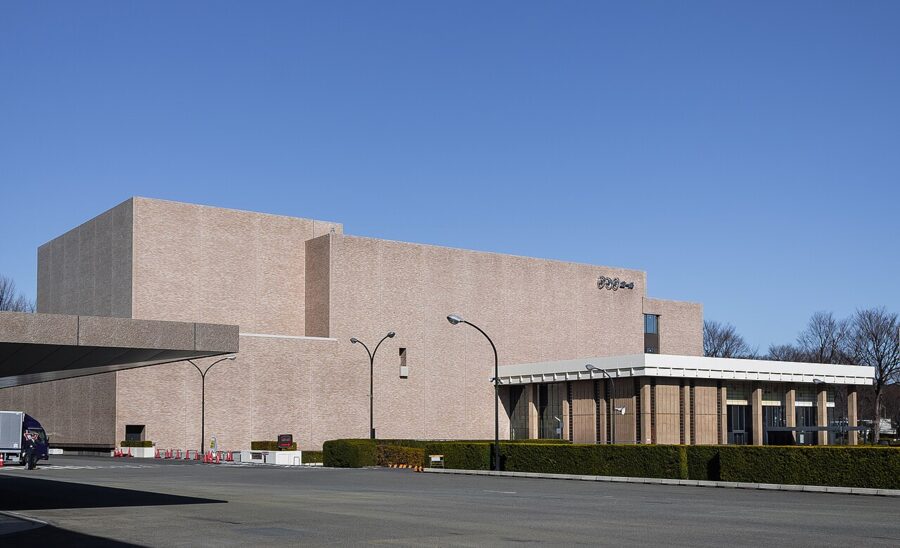

On the Billboard Japan Hot 100 the song spent 11 weeks at number one, seven in a row, and topped the 2017 year-end chart. Oricon’s CD chart had it at number two in its first week, with about 102,000 copies. It was certified platinum on CD and million on download, and won the 2017 Japan Gold Disc award as the most-downloaded Japanese song of 2016.
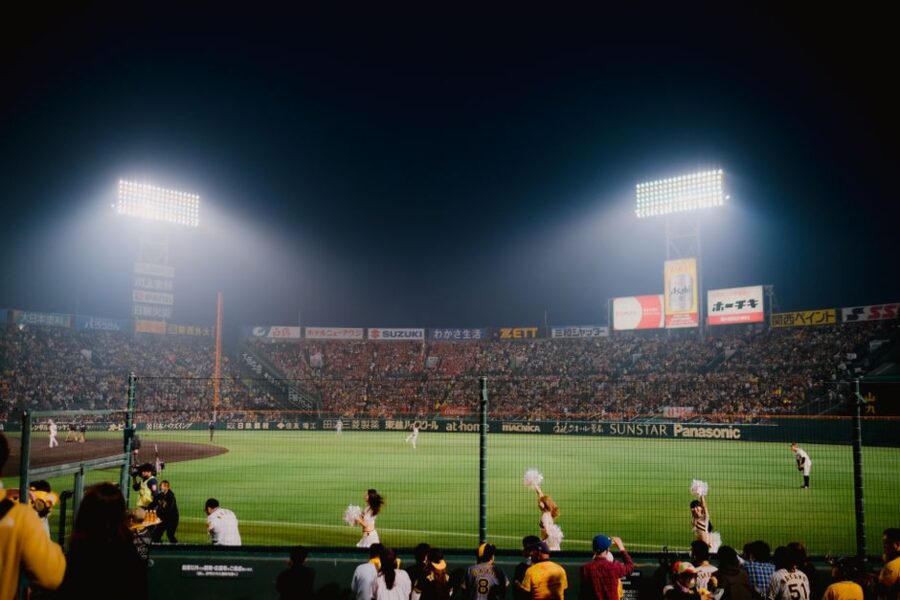
At the 67th Kohaku Uta Gassen the hosts, Kasumi Arimura and Masaki Aiba of Arashi, danced along. In March 2017 a brass arrangement slowed to 116 beats a minute became the entrance march of the spring high-school baseball tournament at Koshien.
Gen Hoshino before and after
Gen Hoshino (星野源) was born in Saitama on 28 January 1981. He led the instrumental band SAKEROCK from 2000 until it split in 2015, acted with the Otona Keikaku theatre company and went solo in 2010. A subarachnoid haemorrhage in December 2012, and a relapse in 2013, kept him off stage until a Budokan concert in February 2014.
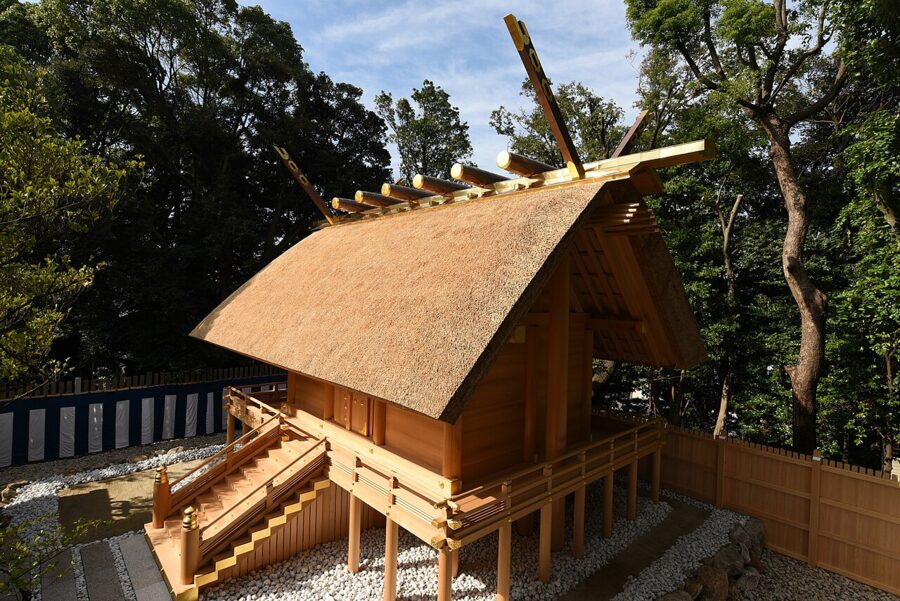
In 2016 he was playing Tokugawa Hidetada in NHK’s Sanadamaru at the same time as Hiramasa. Since then he has released the lockdown song “Uchi de Odorō” (“Dance at Home”, April 2020) and starred in TBS’s MIU404. As of November 2026 his official site lists a remastered seven-inch of “Koi” for its tenth anniversary, due on 28 January 2027, his 46th birthday.
What the drama was arguing about
The producers called it a shakai-ha rabu komedī (社会派ラブコメディー), a “socially minded romantic comedy”, and the social part was not decoration. The premise turns a wife’s housework into a job with a wage, a contract and days off. Because Mikuri is paid, the work becomes visible.
The Asahi Shimbun and the Mainichi Shimbun both wrote about the drama’s view of housework as labour, and the government has a number for it. The Cabinet Office values unpaid housework at what the people doing it could have earned. Its latest estimate, published in July 2023 from 2021 data, put the average woman’s at ¥1.94 million a year (about $12,000) and the average man’s at ¥604,000 (about $3,800). Women put in 1,289 hours a year, men 325.
The drama got its laughs from that gap. In episode 10, with his job at risk, Hiramasa proposes a real marriage and points out that it would save him her salary. Mikuri turns him down with the line viewers remembered: suki no sakushu (好きの搾取), “the exploitation of love”. Using affection to get work for free, she says, is still exploitation.


Other phrases came from the romance. Hagu no hi (ハグの日), the weekly “Hug Day” the couple schedule to look convincing, named episode 5. Muzukyun (ムズキュン), coined on the show’s official accounts, means the itch of watching a couple who will not get on with it. And Mikuri’s private wound, an old boyfriend calling her kozakashii (小賢しい, “too clever by half”), runs through her whole story.
Aunt Yuri carried the subplot about age. In the final episode she tells a younger rival who has sneered at her age that what she is writing off as worthless is her own future. It is the speech people still quote, and it was Ishida’s, not the leads’.
The 2020 rerun and the 2021 special
In spring 2020 the pandemic delayed TBS’s new Tuesday drama, so from 19 May the network filled the slot with a re-edited Muzukyun! Tokubetsu-hen (“special edition”). On 26 May the ending had a surprise: Aragaki and Hoshino dancing the routine at home, separately, edited together. Hoshino admitted on his radio show that he had forgotten most of it and asked MIKIKO for a remote lesson.
The sequel, Ganbare Jinrui! Shinshun Supesharu!! (“Hang in there, humanity!”), aired on 2 January 2021 and follows the couple from 2019 into the pandemic. Mikuri’s pregnancy pushes them to register the marriage, and Hiramasa’s plan to take paternity leave meets his office.
A parody of NHK’s puppet interview show Nehorin Pahorin, made with NHK’s own set and puppeteers, turns the question of who changes surname into a sketch. Japanese law still requires a married couple to share one name, which is why Airi Taira is still Taira on screen and Nagatomo on paper.
The special ended with a new Koi dance, with a few new moves and the couple’s baby daughter, which Oricon reported delighted viewers who had spent four years learning the old steps.
The marriage, as they announced it
On 19 May 2021 the actors’ agencies, Lespros Entertainment for Aragaki and Amuse for Hoshino, sent the media a joint statement. The two wrote that they would marry, that they hoped to support each other and build a rich life together, and asked to be watched over warmly. The statement in full gave no wedding details.
The same announcement said Aragaki was ending most of her contract with Lespros to work in her own way. Celebrity weddings are front-page news in Japan, as the table tennis player Ai Fukuhara‘s was in 2016. This one read like a final episode, because millions had already watched the pair marry on screen.
Since then the couple have said little about their private life. On 13 October 2026 they announced the birth of their first child in a joint statement signed by hand by both.
Watching it, learning it, finding it
Is the series worth watching now? Yes, with one warning: the romance is slow on purpose, and the first two episodes spend a long time on the contract. From episode 3 it is very good, and Ishida steals the second half. Watch the special after the series, not before.
In the United States it has been listed on Netflix and Rakuten Viki, but streaming rights change by country, so check your own service. To learn the routine, use the music video on Hoshino’s official channel rather than the ending, since the camera stays wide. Mirror-image tutorials make it easier to follow facing a screen.

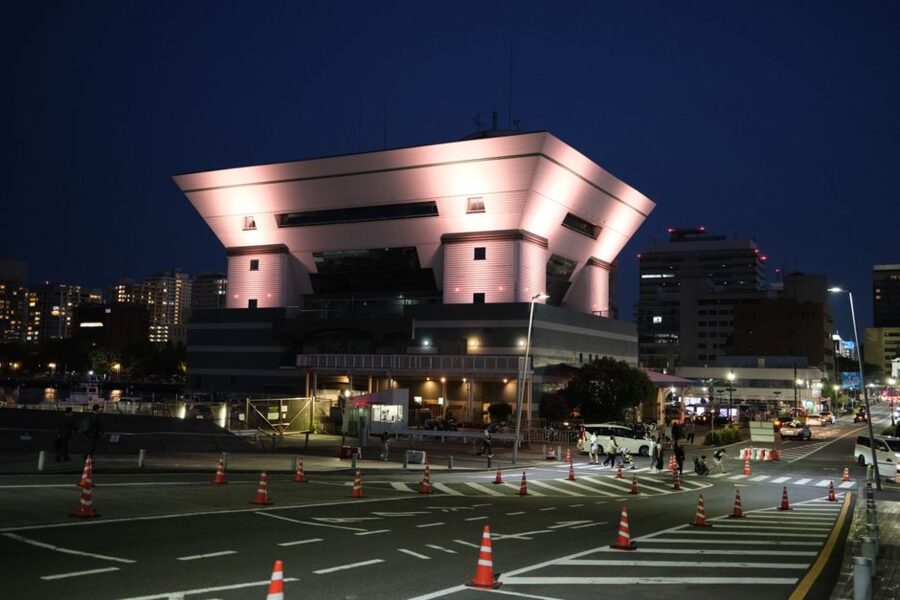
Several of the drama’s Yokohama locations fit into one afternoon. Zou-no-hana Park and the Osanbashi pier terminal sit side by side on the waterfront; the terminal is a 7-minute walk from exits 3 and 4 of Nihon-odori Station on the Minatomirai Line. Iseyama Kotai Jingu is about 10 minutes on foot from Sakuragicho Station (JR and the Blue Line subway) or Hinode-cho on the Keikyu Line.

Stand on the pier with Minato Mirai behind you, put the song on, and cover your eyes. Then open your hands, the way Aragaki did. It was always her favourite part.