
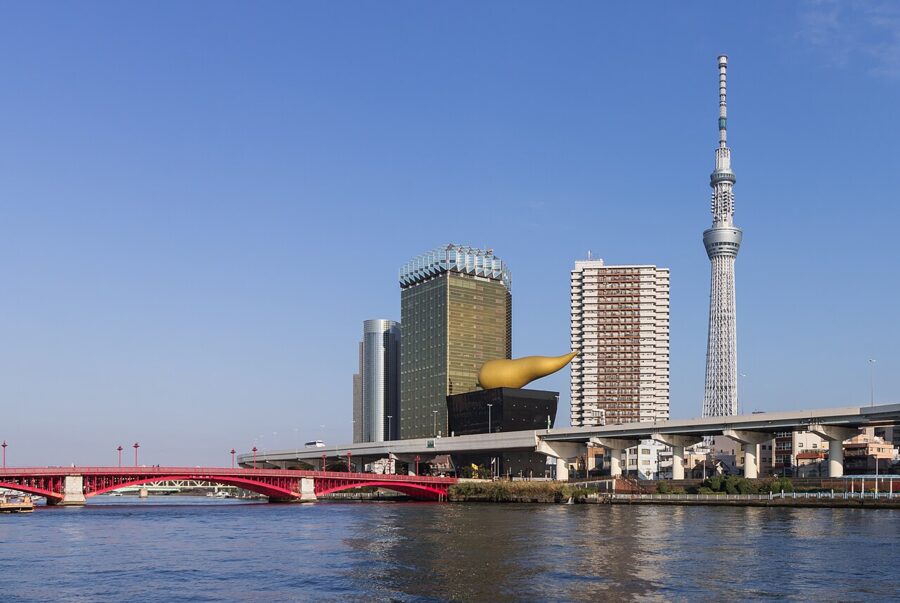

The man who paid for it wanted it standing up. In 2001 Hirotaro Higuchi (樋口廣太郎), president of Asahi Breweries when the building went up, told readers of the Nikkei that the golden flame was meant to rise vertically, and that it had instead flopped over onto its side. “Well,” he remembered thinking, “nothing to be done about it.”
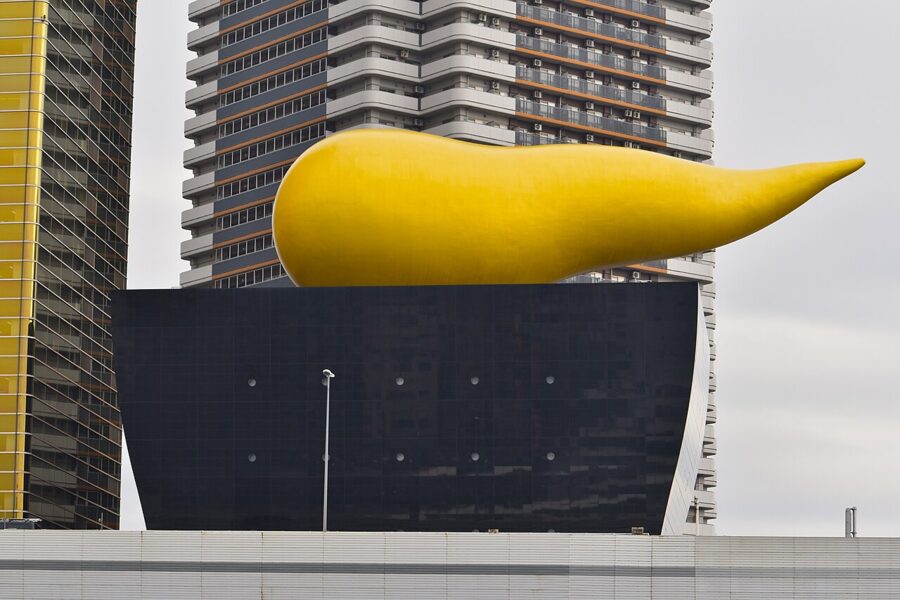
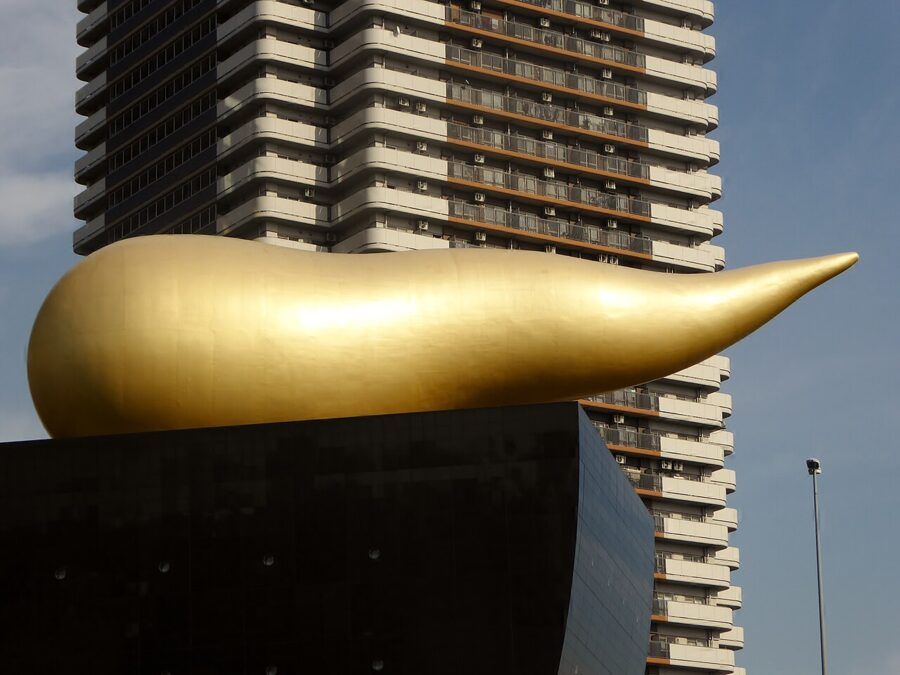
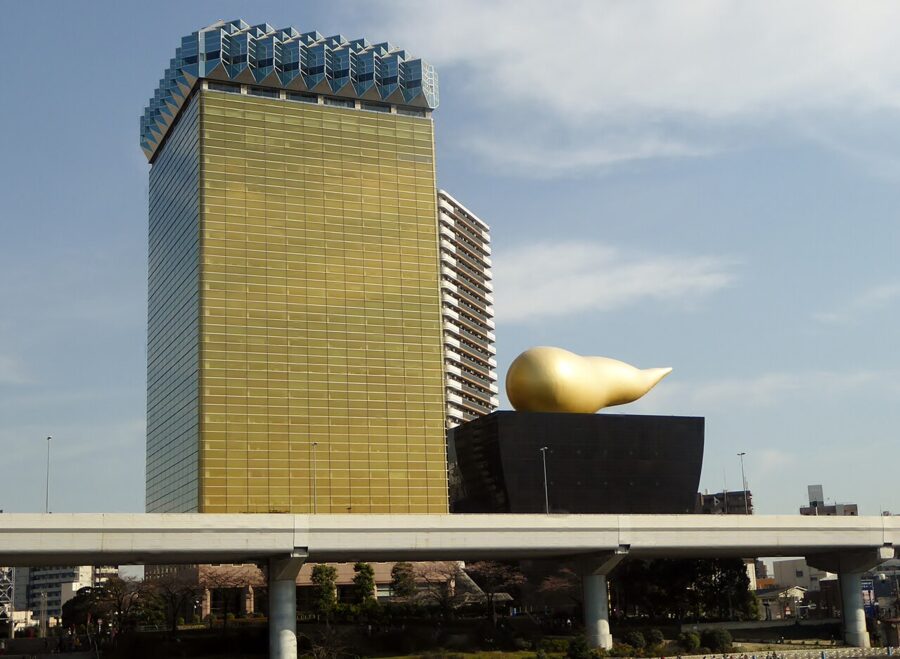
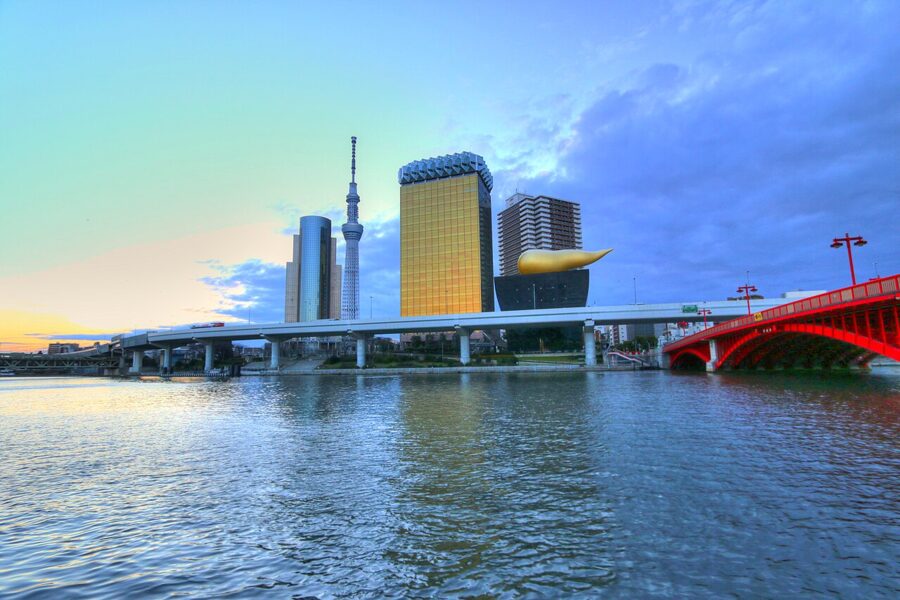
Thirty-seven years later it is still lying there, 44 metres of gold-coloured steel on a black plinth on the east bank of the Sumida River. Its official name is the Flamme d’Or, French for “golden flame”. Most of Tokyo calls it something ruder.
The flame sits on the roof of a low black building that Asahi’s English pages now call the Asahi Group Hall. Maps, the restaurant inside and most people still call it the Super Dry Hall, after the beer that paid for it.


In this article
A flame on a cauldron
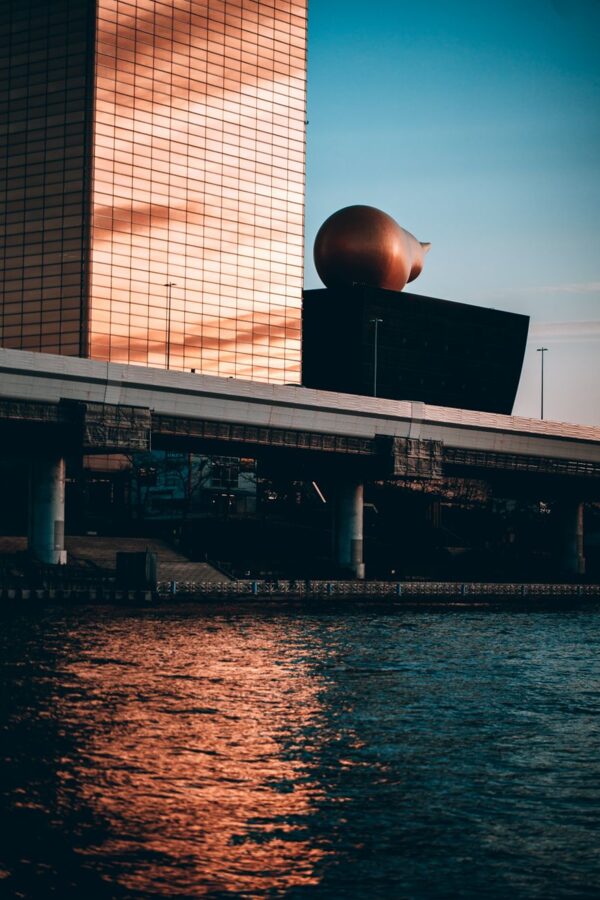
The design is by Philippe Starck, the French designer better known in 1989 for chairs, lamps and Paris café interiors than for buildings. Asahi commissioned the hall and the tower beside it to mark the company’s hundredth anniversary, and both were finished in October 1989. Asahi’s customer helpline keeps a stock answer for anyone who rings to ask what the gold thing is: it is the flame of a seikadai (聖火台), the cauldron that holds a ceremonial flame, and it stands for “the burning heart of Asahi Beer, leaping towards the new century”.
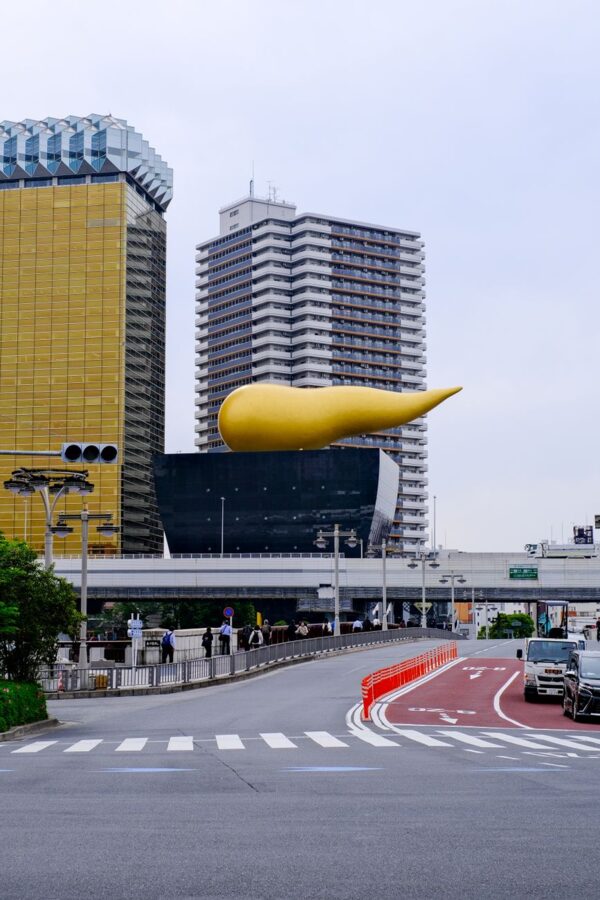
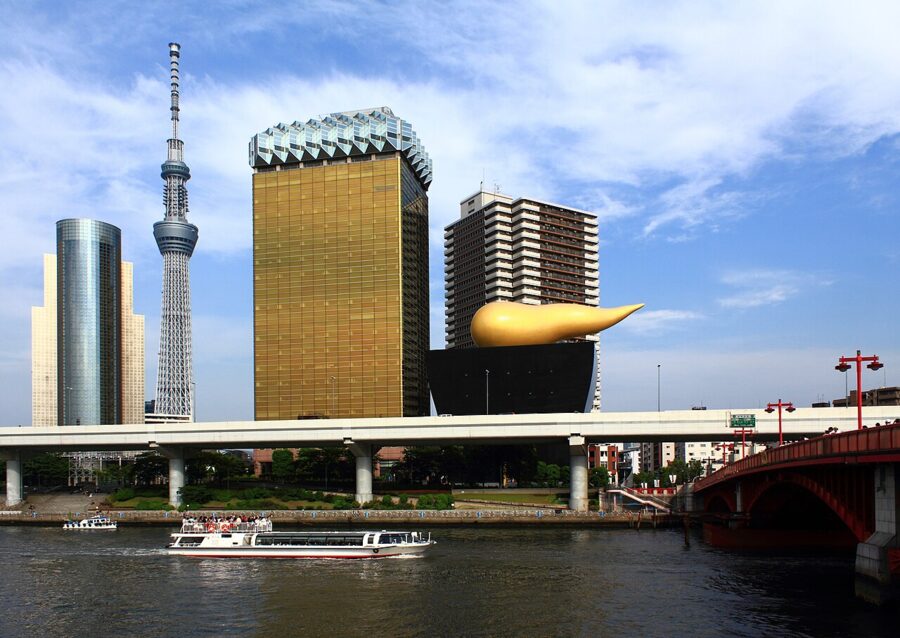
Read that way, the building is the cauldron and the gold is what burns in it. The black hall has walls of polished black granite that flare outward as they rise, an upside-down trapezoid, so the whole block works as a pedestal. Its windows are small and round, like portholes, and almost vanish at a distance.
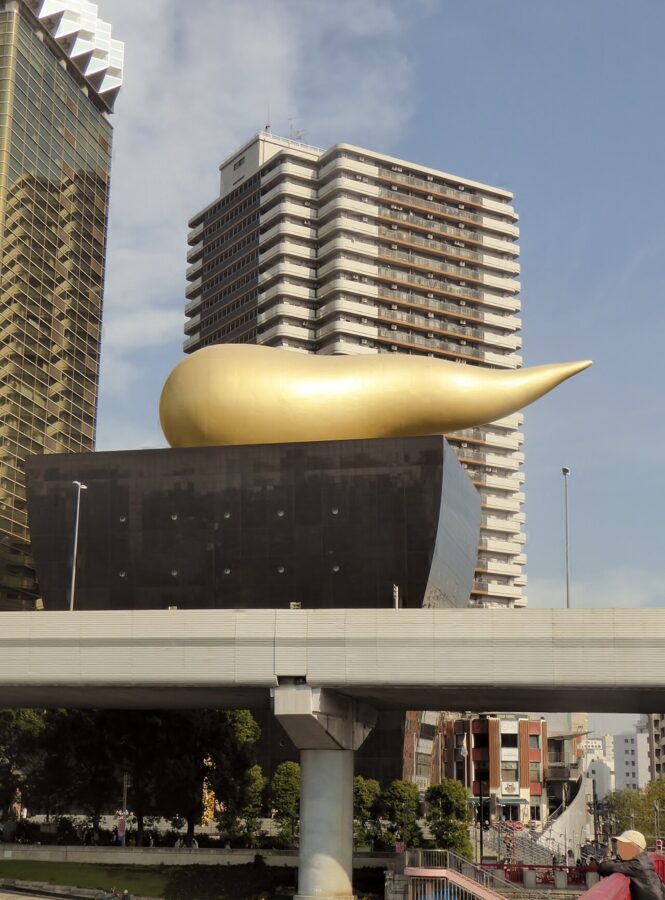
The numbers on Asahi’s page on the two buildings are 44 metres long and 360 tonnes, built of steel. Starck’s own explanation, as Asahi quotes it, was that he wanted people to feel strongly that “Asahi is there”, and to make “something new and something mysterious that has never existed in Tokyo before”. On the second point, at least, nobody has argued.

Unko biru, and the other names
The polite Japanese name is the katakana spelling of the French, Furamu Dōru (フラムドール), or simply kin no obuje (金のオブジェ, “the golden object”). The one people actually use is unko biru (うんこビル), “the poo building”, and for the flame itself kin no unko (金のうんこ), “the golden poo”. English-language guidebooks have settled on “the golden turd”.
The joke is not new and not only a foreign one. Higuchi titled his 2001 newspaper instalment about the building “A strange nickname”. The Yomiuri Shimbun ran a piece on 25 October 1989 under a headline that saw a golden cloud, and the list of readings since then includes a tadpole, a squeeze of mustard paste, a whale, a ghost and kintoun, the flying cloud ridden by the Monkey King in Journey to the West.
None of this has hurt the building. When the flame disappeared behind scaffolding in November 2017, photos of the empty roof spread on Twitter with guesses that it had been removed for the Olympics or “washed out to sea”. Asahi’s press office told reporters that it was being repainted, the first time since 2005, and that a number of worried people had phoned in.
Why the flame lies down
The most repeated story is the one Higuchi told: the flame was meant to stand upright, or even to pierce the building, and structural problems knocked it over. Online versions add a building inspector who ordered it laid flat as a hazard, or a fire brigade that objected to an original red colour because it looked like a fire.
Asahi’s press office has pushed back on all of it. Asked in 2017, a spokesperson said Starck’s proposal had been horizontal from the start and that there was no history of a vertical design. Asked again in 2023, the company said its records include a plan for a flame lying the other way round, and nothing for an upright one. It has also denied, more than once, that the flame was ever meant to be red.
So there are two accounts, and they come from the same company. I would weigh the archive over the memory, since a retired chief recalling a decision twelve years on tells a better story than a file does.
The flame lies down because it was drawn lying down. Higuchi’s version survives because it is funnier.
Keeping it gold has its own history. For the first years, rock climbers abseiled over it to clean it. The 2005 repaint used a self-cleaning coating, which ended the climbing, and the 2017 job renewed that coating.
The beer mug next door
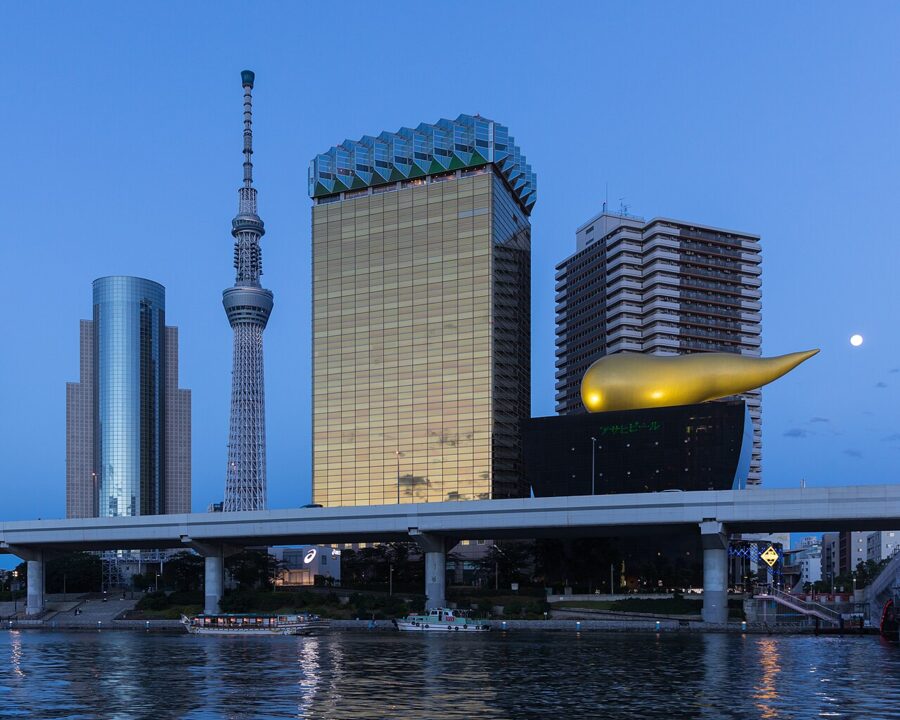
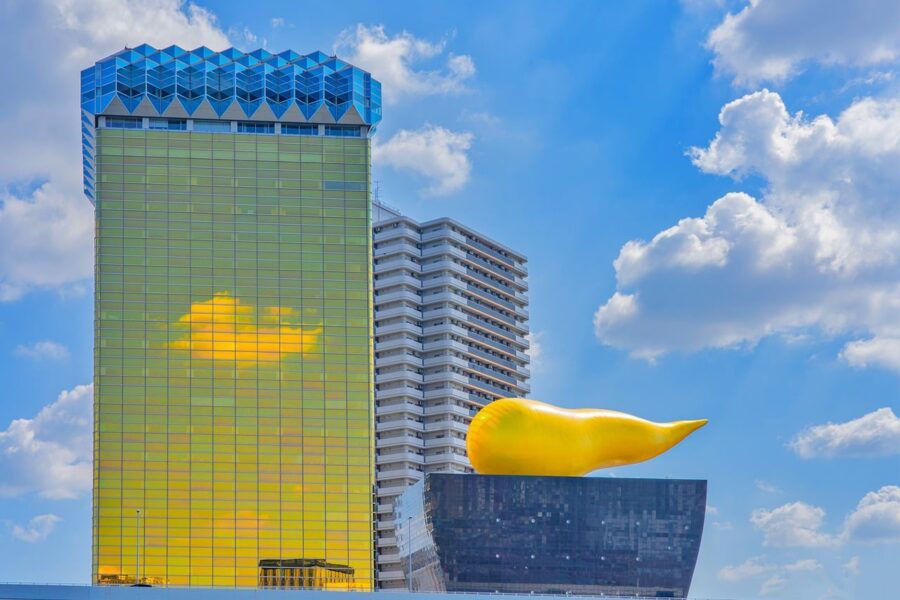
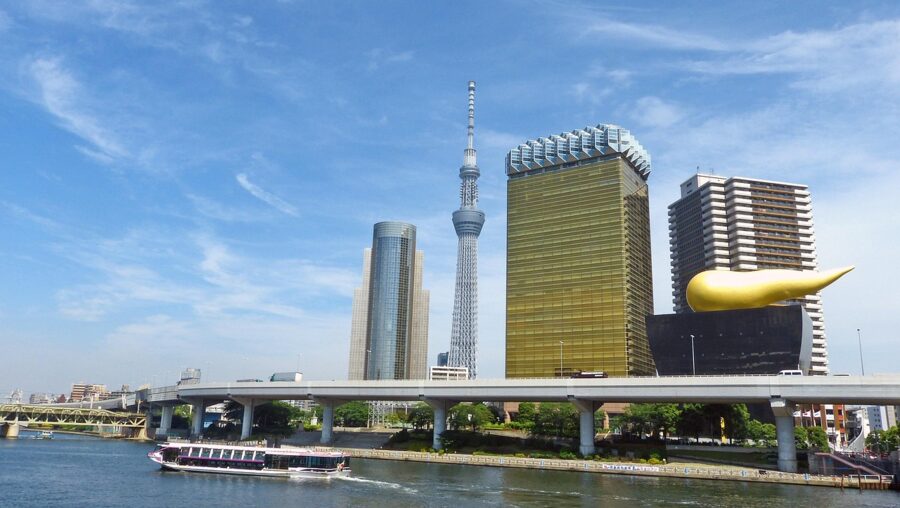
The tall building beside the hall is the Asahi Group headquarters. It is meant to be a mug of beer filled to the brim: amber half-mirror glass up to the 20th floor, then white cladding on the 21st and 22nd floors for the head.
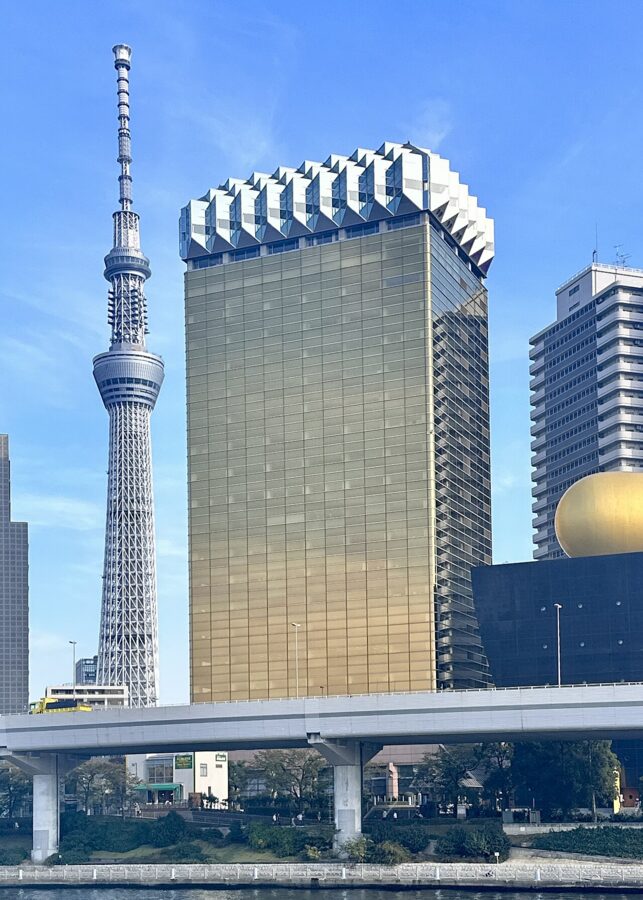
At about 100 metres it was the landmark of the low skyline east of the river for more than twenty years before the Skytree arrived. It is still a working office, and it is still where the group, Asahi Breweries included, is run from.
Eighty-two years of brewing at the bridge
There was beer on this site long before there was a flame. Asahi’s Azumabashi brewery ran here from 1903 to 1985, about 82 years with a break for wartime damage. By the mid-1980s Asahi was in trouble, and the brewery was shut and the land sold as part of a restructuring.
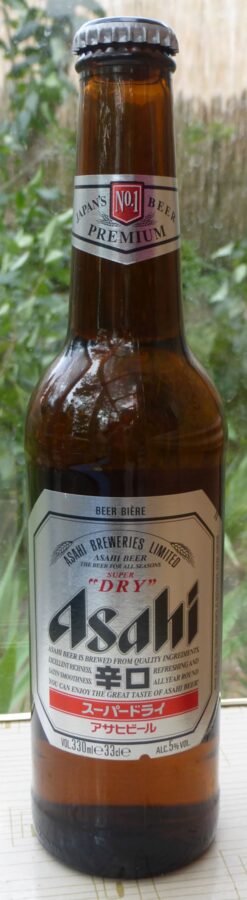
Then came Super Dry. Its launch in 1987 turned Asahi round so quickly that by its centenary the company could buy back part of the old brewery land. The two buildings went up on it in 1989; the rest of the site became the Riverpia Azumabashi development, which also takes in the Sumida City Office.
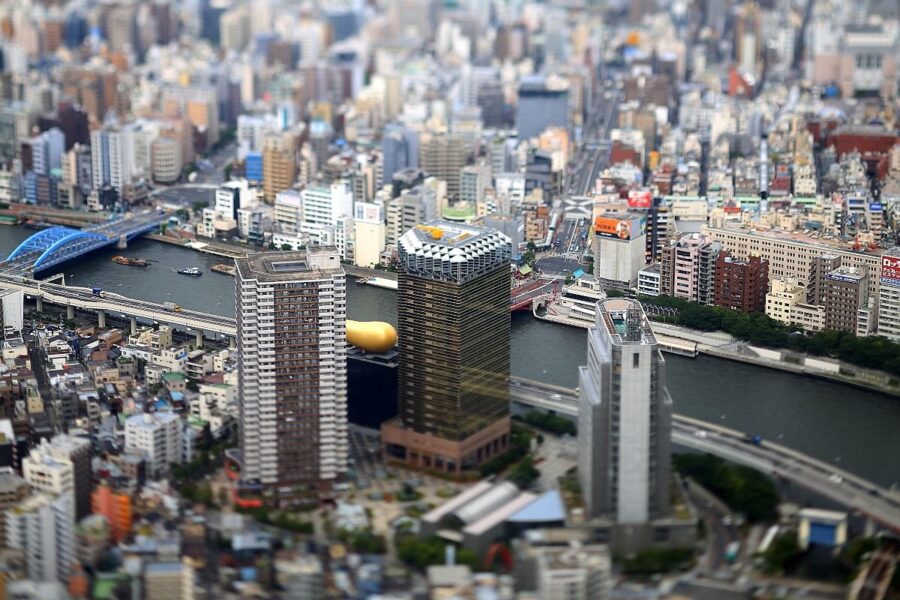

The view from Azumabashi, with Skytree
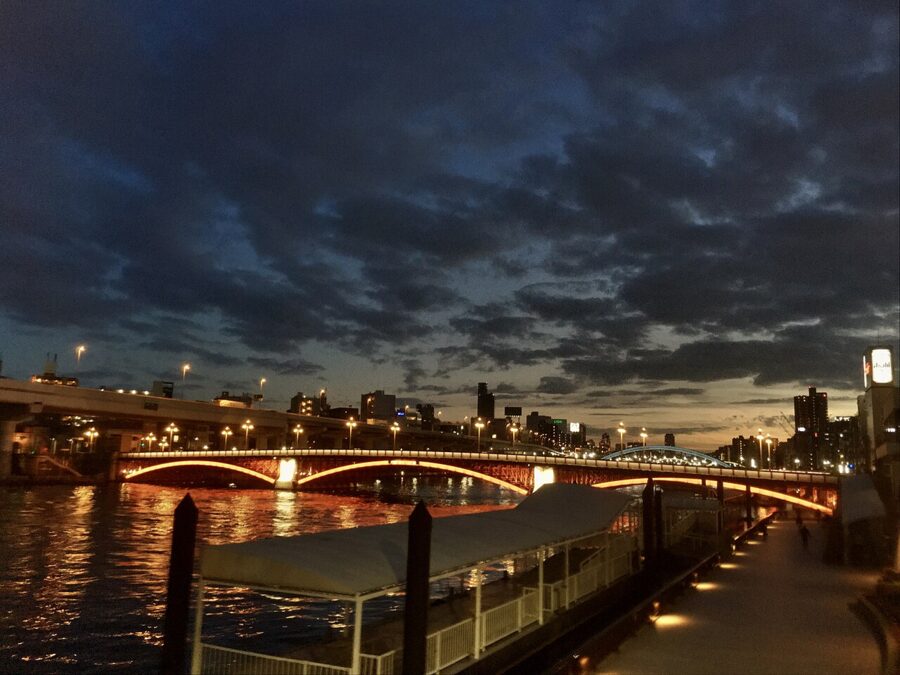
Azumabashi (吾妻橋) has carried people between Asakusa and the east bank since 1774, when it was a wooden bridge at the foot of the Senso-ji temple district. The present red steel arch dates from 1931. For most of its life the view east from it was warehouses and factories, the Asahi brewery among them.
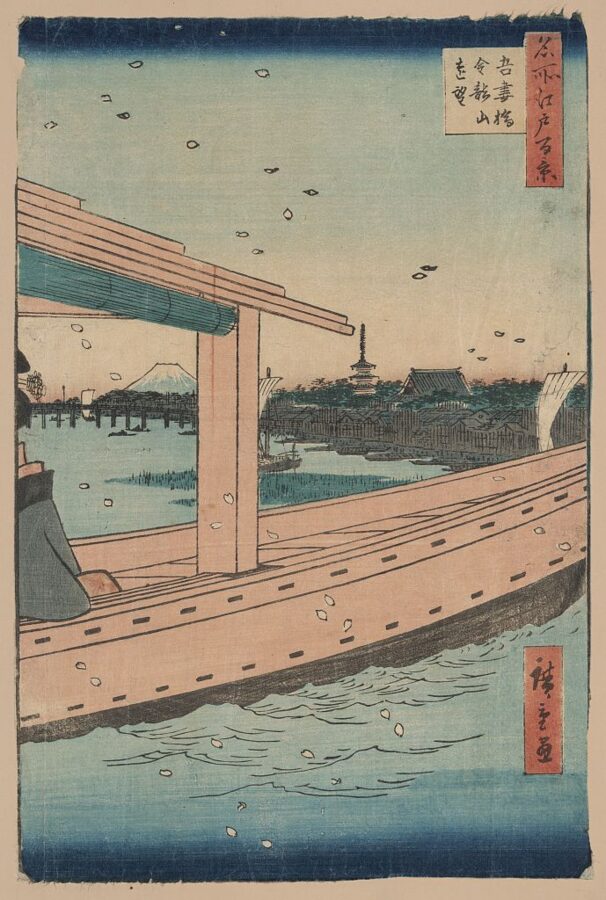
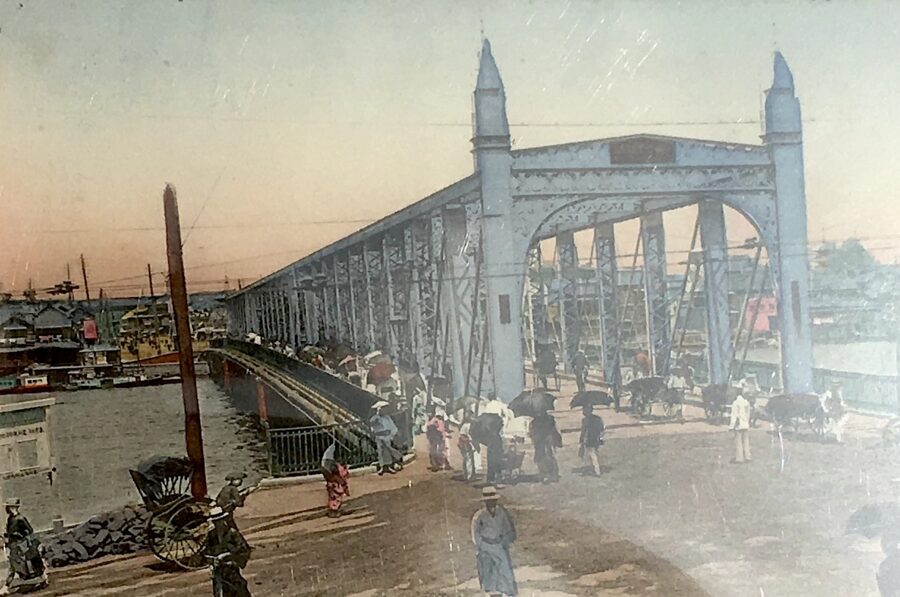
Since 2012 the view has had a third element. Tokyo Skytree, 634 metres tall, rises behind the Asahi buildings when you look east from the Asakusa end of the bridge, and the three together (amber mug, gold flame, white lattice tower) have become the standard photograph of this stretch of the river.

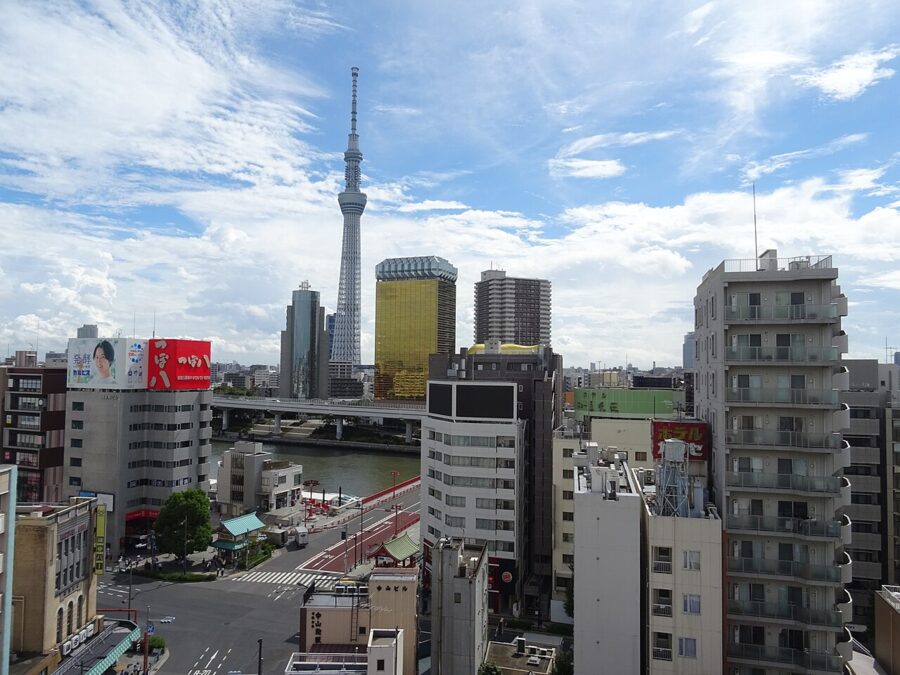
Three places give the view a different angle. The free terrace on the eighth floor of the Asakusa Culture Tourist Information Center, opposite Kaminarimon, looks east across the rooftops to the flame and the Skytree. The Sumida River Walk, a footpath hung beside the Tobu railway bridge just upstream, opened in 2020 and lets you cross the river with the Skytree ahead of you.

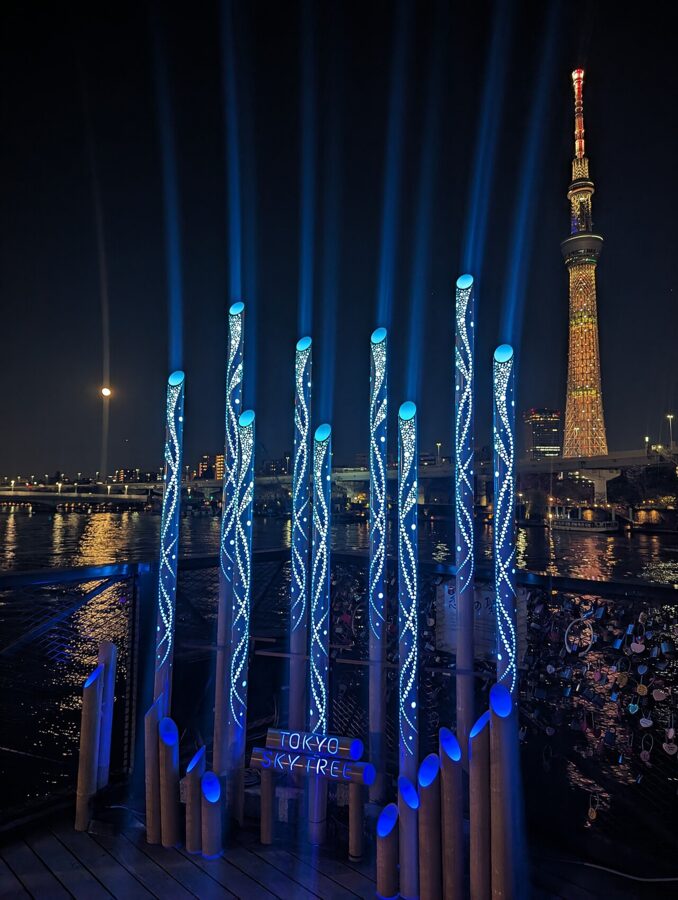

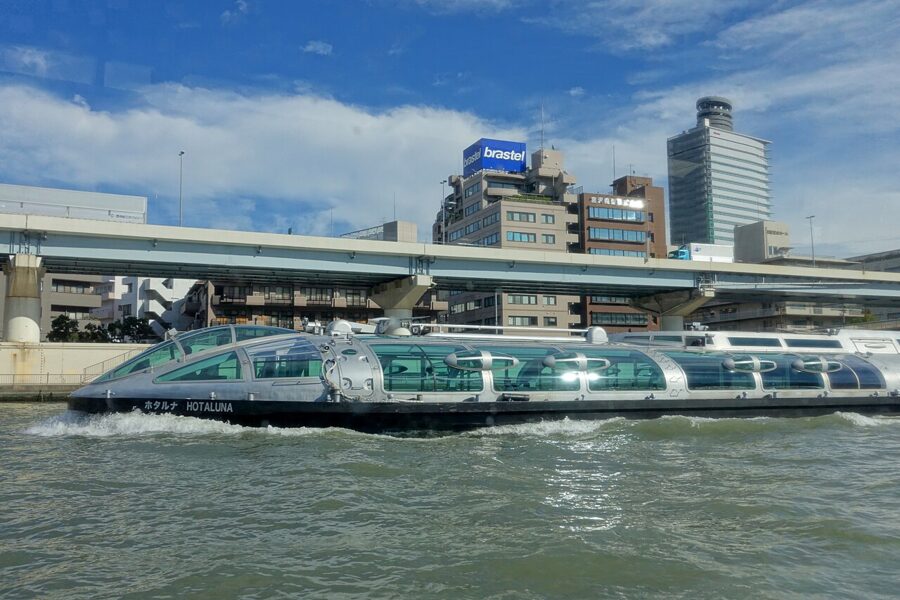
The third is the water itself. From the deck of a river bus leaving Asakusa you see the flame from water level, and how much bigger it is than it looks from the bridge.

Inside the hall and up the tower
You cannot visit the flame, and the office floors of the tower are closed to the public. You can eat and drink in both buildings, though.
The first and second floors of the hall are the Flamme d’Or beer restaurant, a 240-seat room with Starck’s swollen columns, said to suggest rising beer foam, and a white marble staircase. It pours Super Dry alongside Asahi Nama (known as Maru-F) and the dark Kuronama, with a sausage platter as the house order. The fourth floor was once an arts venue, Asahi Art Square, which closed at the end of March 2016.
At the top of the tower, on the 22nd floor, the Asahi Sky Room is a 40-seat lounge looking west over Asakusa and the river, and east to the Skytree. It reopened after a refit on 1 July 2024 and does not take bookings for ordinary seats. The lounge says Mount Fuji sometimes shows on clear days.

| As of November 2026 | Flamme d’Or (hall, 1F–2F) | Asahi Sky Room (tower, 22F) |
|---|---|---|
| Hours | 11:30–22:00 (food last orders 21:30, drinks 21:45) | 10:00–22:00 (last orders 21:30) |
| Closed | New Year period, one inspection day a year, occasional irregular days | New Year period, the last Sunday in January, the night of the Sumida River Fireworks, occasional irregular days |
| Bookings | Yes; a course with two hours of free-flow drinks is listed at ¥5,500 (about $37) | Not for ordinary seats |
Getting there by train and by river
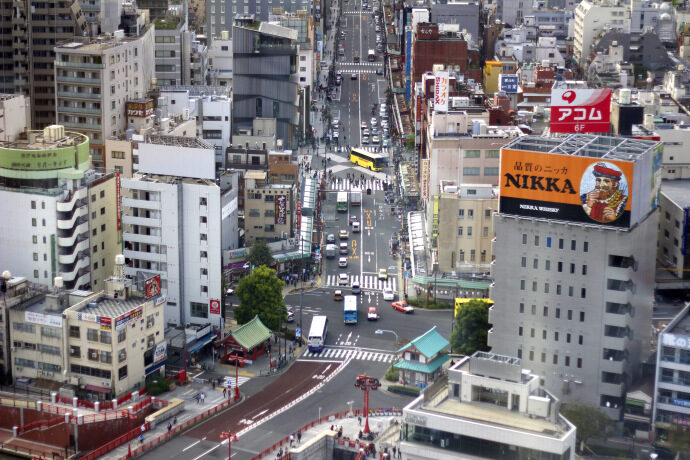
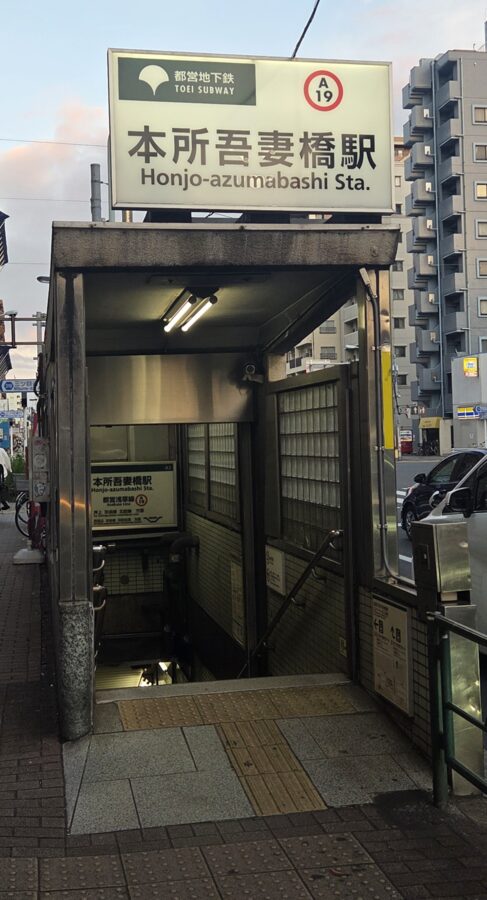
The address is 1-23-1 Azumabashi, Sumida-ku, and the walk from Asakusa takes about five minutes across the bridge. On the Tokyo Metro Ginza Line, take Asakusa Station exit 4 or 5, which the operator signs for the water bus pier, the Sumida City Office and Sumida Park. The Tobu Skytree Line and the Toei Asakusa Line also stop at Asakusa; on the Toei line, Honjo-azumabashi Station, one stop east, puts you on the Sumida side without crossing the river.

The river route is the better one. Tokyo Cruise’s Asakusa pier sits at the Asakusa end of Azumabashi, a minute’s walk from the Ginza Line, and its boats pull out past the Asahi buildings as they head downstream.

Adult one-way fares from Asakusa, as of November 2026: ¥1,000 (about $6.70) to Hinode Pier, about 40 minutes, and ¥2,000 (about $13) to Odaiba Seaside Park on the futuristic Himiko, Hotaluna or Emeraldas, 50 to 65 minutes. Children aged 6 to 11 pay half on these routes. In November and December the first boat leaves at 10:50 and the last regular one at 16:10, so go early if you want the flame in daylight from the water.
Stand on the Asakusa end of Azumabashi in the late afternoon and look east. The flame that was supposed to stand up is still lying on its side, gold against the Skytree, and nobody in Tokyo would now have it any other way.