
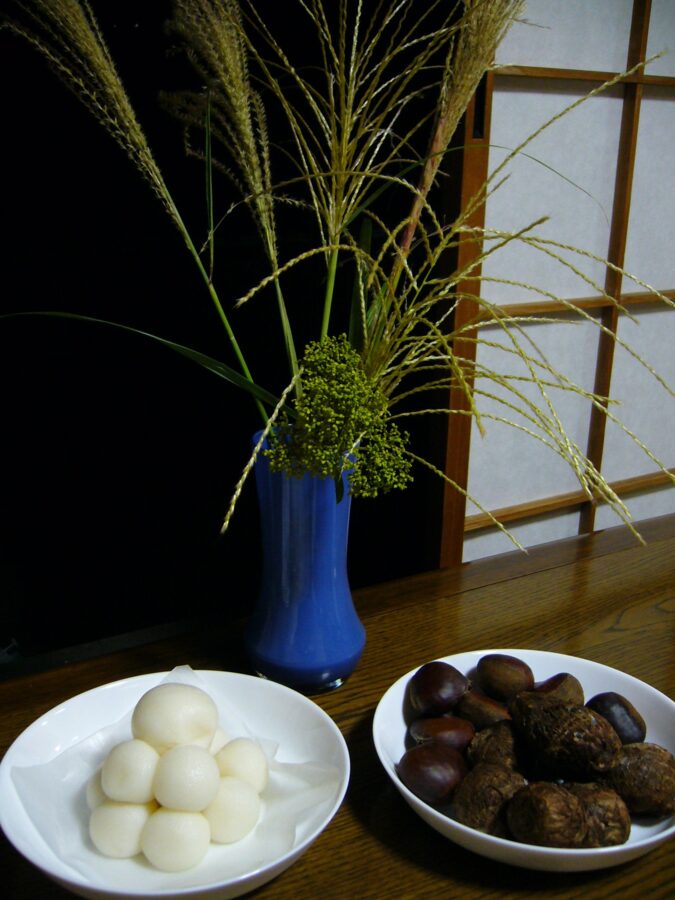

The moon that rose over Japan on 25 September 2026 was not quite full. It reached full at 1.49 in the morning two nights later, and nobody who had set out a plate of white dumplings and a vase of pampas grass that Friday evening was troubled by the gap. They were not watching the moon. They were watching the fifteenth night.
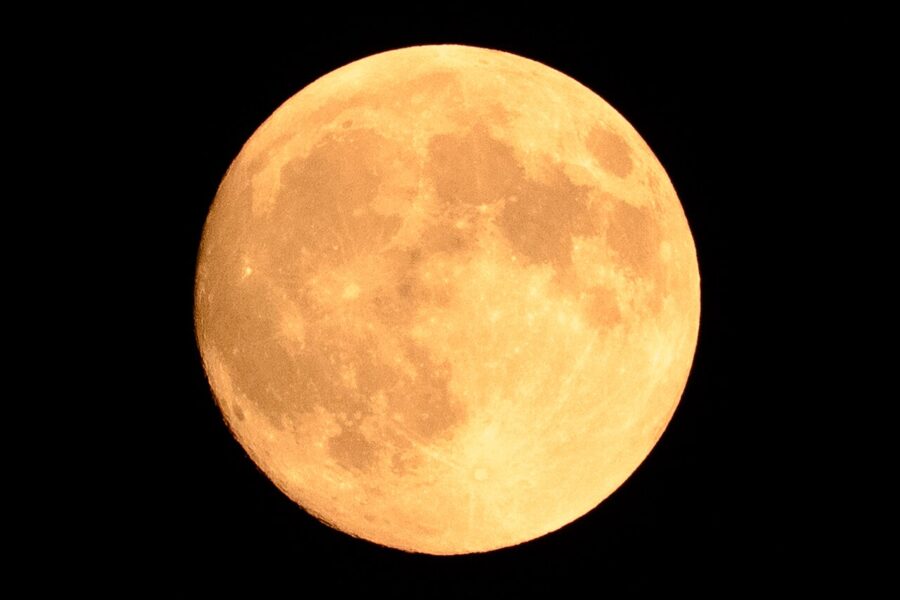
That night is jūgoya (十五夜, “the fifteenth night”): the fifteenth day of the eighth month in the old lunisolar calendar. The moon itself is chūshū no meigetsu (中秋の名月, “the bright moon of mid-autumn”), and looking at it is tsukimi (月見, “moon viewing”), or more politely otsukimi. It is not a public holiday. Shops sell dumplings, fast-food chains sell egg burgers, temples put boats on their ponds, and most people glance up on the way home.

In this article
The fifteenth night, and why the moon is often not full
The old calendar began each month on the day of the new moon, so the fifteenth fell near the full moon and people simply called it full. Autumn ran through the seventh, eighth and ninth months, which made the eighth month’s fifteenth the middle of the middle: chūshū. The National Astronomical Observatory of Japan (NAOJ), which still computes the dates, defines the night as the fifteenth of the lunar month containing the autumn equinox.
That rule moves it around the modern calendar. The observatory’s calendar notes give a range of 7 September to 8 October, and an October date four or five times in every nineteen years.
It is also often a day or two early. On the fifteenth the moon is on average about 14 days old, while the true full moon comes anywhere from 13.9 to 15.6 days after the new moon. In 2026 the lunar month began on 11 September, so the fifteenth was 25 September, but full moon came at 01.49 on the 27th. The observatory’s September 2026 sky notes add that a two-day gap last happened in 2017 and will not recur until 2043.
| Year | Jugoya | Astronomical full moon (JST) |
|---|---|---|
| 2026 | Friday 25 September | 27 September, 01.49 |
| 2027 | Wednesday 15 September | 16 September, 08.04 |
| 2028 | Tuesday 3 October | 4 October, 01.25 |
| 2029 | Saturday 22 September | 23 September, 01.29 |
What goes on the tray, and why
Most households set out three things near a window that faces the rising moon: white dumplings, a few stems of pampas grass, and some of the autumn’s produce. The Nihon Kokugo Daijiten, the standard historical dictionary, lists susuki, taro, chestnuts and dango. No authority fixes any of it, and regions differ.
Tsukimi dango
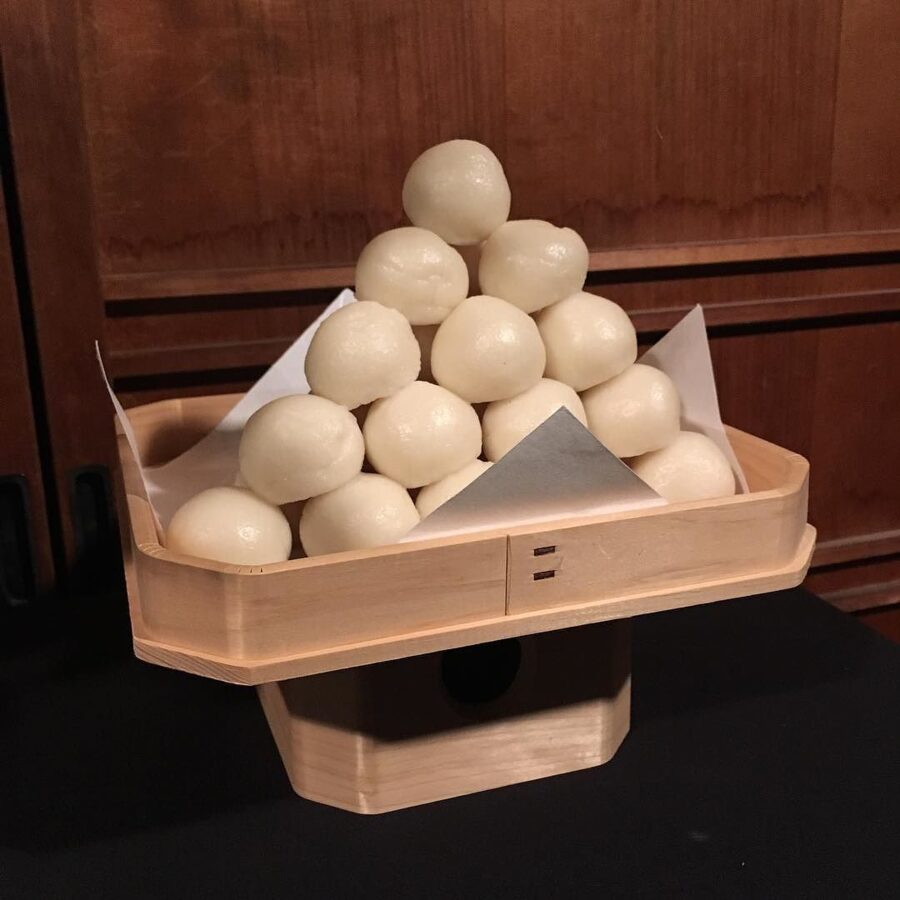

Tsukimi dango (月見団子) are plain dumplings of steamed rice flour, set out for the moon and eaten afterwards. The usual count is fifteen for the fifteenth night; a 1911 almanac of Tokyo customs records thirteen for the thirteenth night, served with persimmons, chestnuts and green soybeans.
The common stack is a square of nine, a square of four, and two on top, placed one behind the other so the pile ends in a single point from the front. It sits on white paper on a sanbō (三方), the small wooden stand used at shrines.
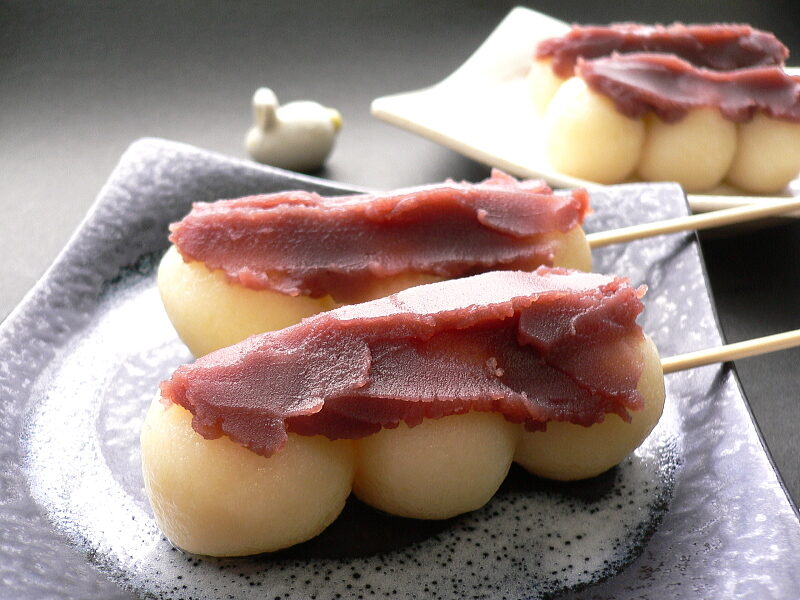

In Kyoto and Osaka the moon dumpling is often long rather than round, wrapped in a band of red bean paste. Ask why and you get the taro answer below.
Susuki, the pampas grass
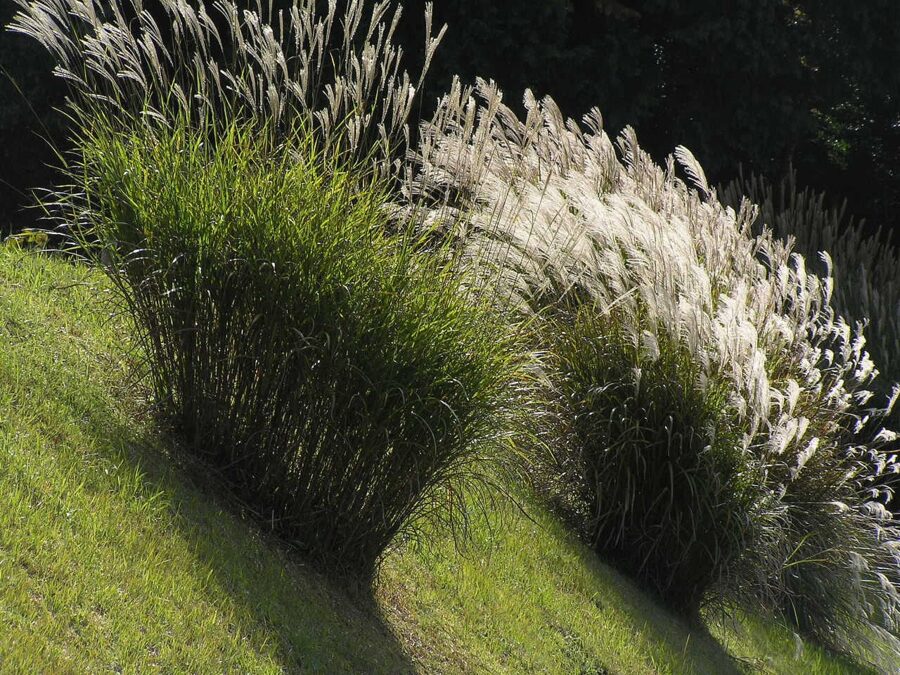

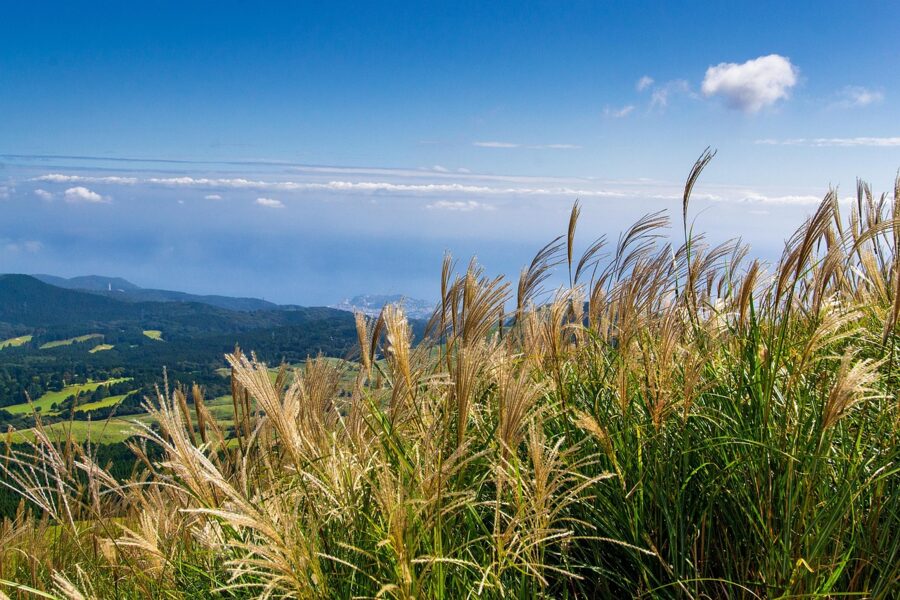
Susuki (薄, Miscanthus sinensis) stands in for the rice ears that are not yet cut when the fifteenth night comes. The explanations you will hear are that the hollow stems give the moon’s god somewhere to come down to, and that the sharp leaves keep bad luck away, which is why some families hang a stem under the eaves afterwards.
Taro, and the “potato moon”
The fifteenth night has a second name, imo meigetsu (芋名月, “taro moon”), because the year’s first satoimo taro was dug and offered to it. The encyclopedia entries for imo meigetsu quote a palace diary recording a moon celebration with nothing on the stands but taro piled high, and the poet Matsunaga Teitoku was using the word by 1633.
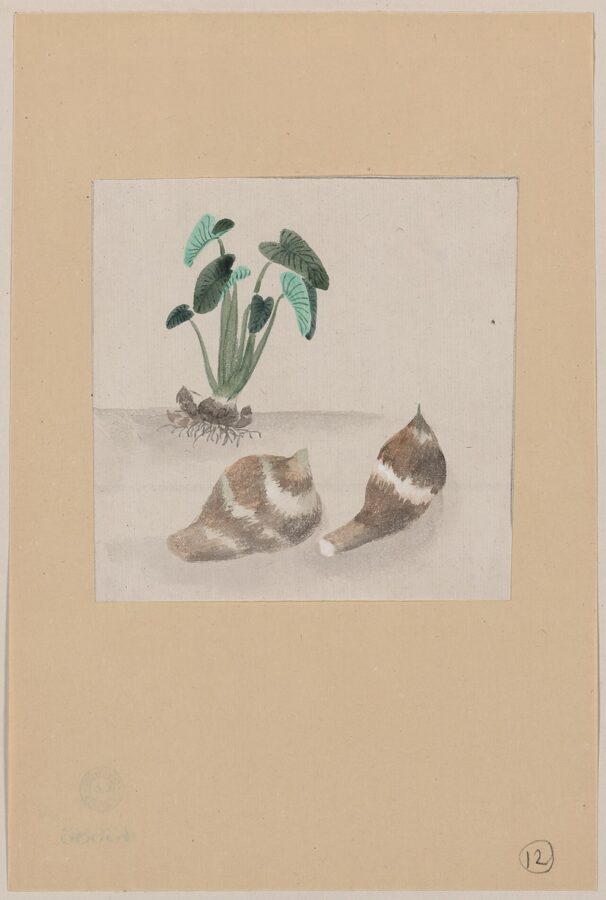
Folklorists read this as a clue to the custom’s age. Heibonsha’s encyclopedia argues that the fifteenth night began as a taro harvest rite and attached itself to rice only as paddy farming spread, pointing to Okinawa and Amami, where taro rites stay strong. Popular accounts add that the dumpling stands in for the taro, which would explain the Kansai shape.
One more custom belongs here. In many villages children went round with long poles and lifted the offerings from other people’s verandas while the adults looked away. The custom, tsukimi dorobō (月見泥棒, “moon-viewing thieves”), survives in places as a round of sweets at the door.
The rabbit with the mallet
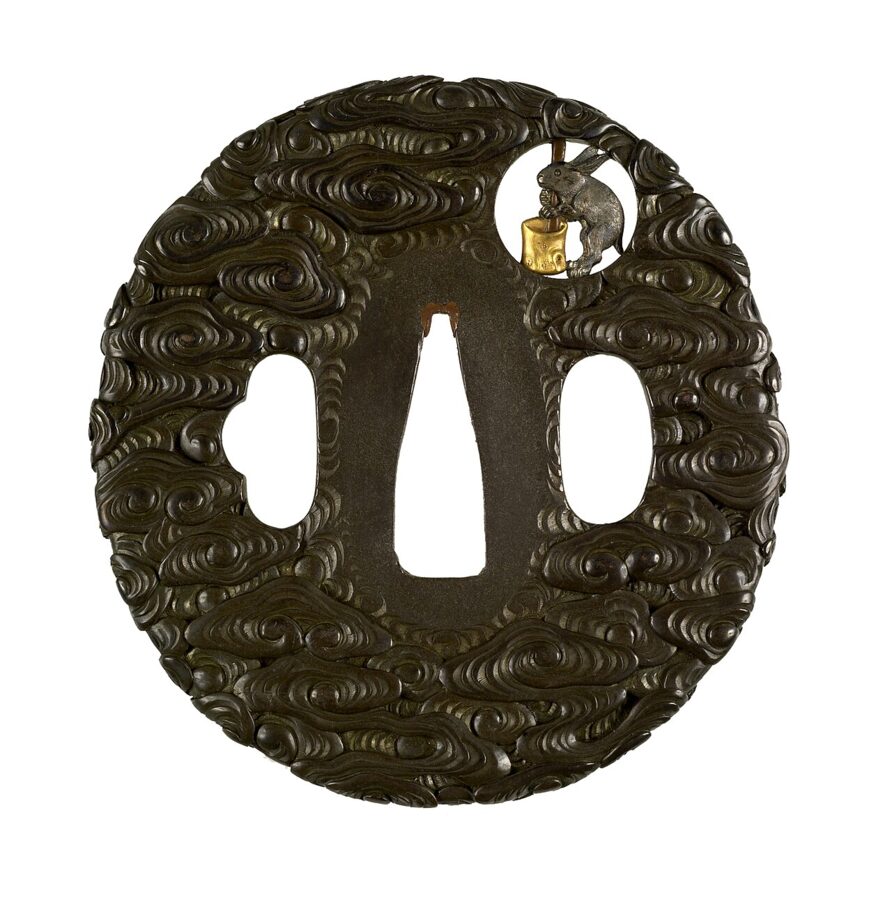
Look at the full moon in Japan and you are expected to see a rabbit at a mortar, pounding rice into mochi.
The rabbit came from India by way of China. A Buddhist birth story, retold in the twelfth-century Konjaku Monogatari, has a rabbit, a fox and a monkey trying to feed a hungry old man; the rabbit, having found nothing, throws itself into the fire as his meal. The old man is the god Taishakuten in disguise, and he puts the rabbit in the moon.
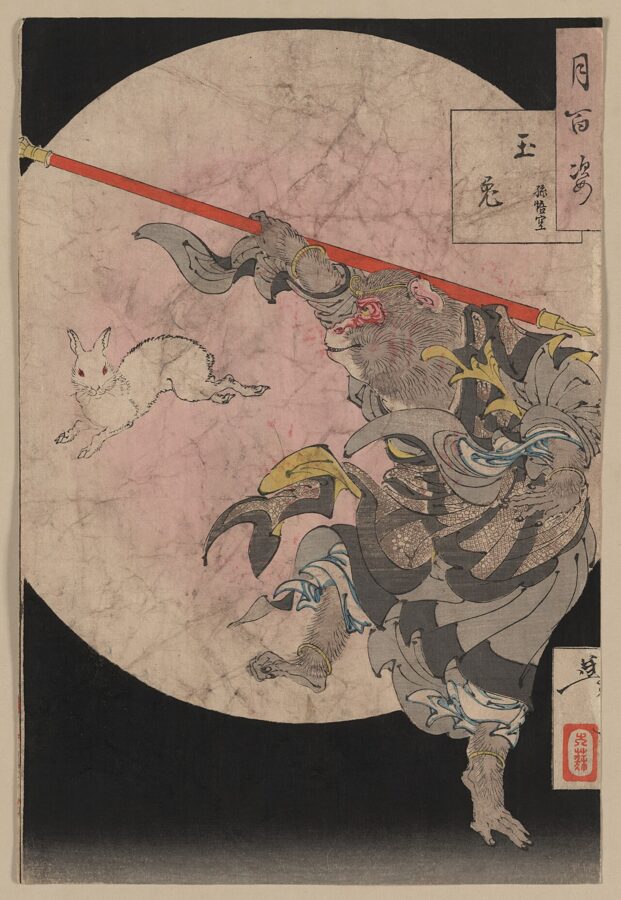
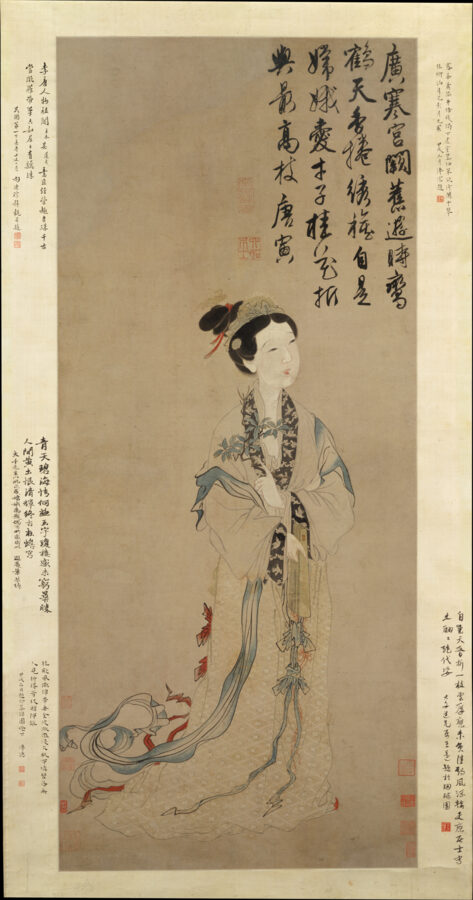
In China the jade rabbit keeps the goddess Chang’e company and pounds the elixir of immortality. Japan swapped the elixir for mochi. The pun usually given is that the full moon is mochizuki (望月) and pounding rice cakes is mochitsuki (餅つき); nobody has shown the pun came first, but every Japanese child hears it.
Poems at court, parties in Edo
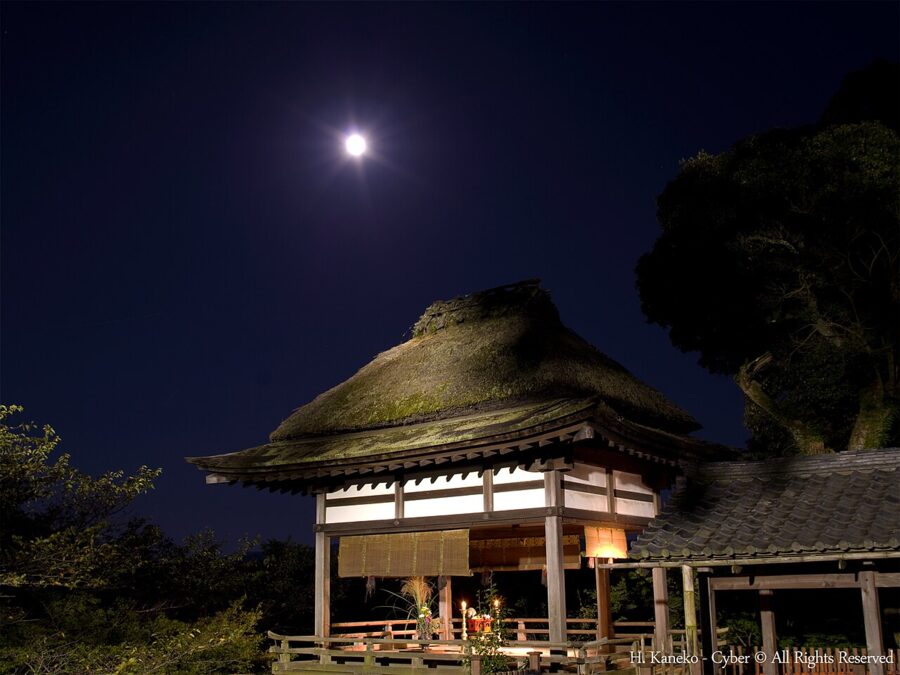
Moon-viewing banquets reached Japan from Tang China around the ninth century, by the observatory’s reckoning. At the Heian court the point was poetry and music, and the moon was often enjoyed at one remove: reflected in a pond or a cup of sake, or watched from a boat.

An anonymous poem that every account of tsukimi quotes plays on tsuki, which means both “moon” and “month”: tsukizuki ni tsuki miru tsuki wa ōkeredo tsuki miru tsuki wa kono tsuki no tsuki. Roughly: many months have moons to look at, but the month for looking at the moon is this month’s moon. Eight moons in thirty-one syllables, and it is meant to make you laugh.
The haiku poets made the night their own. Matsuo Basho’s best-known moon poem, from 1686, is meigetsu ya / ike wo megurite / yo mo sugara: “Harvest moon; I walked around the pond all night long.” In 1691, a year with a leap eighth month and so two fifteenth nights, he wrote that even after two harvest moons the moon over Seta was still the one to see.
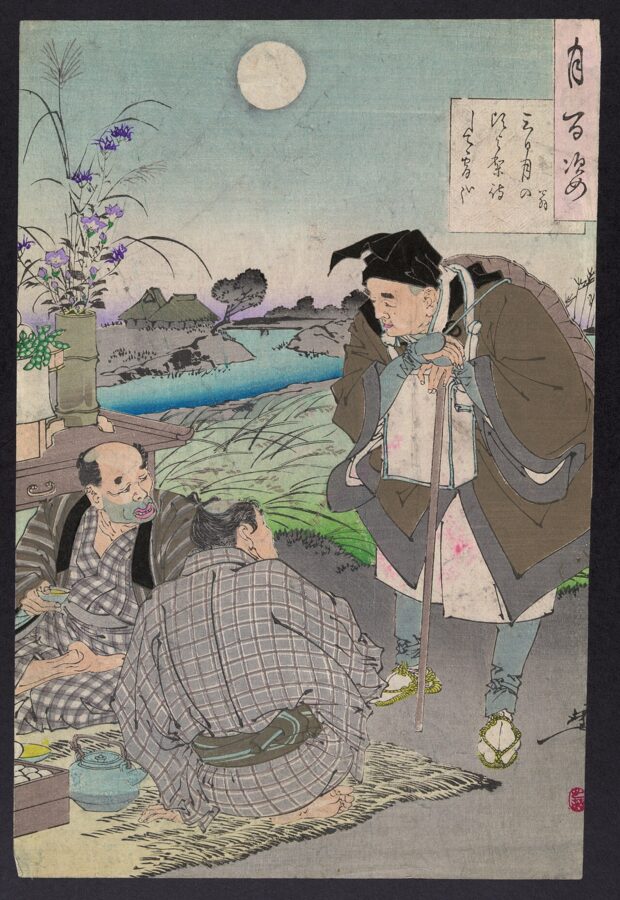
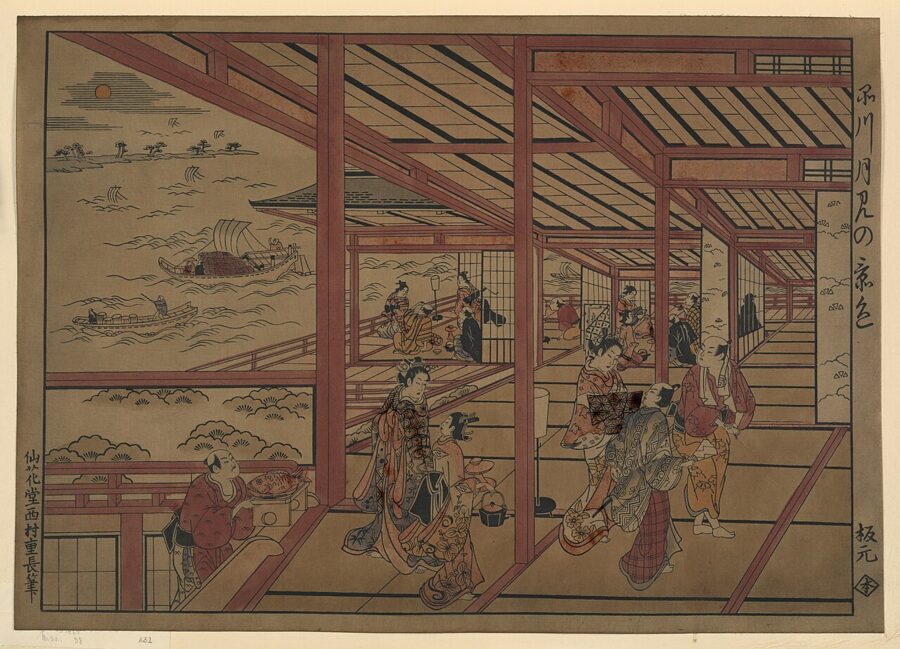
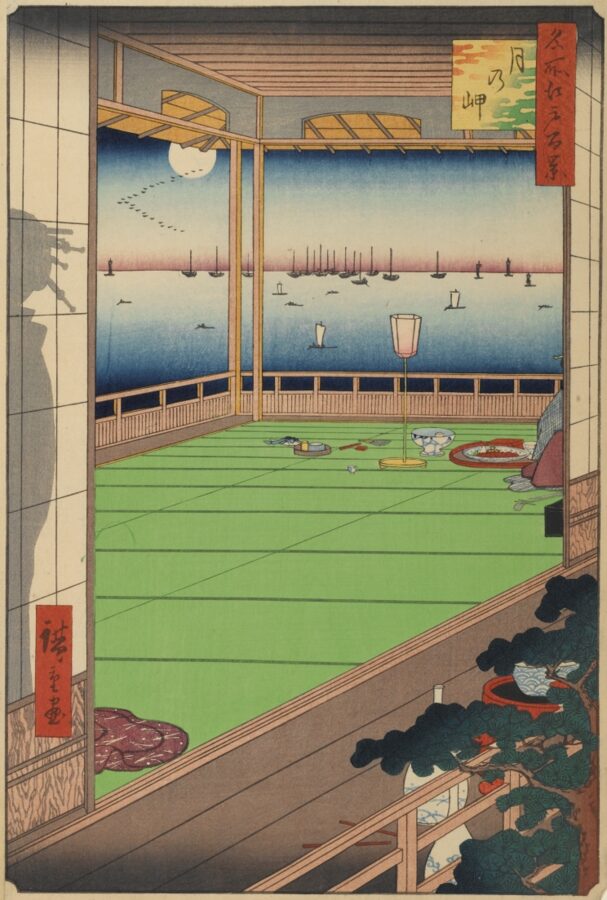
By the Edo period the custom belonged to everyone. Townspeople rented rooms at the bay-side teahouses of Shinagawa, and in the Yoshiwara pleasure quarter the fifteenth night was a monbi, a festival day when clients were expected to visit and pay extra.
Jusanya, and the rule against one moon
A month later comes the second moon. Jūsanya (十三夜, “the thirteenth night”) is the thirteenth of the ninth lunar month, also nochi no tsuki (“the later moon”). Because chestnuts and soybeans go on the tray instead of taro, it is also the chestnut moon and the bean moon. In 2026 it fell on Friday 23 October.
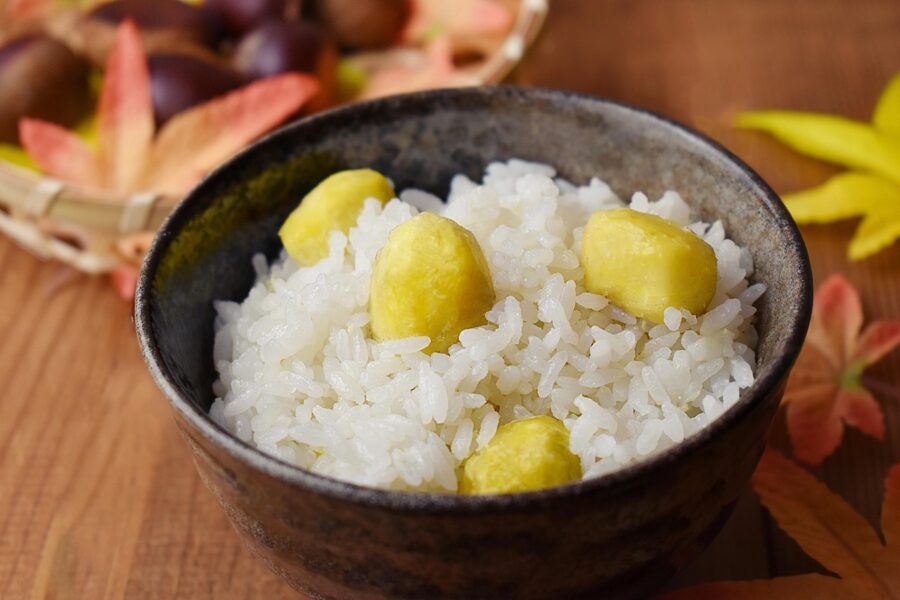
A thirteenth-night moon is never full, which is the puzzle. NAOJ’s note on jusanya calls it a purely Japanese custom and traces it to a banquet held by the retired Emperor Uda on the thirteenth of the ninth month of 919, where he is said to have called the moon without equal. Yoshida Kenko’s fourteenth-century Tsurezuregusa claims both nights put the moon in the clear lunar mansion of Lou. The observatory checked: it does not, and Kenko’s calendar simply assigned the mansions that way.
Edo made a rule of it anyway. Seeing the fifteenth-night moon and skipping the thirteenth was katamitsuki (片見月, “one-sided moon viewing”), said to bring bad luck. In the Yoshiwara it meant a client who came on the fifteenth and not on the thirteenth, and a senryu of 1772 mocks a son caught doing exactly that. Two moon nights a month apart meant two visits and two reasons to sell chestnuts.
The same night in China and Korea
China and Korea keep the fifteenth of the eighth month too, and with the same lunar rule the date usually matches; in 2026 it was 25 September in all three. What people do with it does not match.
| Japan: jugoya | China: Zhongqiu Jie | Korea: Chuseok | |
|---|---|---|---|
| Public holiday | No | Yes | Yes, three days |
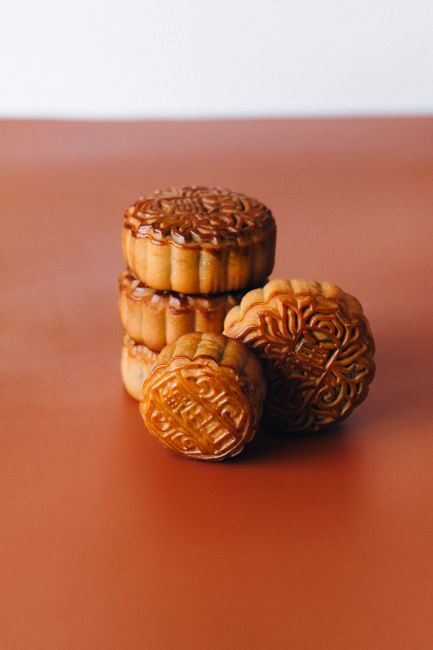
| Food | White dango, taro, chestnuts | Mooncakes | Songpyeon rice cakes |
| Centre of the night | Looking at the moon | Family reunion, lanterns | Ancestral rites, graves |
| In the moon | Rabbit pounding mochi | Jade rabbit with Chang’e | Rabbit pounding rice cakes |
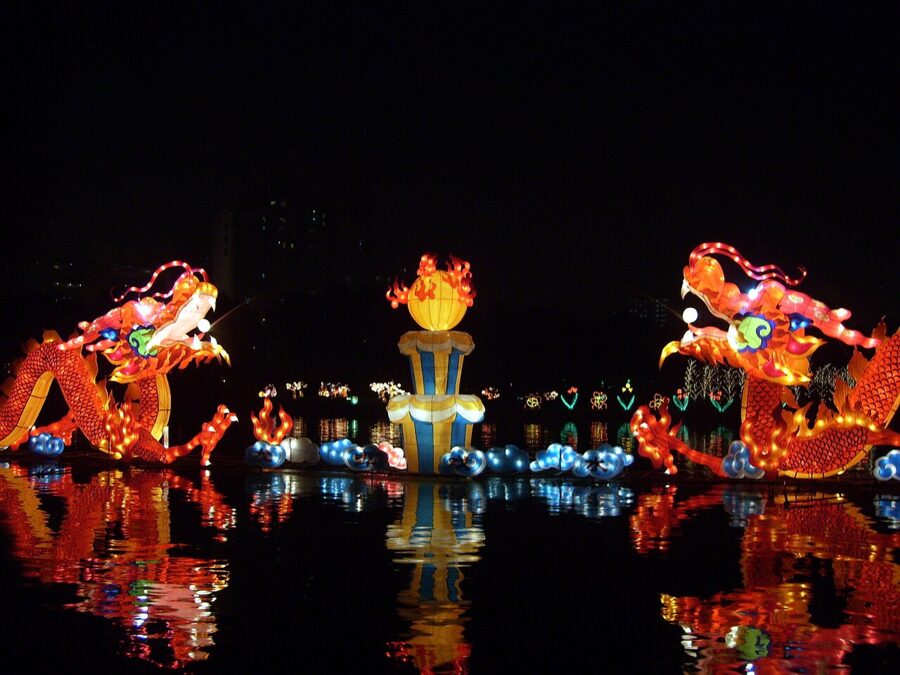
In China, Zhongqiu Jie (中秋節) brings families home for mooncakes, lanterns and the story of Chang’e, who swallowed the elixir and floated to the moon. In Korea, Chuseok (추석) is the year’s biggest holiday: three days in which families hold charye rites for their ancestors, tend the graves and make songpyeon, half-moon rice cakes steamed on pine needles.
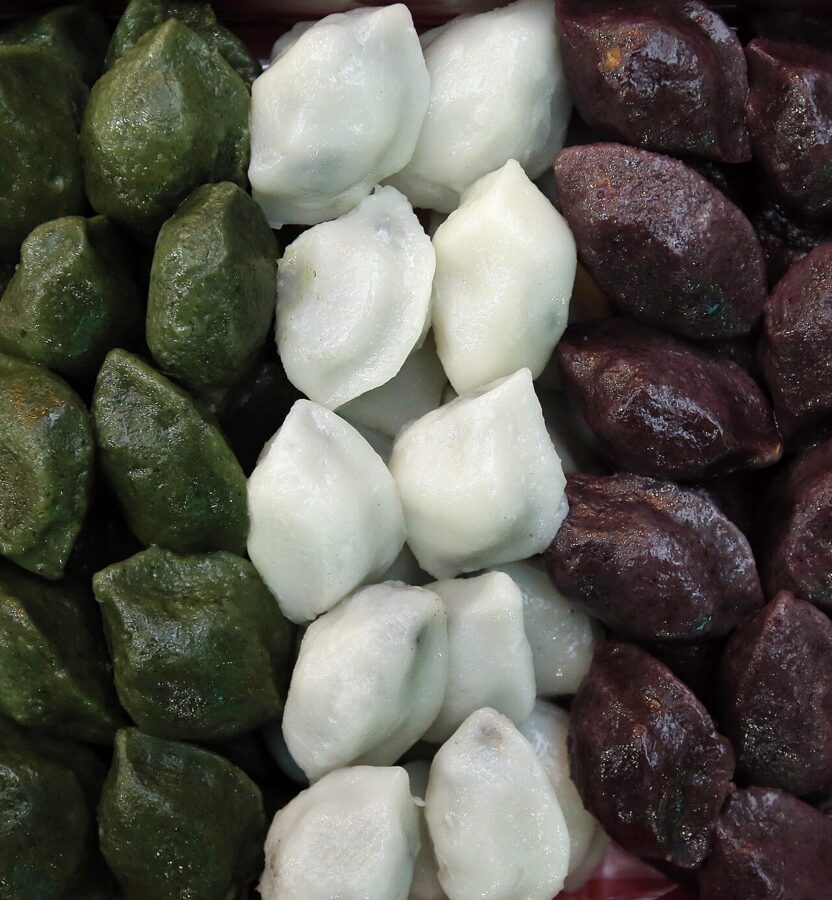

Japan dropped the lunar calendar at the start of 1873, and most seasonal festivals moved to fixed solar dates. The fifteenth night could not move without losing its moon, so it stayed lunar, and a date nobody carries in their head is easy to miss. I would count that as one reason Japan’s version is the smallest of the three.

Tsukimi on a bun
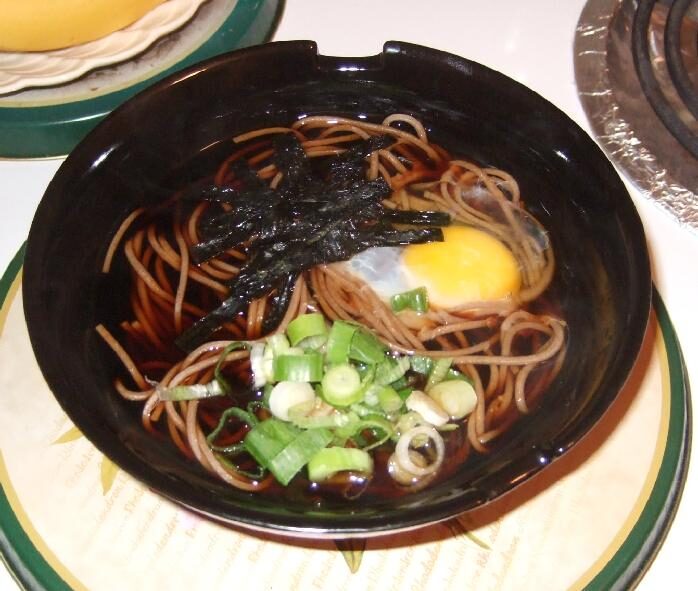
On a Japanese menu, tsukimi means an egg. A raw yolk on noodles is the moon, so tsukimi soba and tsukimi udon come with an egg broken over them, and a late Meiji guide to Tokyo customs already lists “tsukimi” among the soba orders. It is on the menu all year.

The autumn version is the burger. McDonald’s Japan first sold its Tsukimi Burger, a beef patty with bacon and a round fried egg, in some regions in September 1991, and it has been an autumn fixture ever since. The 2026 line went on sale on 2 September, more than three weeks before the moon it is named after.
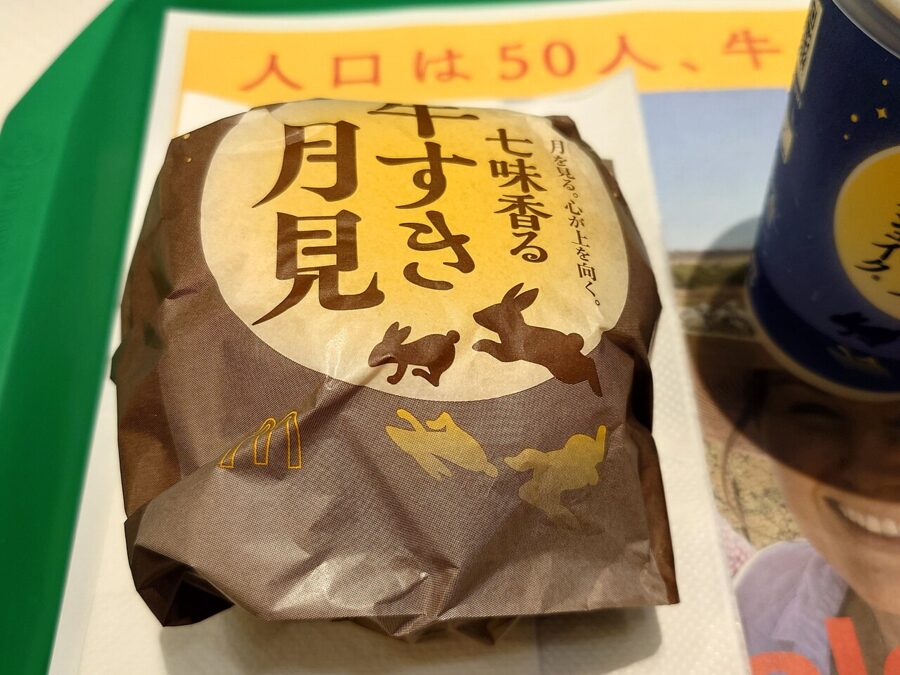

Convenience stores and other chains now run their own tsukimi weeks, all built on something yellow and round. I would not call this a decline. The burger has kept the word in daily use for a generation that never stacked a dango, and the rabbit on the wrapper is the same rabbit.
Where to watch in Kyoto
Kyoto keeps the court version, with music on the night and boats on the ponds. Kyoto City’s list of moon-viewing events for 2026 named about a dozen, most on 25 September.
Daikaku-ji: Kangetsu no Yube
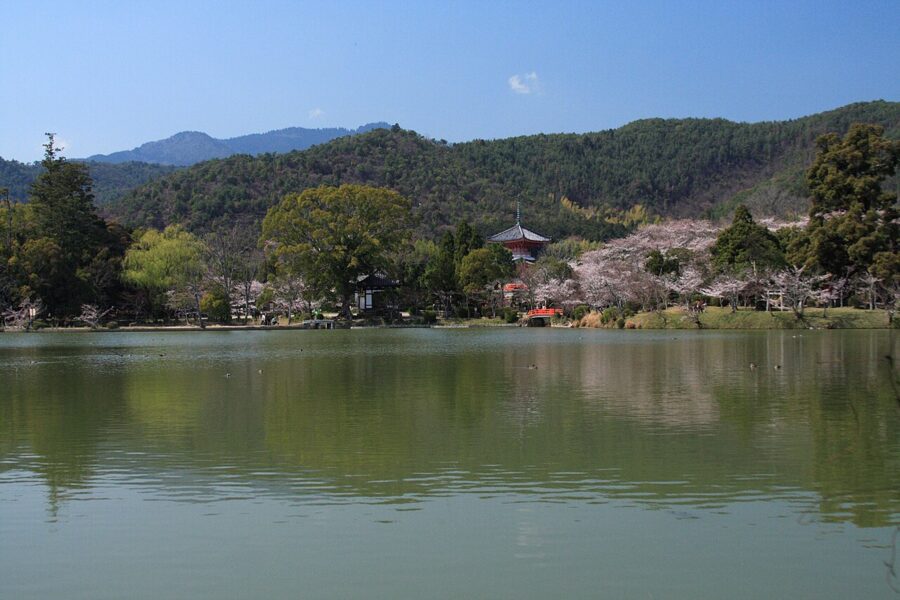

Daikaku-ji (大覚寺) in western Kyoto was Emperor Saga’s villa before it was a temple, and Saga is said to have taken his court out on Osawa Pond (大沢池) for the harvest moon. The temple’s Kangetsu no Yūbe (観月の夕べ, “moon-viewing evening”) puts boats back on the water, the ryūtō gekishu (龍頭鷁首), carved at the prow with a dragon or the geki, a mythical waterbird, so you see the moon in the sky and its double on the pond. With Sarusawa Pond in Nara and Ishiyama-dera in Otsu, Osawa Pond is one of the three places long named as Japan’s best for the autumn moon.
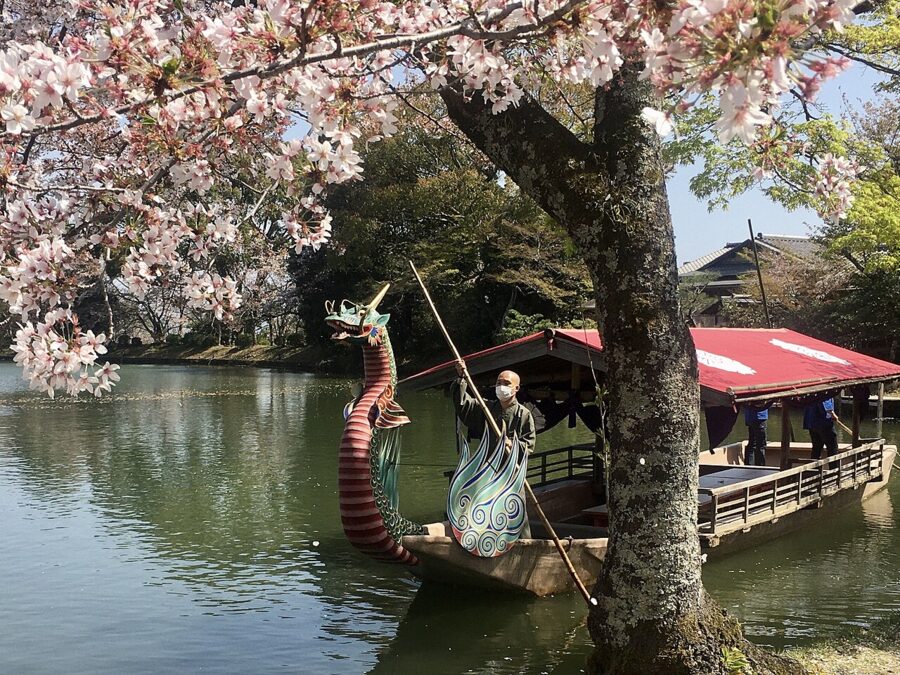

In 2026 it ran on three nights, Friday 25 to Sunday 27 September, from 17.30 to 21.00 (last entry 20.30), with daytime visitors cleared out before the evening. In recent years the boat ride and a tea seat have been sold together as an advance ticket, so watch the temple’s announcement over the summer. Daikaku-ji is about 20 minutes’ walk north of Saga-Arashiyama Station on the JR Sagano Line, or take Kyoto City Bus 28 to the Daikakuji stop at the end of the line.
Shimogamo Shrine: Meigetsu Kangensai
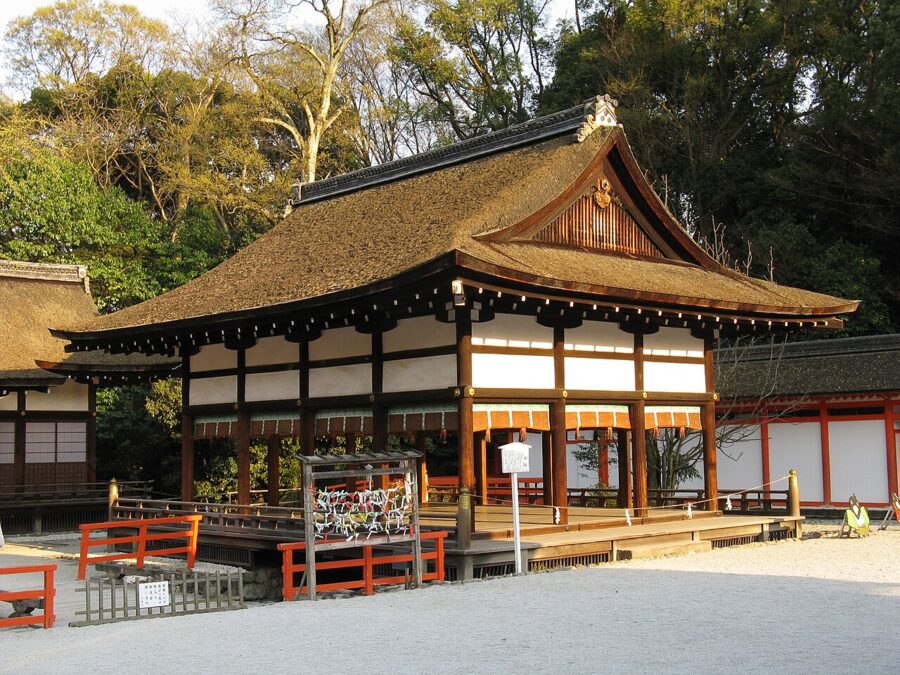

At Shimogamo Shrine (下鴨神社), the Meigetsu Kangensai (名月管絃祭, “harvest-moon music festival”) falls on the fifteenth night itself. After the rite, players in Heian court dress perform bugaku dance, court music, koto, shakuhachi and biwa on the Hashidono, with susuki on display and bonfires lit. In 2026 it ran from 17.30 until the gates closed at 21.00, and entry was free. The shrine is about ten minutes’ walk north of Demachiyanagi Station (Keihan and Eizan lines).
Where to watch in Tokyo
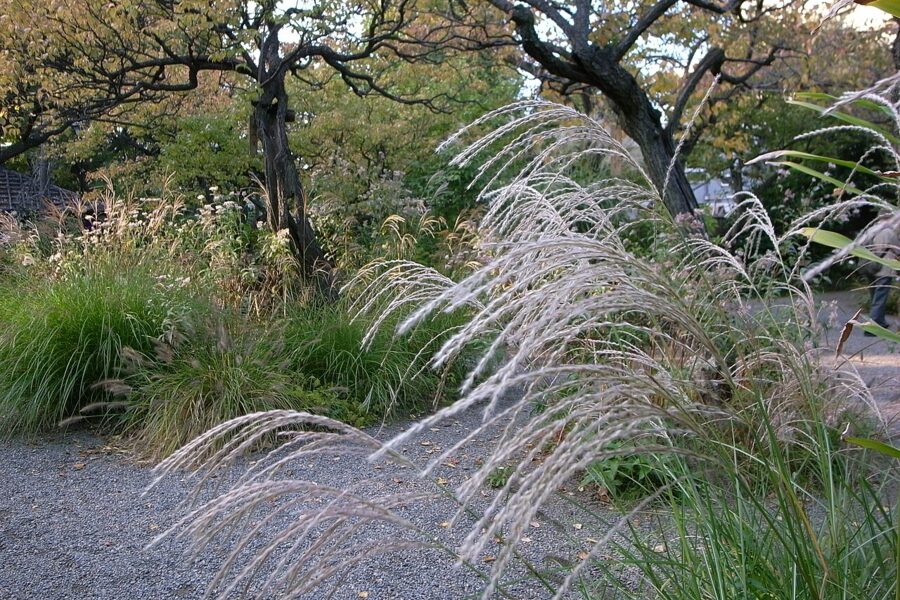

Tokyo’s best moon-viewing evening is in a small garden in Sumida that the Edo writers who helped plant it would still recognise. Mukojima Hyakkaen (向島百花園), run by the Tokyo Metropolitan Park Association, holds a Tsukimi no Kai (月見の会, “moon-viewing gathering”) over three nights. In 2026, according to the Tokyo Metropolitan Government’s announcement, it ran from Thursday 24 to Saturday 26 September, with the garden open until 21.00 (last entry 20.30) instead of 17.00.
The programme was the old one. Dango and vegetables were offered to a shinobue bamboo flute on the evening of the 24th. A tea ceremony ran every half hour from 15.00 to 20.00 on the 25th and 26th, at ¥1,500 (about $10) a seat with no booking, and there was koto music from 18.00 each night under lit paper lanterns.
Admission is ¥150 (about $1), ¥70 for over-65s and free for primary-school children, as of 2026. The garden is an eight-minute walk from Higashi-Mukojima Station on the Tobu Skytree Line, or thirteen minutes from Keisei-Hikifune Station on the Keisei Oshiage Line.
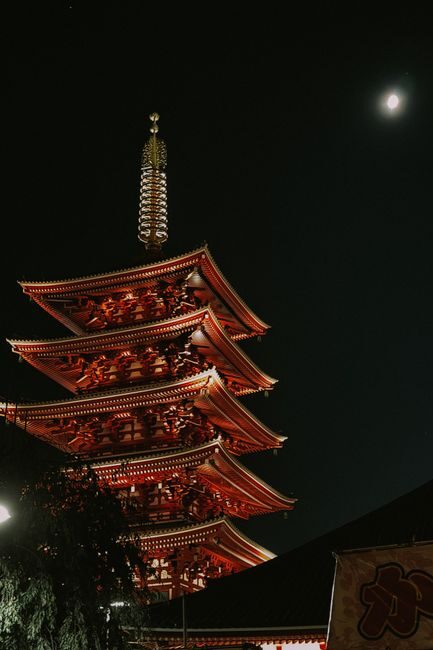
You do not need an event, though. The custom was always a household one: a window that faces east, some grass from the riverbank, a plate of something round and white.
On 15 September 2027 the moon will rise over Japan about half a day short of full. Set the dumplings out anyway, and keep some chestnuts back for October.