
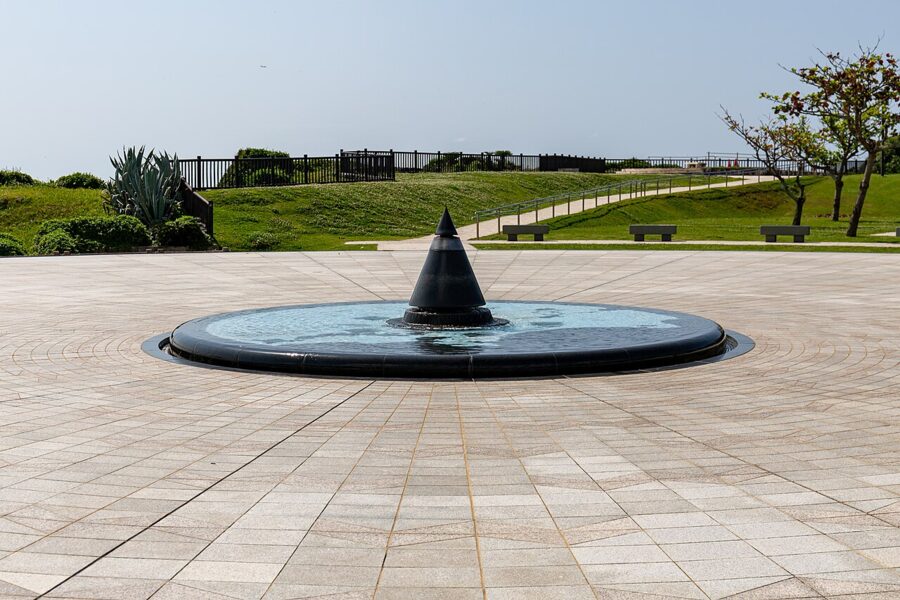
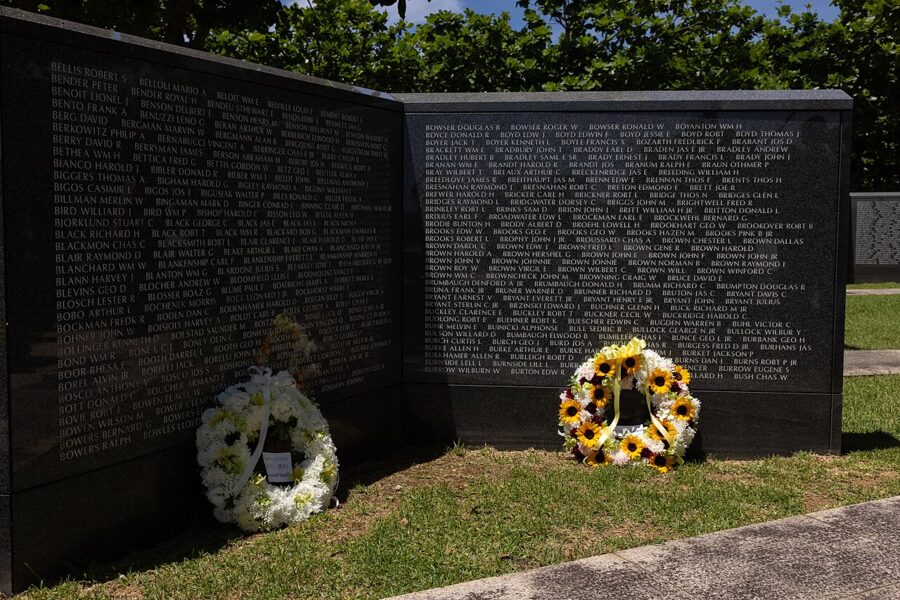
Before the ceremony at Mabuni on 23 June 2026, 95 new names had been cut into the black granite. Thirty-two were Okinawans, 62 were soldiers from other prefectures and one was an American; three names carved twice were taken off. That left the Cornerstone of Peace (平和の礎, Heiwa no Ishiji) carrying 242,659 names, 81 years after the fighting on this hill stopped.
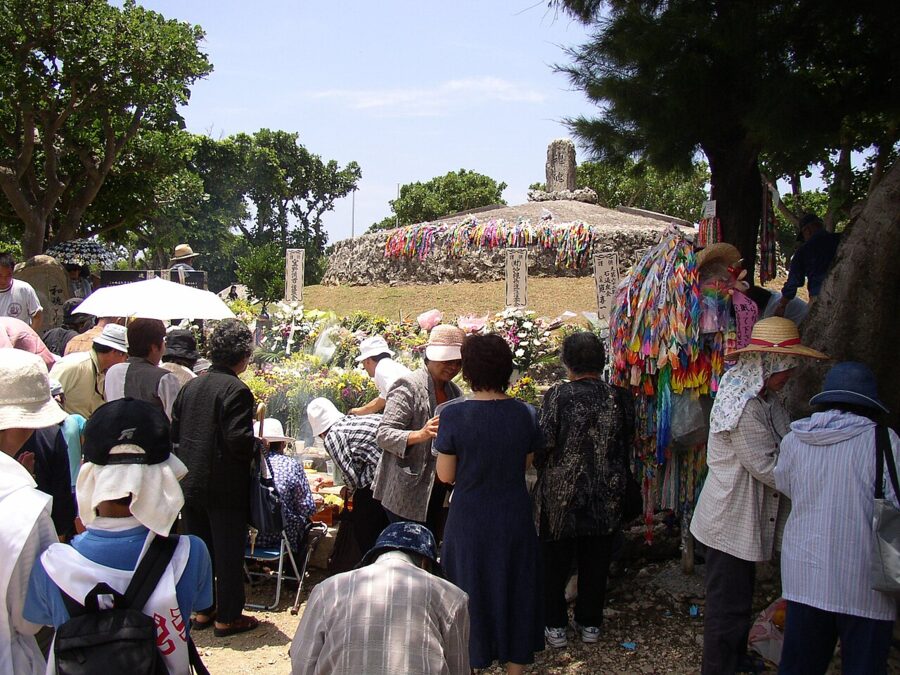
Families come early. They find the panel for their village, run a finger down a column, and leave flowers or a can of beer beneath a grandfather, an aunt, a whole household. At noon the prefecture’s memorial service in the park stops for a minute’s silence, and for that minute the only sound is the sea below the cliffs.
The Battle of Okinawa is remembered in Japan for what it did to the people who lived there: by the prefecture’s estimate, about as many Okinawan civilians died as Japanese soldiers. How many, and how they died, are questions that still reach the Diet, the courts and the school textbook.

In this article
Eighty-two days, from Hagushi to Mabuni
The landing nobody opposed
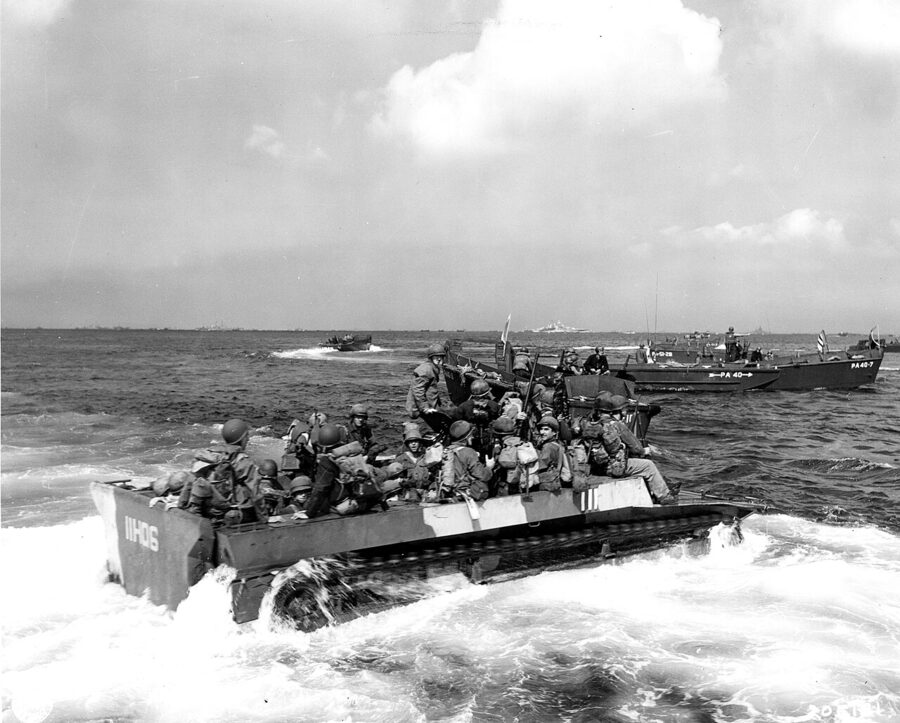
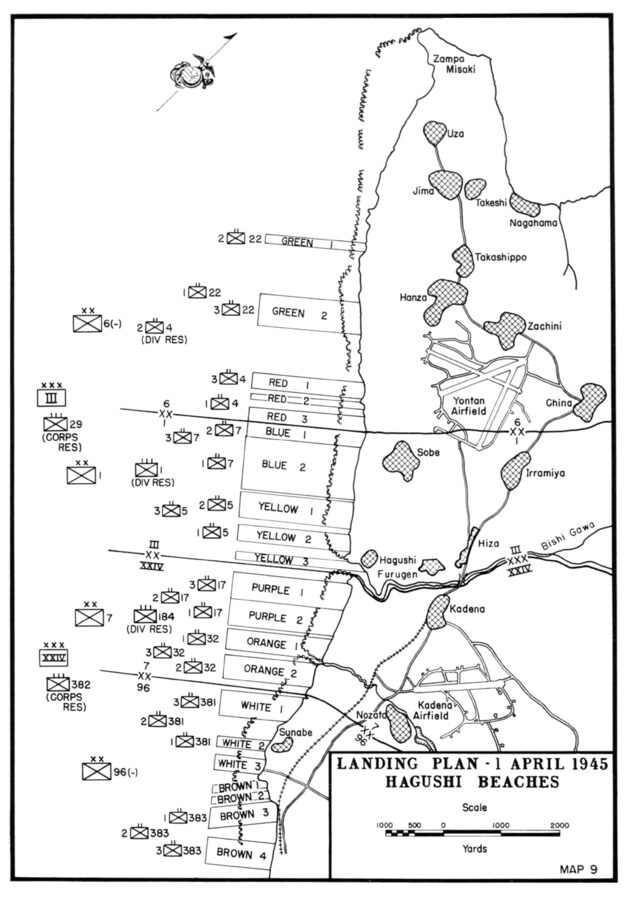
The Americans came first to the Kerama Islands west of Naha on 26 March 1945. On 1 April they landed on the main island along the Hagushi beaches between Yomitan and Chatan, and walked inland almost without a shot. The prefectural peace museum puts the American strength at 183,000 combat troops, about 550,000 with support units: more than the islands’ whole population.
The defenders were the Imperial Japanese Army’s 32nd Army under Lieutenant General Mitsuru Ushijima (牛島満), about 100,000 men by the museum’s count, a third of them Okinawans called up into the Home Guard (Bōeitai, 防衛隊) and student corps. Ushijima had pulled his main force south into lines of caves and tunnels around Shuri, the old royal capital. His orders were to hold the island as long as possible and bleed the Americans before they reached the home islands. Protecting the people of Okinawa came second, if at all.
Kakazu, Sugar Loaf and the Shuri line
The marines who turned north reached the island’s top at Cape Hedo by mid-April. The army divisions that turned south ran into the Shuri line at Kakazu Ridge in early April, and spent the rest of the month taking it. The Japanese fought from caves dug into the far side of each ridge, where artillery could barely reach them.
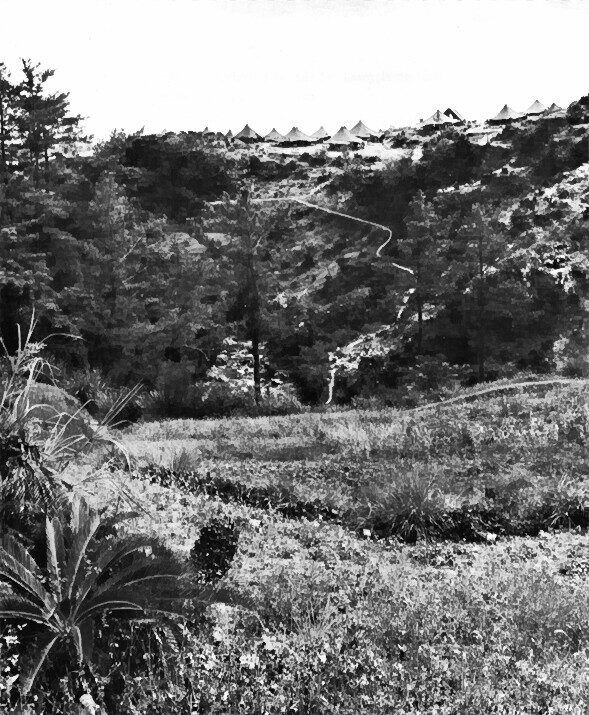
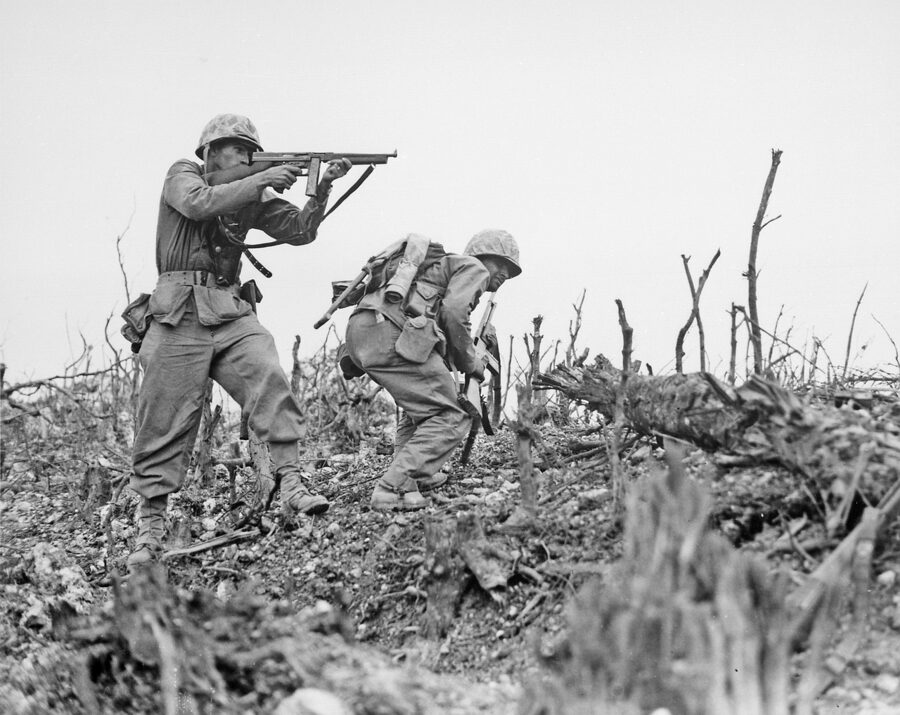
At sea, waves of kamikaze aircraft hit the fleet from 6 April. On land, the fighting moved south a few hundred metres a week: Maeda Escarpment, Conical Hill, and on the western flank a low rise the 6th Marine Division called Sugar Loaf, which changed hands repeatedly in mid-May before it was held.

Leaving Shuri in the rain
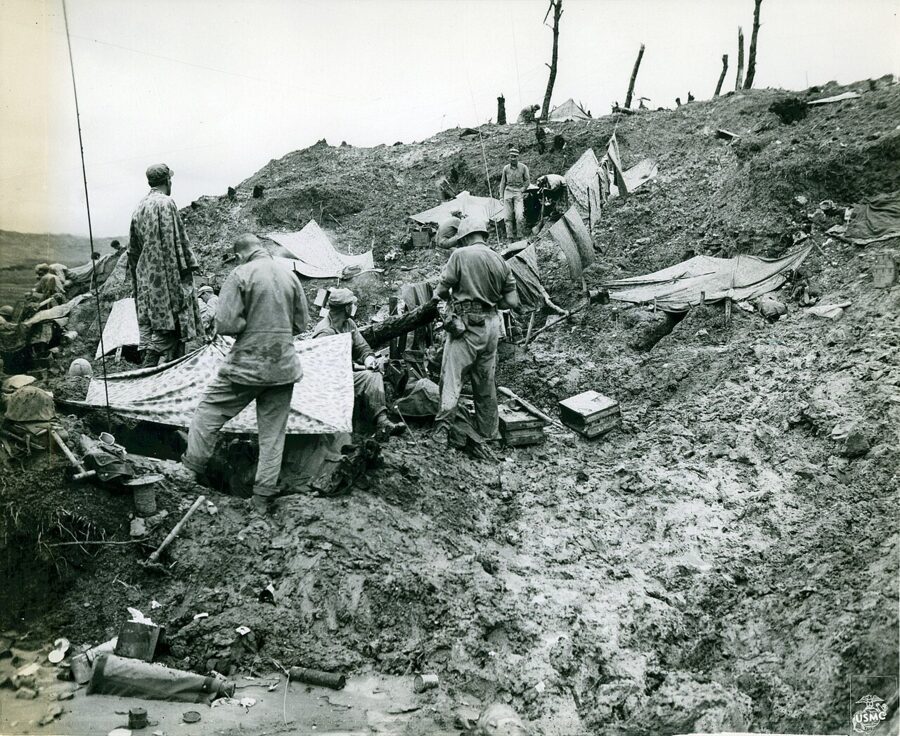
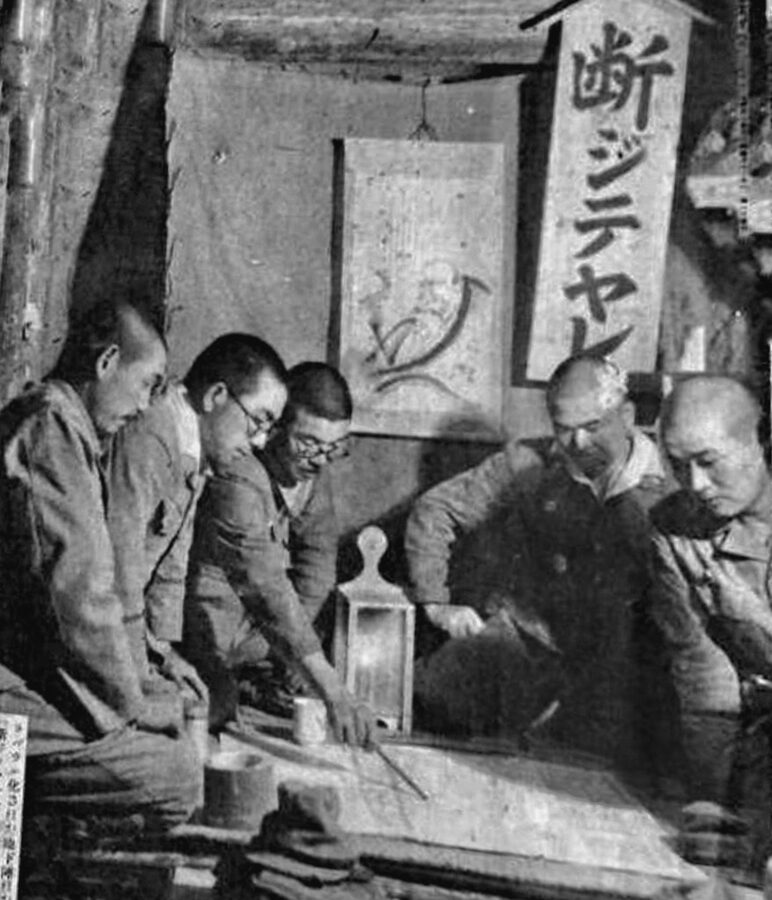
Under Shuri Castle the 32nd Army had dug its headquarters, a tunnel system the prefecture now measures at more than a thousand metres. By late May the line around it was breaking. Ushijima chose to fall back south rather than make his last stand at Shuri, and the withdrawal began on 26 May in the heavy rains of the tsuyu season, with roads turned to mud and the wounded left behind in the cave hospitals.
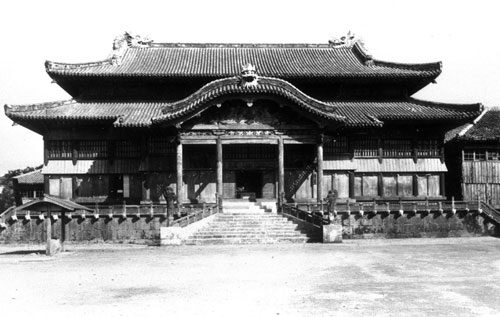
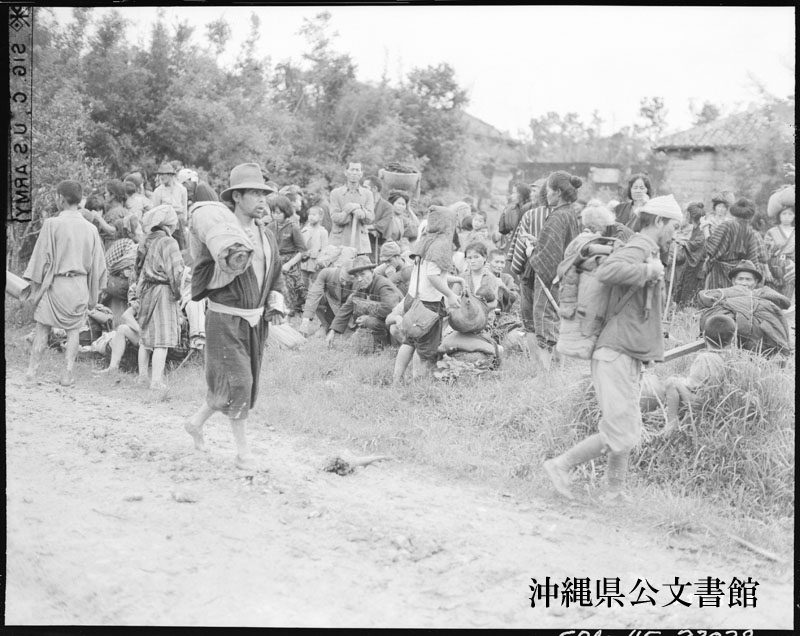
That decision is the hinge of the whole story for Okinawans. The south, around Itoman and the Kyan peninsula, was where tens of thousands of civilians had gone to shelter in limestone caves (gama, ガマ). Now the army came too, and the battlefield came with it.
The end on the Kyan peninsula
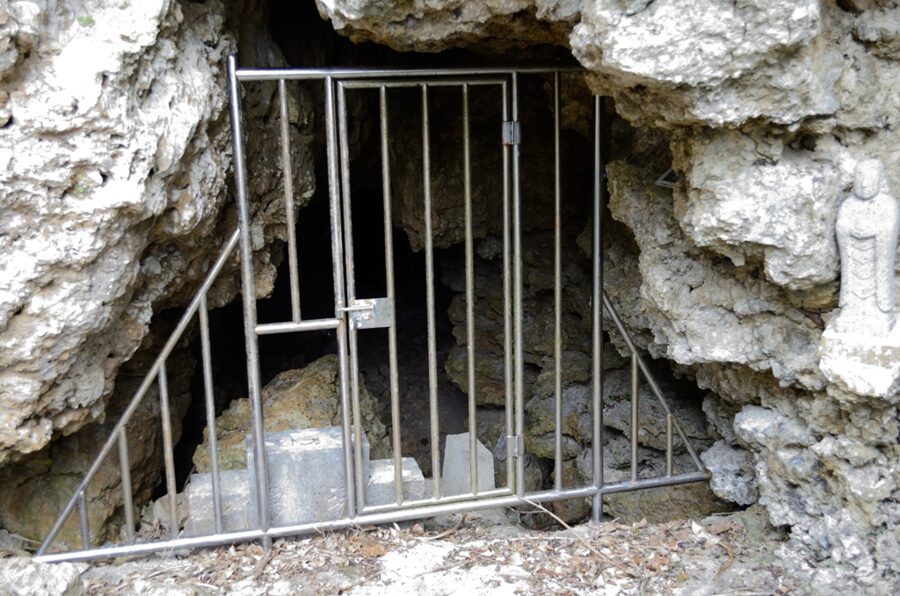
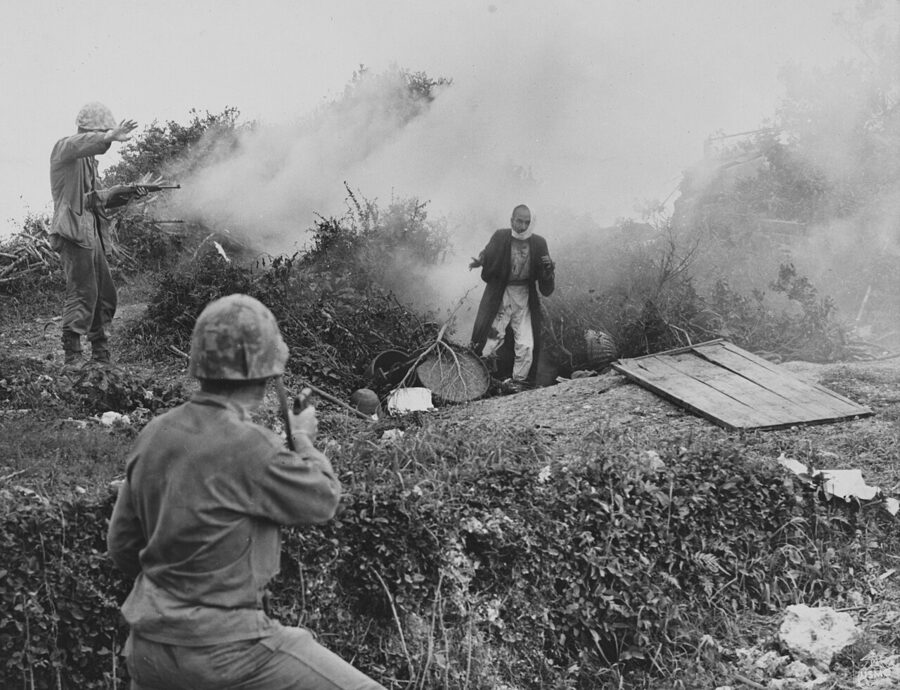
The museum calls what followed the “typhoon of steel” (tetsu no bōfū, 鉄の暴風), the name the Okinawa Times gave its 1950 account of the battle. Soldiers and civilians were crowded together on a strip of coral hills a few kilometres wide, under shelling from land and sea. Some soldiers drove families out of the caves to take them over; some killed civilians they suspected of spying.
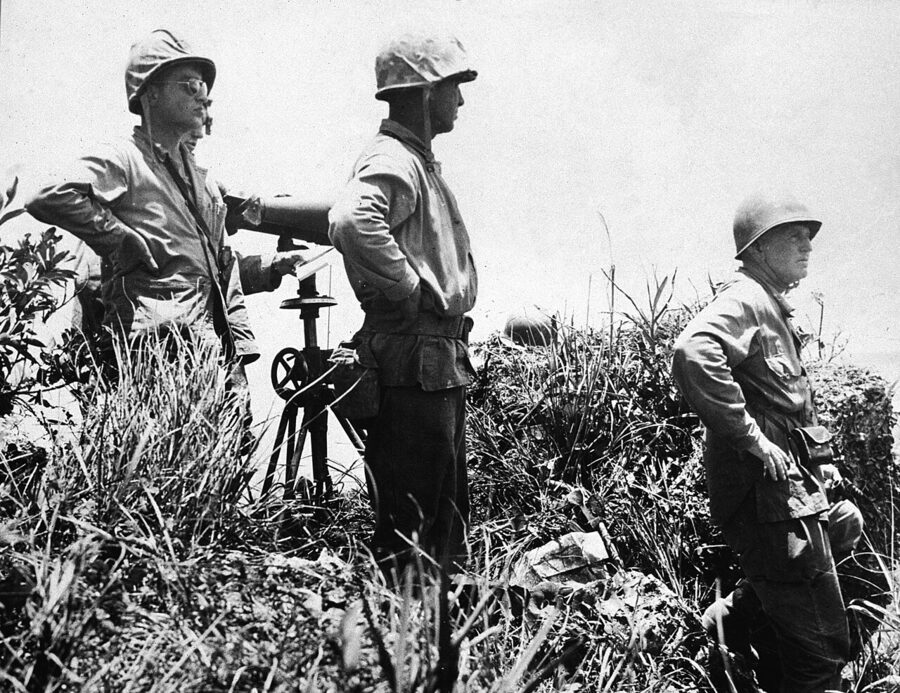
Ushijima and Cho died by suicide in their cave on Mabuni Hill on 23 June, or the 22nd by some accounts; the prefecture keeps the 23rd as the date the organised fighting ended. The Americans declared the campaign over on 2 July, and the formal surrender of the Ryukyus was signed on 7 September. From the landing to Mabuni is 82 days, though mopping-up, starvation and malaria went on killing for months.

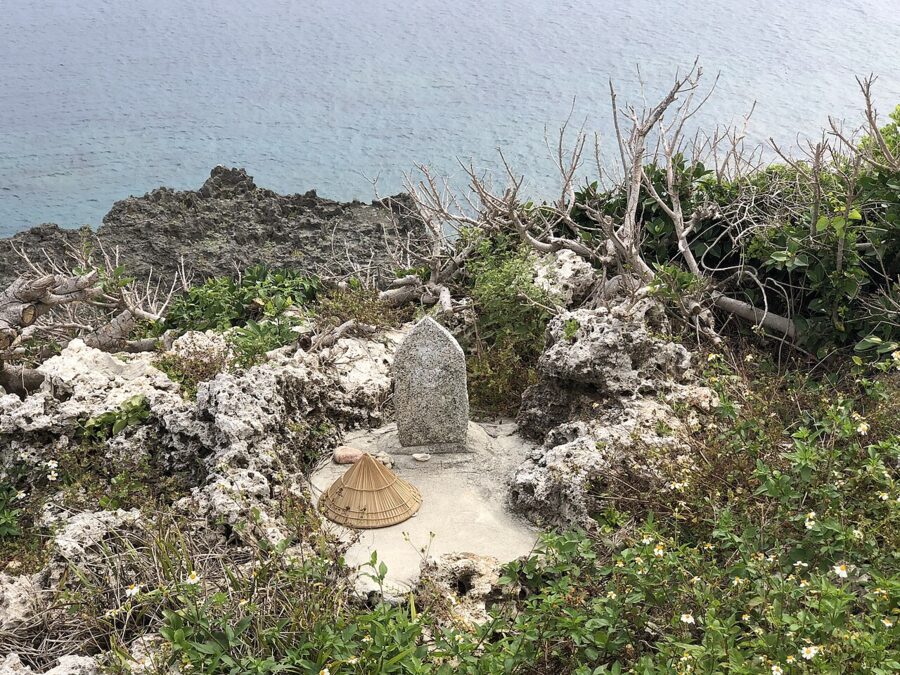

Counting the dead
The figure most often quoted in Japan, about 200,000 dead, comes from Okinawa Prefecture’s welfare department. Its table, published in 1996 and reproduced on the Ministry of Internal Affairs’ page on Okinawa’s war damage, breaks it down like this.
| Category | Dead | How it was counted |
|---|---|---|
| Soldiers from other prefectures | 65,908 | From prefectural records of the war dead |
| Okinawan soldiers and military employees | 28,228 | From Okinawan name lists and death records |
| Okinawan civilians | 94,000 | An estimate, from the 1944 and 1946 populations |
| US forces | 12,520 | US military records |
| Total | 200,656 |
The American figure matches the US Army’s official history, Okinawa: The Last Battle (1948): 12,520 killed or missing, of whom 4,907 were sailors, most of them lost to kamikaze attacks on ships. The same history counts about 110,000 Japanese dead and 7,400 prisoners, but its “Japanese” includes conscripted Okinawans and, almost certainly, civilians the troops could not tell apart from soldiers. The civilian line in the prefecture’s table is the softest number in it, because nobody counted the dead in the caves as they died.
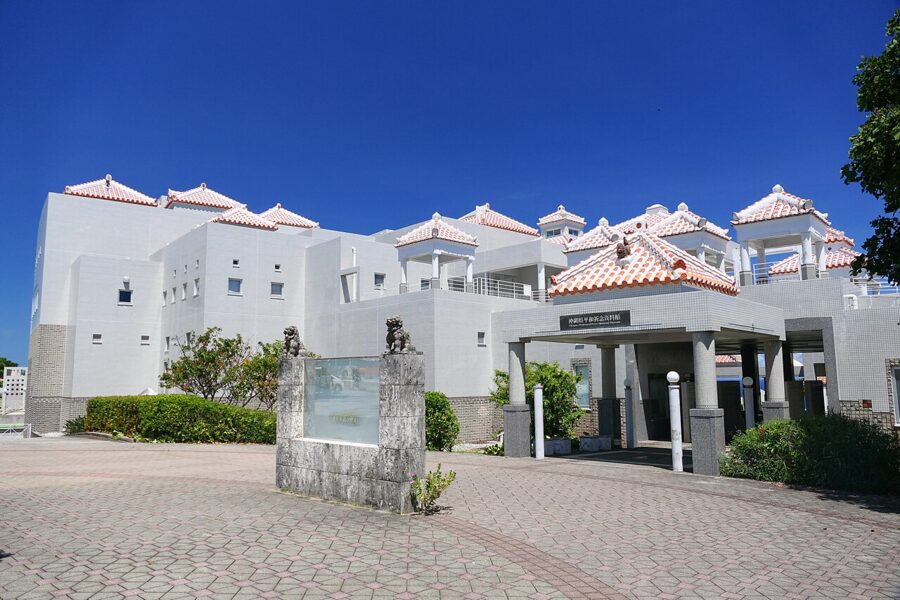
Set the museum’s 120,000 Okinawan dead against that prewar population and you get more than one in four, which is why the battle is spoken of here as something done to a place, not only fought over it.
The Cornerstone of Peace count is larger again, and for a stated reason. Under the prefecture’s inscription rules, an Okinawan’s name goes on the wall if he or she died because of the war anywhere, at any point from the Manchurian Incident of 18 September 1931 to about a year after the surrender. People from elsewhere are listed if they died in the battle, between 26 March and 7 September 1945, or in operations around the islands from March 1944, when the 32nd Army was formed.
| Names on the Cornerstone of Peace (as of 23 June 2026) | Count |
|---|---|
| Okinawa Prefecture | 149,703 |
| Other prefectures of Japan | 78,365 |
| United States | 14,012 |
| Republic of Korea | 381 |
| United Kingdom | 82 |
| North Korea | 82 |
| Taiwan | 34 |
| Total | 242,659 |
The Korean panels are the thinnest compared with the reality. Thousands of Korean labourers and so-called comfort women were brought to Okinawa, and most of their names were never recorded. Names are added every year as families and prefectures come forward, which is why the total still rises.
The civilians’ battle
The Himeyuri students
On 23 March 1945, 222 schoolgirls and 18 teachers from the women’s division of the Okinawa Normal School and the Prefectural First Girls’ High School were mobilised as nurses for the army hospital at Haebaru. They became known by the nickname of their two schools, himeyuri (ひめゆり, “princess lily”). They worked in tunnel wards cut into the hillside, carrying water, amputated limbs and the dead.
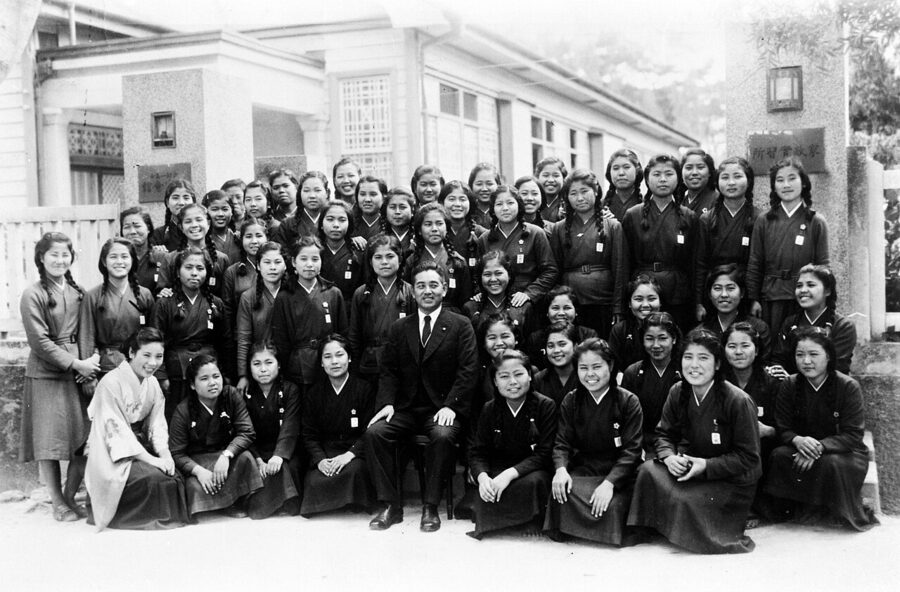
When the army retreated south they followed it into the caves around Ihara. On 18 June the unit was told it was dissolved and the girls were on their own, in the middle of the fighting. Of the 240, 136 died, and 117 of those deaths came after the dissolution order, as reported by the Ryukyu Shimpo from the museum’s records. The next morning a gas grenade was thrown into the cave of the Third Surgical Unit, where many of them had gathered.
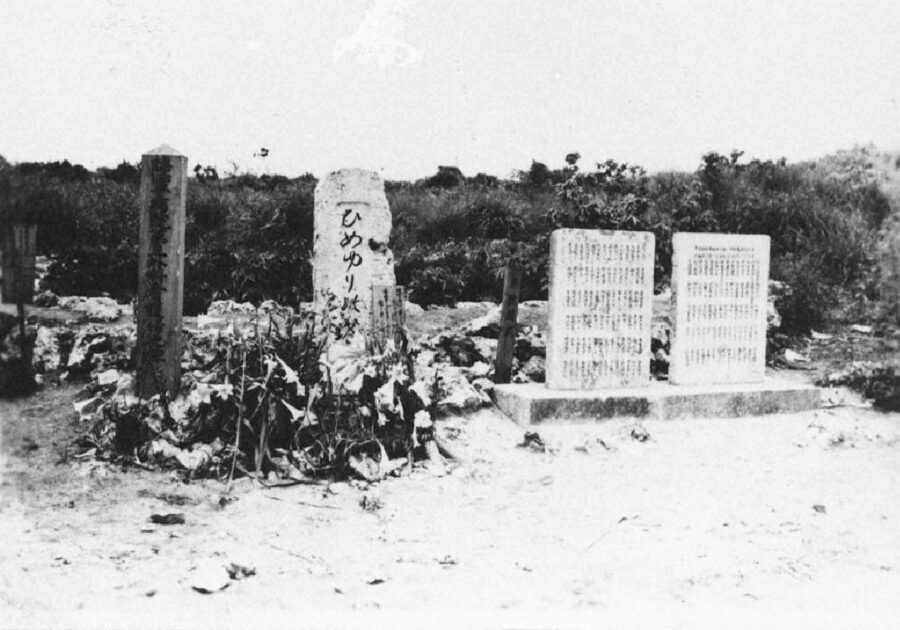
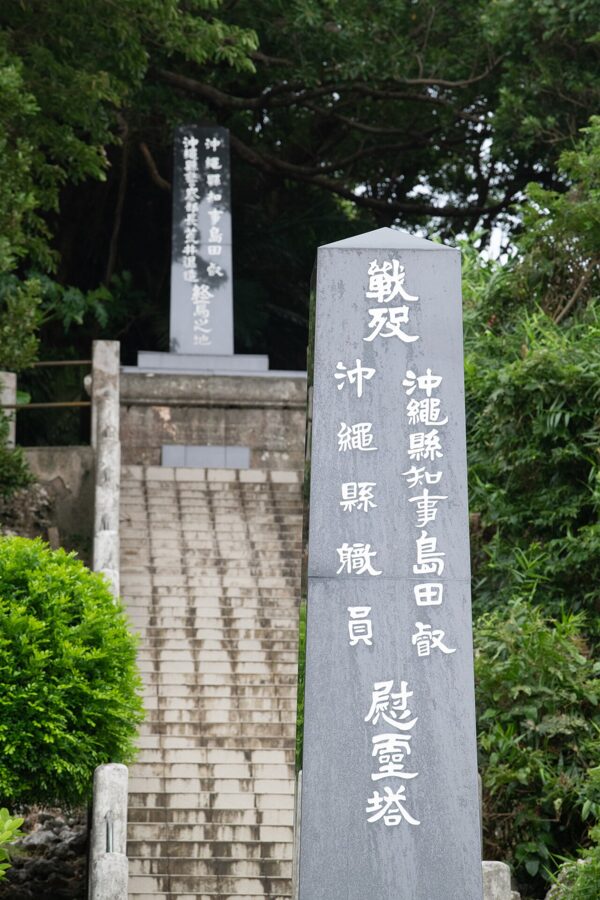
The survivors founded the Himeyuri Peace Museum in 1989 and spent decades giving testimony there themselves. In May 2025 Shoji Nishida (西田昌司), a Liberal Democratic Party member of the House of Councillors, told a symposium in Naha that the explanations at the Himeyuri Tower amounted to “rewriting history”. He apologised to Okinawans on 9 May for having used the Himeyuri name in his speech, but did not withdraw the view itself. The Ryukyu Shimpo checked the exhibits and reported that nothing there says what he described.
Shudan jiketsu: the group deaths
The phrase in the history books is shūdan jiketsu (集団自決), literally “group self-determination”, the standard term for families killing each other and themselves as the Americans arrived. Many Okinawan historians and journalists now pair it with kyōsei shūdan shi (強制集団死), “forced group death”. The choice of term is the whole argument in miniature.
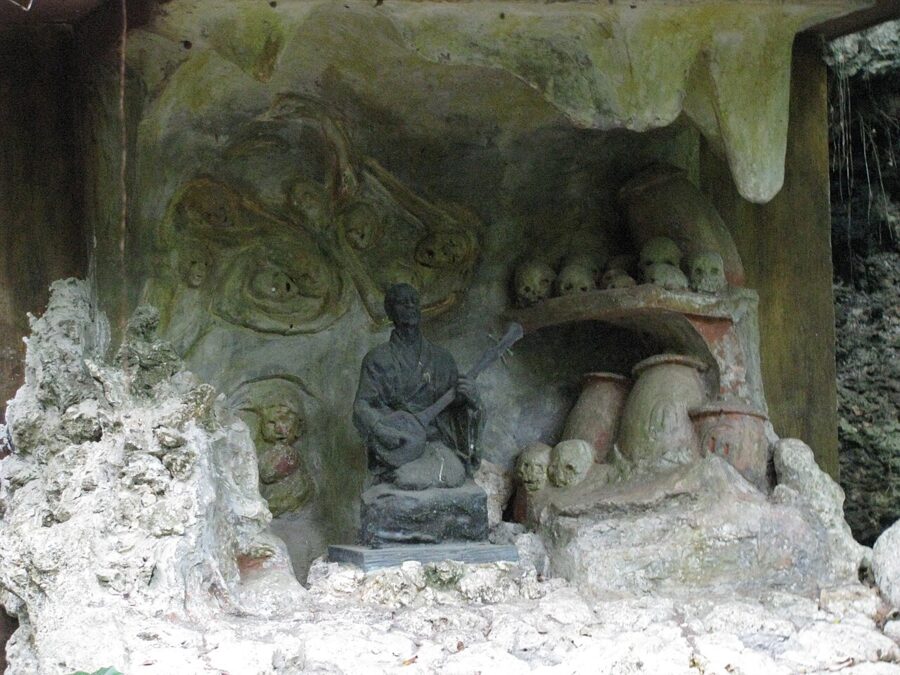

The worst cases came first, in the Kerama Islands in late March, where several hundred people died on Tokashiki and Zamami. Survivors describe soldiers handing out grenades, telling residents that the Americans would rape and torture them, and a garrison culture in which being captured was unthinkable. Whether a commander ever gave a direct order is what has been fought over since.
The textbook dispute
In March 2007 the Ministry of Education’s textbook screening made publishers of high school history books remove or soften wording that the Japanese military had forced the group suicides; the Ryukyu Shimpo counted seven books from five companies. The ministry’s position was that the evidence did not establish a military order. It pointed, among other things, to a lawsuit then in court: Yutaka Umezawa (梅澤裕), who had commanded on Zamami, and the brother of the Tokashiki commander had sued the novelist Kenzaburo Oe (大江健三郎) and his publisher over Okinawa Notes (Okinawa Nōto, 1970), which said the commanders ordered the deaths.

Okinawa’s answer came on 29 September 2007, at a prefectural rally in Ginowan Seaside Park that the organisers put at 110,000 people, with mayors and party representatives on the stage. In December the ministry let the publishers revise: the books could say the military handed out grenades and that residents were “driven into” the group deaths, but not that they were ordered or forced. The screening opinion itself was never withdrawn. The courts, meanwhile, found for Oe at Osaka in 2008, and the Supreme Court ended the case in his favour in 2011.
The textbooks may say the army handed out the grenades. They still may not say it gave the order.
I would read the 2007 compromise as a truce rather than a settlement. The two sides now agree on the grenades and the fear, and disagree on the word “order”, which is exactly where the documents run out.
Irei no Hi and the peace declaration
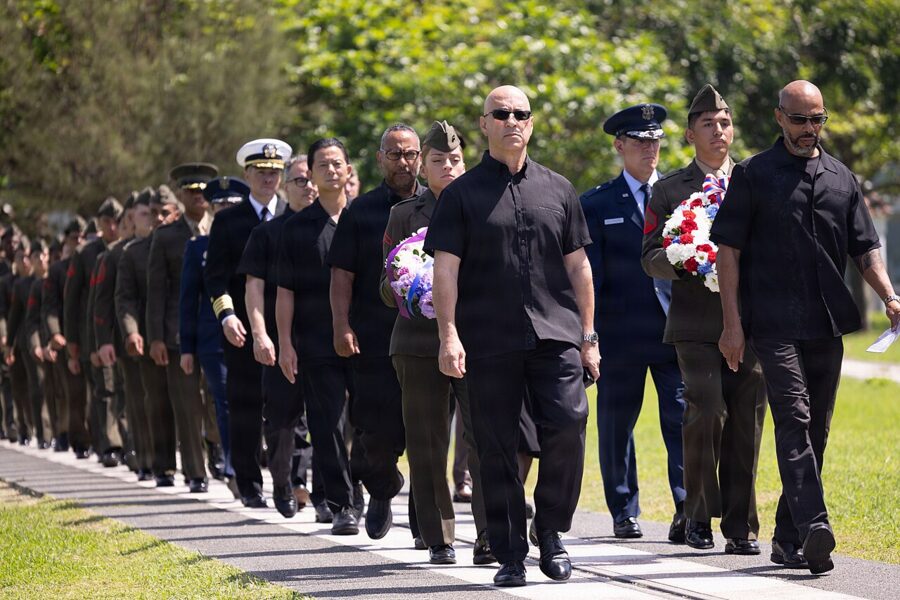
Irei no Hi (慰霊の日), Okinawa Memorial Day, is 23 June, a day off fixed by Okinawa’s own ordinance, when prefectural and municipal offices and the schools close. The main event is the Okinawa Memorial Service for All the War Dead in Peace Memorial Park, hosted by the prefecture and the prefectural assembly. After the silence at noon, a school student reads a peace poem and the governor reads the heiwa sengen (平和宣言), the peace declaration.
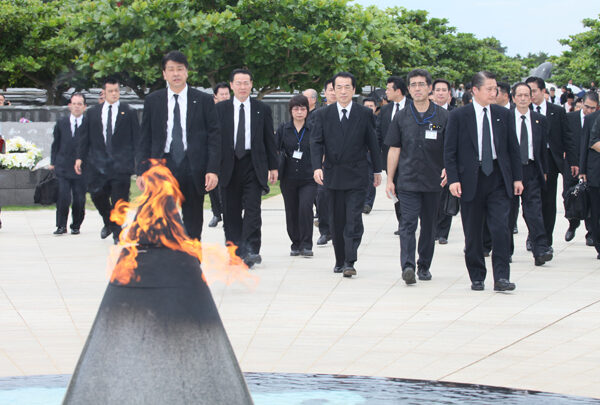

The declaration is where the battle meets present politics. The 2026 declaration, the last by Governor Denny Tamaki (玉城デニー), opened on the 81 years since the battle, asked again for a reduction of the “excessive base burden” (kajū na kichi futan, 過重な基地負担), noted that Futenma Air Station is still in use 30 years after Tokyo and Washington agreed to return it, and lamented the failed nuclear non-proliferation review. Foreign Minister Toshimitsu Motegi (茂木敏充) attended for the national government. This year’s peace poem, “Proof that they wished to live”, was written and read by a 14-year-old from Tomisaki Junior High School in Tomigusuku.
The 2027 declaration will come from a different governor. On 13 September 2026 Genta Koja (古謝玄太), 42, backed by the LDP and four other parties and accepting the move of Futenma’s functions to Henoko, beat Tamaki by about 147,000 votes, with 423,124 votes. He is the first conservative governor in twelve years and the first born after the islands returned to Japan in 1972.
Where to go: Mabuni, Ihara, Tomigusuku and Shuri
Peace Memorial Park and the prefectural museum
The park covers the seaward slope of Mabuni Hill in Itoman, at the southern end of the main island. The Cornerstone of Peace, the Peace Flame and the open lawns are free and never close. Uphill, Mabuni Hill is lined with memorials put up by the other prefectures and by army units for their own dead.

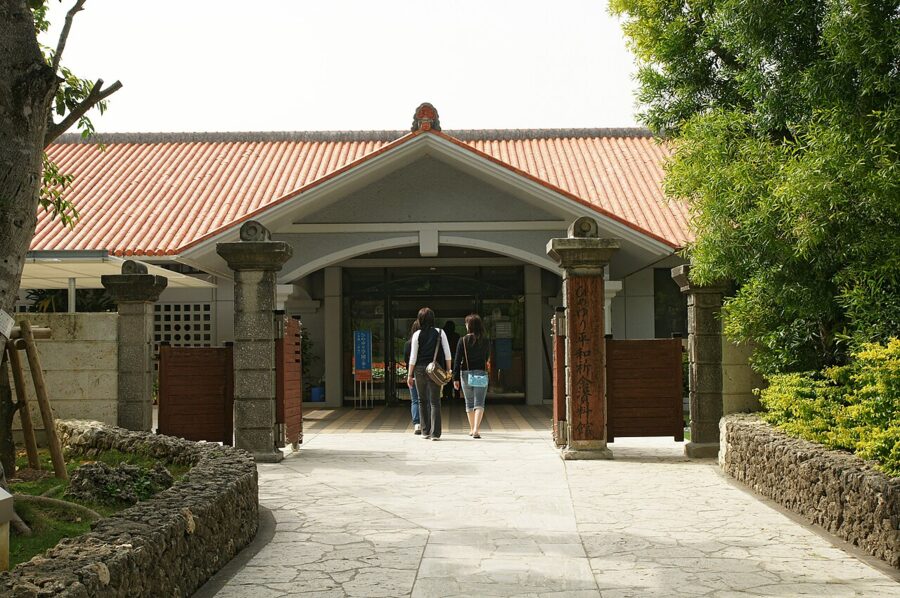
The Okinawa Prefectural Peace Memorial Museum is the one place to see the battle whole; the room of recorded testimony near the end is what stays with you. The prefecture is planning a renewal of the exhibits and will announce any closure once the details are fixed.

The Himeyuri Peace Museum
The Himeyuri Tower and the museum beside it stand in Ihara, a few kilometres west of the park, over the cave of the Third Surgical Unit. Inside, the room most visitors stay longest in is the wall of portraits of the dead students, each with a short note on how she died. Photography is not allowed in the exhibition rooms, and the staff ask groups of ten or more to book.

The Former Japanese Navy Underground Headquarters
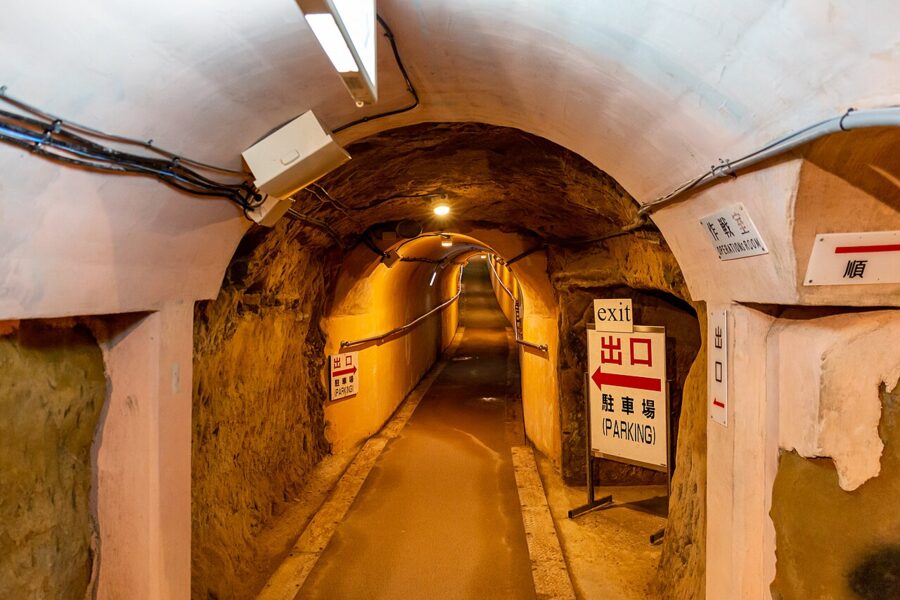
On a hill in Tomigusuku, near Naha airport, the navy’s headquarters tunnels are the most complete wartime shelter open on the island. Navy engineers dug them in 1944, about 450 metres of arched tunnels lined with concrete, and up to 4,000 men sheltered inside; 300 metres around the commander’s room were restored in 1970. Rear Admiral Minoru Ota (大田実) and his staff died here on 13 June 1945.
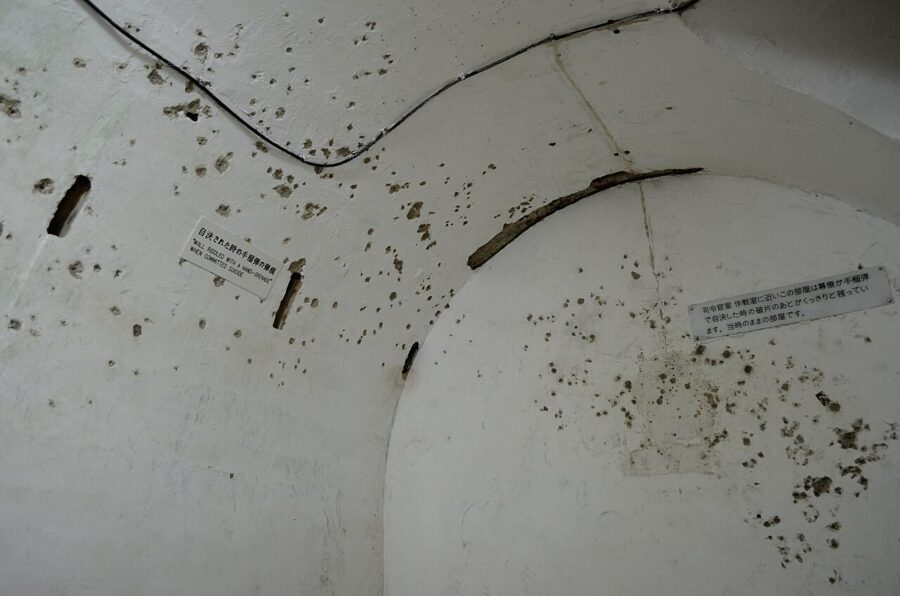

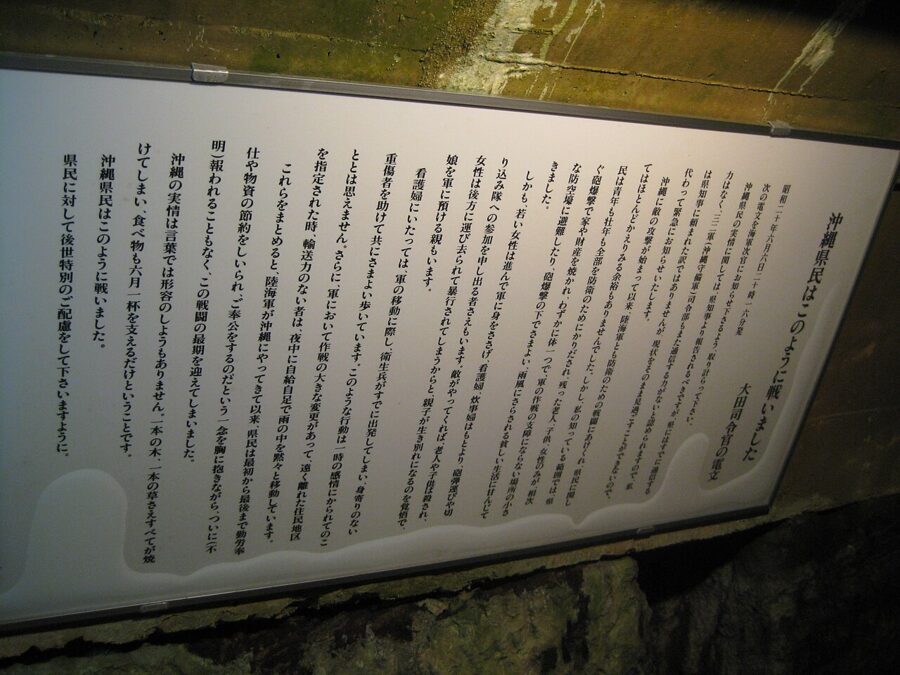
Ota is remembered in Okinawa for one telegram. On 6 June 1945, instead of the usual report of glory, he wired the navy vice-minister in Tokyo a description of what the island’s people had suffered and given, ending with a line every Okinawan schoolchild knows: Okinawa kenmin kaku tatakaeri (沖縄県民斯ク戦ヘリ), “this is how the people of Okinawa fought”, and a request that they be given special consideration in the years to come. Okinawans have quoted it back at Tokyo ever since.

Shuri: the castle and the tunnels beneath it
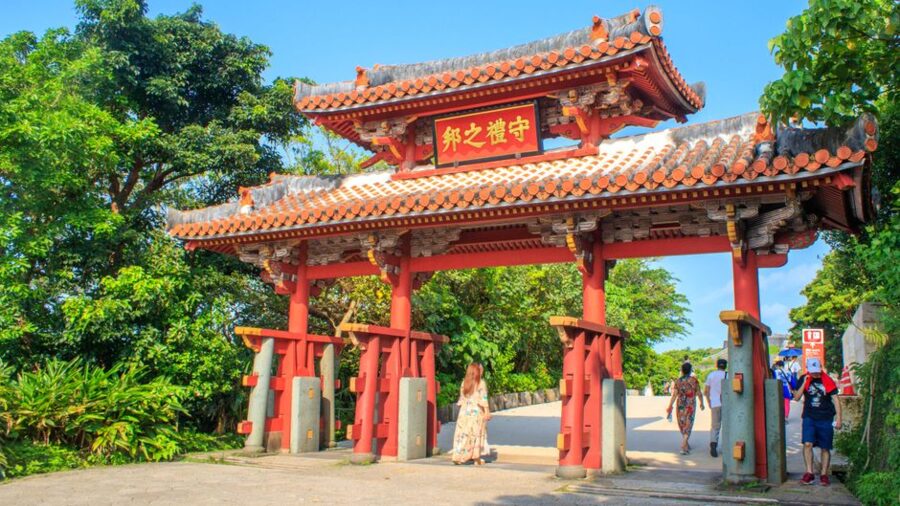
Shuri Castle, rebuilt in 1992 and burned again in October 2019, has been rebuilt a second time, and the prefecture set 23 November 2026 as the day the new main hall opens to the public. Under the hill, the 32nd Army headquarters is still closed: the soil is fragile, the land has several owners, and the prefecture’s plan of March 2025 expects preservation to take “a considerable period”. For now the closest you can get is a booked site visit when the excavation at one entrance is shown, as on 30 August 2026, and the prefecture’s film of the inside.

Hours, fees and getting there
All three museums below were confirmed on their own sites in November 2026.
| Place | Hours | Admission |
|---|---|---|
| Himeyuri Peace Museum, Ihara, Itoman | 9:00–17:25 (last entry 17:00), open every day | Adults ¥450 (about $3); high school ¥250 (about $1.70); elementary and junior high ¥150 (about $1) |
| Okinawa Prefectural Peace Memorial Museum, Mabuni | 9:00–17:00 (permanent exhibition until 16:30); closed 29 December–3 January | Adults ¥300 (about $2); children and students up to university ¥150 (about $1); cash only; free on 23 June and 1 November |
| Former Japanese Navy Underground Headquarters, Tomigusuku | 9:00–17:00 (last ticket 16:30), open every day | Adults ¥600 (about $4), children ¥300 (about $2); rising to ¥800 (about $5.30) and ¥400 (about $2.70) from 1 January 2027 |
| Peace Memorial Park and the Cornerstone of Peace, Mabuni | Open at all times | Free |
Without a car, take bus 89 from Asahibashi (facing the Naha Bus Terminal) or Akamine Station on the Yui Rail to Itoman Bus Terminal, about 30 minutes, then bus 82 or 107 to Himeyuri-no-to-mae; the museum puts the trip from Naha at 60 to 90 minutes. Bus 82 continues to Heiwa Kinendo Iriguchi for the park, about 15 minutes more. For the Navy headquarters, buses 55, 88 and 98 from Asahibashi stop at Uebaru Danchi-mae, a four-minute walk from the visitor centre.
How Okinawans speak of it now
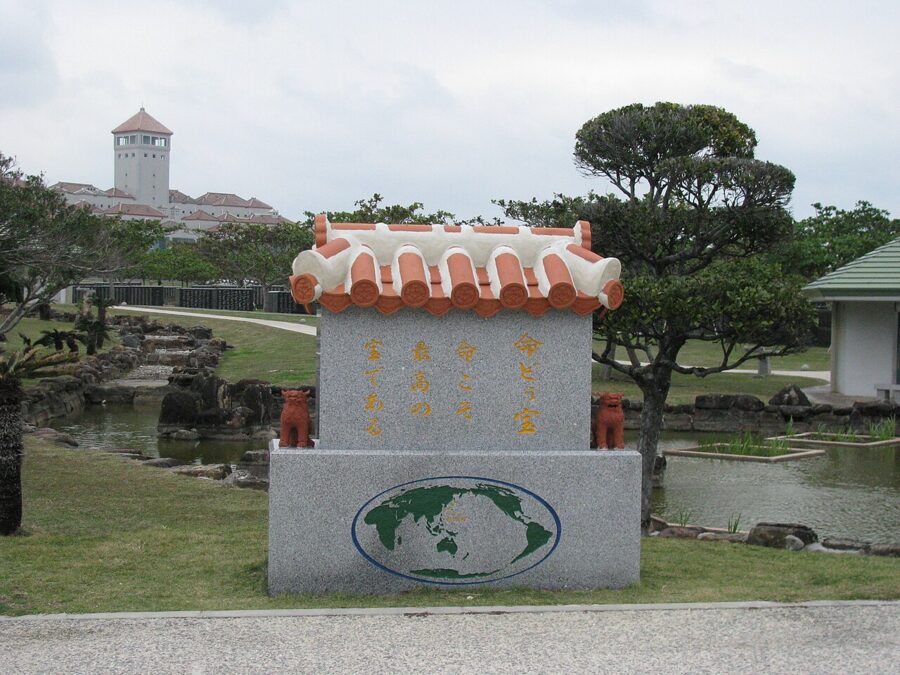
Most Okinawans alive today were born after the battle, and the 2026 declaration said as much: remembrance now rests on testimony, memorial work and preserved sites. You will hear the Okinawan saying nuchi du takara (命どぅ宝), “life is the treasure”, from older people and at protests. The phrase is the closest thing the islands have to a lesson drawn from 1945.
The memory is local in a way the national one is not: every village has its own cenotaph and its own cave. When politicians in Tokyo speak of the battle as a sacrifice for the nation, Okinawans tend to answer with Ota’s telegram, or with the 94,000.
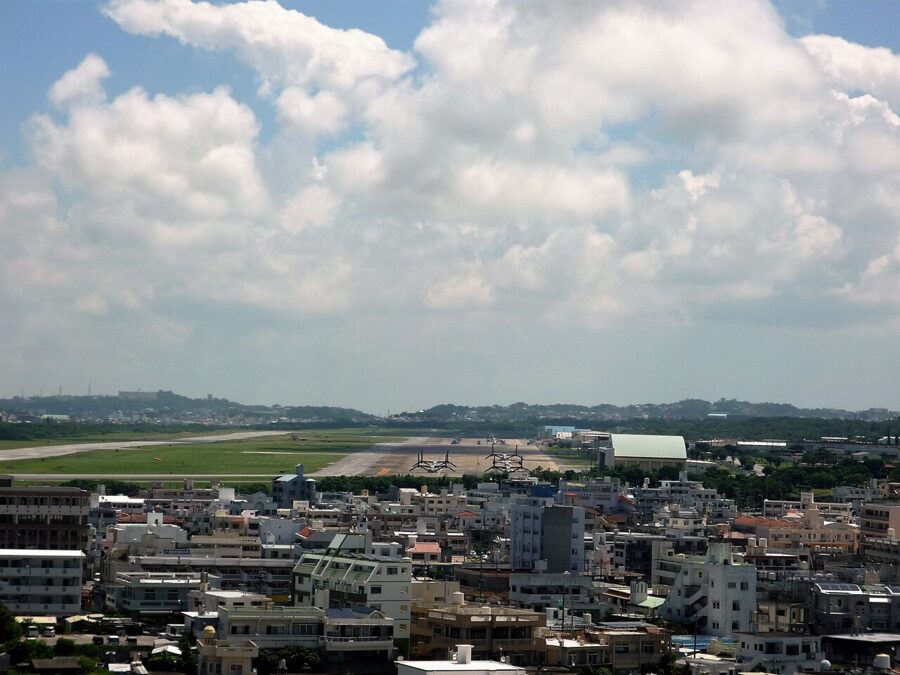

And then there are the bases, which began as the battlefield itself: the Americans built on land they took in 1945, and much of it was never handed back. The argument over Futenma, Henoko and the newer Japan Self-Defense Forces (SDF) posts on Yonaguni, Miyako and Ishigaki is the postwar chapter of this story, and it belongs to Japan since 1945. You can see why it stays raw from the deck at Kakazu, where the ridge the Americans spent April taking now looks over their runway.
Go back to Mabuni on any day that is not 23 June and the walls are mostly empty, the sea loud below. There are 242,659 names, and next June there will be a few more.