
For most of the last fifty years, the visitor Japanese households least wanted at the door on a weekday evening was the man from NHK. He carried a clipboard, asked whether there was a television in the flat and, if there was, produced a contract. In 2023 NHK stopped sending contracted canvassers door to door, citing complaints and cost. In September 2026 it started again.
The other scene everyone knows is gentler. On New Year’s Eve the same broadcaster puts on Kōhaku Uta Gassen (紅白歌合戦, “Red and White Song Battle”), women against men in song, and a third of Tokyo-area households still watch the second half. Both belong to Nippon Hōsō Kyōkai (日本放送協会), the Japan Broadcasting Corporation, which takes no advertising, answers to the National Diet and is paid for by most households that own a television.

NHK’s own fee pages say it is neither a state broadcaster nor “half government, half private”. Critics on the left say the government steers it anyway; critics on the right, and a small party built on the grievance, say nobody should be forced to pay for it.

In this article
From a hilltop radio station to a “special corporation”
Japanese broadcasting began at 9.30am on 22 March 1925, from a temporary studio in Shibaura, Tokyo. The announcer read out the call sign JOAK, and Gotō Shinpei, president of the new Tokyo Broadcasting Station, promised listeners equal access to culture. In July the station moved to Atagoyama, a wooded hill in what is now Minato Ward, which NHK still calls the “home of broadcasting”.
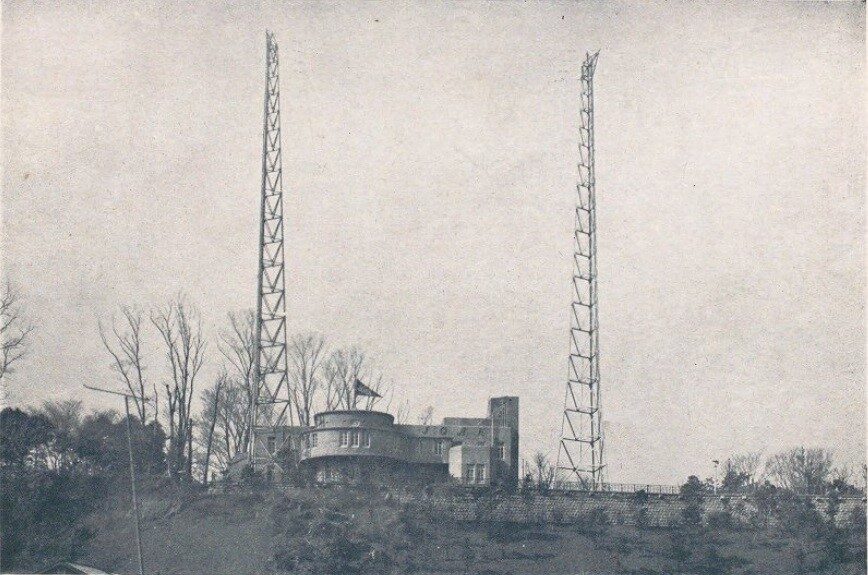
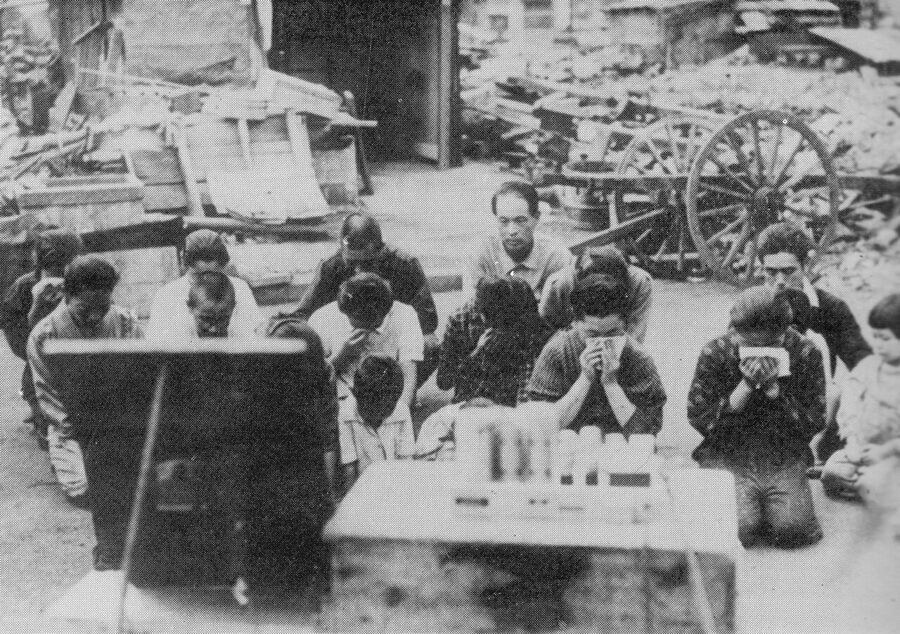
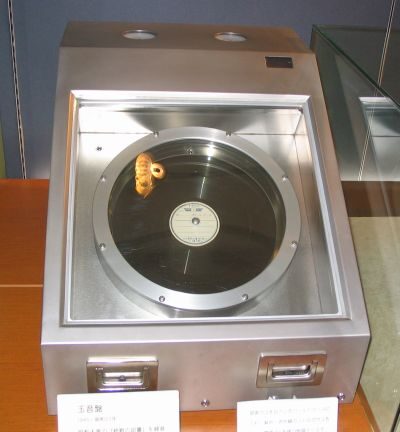
In August 1926 the Tokyo, Osaka and Nagoya stations merged into a single incorporated association, the first Nippon Hōsō Kyōkai. Through the war it was the government’s voice at home and abroad. On 15 August 1945 it broadcast the recording of Emperor Showa (Hirohito) accepting surrender, the first time most of his subjects had heard him speak.
The occupation rebuilt the system. On 1 June 1950 the association was dissolved and NHK refounded under the Hōsō-hō (放送法, Broadcast Act) as a tokushu hōjin (特殊法人), a “special corporation” created by statute. It owns itself: no shares, no government stake, no advertisers. Television followed on 1 February 1953, Japan’s first regular TV service, months ahead of the first commercial station.

Who runs it
At the top sits the Board of Governors (keiei iinkai, 経営委員会): twelve part-time members appointed by the prime minister with the consent of both houses of the Diet. No more than four may belong to one party, and nobody from a newspaper or another broadcaster may sit. The board approves the budget and appoints the president, who names the directors and runs the place day to day.
Appointing a president takes nine of the twelve votes. On 8 December 2025 the board promoted the vice-president, a career NHK journalist named Inoue (井上樹彦), by exactly nine votes to three. He took office on 25 January 2026, the first insider in eighteen years after six presidents brought in from business and the Bank of Japan.
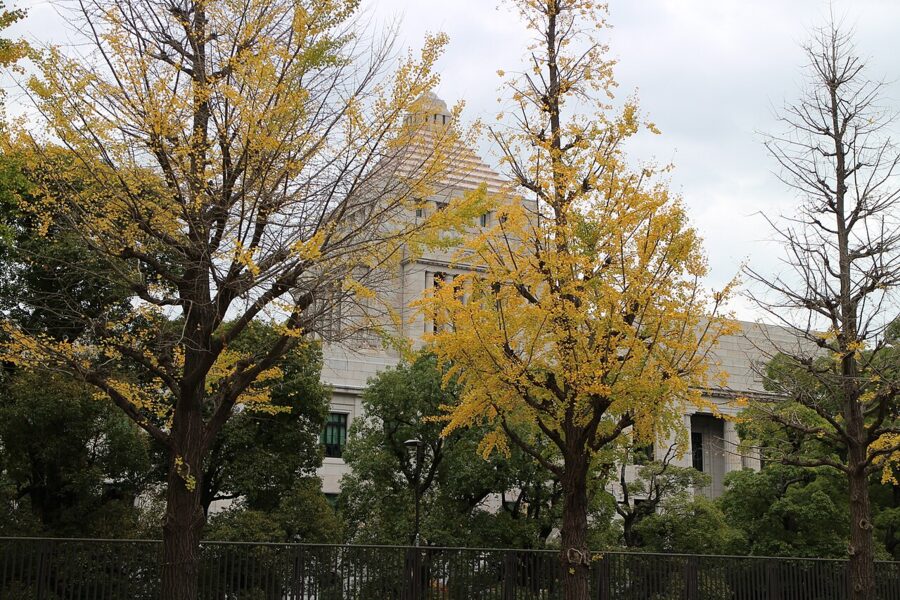

Then there is the Diet. NHK sends its annual budget to the Minister of Internal Affairs and Communications, who adds an opinion and passes it through the cabinet for the Diet’s approval; Article 70 says the fee is fixed by that approval. The same ministry licenses NHK’s transmitters and approves its contract terms, which is why a minister’s words about broadcasting carry weight.
The fee: who has to sign, and how much
The word on the bill is jushinryō (受信料), “receiving fee”. It is not a tax and not a subscription. Article 64 says anyone who installs equipment able to receive NHK must conclude a contract with it, and NHK’s receiving regulations set the price. Nobody has to watch, and there is no criminal penalty for not signing; the obligation is to sign, and then to pay.
The unit is the household: one contract covers every set in the home and the navigation screen in the family car. A second home or a student living away needs its own, with discounts. A hotel, office or shop needs one for each room or vehicle with a set in it.
| Contract (as of November 2026) | Monthly | 6 months ahead | 12 months ahead |
|---|---|---|---|
| Terrestrial (chijō): terrestrial-only TV, or the internet service only | ¥1,100 (about $7.10) | ¥6,309 (about $41) | ¥12,276 (about $80) |
| Satellite (eisei): any set that can receive the BS channels | ¥1,950 (about $12.70) | ¥11,186 (about $73) | ¥21,765 (about $140) |
Prices include consumption tax and are billed every two months unless paid ahead; Okinawa pays less, ¥965 (about $6.30) and ¥1,815 (about $11.80) a month. Because most televisions sold in Japan have a satellite tuner built in, 53% of contracts are satellite ones. Households on public assistance are exempt, as are students living away from their parents who meet the income test.

Cuts, and the October 2023 price
The current price dates from 1 October 2023, when NHK cut the fee by about a tenth: terrestrial from ¥1,225 (about $8) to ¥1,100 a month, satellite from ¥2,170 (about $14) to ¥1,950. It was the largest cut in NHK’s history, and it ended the higher price for paying by bank slip. Sanae Takaichi, internal affairs minister in 2019 and 2020, had pressed NHK publicly to bring the fee down.
The cut has a cost. Fee income in the year to March 2026 was ¥585.1 billion (about $3.8 billion), down from ¥632.8 billion (about $4.1 billion) two years earlier, and NHK ran its third deficit in a row, covered from a reserve set aside for fee cuts. Nobuyuki Koga, chair of the board, said in June 2026 that personally he thought it was really time for a rise.
The 2017 Supreme Court ruling
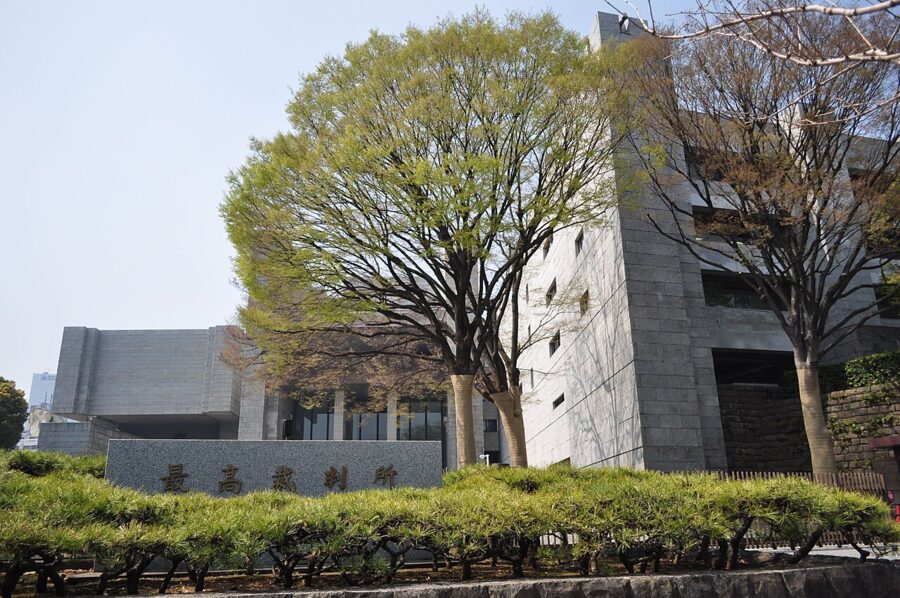
For decades a minority simply never signed, and NHK’s answer was to sue. The test case reached the Grand Bench of the Supreme Court, which ruled on 6 December 2017:
- Article 64 compels anyone with a set to contract with NHK, and does not breach the constitution’s guarantees of personal freedom, free expression or property.
- If a household refuses, NHK can sue for a judgment ordering it to accept; the contract exists from the day that judgment becomes final.
- The household then owes the fee back to the month the set was installed.
- The limitation period on those arrears runs only from the day the contract is formed, so years of not signing do not wipe the debt.

The practical message: refusing to sign does not save you money, it postpones the bill. In the year to March 2026 NHK filed 1,368 court demands for payment, eleven times the year before, and it plans more than 2,000 this year.
The surcharge since 2023
A 2022 amendment let NHK charge a warimashikin (割増金), a surcharge, from April 2023. Anyone who dodges payment by deceit, or misses the filing deadline (the end of the second month after installing a set) without good reason, can be billed the unpaid fee plus twice that again. For sets installed earlier, only arrears from April 2023 count.
The internet fee since October 2025
Another amendment made internet distribution one of NHK’s core duties from 1 October 2025, and NHK ONE replaced the NHK+ streaming service that day. A household that already pays owes nothing extra. A household with no television that starts using the service must sign a terrestrial contract at the same ¥1,100.
Owning a phone or computer does not trigger the obligation. Only “starting to receive” does, which NHK defines as completing an on-screen step confirming you want the service. By the end of March 2026 NHK ONE had 3.62 million accounts, NHK said at a briefing in April; only 128,000 were new rather than moved over from NHK+.
Refusing to sign does not save you money. It postpones the bill.
How many people pay
At the end of March 2026 NHK had 40.33 million contracts, 38.59 million of them paying and about 1.74 million in arrears, the first fall in unpaid contracts for six years. Its estimate of household payment was 76.9%, down 0.4 points on the year.
The national figure hides a map. Akita households pay at 96.5%, and six prefectures from Aomori to Shimane are above 90%. Tokyo is at 65.6%, Osaka 63.9%, and Okinawa, where NHK took over from a local public broadcaster only at reversion in 1972, 46.3%. NHK blames frequent moves, single-person flats and buildings canvassers cannot get into.
What the money buys
As of November 2026 NHK runs these services, plus regional stations in every prefecture and a broadcasting research laboratory in Setagaya.
- General TV (Sōgō, 総合): news, the morning drama, the taiga drama, Kōhaku.
- E-tele (Eテレ), educational since 1959: schools, children’s shows, language lessons, documentaries.
- NHK BS, BS Premium 4K and BS8K, the satellite line-up since December 2023.
- NHK AM and NHK FM: Radio 1 and Radio 2 were merged into NHK AM in March 2026.
- NHK World-Japan: English television, radio in 17 languages, and Japanese services for people abroad, free to stream anywhere.
- NHK ONE, with a week of catch-up, and NHK On Demand, a separate paid archive at ¥990 (about $6.40) a month.
NHK’s own chronology lists the moments it carried, from the 1959 royal wedding parade to the Tohoku earthquake of 2011; its case for the fee leans hardest on disaster coverage.
Independence: who pulls which levers
Article 3 of the Act says no one may interfere with programmes “except under the authority of law”. The arguments start with that clause. Three levers sit in political hands: the prime minister appoints the governors, the Diet approves the budget and fee, and the ministry approves the rules and holds the licences. None lets a politician order a programme off the air, but all of them keep NHK’s managers attentive.
The Momii years
In November 2013 the Diet approved new governors chosen by Shinzo Abe’s government, the novelist Naoki Hyakuta among them, whom the Japanese press described as close to the prime minister’s views. In December the board chose Katsuto Momii, a former vice-president of the trading house Mitsui and Co., as president.
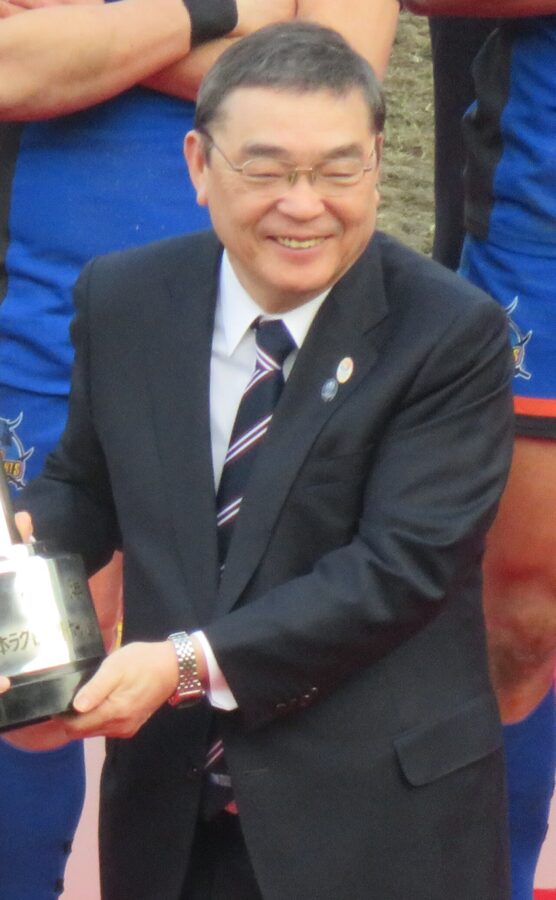

At his first press conference, on 25 January 2014, Momii was asked about the wartime “comfort women”. NHK’s own summary has him saying they existed in every country at war and that the issue was complicated because Japan alone was accused of forced recruitment. Reminded that the conference was official, he said he withdrew it all; the reaction ran from Tokyo to Seoul, and in February he told the Diet the remarks had been personal.
His defenders, mostly on the right and online, said he had only said aloud what many people thought. His critics said that was the problem: a president chosen by a board the prime minister had just reshaped had echoed the government’s line on the most sensitive subject in Japan’s relations with its neighbours.
The ministry and Article 4
Article 4 requires broadcasters to be politically fair, not to distort facts and to show as many angles as possible on contested issues. The government holds that the ministry can enforce it; the industry’s watchdog reads it as an ethical code for broadcasters to police themselves. The argument flared in 2015 over a commentator’s on-air outburst on TV Asahi, a press freedom row in which the ruling party also called NHK executives to a hearing.
On 8 February 2016 Takaichi, then the minister, declined in the Diet to rule out ordering a station off the air for breaching Article 4. No such order has ever been issued. I would read her answer as a reminder of where the licence comes from rather than a threat, and the broadcasters read it the same way, which was the point.
The Japan Post episode
In April 2018 the investigative programme Close-up Gendai+ (クローズアップ現代+) reported improper sales of Japan Post Insurance policies. The presidents of the three Japan Post companies complained to NHK’s board in a letter dated 5 October 2018, and on 23 October the board formally cautioned NHK’s president, Ryoichi Ueda, over governance.
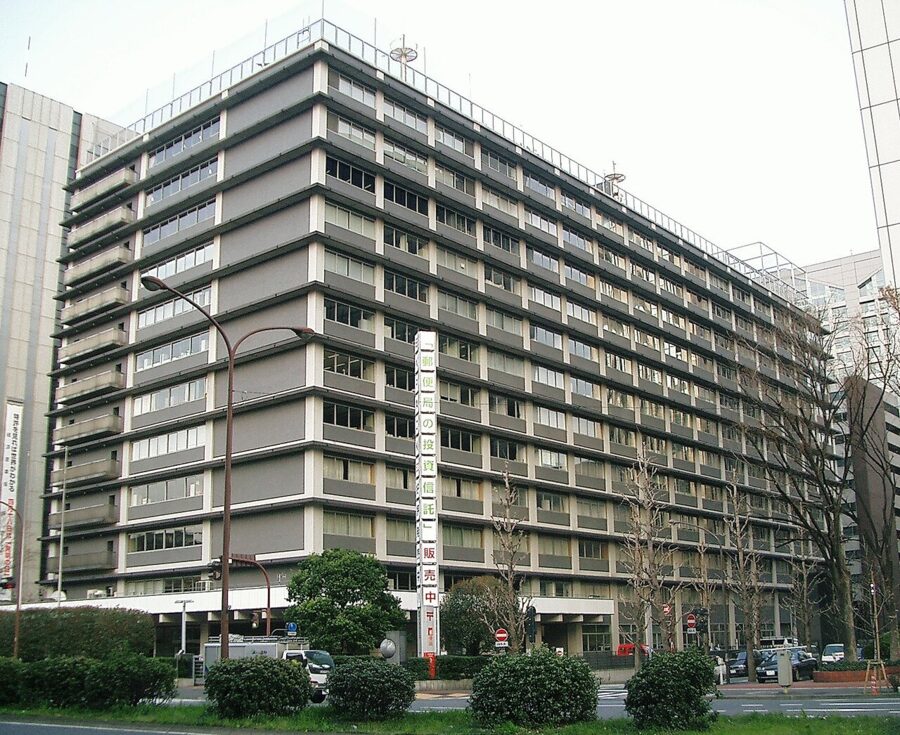

The acting chair, Shunzo Morishita, said the board had discussed governance, not editing. The minutes were released in full only in July 2021, after NHK’s own disclosure committee had twice recommended it, and in December 2024 Morishita settled a lawsuit brought by viewers over the episode.
Each side’s case, at its strongest, runs like this. Press-freedom groups and the liberal papers say a broadcaster whose board is picked by the prime minister and whose budget passes through the Diet will always lean towards the governing party. Conservatives and the fee’s opponents say NHK is large, compulsory and, in their view, tilted against that party, and that the real scandal is making people who never watch it pay.
The programmes that define it
Three programmes fix NHK in the national calendar.
Asadora, the morning drama
The renzoku terebi shōsetsu (連続テレビ小説, “serial television novel”), known as asadora, has filled a fifteen-minute morning slot since 1961, usually half a year to a story and almost always built around a woman’s life. The peak was Oshin in 1983, a peasant girl’s rise from poverty that reached a Kanto rating of 62.9% and was later shown in dozens of countries. Burassamu stars Shizuka Ishibashi as a heroine modelled on the writer Chiyo Uno.
The taiga drama
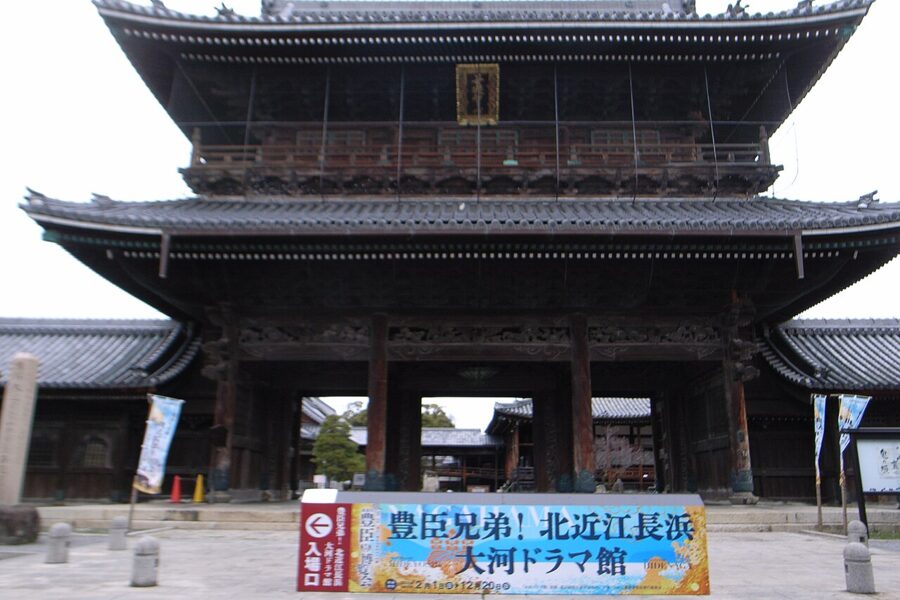
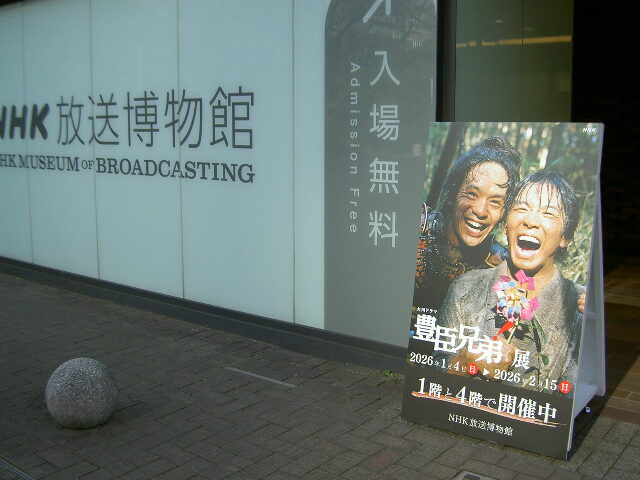
The taiga dorama (大河ドラマ, “great river drama”) is a year-long historical epic on Sunday nights, made since 1963, and it reliably sends tourists to whichever castle town it features. The 2026 drama, Toyotomi Kyōdai! (The Toyotomi Brothers!), follows Hideyoshi’s younger brother Hidenaga, played by Taiga Nakano.
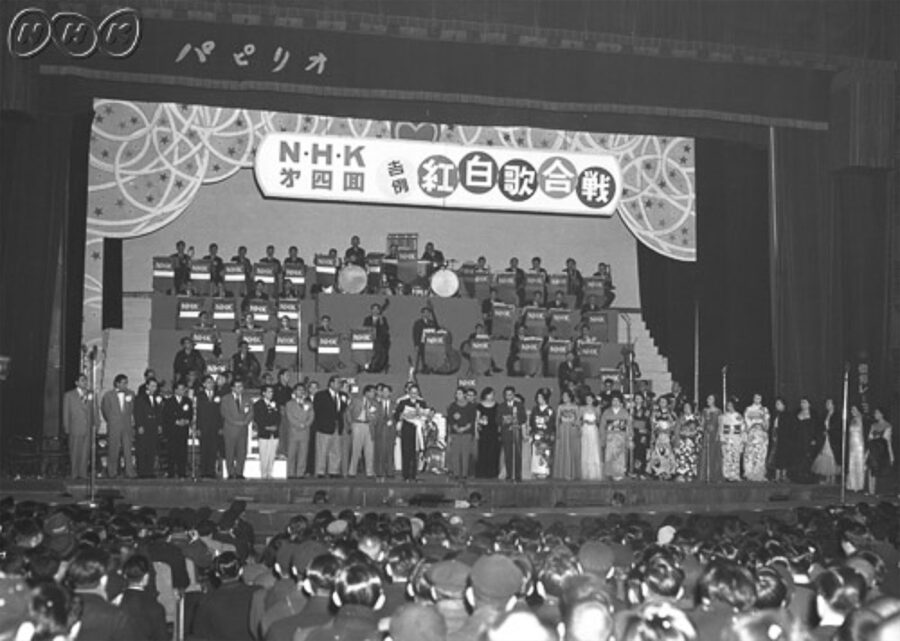
Kōhaku on New Year’s Eve
Kōhaku Uta Gassen began on radio on 3 January 1951 and moved to New Year’s Eve in 1953. In 2023, after the revelations about Johnny Kitagawa’s abuse of young performers, NHK stopped inviting acts from his former agency, and for the first time since 1979 none appeared: a measure of how far Johnny’s had fallen in the TV and idol business.
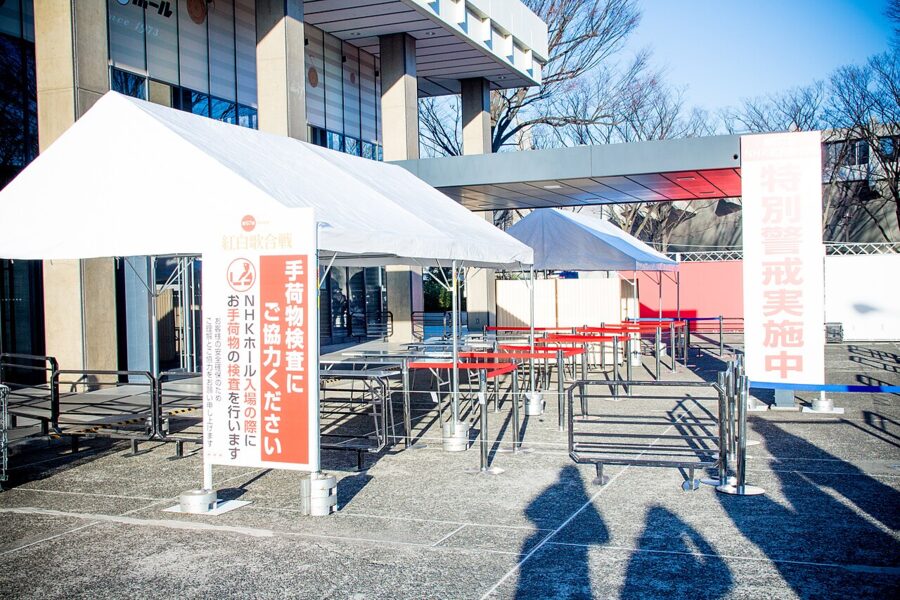

The 77th Kōhaku goes out from NHK Hall on Thursday 31 December 2026, 7.20pm to 11.45pm, under the theme “Koete ikō, uta to tomo ni” (“Getting through it together, with song”). The hosts are the actors Mana Ashida and Masato Sakai, Kazunari Ninomiya, formerly of Arashi, and the announcer Nahoko Suzuki. Then the temple bells of Yuku Toshi Kuru Toshi lead into the New Year customs.
The party that ran against the fee
In June 2013 Takashi Tachibana (立花孝志), a former NHK accounts clerk who had left in 2005 after exposing irregular spending to a weekly magazine and being disciplined himself, founded a group to fight the fee. It soon took the name NHK kara Kokumin wo Mamoru Tō (NHKから国民を守る党), the Party to Protect the People from NHK. Its policy was to scramble NHK’s signal so only payers could watch, and its slogan, shouted in Tachibana’s televised campaign broadcast for the 2016 Tokyo governor’s race, was “NHK wo bukkowasu!” (“Smash NHK!”).
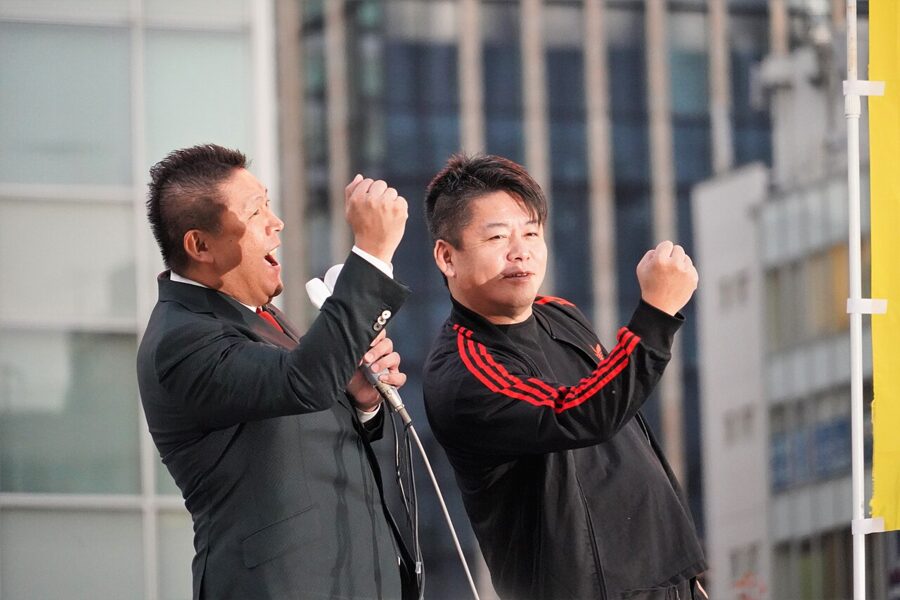

The joke worked. In the House of Councillors election of 21 July 2019 Tachibana won a national seat and the party passed the threshold to count as a political party in law. He gave the seat up within three months to run in a by-election, and lost. In 2022 he received a suspended prison sentence for obstructing NHK’s business, a case built on contract data he had obtained from a former collector; the Supreme Court upheld it in March 2023.
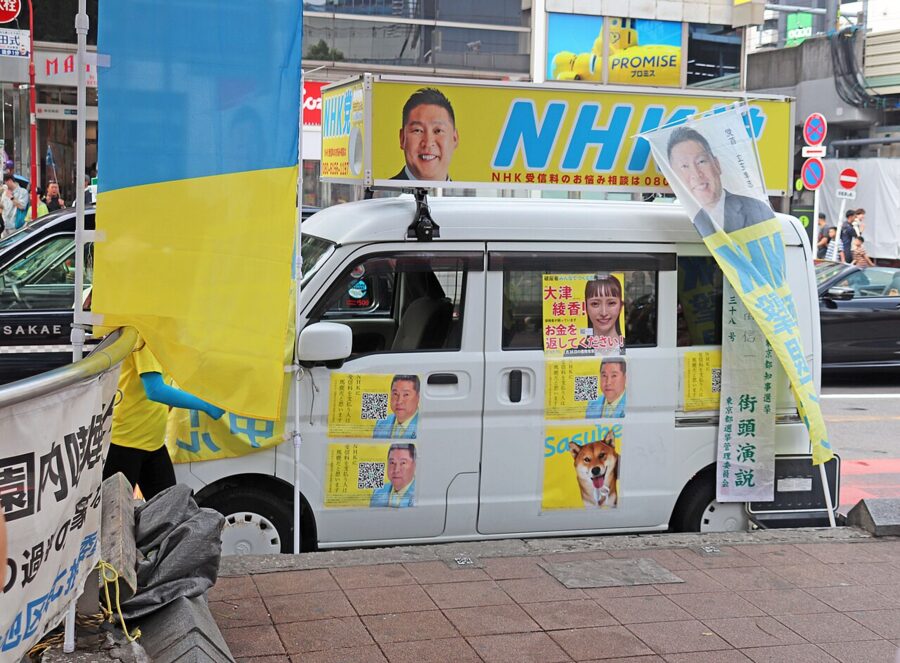

The party then split over its leadership and drifted from its single issue. In November 2025 Tachibana was arrested and indicted for defaming Hideaki Takeuchi, a Hyogo assembly member who had died that January, and he was refused bail more than once in 2026. In a separate civil case a court in Amagasaki ordered him in January 2026 to pay ¥3.3 million (about $21,000) to another assembly member over false statements in a speech. The party’s last Diet member had left in November 2025, and on 27 February 2026 it announced it was going dormant.
The fee outlived the party. What it left behind is vocabulary: a scrambled NHK, and a fee you could opt out of, are now ordinary lines in any argument about NHK, and I would count that as Tachibana’s one lasting result.
How a visitor meets NHK
As a tourist you owe NHK nothing. The television in a hotel or ryokan room is covered by the hotel’s own contract, one per room, as NHK’s guide to contract units sets out, and carrying a smartphone creates no obligation. People who move to Japan and install a set, foreign residents included, fall under the same rule as everyone else.
The easiest way to watch is the free NHK World-Japan app, in English. In a Tokyo hotel, channel 1 is General TV and channel 2 is E-tele. Switch on at 8am on a weekday for the morning drama; on Sunday at 6pm NHK BS shows the taiga drama two hours before General TV does.
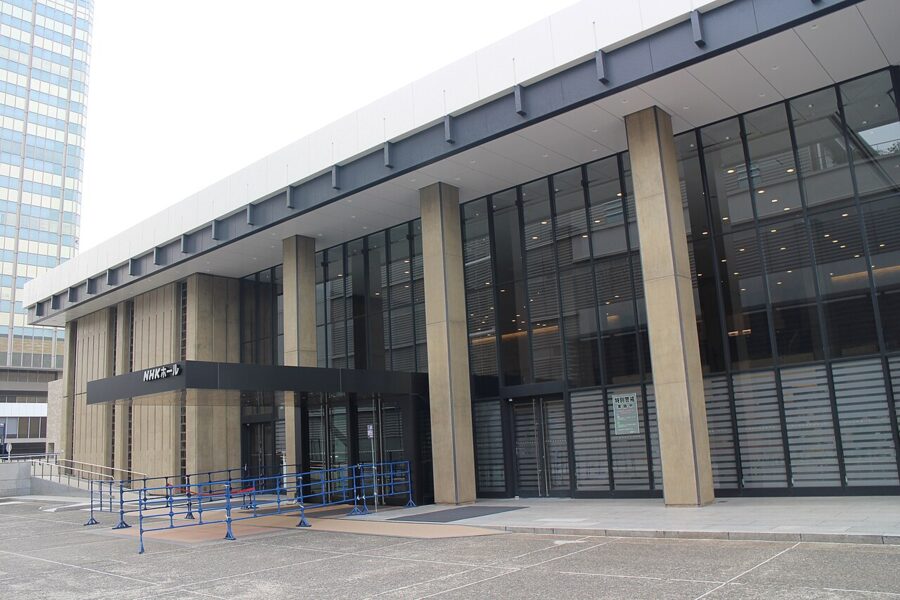

Shibuya: the Broadcasting Center
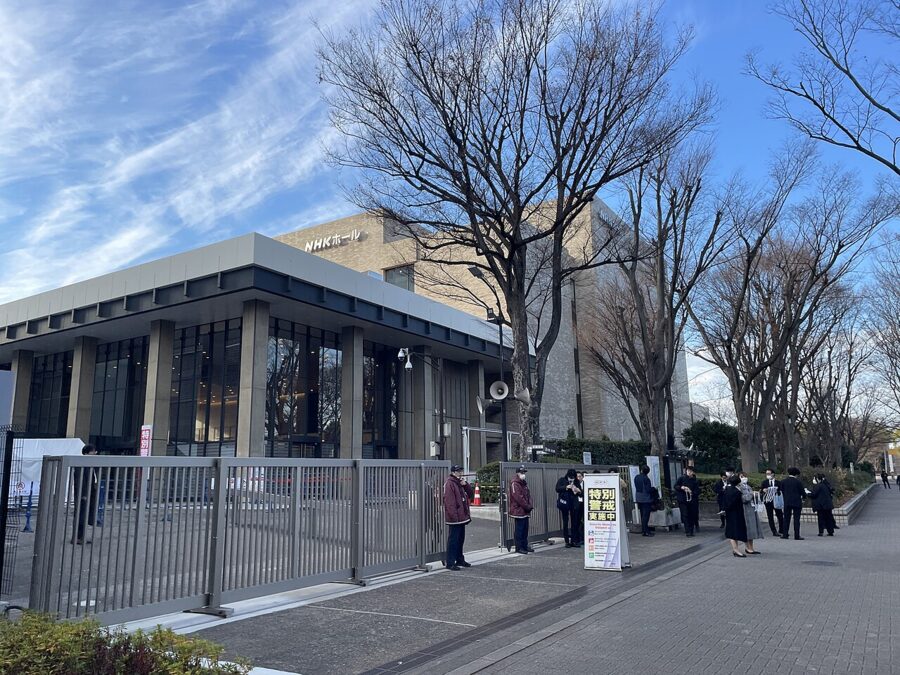
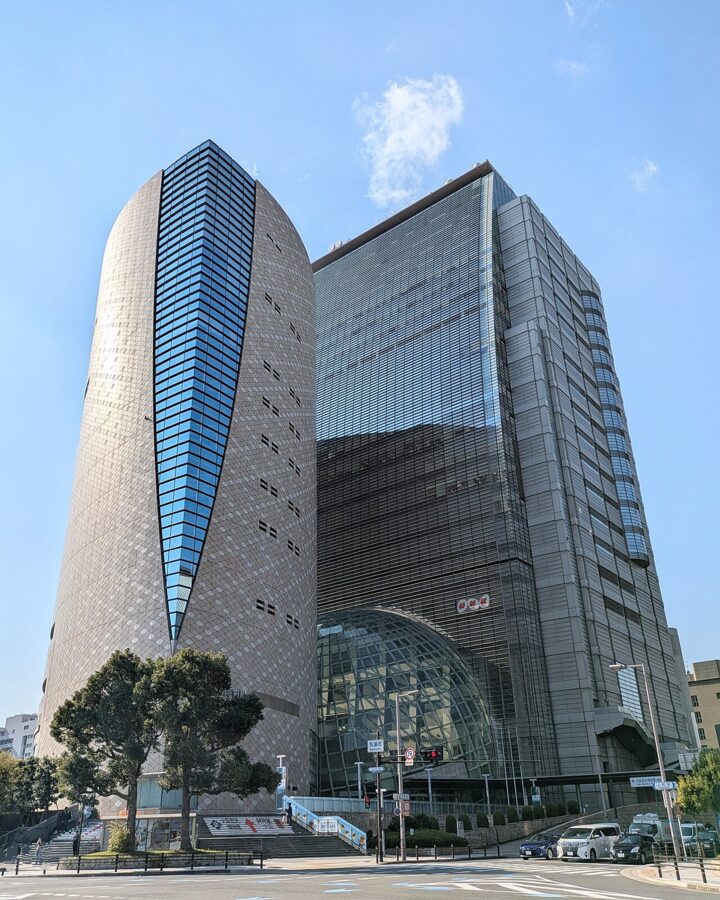
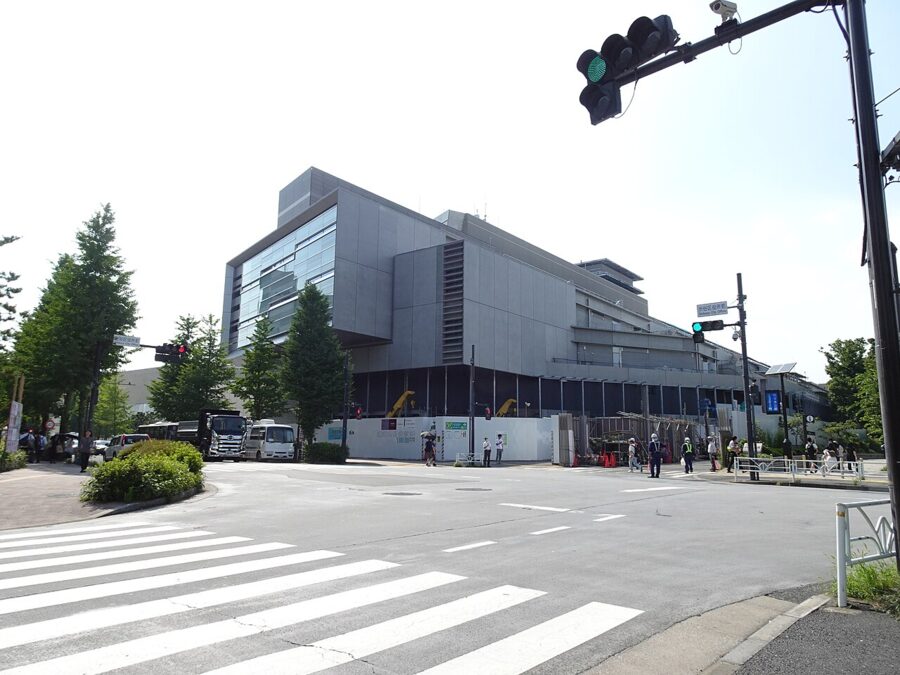
The neighbourhood walk from Shibuya Station up Koen-dori ends at the Broadcasting Center and NHK Hall, beside Yoyogi Park. You can look, but not go in. The NHK Studio Park, which once let visitors walk past live studios, closed in February 2020 and has not reopened; NHK’s revised rebuilding plan of April 2025 folds its planned public building into a second-phase block due to open in fiscal 2038.

Atagoyama: the Museum of Broadcasting
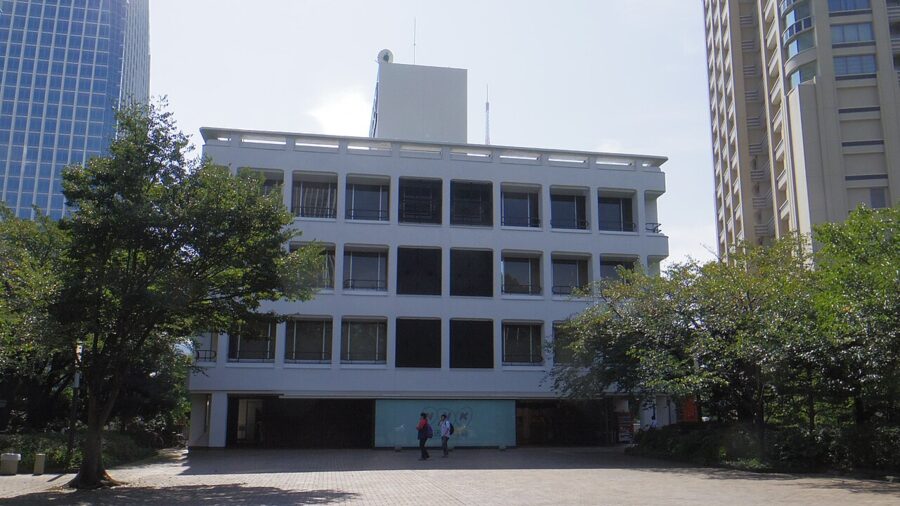
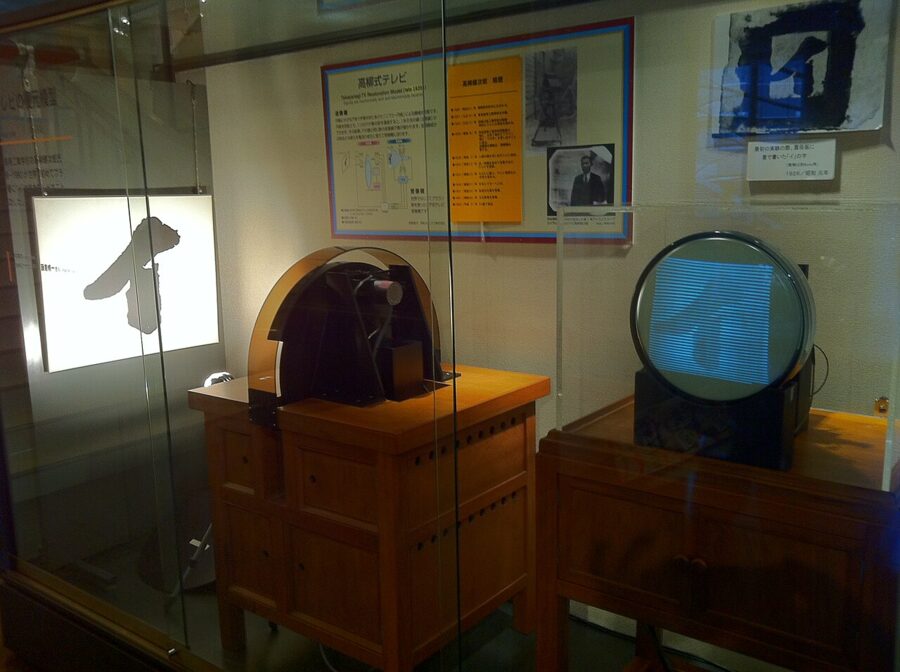
The better visit is to where it started. The NHK Museum of Broadcasting opened in 1956 on the Atagoyama site of the 1925 station and calls itself the world’s first museum devoted to broadcasting. Its four floors hold early radios and cameras, a studio where you can try reading the news, a Kōhaku display and a library.

| NHK Museum of Broadcasting (as of November 2026) | |
|---|---|
| Hours | 9.30am–4.30pm |
| Closed | Mondays (Tuesday when Monday is a holiday); 24 December 2026–3 January 2027 |
| Admission | Free |
Hours are from the museum’s own guide. From April 2027 the fourth-floor library will admit only visitors who book a week ahead.

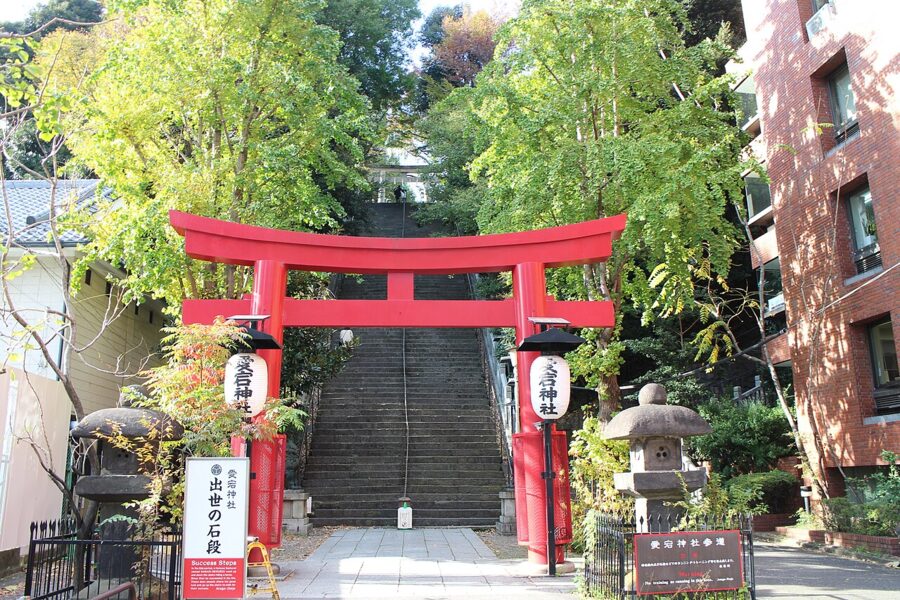
Take the Hibiya Line to Kamiyacho Station, exit 3, and walk about eight minutes; Toranomon Hills Station (Hibiya Line, exit A1) and Onarimon Station (Toei Mita Line, exit A5) are about ten minutes away.

The museum begins with the morning in 1925 when an announcer called “JOAK” into a microphone for the first time. A century on, somewhere in Tokyo this evening, someone with a clipboard is knocking on a door to ask who is listening.