
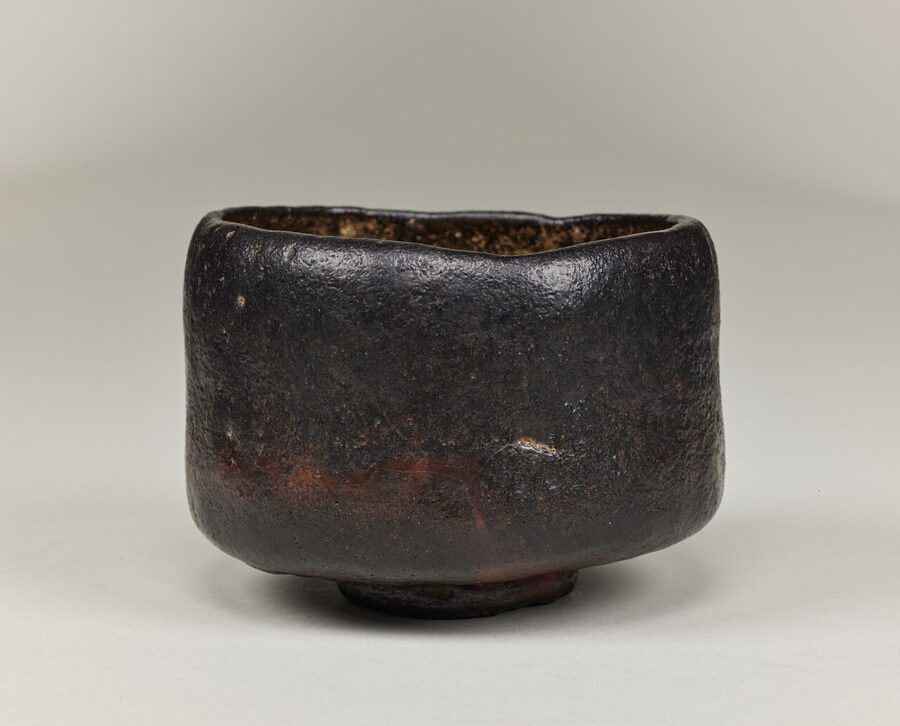

Stop people on a Japanese street and ask them what wabi-sabi (侘び寂び) means, and most will smile, tilt their head and say iya, yoku wakaranai desu: no, I’m not really sure. The playwright Shoji Kokami (鴻上尚史) tried it for NHK‘s Cool Japan, the programme he hosted, and wrote that almost every Japanese passer-by gave that answer.
The foreigners in Japan his team asked did not hesitate. Simplicity, they said; owning nothing; being happy with less; the centre of Japanese culture.
Kokami had his own reason to sympathise with the shruggers: a classmate at drama school in Britain once asked him the difference between wabi and sabi, and he went to the Kōjien, Japan’s best-known dictionary. Its entry for wabi describes a quiet, tasteful mood and ends with the word “sabi”. Its entry for sabi describes something aged and tasteful and, again, quiet. He admits he could not tell them apart either.
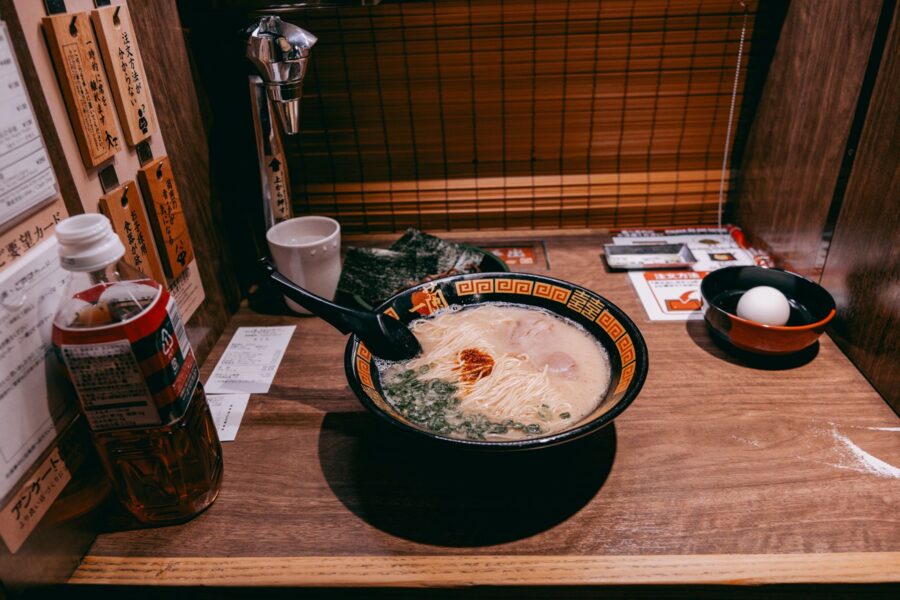
The same programme asked foreign guests to photograph something that felt like wabi-sabi to them. A Chilean woman brought back a picture of a ramen counter divided into one-person booths, the kind the Hakata chain Ichiran is known for: you cannot see the staff, nobody talks, and it is just you and the bowl. Kokami confesses he did not follow her reasoning. A British guest, who had first met the idea through an English translation of Jun’ichirō Tanizaki’s In Praise of Shadows, nodded hard.
That gap, between a word almost nobody in Japan will define and a word the rest of the world defines with confidence, is the subject here. I would take the shrug seriously. It is the most accurate thing anyone says about the phrase, and it has a history.
In this article
Two words from two different rooms
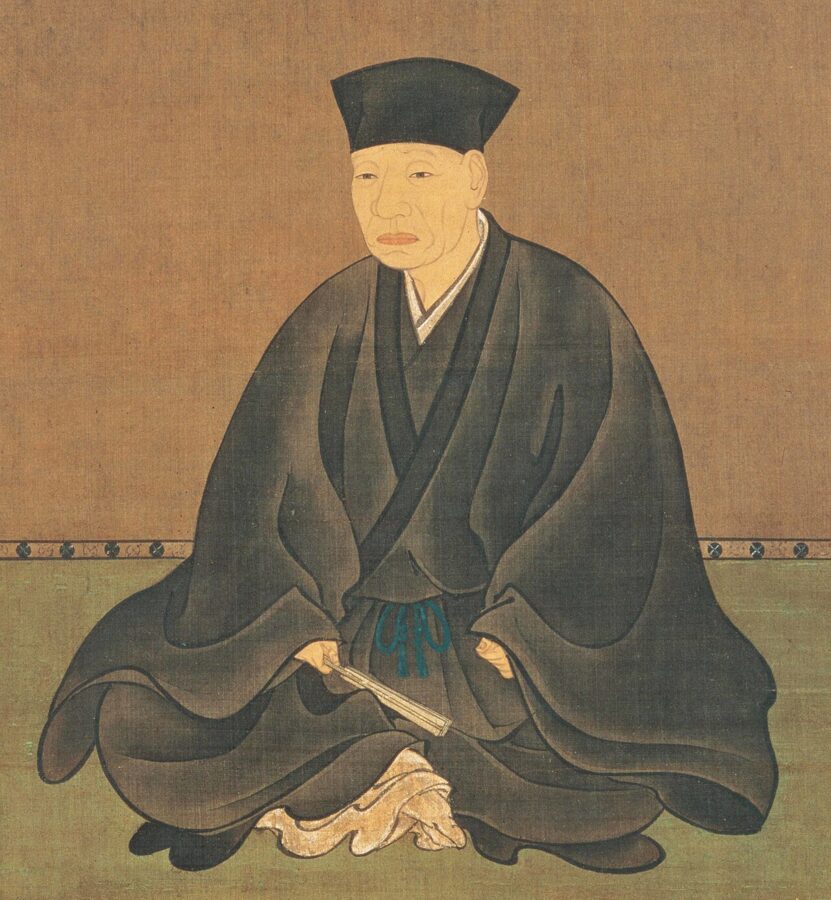
Wabi (侘び) is the noun of the old verb wabu, to languish or be at a loss, and in classical poetry it meant something close to misery. The Heibonsha encyclopaedia’s entry traces how medieval hermits turned that poverty into a badge of freedom from status, and how the tea masters Takeno Jōō and Sen no Rikyū (千利休) made it the spirit of wabi-cha, plain tea served in a tiny room with rough bowls, at the very moment warlords were competing for Chinese treasures. The Nanpōroku, the text that says Jōō saw wabi in a poem about a bare autumn shore and Rikyū in a poem about spring grass showing through the snow, only surfaced in 1690, a century after Rikyū’s death, and several historians suspect it was written then.
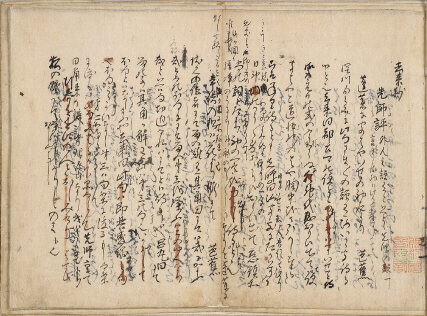
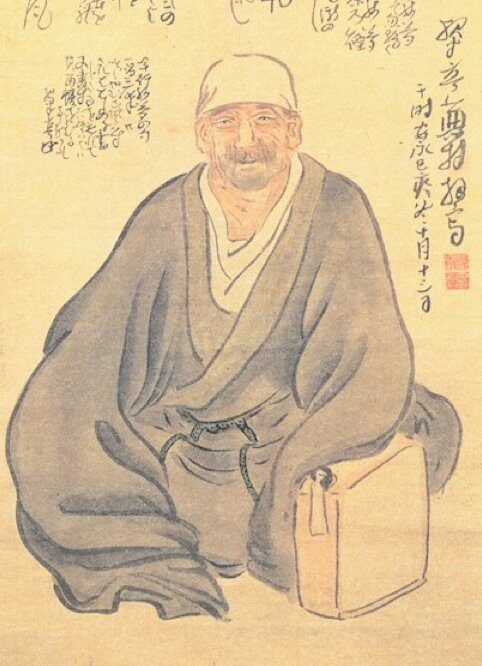
Sabi (寂び) comes from sabu, to grow old or desolate; the modern verb sabiru means to rust. It became a poet’s word in the school of Matsuo Bashō (松尾芭蕉), though the Nipponica encyclopaedia notes that Bashō himself hardly ever used it. The record comes from his pupil Mukai Kyorai, in the Kyoraishō: “Sabi is the colour of a verse. It does not mean a verse about loneliness.”
Bashō praised Kyorai’s own hanamori ya / shiroki kashira wo / tsukiawase (“the blossom-keepers, putting their white heads together”) because the sabi showed in it well. Two old men under cherry trees, gossiping. That is sabi, not a cracked pot.
The two words travelled separately for centuries, one in the tea room and one in verse. Japanese speakers do pair them, usually written with a dot, わび・さび, as a stock phrase for “traditional Japanese taste”. Paul Atkins, a professor of Japanese at the University of Washington, points out that the hyphenated compound took off abroad and came back to Japan from there.
The everyday words around it
Nobody in Japan says “that’s very wabi-sabi” about their kitchen. But the words that grew from the same roots are in daily use, and they tell you more about the feeling than any definition.
Wabishii and sabishii
Wabishii (侘しい) is the adjective of wabi, and it has never stopped meaning bleak. The Daijisen dictionary’s example is hitori wabishiku yūshoku wo toru, eating dinner alone, miserably. A wabishii bedsit is a sad one. The tea masters took a word for shabby and decided shabby could be chosen.
Sabishii (寂しい) is lonely, and it is one of the first adjectives a learner meets. It also turns up in places you would not expect. Futokoro ga sabishii, “my breast pocket is lonely”, means you are short of cash, and kuchi ga sabishii, “my mouth is lonely”, means you want a snack.
At a sushi counter, sabi is chef’s slang for wasabi, and sabi-nuki means “hold the wasabi”. In a karaoke booth the sabi is the chorus, the part everyone waits for. The dictionary calls its origin unknown.
Shibui, the taste of an unripe persimmon
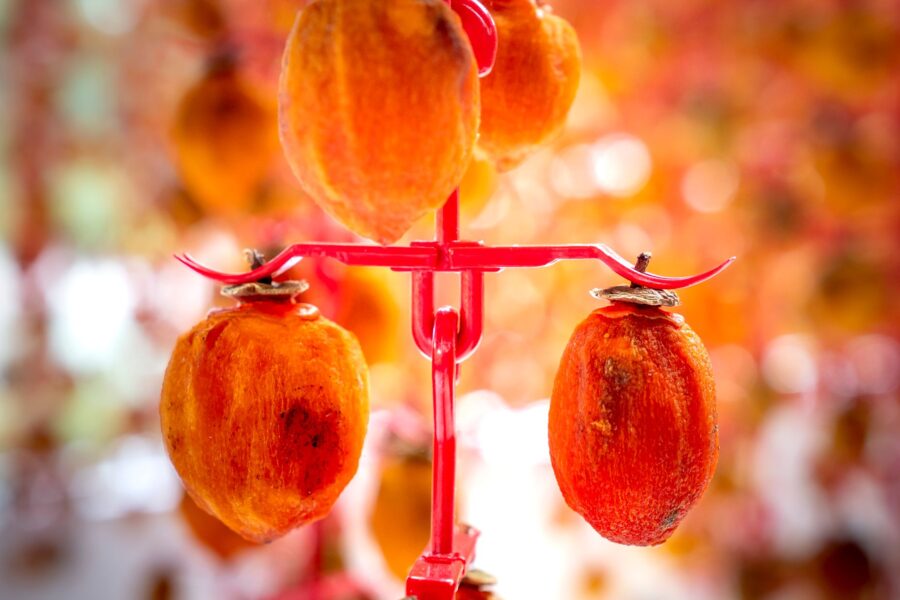
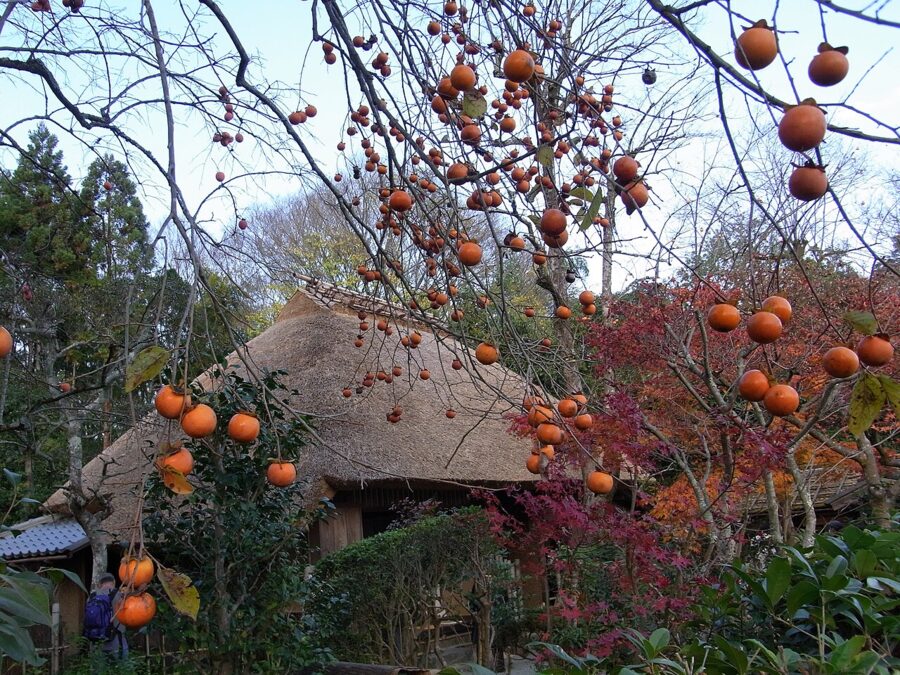
Shibui (渋い) starts in the mouth. It is the dry, puckering taste of an astringent persimmon, and Japanese farmers have long peeled those persimmons and hung them to dry until the tannin turns sweet. From the taste it moved to colour, voices and choices: a shibui tie is dark and good, a shibui voice is low and lived-in, and me no tsukedokoro ga shibui means “you have a discerning eye”. It can also mean stingy, or a sour face.
In daily speech, shibui is the word Japanese people actually use where English speakers reach for “wabi-sabi”. The critic Sōetsu Yanagi (柳宗悦) said as much in the essays later published in English as The Unknown Craftsman (1972), naming shibui, wabi and sabi together as words for a hidden beauty in rough things.

Iki: chic, and knows it
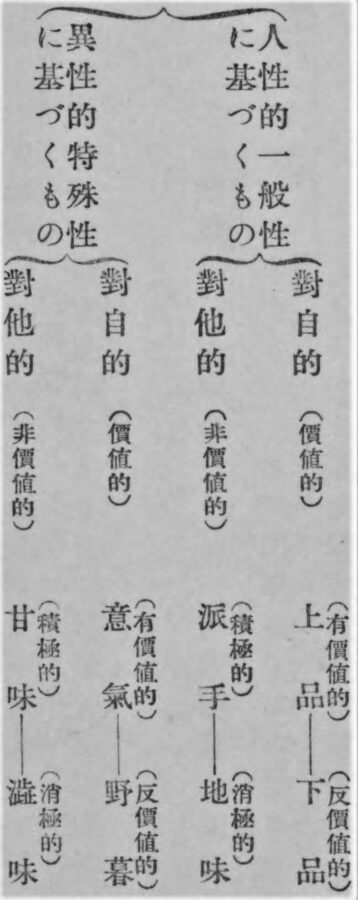
Iki (粋) is the Edo city’s word for style that is sharp, a little flirtatious and never tries too hard: a striped kimono, a well-judged exit. The philosopher Shūzō Kuki (九鬼周造) gave it a whole book, “Iki” no Kōzō (The Structure of Iki, 1930), built on three parts: allure, pride and resignation. He took care to set it apart from shibumi and jimi, plainness. Iki is the opposite of yabo, the uncool, and people still use it of a gesture: iki na hakarai is a classy thing to have done.
Mottainai, the word that went abroad first
Mottainai (勿体無い) is what a Japanese grandmother says when you leave rice in your bowl: what a waste. Its older senses were “outrageous” and “too good for me”; the sense of waste is the one that survived. In 2005 the Kenyan Nobel laureate Wangari Maathai took the word up as a slogan for her environmental campaign after a visit to Japan, and the word went round the world with her campaign.


Mottainai is the plain motive behind a lot of what the export calls wabi-sabi. A chipped bowl is mended because a good bowl is too good to throw away. The gold seam came later.
Natsukashii
Natsukashii (懐かしい) is the word you hear most, and it has no English twin. It comes from natsuku, to grow attached, and for centuries it meant “dear, close to the heart” before it settled into “it brings back the old days”. An old song comes on in a shop and someone says natsukashii! with real pleasure.
There is no sadness in it, which is what separates it from nostalgia. A worn wooden counter is natsukashii long before it is sabi.
How wabi-sabi became an export
Atkins finds the term appearing in English print around 1980, after Yanagi’s book came out in translation. The turning point was 1994, when the American artist and writer Leonard Koren published Wabi-Sabi for Artists, Designers, Poets & Philosophers with Stone Bridge Press in Berkeley. It was short, handsome and certain, and it turned a scatter of Japanese words into a list of principles a designer could use. Koren later wrote, plainly, that in 1994 he “introduced the term”.
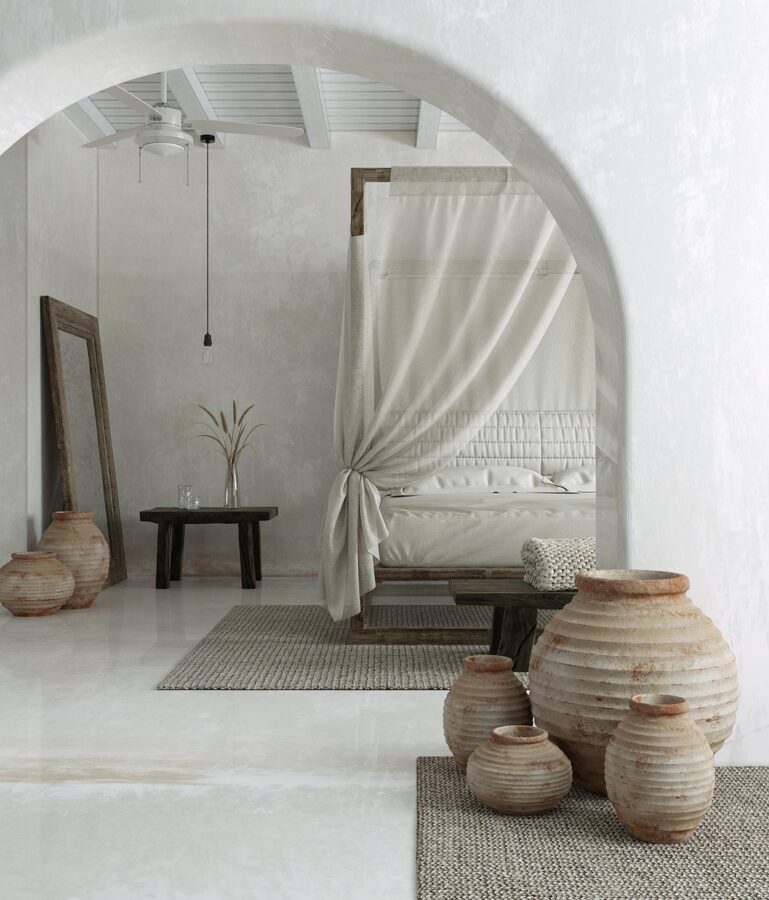
The books that followed moved from design to self-help. Beth Kempton’s Wabi Sabi: Japanese Wisdom for a Perfectly Imperfect Life (2018) sold the idea as a way to live, the road ikigai had taken in the bestsellers of 2016 and 2017. On TikTok the word now tags videos of stretch marks and lopsided dogs.
The “seven principles” are someone else’s
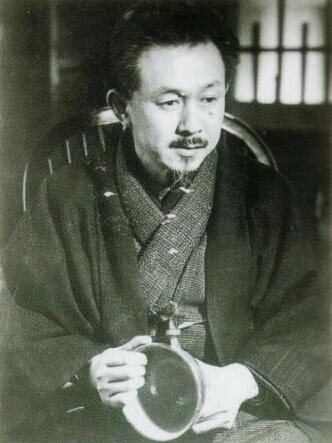
Ask what the seven principles of wabi-sabi are and you will usually be given the same list. Asymmetry, simplicity, austere sublimity, naturalness, subtle profundity, freedom from attachment and tranquillity: it comes from Zen to Bijutsu (Zen and the Fine Arts, 1958) by the Zen philosopher Shin’ichi Hisamatsu (久松真一). Hisamatsu was describing the qualities of Zen art. He was not writing about wabi-sabi, and none of his seven terms is wabi or sabi.
Is wabi-sabi a real concept, then? Wabi is real, sabi is real, and both have centuries of argument behind them. The lifestyle built on the pair is a modern design idea with Japanese names on it, which does not make it worthless. Koren himself conceded in Wabi-Sabi: Further Thoughts (2015) that his first book had skipped how the two words came to be joined, and that this “contributed to numerous misconceptions”.
What Japanese writers make of it
Japanese commentary on the export is mostly amused, and a little rueful. Kokami’s column runs under the headline that foreigners actually know the meaning of wabi-sabi better than Japanese people do. Japanese English-school blogs explain that “wabi-sabi” is now an English loanword like kimono, thanks to Koren’s bestseller, and then teach readers how to explain it to visitors.
The shrug on the street is not ignorance. A word you live inside is hard to stand outside of.
The editor Seigow Matsuoka (松岡正剛), in Nihon Bunka no Kakushin (2020), went back to the roots. Wabi, he argued, grew out of wabi the apology: a hermit with nothing to offer a guest says sorry for the poor tea, puts a single stalk of pampas grass in a jar, and serves it anyway. The apology itself becomes the hospitality. Anyone who has set out pampas grass for tsukimi will recognise the gesture.
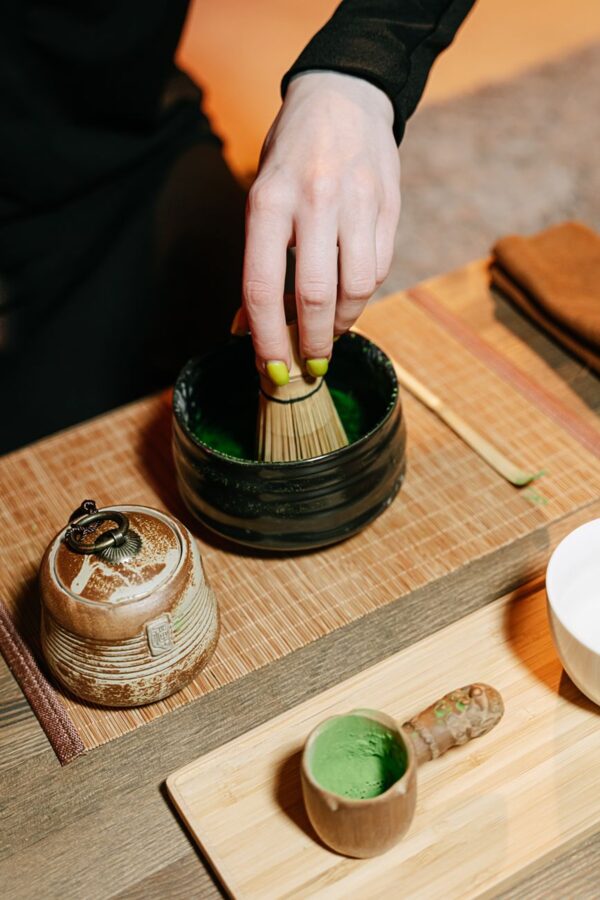
Then there is the line that you have to be Japanese to understand it. The same is said of kūki wo yomu and a dozen other customs; the claim belongs to the postwar genre of nihonjinron, theories of Japanese uniqueness. Peter Dale’s The Myth of Japanese Uniqueness (1986) and Harumi Befu’s Hegemony of Homogeneity (2001) took that genre apart. Kokami’s street interviews undo it from the other side: if being Japanese were the qualification, the passers-by would have had an answer.
Where the feeling is now
You will not find it on a sign. You find it where something has been used for a long time by people who did not throw it away. Old coffee shops, old wood and mended china are where you hear shibui and natsukashii said out loud.
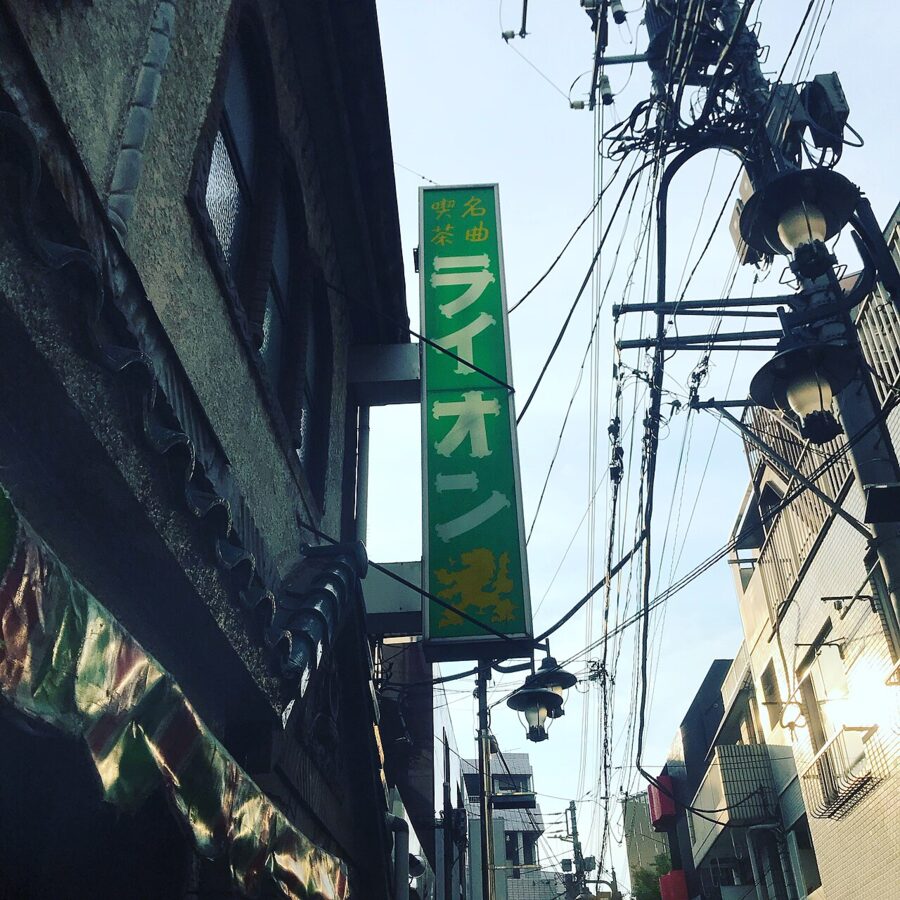
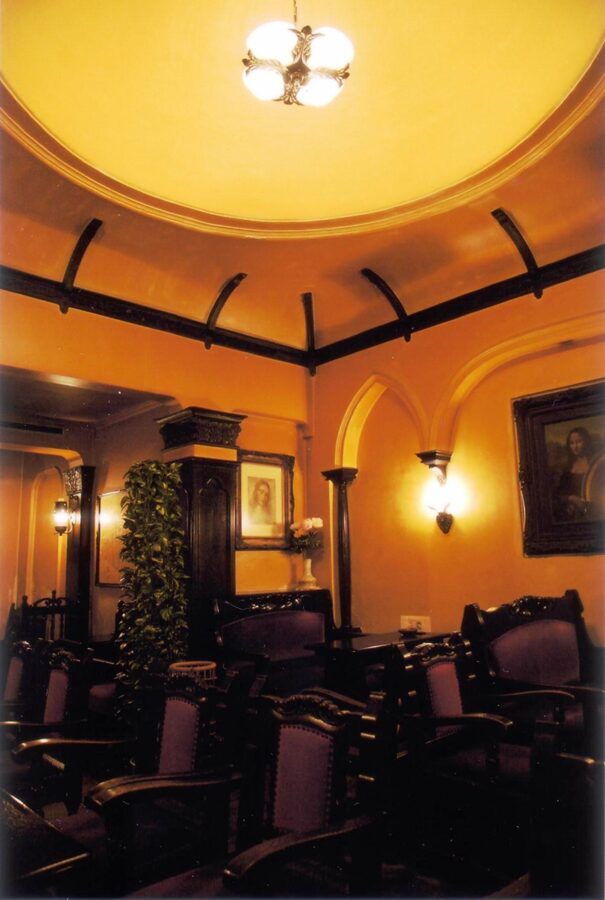
Lion, Shibuya
Meikyoku Kissa Lion (名曲喫茶ライオン) has served coffee and classical records on Dogenzaka since 1926. The air raids of 1945 burned it out, and in 1950 it was rebuilt to the same design, which is why a dark, church-like room with its seats in rows facing the speakers survives a few streets from the Scramble. The shop’s own rules are short: no photographs, no video, no loud conversation, phones on silent.
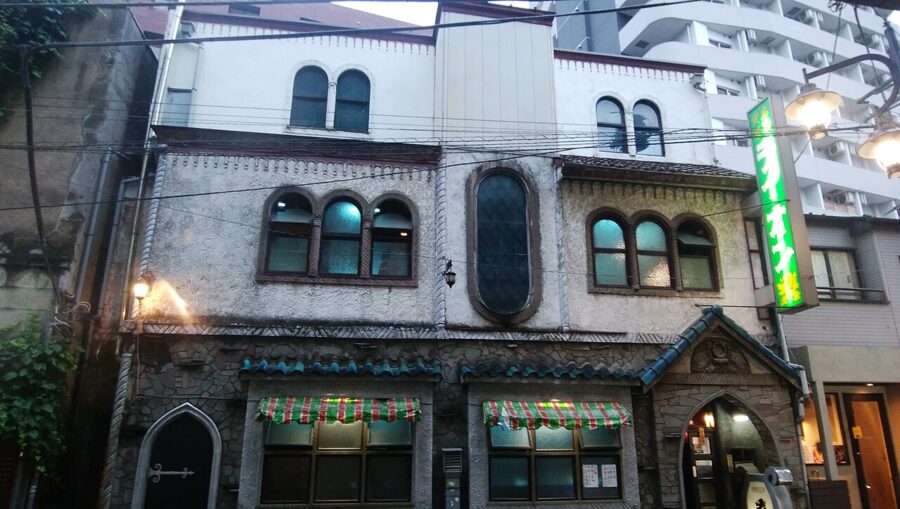

As of November 2026 the shop’s site gives its hours as 1pm to 8pm (last order 7.30pm), open every day except New Year and a short summer break. Order a coffee, request a record if you like, and say nothing. Ten minutes in, you will understand why nobody needs to explain the place.

Francois, Kyoto
Francois Kissashitsu (フランソア喫茶室) opened in 1934 on Nishi-Kiyamachi, just south of Shijo, and the history on its home page, quoted from a Kyoto guidebook, calls it an iki na kissaten, a stylish coffee house. That is the word used properly. Its founder, Shōichi Tateno (立野正一), ran it as a meeting place for anti-war students and artists, and the 1941 interior, designed with an Italian friend to feel like an ocean liner, is still there. In 2003 it became the first coffee shop registered as a national Tangible Cultural Property.
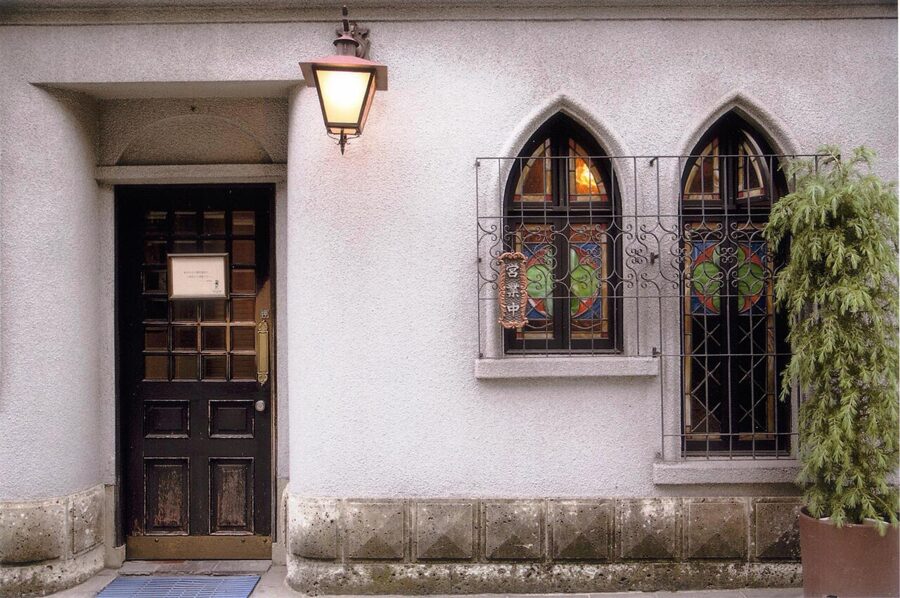

Nothing about Francois is rustic, and that is the point. I would call it natsukashii and shibui, not wabi-sabi. As of November 2026 its access page gives 11am to 10pm, closed 31 December to 2 January, cash only, no bookings; the menu page says 10am, so go after eleven. Some prices went up on 20 November 2026.

The same pull draws queues to old food shops. The iron moulds at Naniwaya in Azabu-Juban, where each taiyaki is baked one at a time, are loved for being old as much as for the cake.
Weathered wood and mended bowls
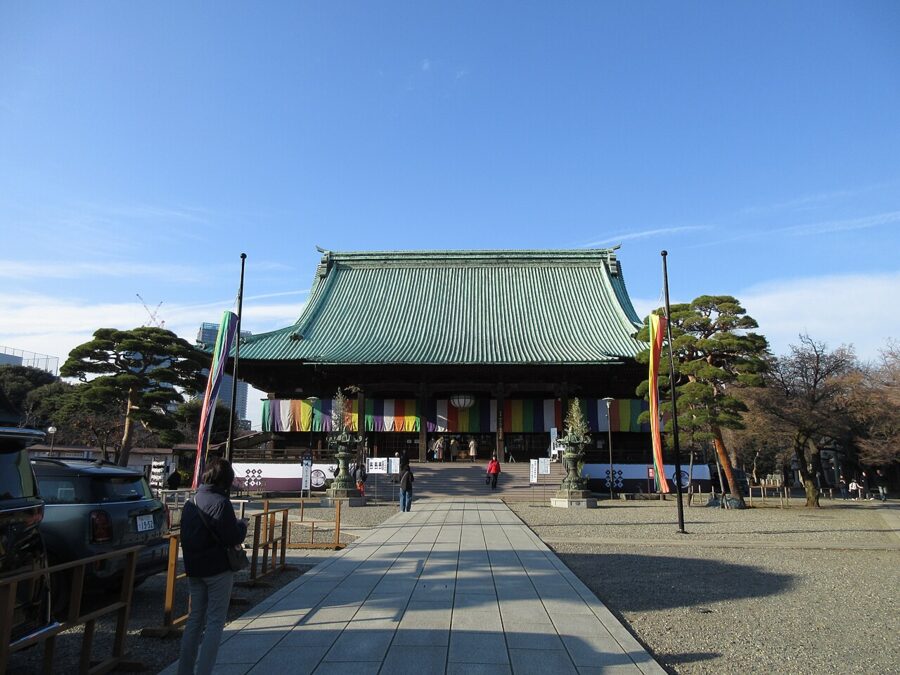
Sabi in its plainest sense is what weather does to cypress and cedar. At Gokokuji in Bunkyo, Tokyo, the main hall built in 1697 came through the 1923 earthquake and the 1945 fire raids, and its timber has gone the grey-brown that new temples spend decades waiting for. It sits right by Gokokuji Station on the Yurakucho Line.

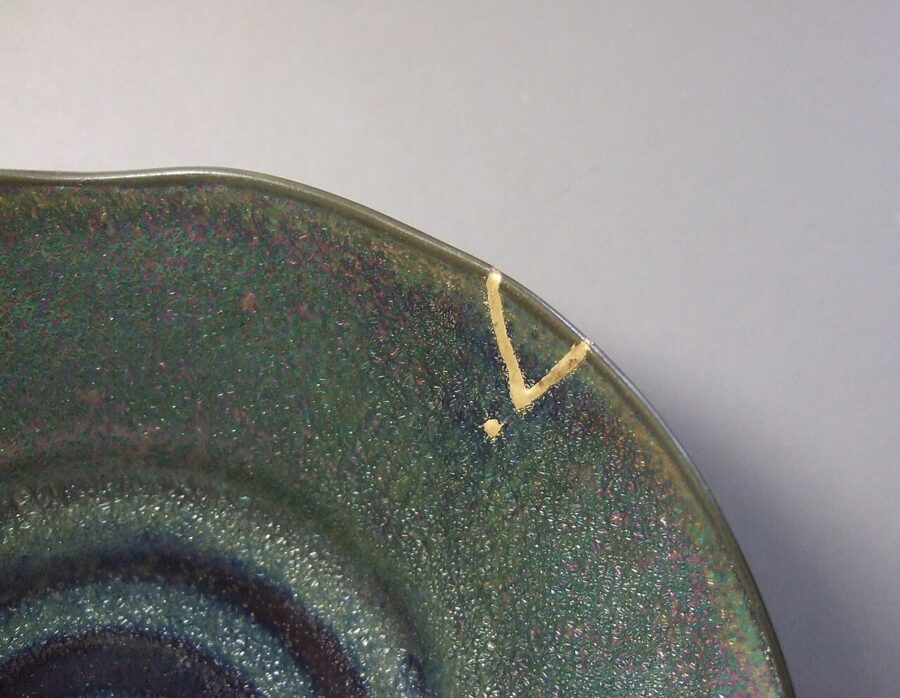
Kintsugi (金継ぎ) is mending broken ceramics with urushi lacquer and dusting the seam with gold. In the English wellness books it has become a metaphor for healing. In Japan it is a repair, and the most-told story about it is really about staples.

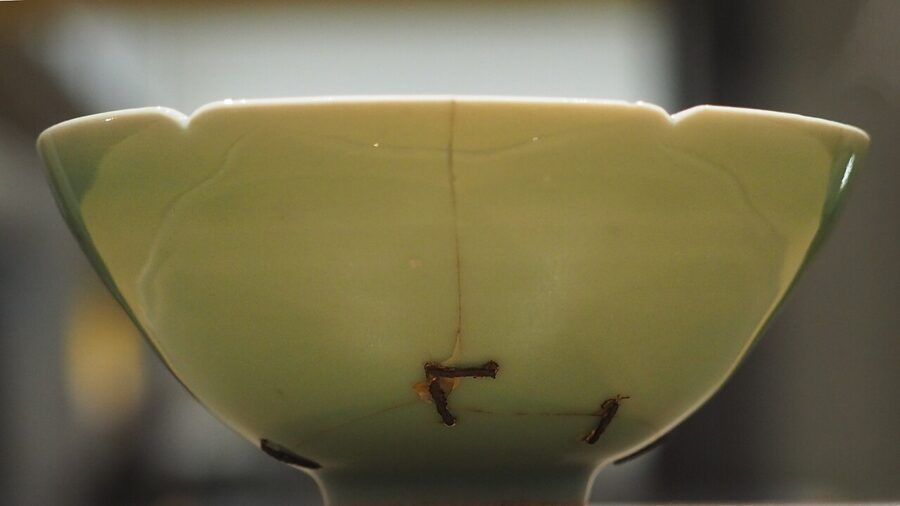
The Tokyo National Museum owns a 13th-century Chinese celadon bowl called Bakōhan. According to an account written in the 18th century, the shogun Ashikaga Yoshimasa sent it back to China when it cracked, asking for a replacement, and it came home held together with metal staples. The staples looked like locusts, the bowl got its name, and the repair made it more famous than the bowl had been whole. The museum shows it from time to time.

A tea room you can apply to see
If you want the room where wabi was made into architecture, it is Taian (待庵), at Myokian temple in Oyamazaki, between Kyoto and Osaka. It is a National Treasure, two tatami mats with a corner hearth, earth walls rendered into the alcove so the corners disappear, and the only surviving tea room attributed to Rikyū. Historians now think he built it around 1582 for Toyotomi Hideyoshi at Yamazaki Castle, and that it was moved to the temple around 1600.
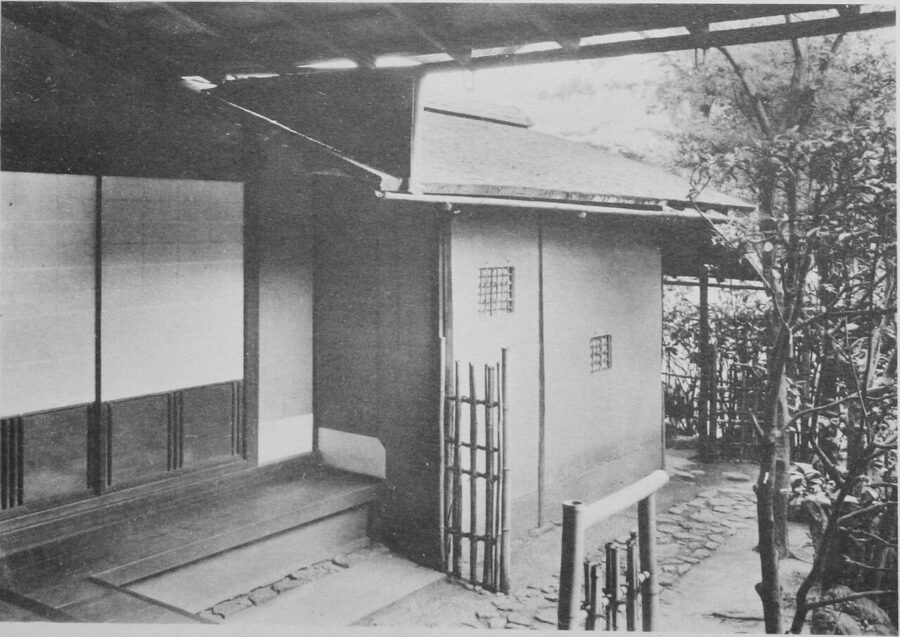
You enter it, as every guest did, on your knees, through the nijiriguchi, a crawl-in door well under a metre high. Viewing has long been by advance application to the temple only, and the temple sets the method and the fee, so write to Myokian well ahead of your trip. It stands opposite JR Yamazaki Station.
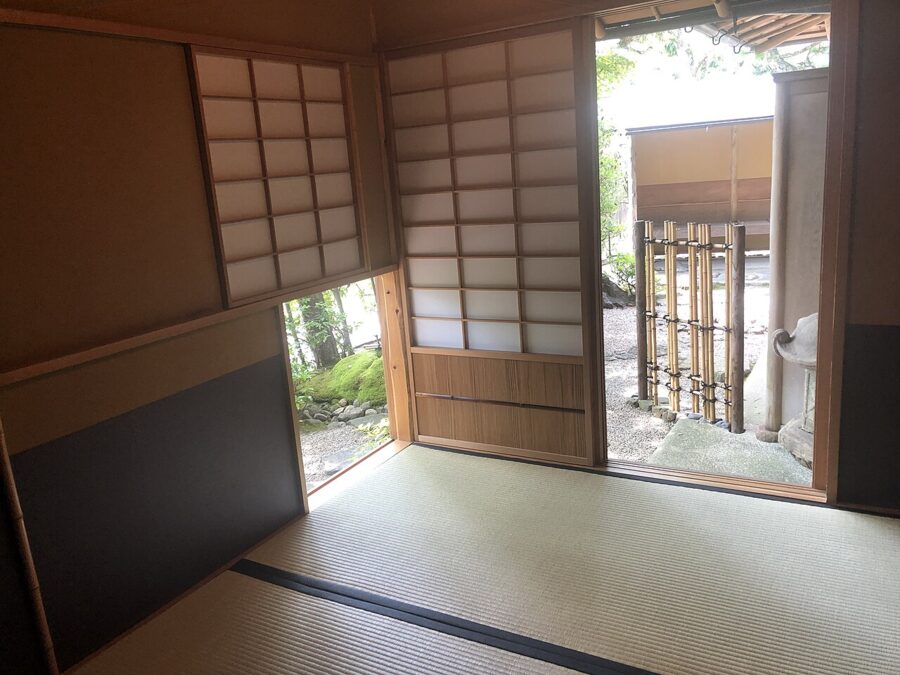

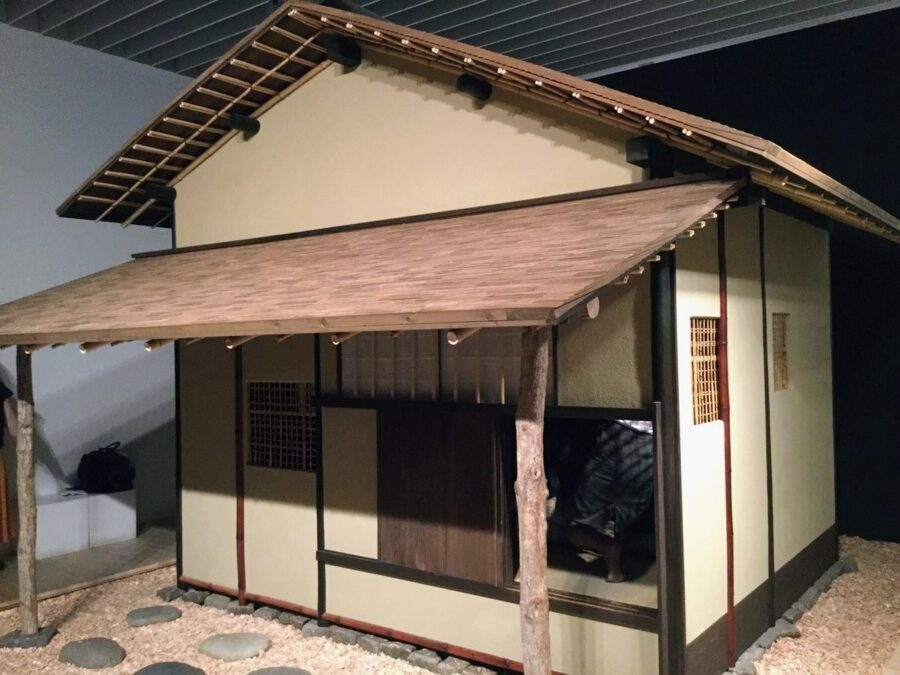
If you cannot get in, full-size reconstructions of Taian have been shown in Tokyo museums; if one is on when you visit, go, and stand inside it for a minute. The space is so small that your own breathing becomes part of the room.

Getting there:
- Lion: 2-19-13 Dogenzaka, Shibuya; about ten minutes’ walk uphill from Shibuya Station.
- Francois: 184 Sendocho, Nishi-Kiyamachi-dori Shijo-sagaru, Shimogyo-ku, Kyoto; a few minutes from Kyoto-kawaramachi Station (Hankyu) or Gion-shijo Station (Keihan).
- Gokokuji: Otowa, Bunkyo, Tokyo; Gokokuji Station on the Tokyo Metro Yurakucho Line.
- Taian at Myokian: Oyamazaki, Kyoto Prefecture; opposite JR Yamazaki Station on the JR Kyoto Line, by prior application only.
Ask a Japanese friend in any of them what wabi-sabi means and you will probably get Kokami’s shrug. Ask whether the place is natsukashii, and watch how fast the answer comes.