
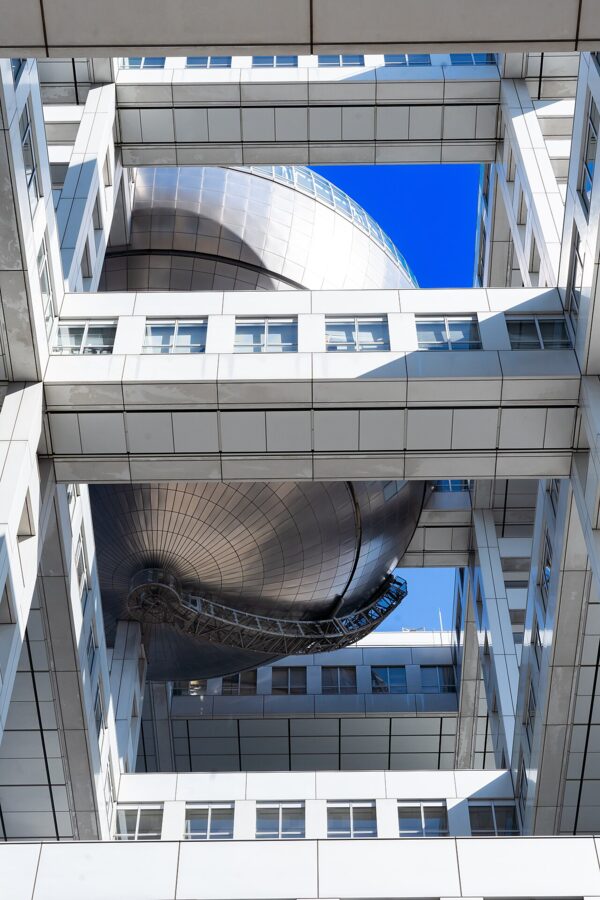

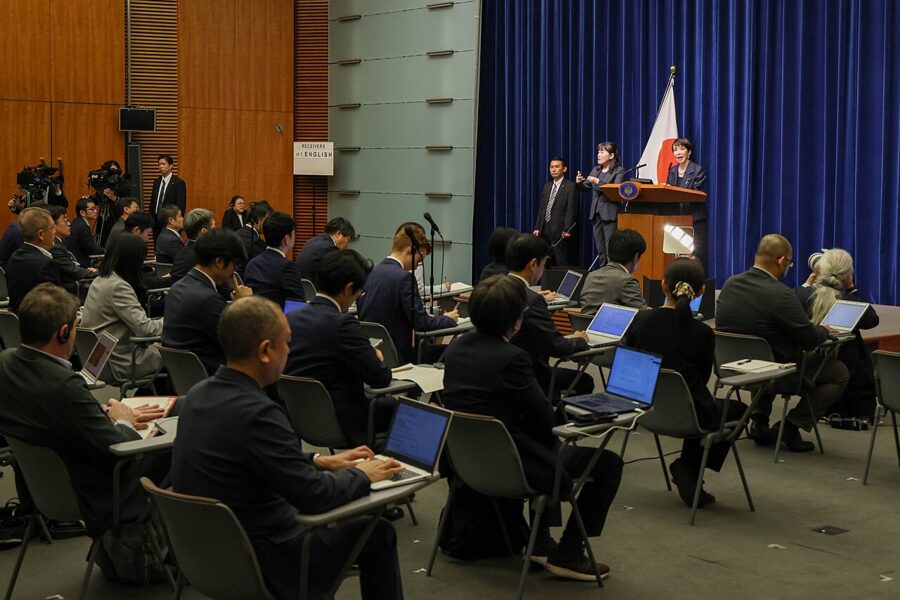
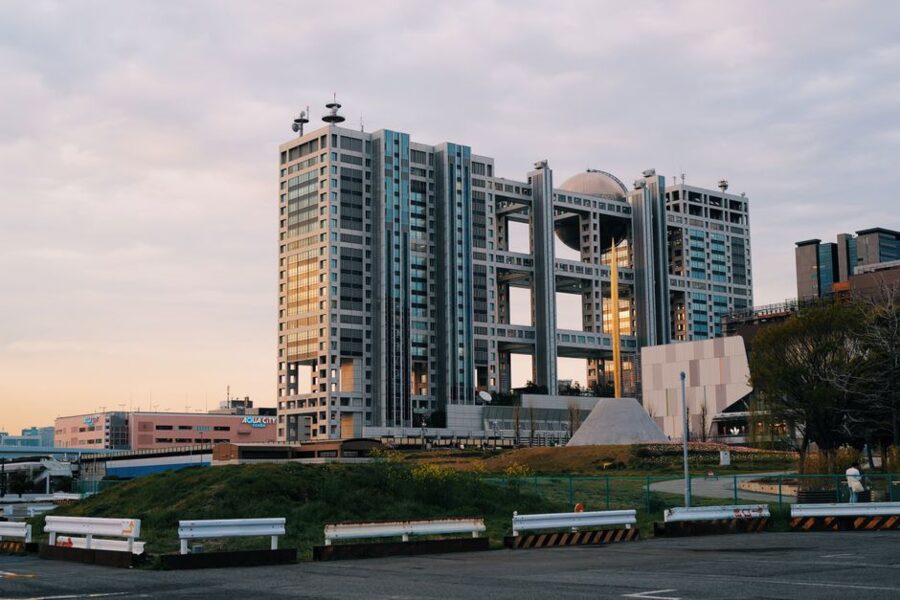
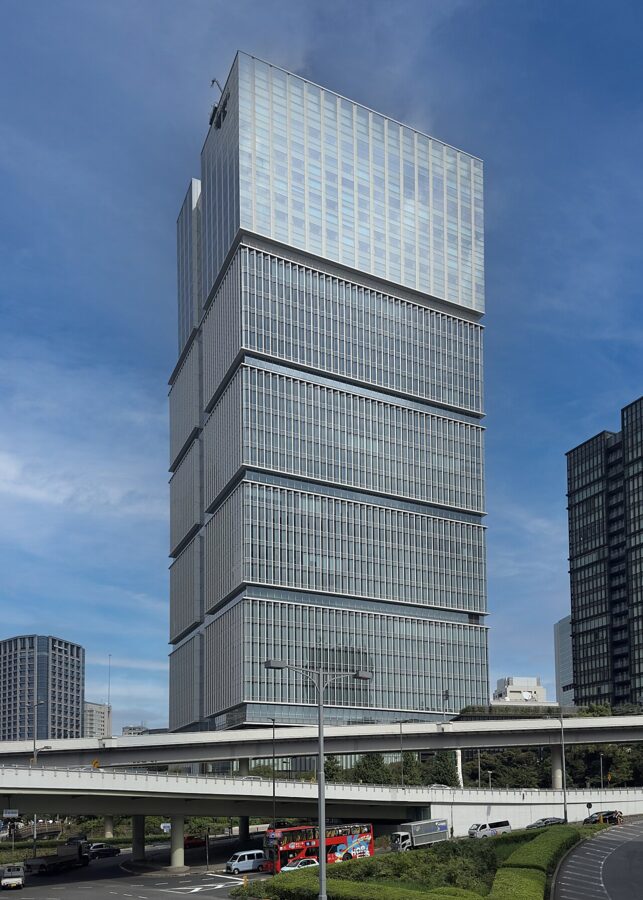
On Friday 17 January 2025 the president of Fuji Television, Koichi Minato (港浩一), faced reporters in Odaiba over a story the weekly magazines had run for a month: the former SMAP leader Masahiro Nakai (中居正広), a settlement with a woman who had worked at Fuji, and what Fuji knew. Questions were limited to members of the press club that covers broadcasters. The weeklies that broke the story, freelancers and online outlets were kept out, and no cameras rolled.
Within days more than seventy advertisers had pulled their commercials. Ten days later Minato came back to a room with no list at the door, 437 people from 191 outlets by Fuji’s count, and answered from four in the afternoon until after two the next morning. He and the chairman, Shuji Kanoh (嘉納修治), resigned in it.
Shukan Bunshun, the weekly that had pushed hardest, then corrected one detail: Nakai, not a Fuji executive, had invited the woman to the dinner. On 31 March a committee appointed by Fuji found that Nakai had committed sexual violence against her in what it called an extension of her work, a finding his lawyers disputed.
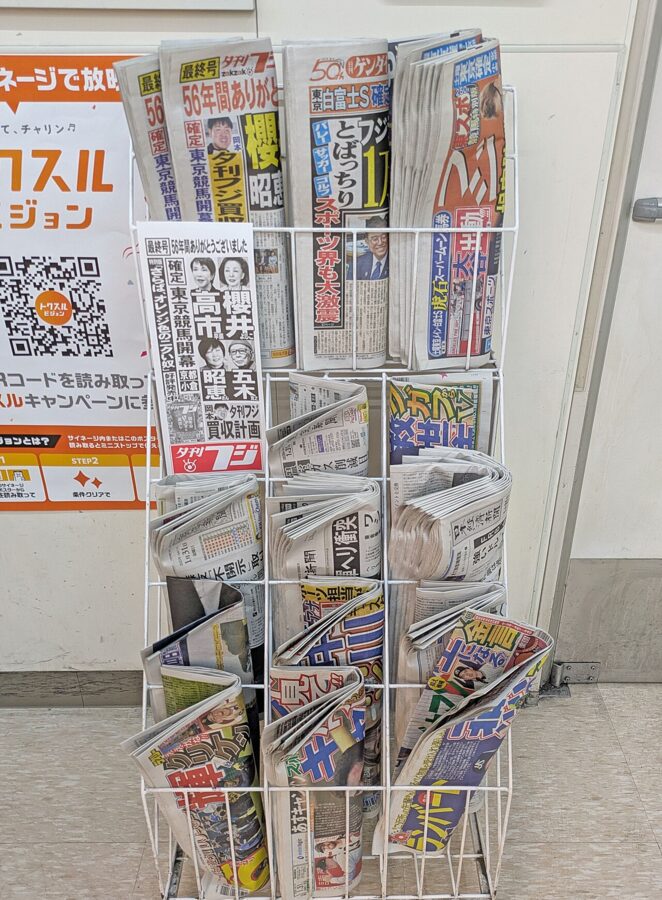

That month holds most of the Japanese media in one frame. A television network belongs to a newspaper family; a weekly outside the club system breaks the story and the dailies follow. A press club decides who may ask, and a public that watches its news on a phone decides the club got it wrong.

In this article
- The five national dailies
- Kyodo, Jiji and the papers of the regions
- Television: five networks, five newspaper families
- Kisha clubs: how a story gets made
- The weeklies: Bunshun, Shincho and the scoops the dailies follow
- The secrecy law and the press-freedom rankings
- Yahoo!, YouTube and the masugomi years
- Where to see it: Newspark, Yokohama
The five national dailies
Japan still prints more newspapers per head than almost anywhere, but far fewer than it did. The Japan Newspaper Publishers and Editors Association counted 24.87 million copies a day in October 2025, a morning and evening edition counted as one, against a peak of 53.77 million in 1997. In 2000 there were 1.13 papers for every household; now there are 0.42.
Five of them circulate nationally, the zenkokushi (全国紙, “national papers”). These are ABC Japan’s certified figures for August 2026, as reported in the trade press.
| Paper | Founded | Copies, August 2026 | Change in a year | Editorial line |
|---|---|---|---|---|
| Yomiuri Shimbun (読売新聞) | 1874 | 4.89 million | −475,000 | Centre-right, for constitutional revision |
| Asahi Shimbun (朝日新聞) | 1879 | 3.03 million | −118,000 | Centre-left, against revising Article 9 |
| Nikkei (日本経済新聞) | 1876 | 1.17 million | −107,000 | Business and markets |
| Mainichi Shimbun (毎日新聞) | 1872 | 1.03 million | −142,000 | Centre-left, liberal on rights |
| Sankei Shimbun (産経新聞) | 1933 | 0.74 million | −60,000 | Conservative, nationalist on history |
Yomiuri and Asahi
The Yomiuri is the world’s largest paper by these counts, and for half a century it was the paper of one man. Tsuneo Watanabe (渡邉恒雄), a political reporter who rose to run the group, died on 19 December 2024 at 98, still its editor-in-chief. Under him the Yomiuri published its own draft of a revised constitution in 1994 and treated the American alliance as settled.
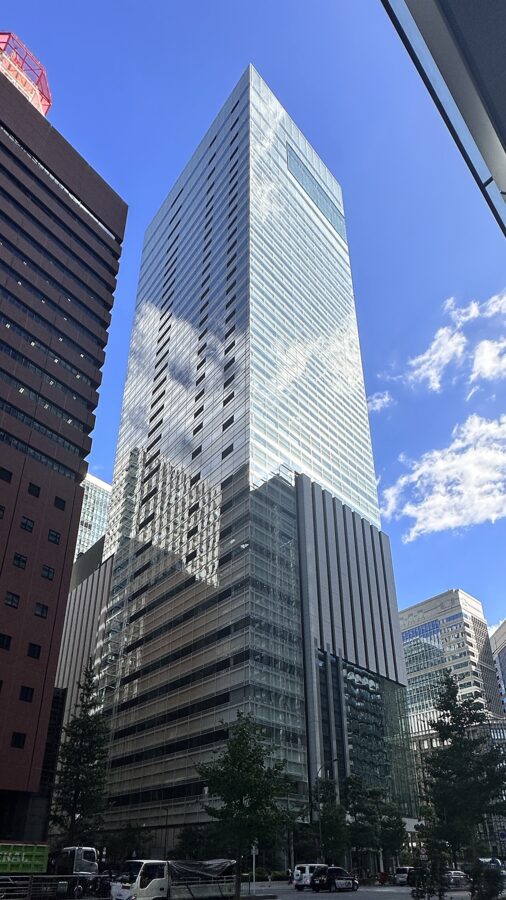

The Asahi is its opposite number, against revising Article 9 and the paper the right loves to hate. In 2014 it retracted articles based on Seiji Yoshida’s discredited account of rounding up women in wartime Korea, withdrew a scoop on the Fukushima Daiichi plant manager’s testimony, and lost its president, Tadakazu Kimura (木村伊量). The right still cites 2014 as proof of bias; the Asahi’s defenders note that it corrected itself.
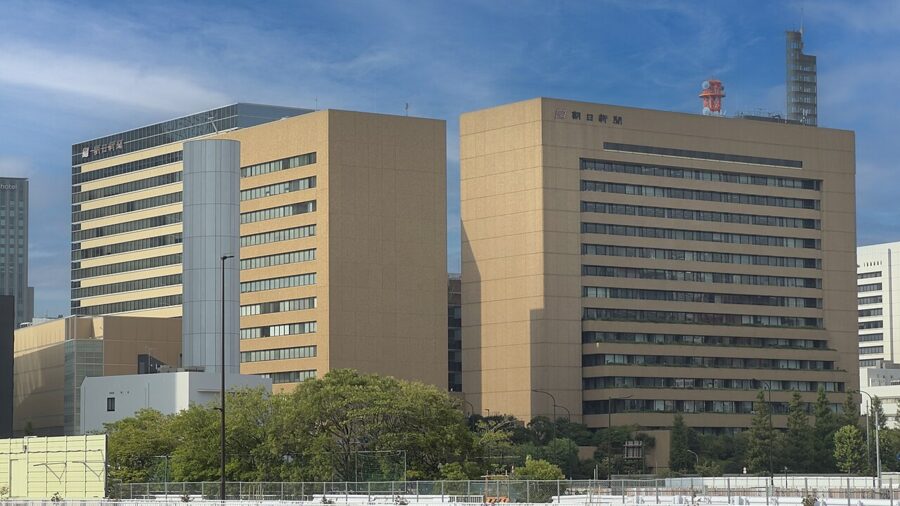

Mainichi, Nikkei and Sankei
The Mainichi, descended from the Tokyo Nichi Nichi of 1872, is the oldest and the most troubled: it lost more than a tenth of its sale in a year and in 2024 stopped delivering in Toyama Prefecture altogether. Its politics sit near the Asahi’s.
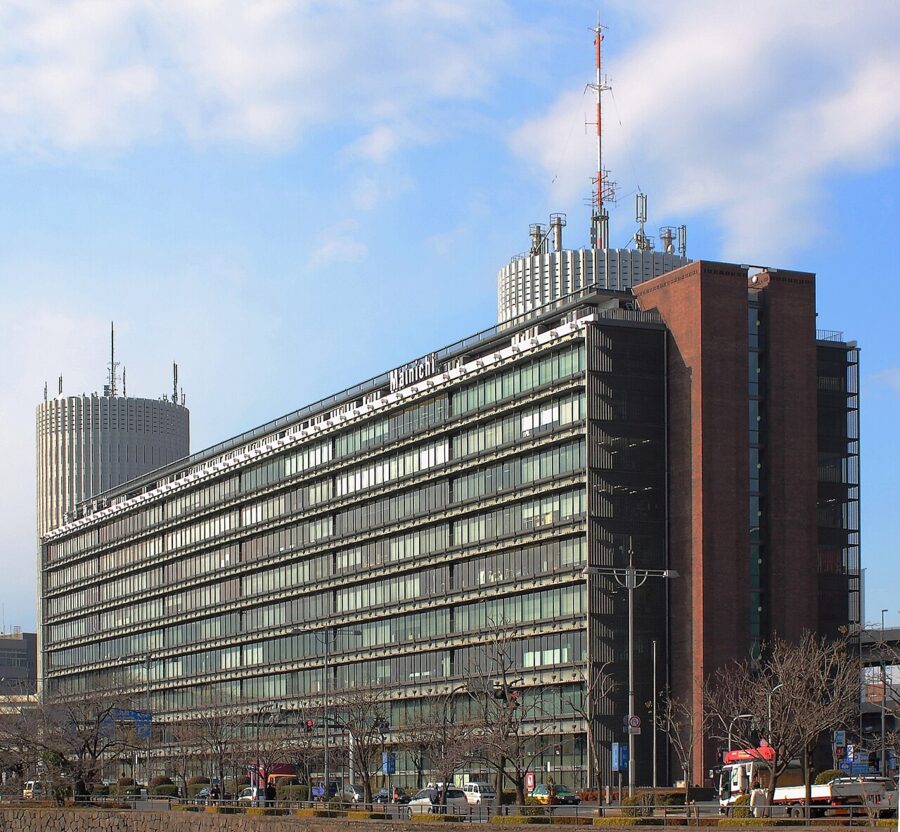

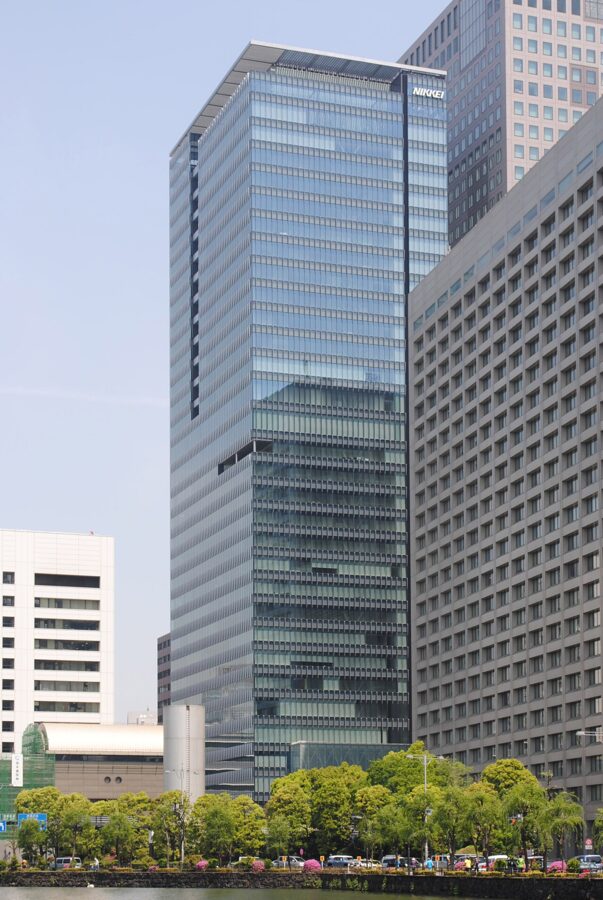
The Nikkei is read by everyone who manages anything, has the most successful paid digital edition of the five, and since 2015 has owned the Financial Times. Its politics are those of the boardroom.

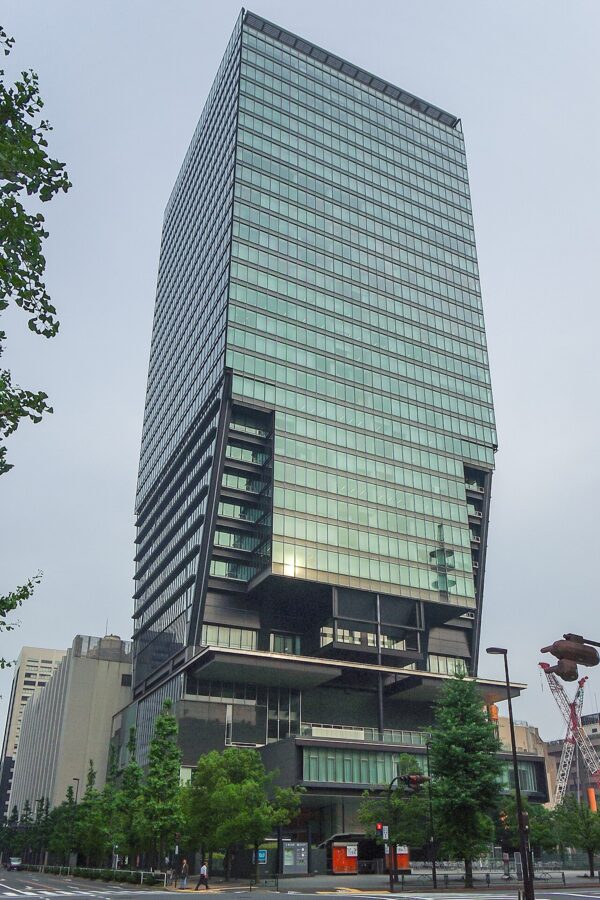
The Sankei began in Osaka in 1933 as an industrial paper and is now the voice of the conservative right: for revising the constitution, hard on China and the Koreas, warmest of the five to prime ministers in the Abe line. It is also the smallest, and it is owned by a television company.

Delivered to the door, and the argument over the numbers
Most Japanese papers are delivered before dawn, on a monthly subscription, by a hanbaiten (販売店, “sales shop”), a local dealer tied to one paper. The dealers made the dailies huge, and now make their decline expensive: every lost subscriber leaves the same streets to cover.
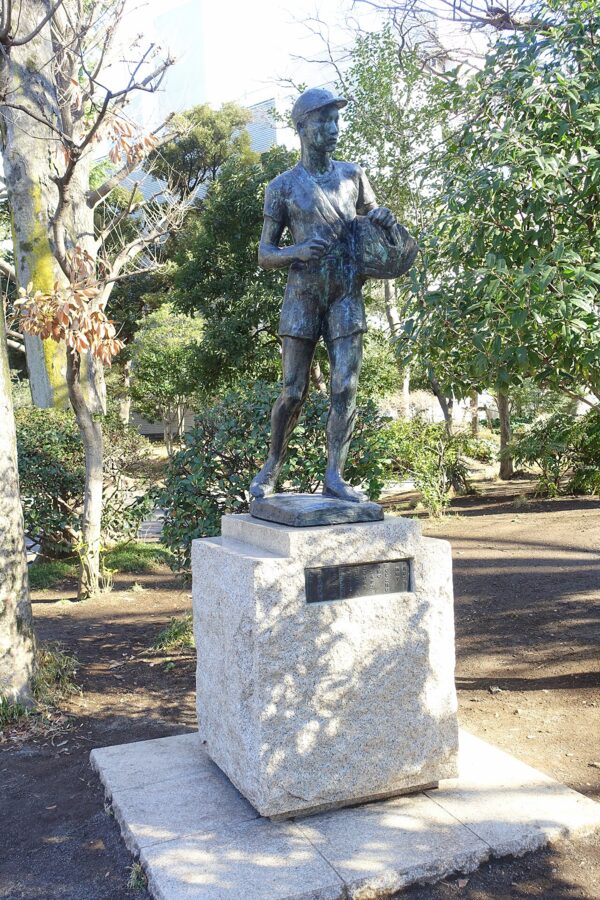
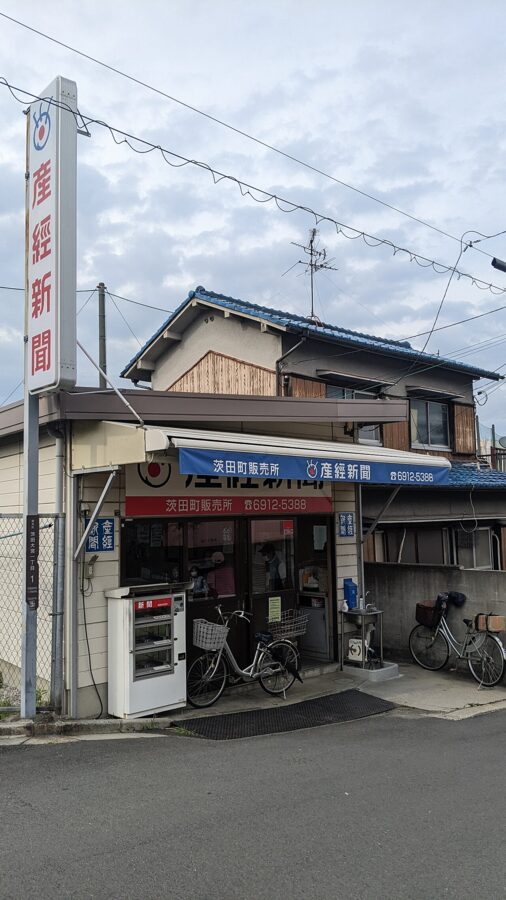

Dealers have long alleged oshigami (押し紙, “pushed paper”): copies a publisher makes them buy whether or not anyone takes them, which keeps the certified count, and the advertising rate, above real readership. The publishers deny it, and nobody has measured it. I would read the ABC figures as a ceiling, not a count of readers.
Kyodo, Jiji and the papers of the regions
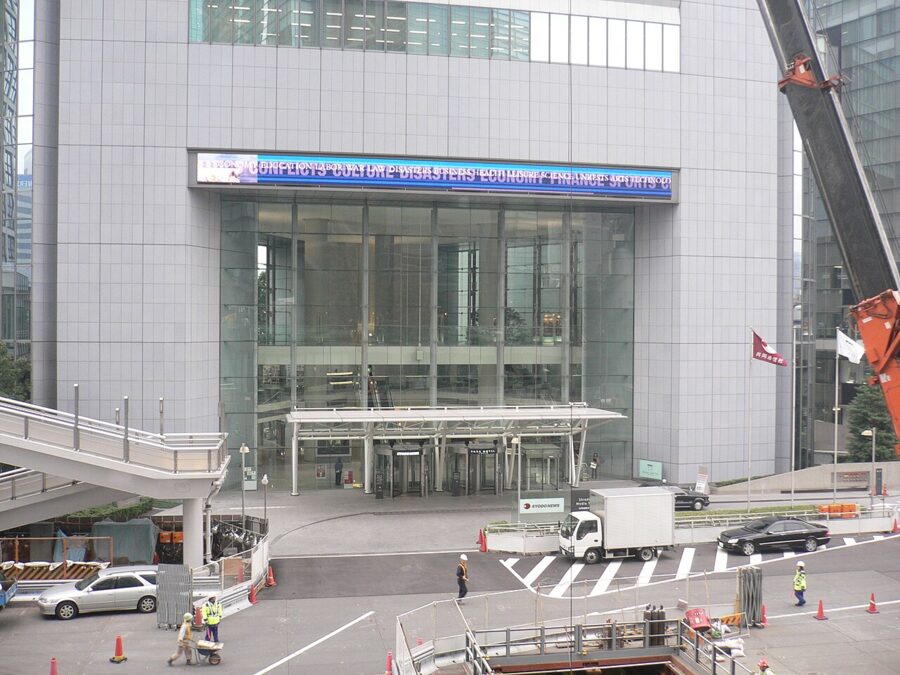
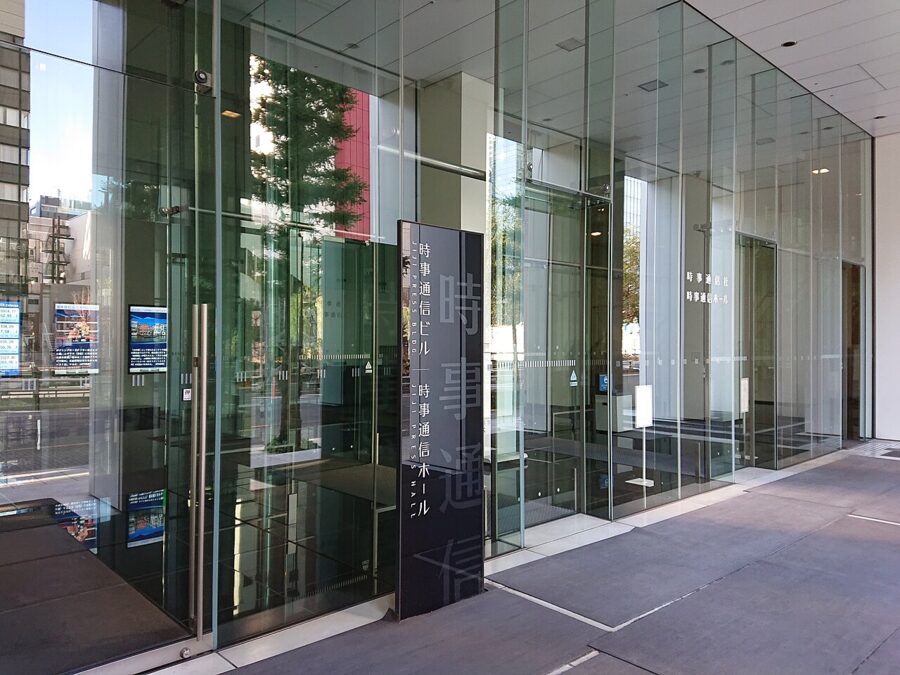
Behind the five stand two wire services, both founded on 1 November 1945 when the occupation broke up the wartime agency Domei. Kyodo News (共同通信), a co-operative of member papers and NHK, supplies almost every regional paper, which is why one Kyodo story can appear under thirty mastheads on the same morning. Jiji Press (時事通信) sells mainly to government offices and business, and runs a long-standing monthly poll of cabinet approval.


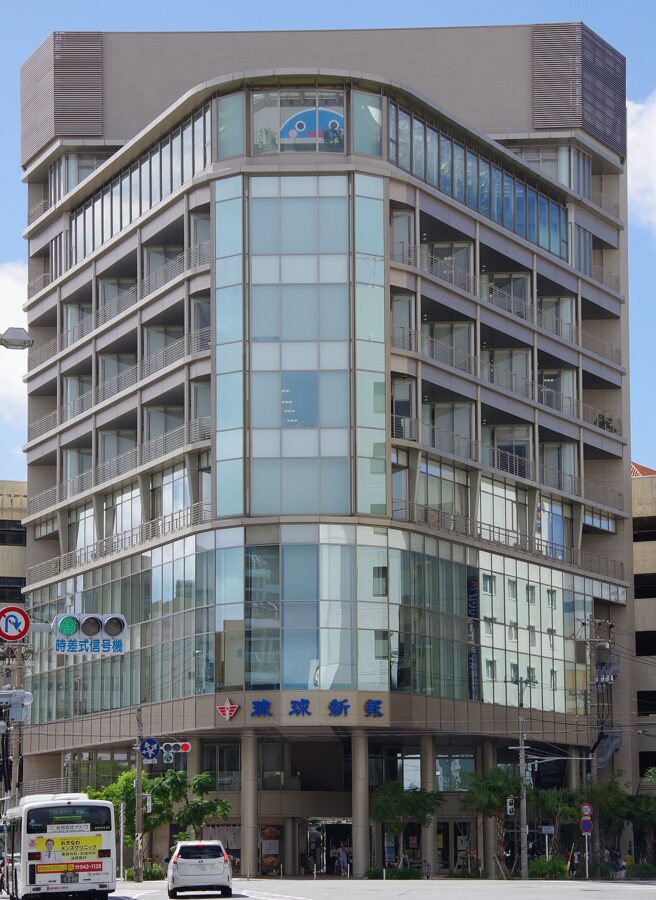
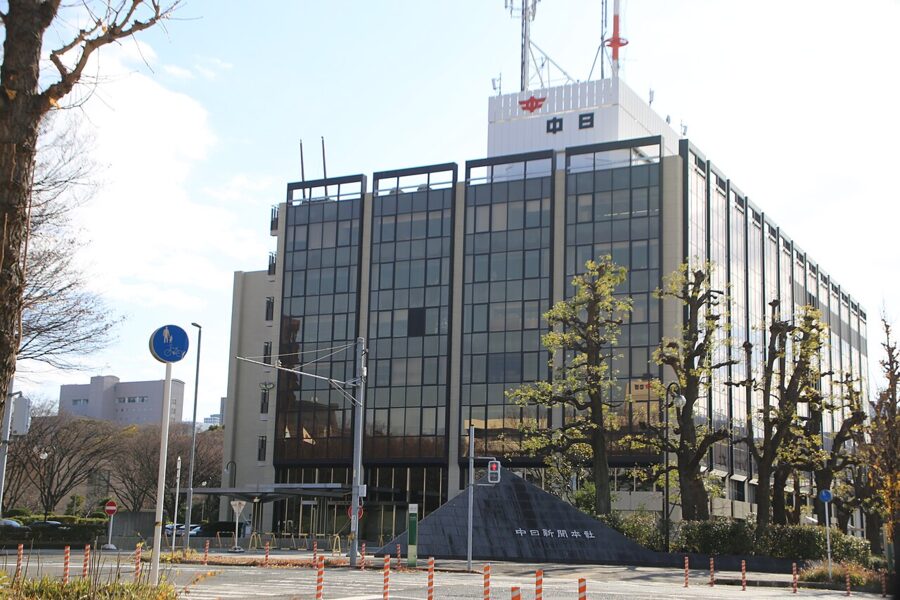
Outside Tokyo and Osaka the paper of record is often local. Each prefecture has its own chihōshi (地方紙, “local paper”), and in many it outsells the five nationals combined. Above them sit the regional “block papers”: the Hokkaido Shimbun, the Nishinippon in Kyushu and the largest, Nagoya’s Chunichi Shimbun. In Okinawa the Okinawa Times and the Ryukyu Shimpo cover the American bases from the side of the people who live around them, a habit rooted in the Battle of Okinawa.


Television: five networks, five newspaper families
Commercial television grew out of the newspapers. Each of the five Tokyo “key stations” heads a network of local affiliates and has a newspaper behind it. Japan has no rule against a newspaper owning a broadcaster, which Reporters Without Borders lists among its reasons for ranking the country low.
| Key station | Network | Newspaper family | Headquarters |
|---|---|---|---|
| Nippon TV (日本テレビ) | NNN | Yomiuri | Shiodome |
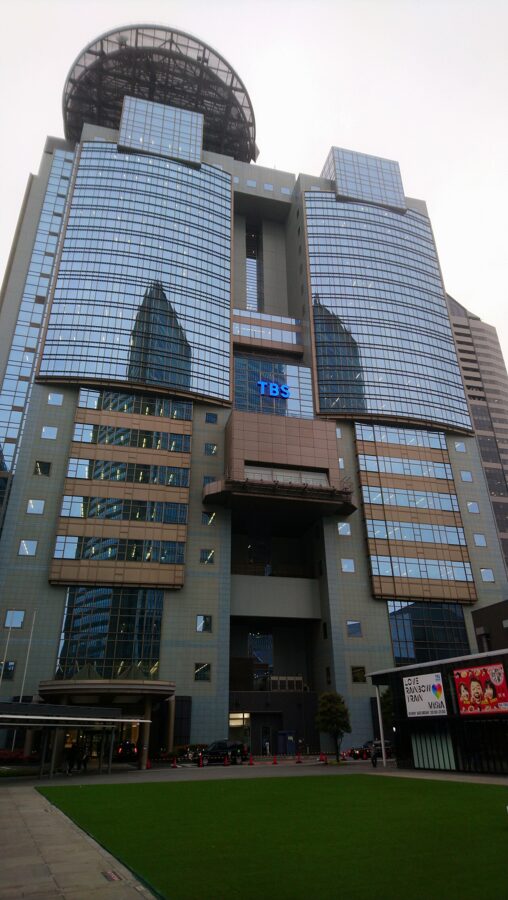
| TBS (TBSテレビ) | JNN | Mainichi (ties now loose) | Akasaka |
| Fuji TV (フジテレビ) | FNN | Sankei | Odaiba |
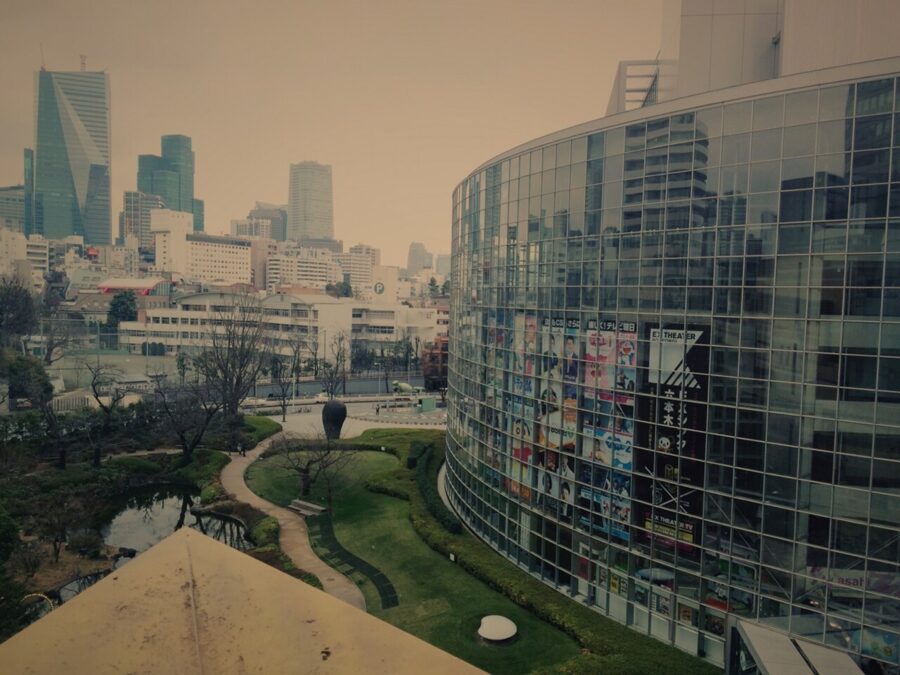
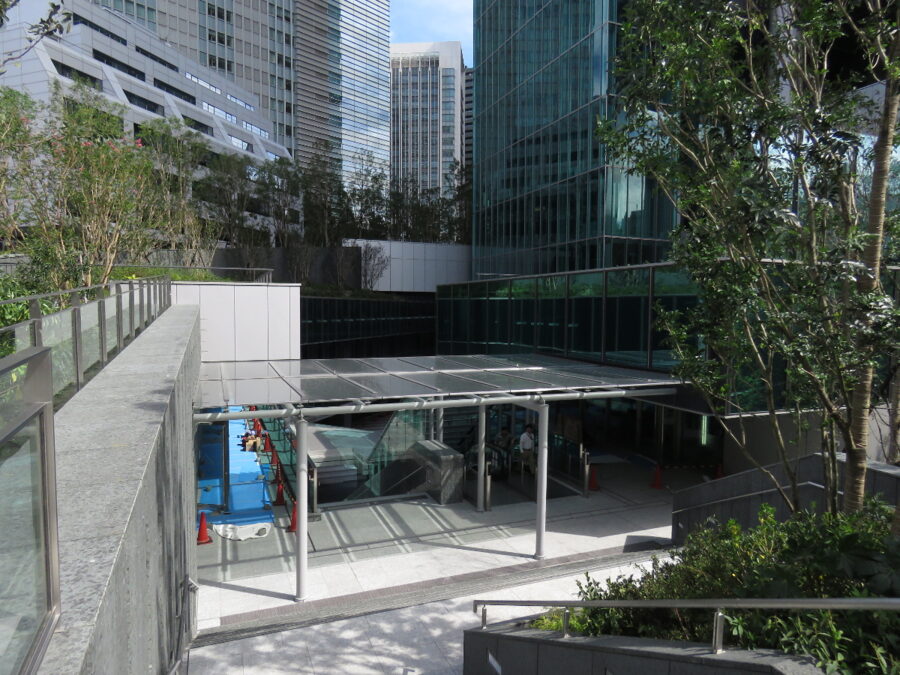
| TV Asahi (テレビ朝日) | ANN | Asahi | Roppongi |
| TV Tokyo (テレビ東京) | TXN | Nikkei | Roppongi |
The families shape the news less than outsiders assume and more than the stations admit. TV Asahi’s Hōdō Sutēshon (報道ステーション, “Report Station”) has often been sharper than the Asahi, but the newspaper groups sit on the boards, swap executives and rarely attack their own television arms.
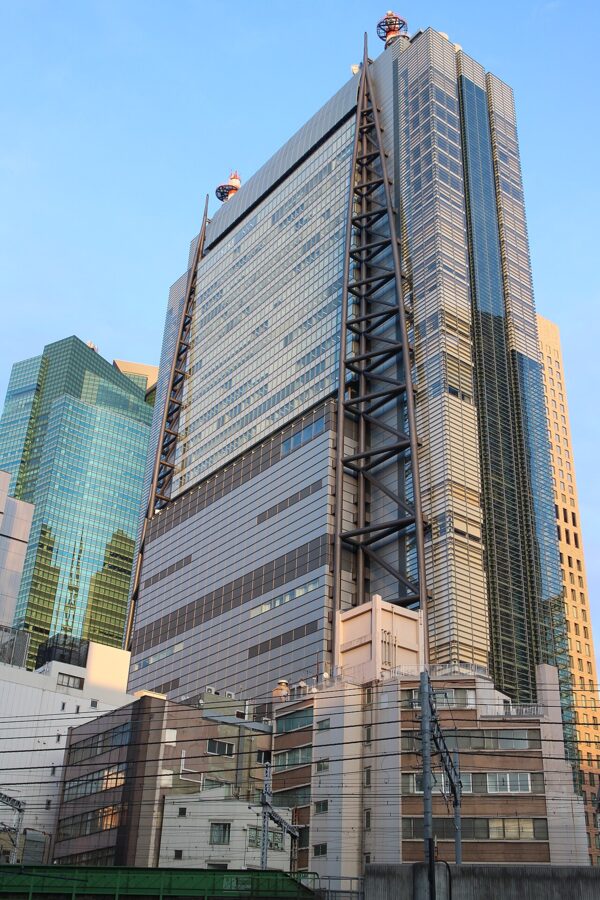

News and entertainment share the building. The same networks run the variety shows and dramas of the Japanese entertainment industry, and newsreaders are often stars: Sho Sakurai of Arashi spent years presenting Nippon TV’s News Zero, and Yuriko Koike read the business news on TV Tokyo before she entered politics.


NHK
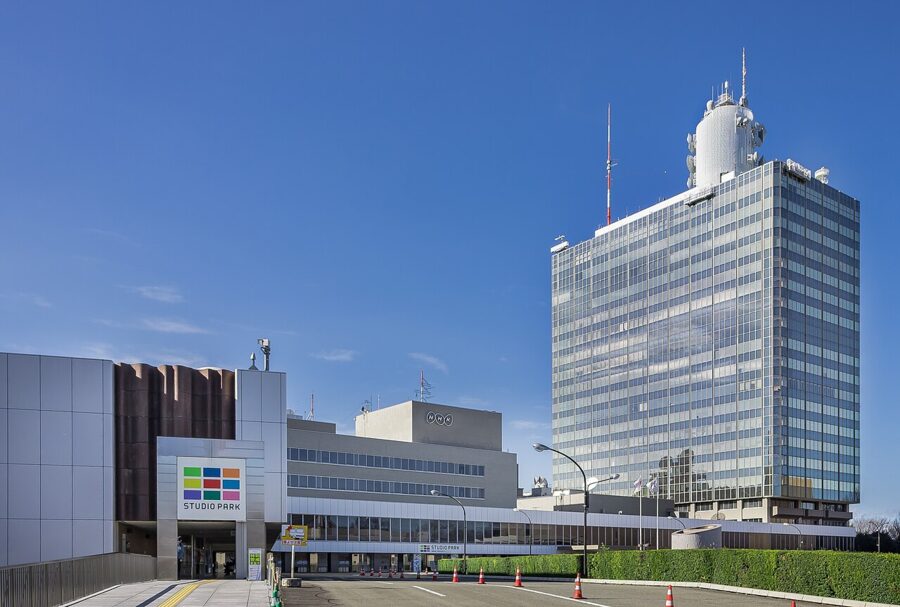
Alongside the five stands NHK, the public broadcaster, paid for by a receiving fee of ¥1,100 (about $7.10) a month for a terrestrial contract (as of November 2026). Its budget passes through the Diet each year and its board is appointed by the prime minister with the Diet’s consent. It is the country’s most trusted news source in surveys, and criticised from both sides for standing too close to the government that approves its budget.

The ministry that holds the licence
Every broadcaster holds a licence from the Ministry of Internal Affairs and Communications, renewed every five years. Article 4 of the Hōsō-hō (放送法, Broadcast Act) asks programmes to be “politically fair” and to show many angles on contested issues. The government says that is a legal norm the ministry can enforce; broadcasters and most media lawyers read it as an ethical code for the industry to police itself.
In February 2016 the minister, Sanae Takaichi (高市早苗), told the Diet that a station which repeatedly broke that rule could in principle be ordered off the air. The year before, Shigeaki Koga had used his last night on Hodo Station to accuse the prime minister’s office of leaning on TV Asahi, the story of Koga and press freedom. In March 2023 the ministry confirmed that papers released by the opposition’s Hiroyuki Konishi (小西洋之), on a push for a stricter reading of Article 4 in 2014 and 2015, were its own; Takaichi called the passages about her fabricated.
No station has ever been ordered off the air. The pressure, where it exists, works through the threat, and through producers who quietly decide not to renew a commentator.
Kisha clubs: how a story gets made
In almost every ministry, prefectural office, police headquarters and party headquarters there is a room of desks belonging to the newspapers, agencies and broadcasters: the kisha kurabu (記者クラブ, “reporters’ club”). Members get the room, often rent-free, the briefings, the advance copies and a seat at the minister’s regular press conference. The publishers’ association defines the club as a voluntary body of journalists covering an institution, and its 2002 guidelines, revised in 2006, say conferences should not be closed to non-members as a rule.
Practice has its own vocabulary. Announcements come with a shibari (縛り, “binding”), an embargo every member keeps. A politician’s ban kisha (番記者, “watch reporters”) follow him by day and call at his home at night on the yomawari (夜回り, “night round”), for remarks reported only as “a source close to”. The prize is the tokudane (特ダネ, “scoop”); the horror is the tokuochi (特落ち), being the only paper to miss what everyone else has.
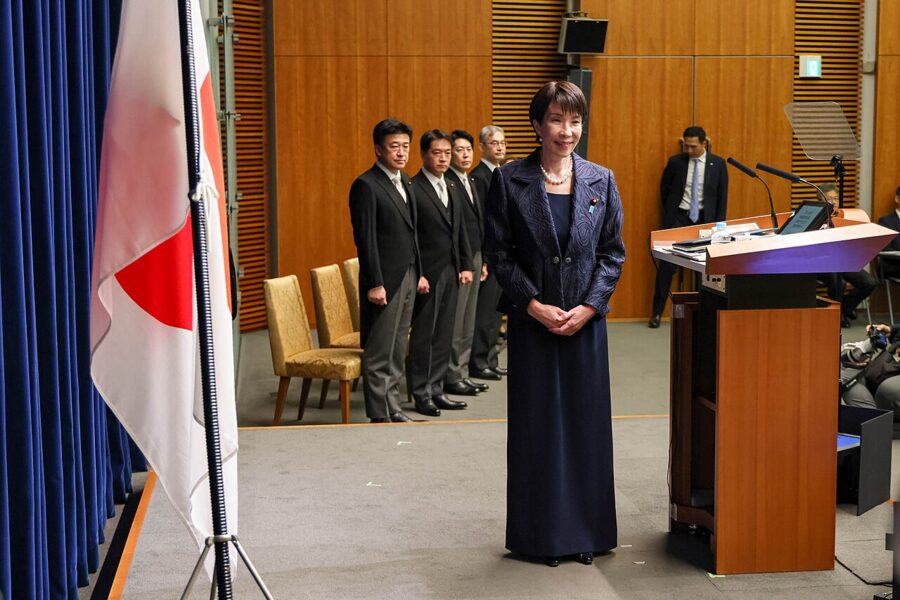

The defence of the system is real: steady access, a collective voice when an official tries to shut reporters out, and facts checked against twenty colleagues before they run. So is the case against it. The same intimacy that produces access discourages the hostile question, and everyone outside, magazines, freelancers, online outlets and for years foreign correspondents, gets the story late. The Kantei now admits a limited number of freelance and foreign reporters, but most clubs still decide who sits at the table.
The same intimacy that produces access discourages the hostile question.
Members are not always docile. Isoko Mochizuki (望月衣塑子) of the Tokyo Shimbun made her name in 2017 by pressing the chief cabinet secretary, Yoshihide Suga, with follow-ups others skipped. In December 2018 the prime minister’s office wrote to the cabinet press club calling her questions inaccurate, and when the letter came out in 2019 newspaper unions read it as an invitation to the club to discipline its own member. Fuji’s restricted conference was the same reflex the other way round: a company sheltering behind the club’s walls.
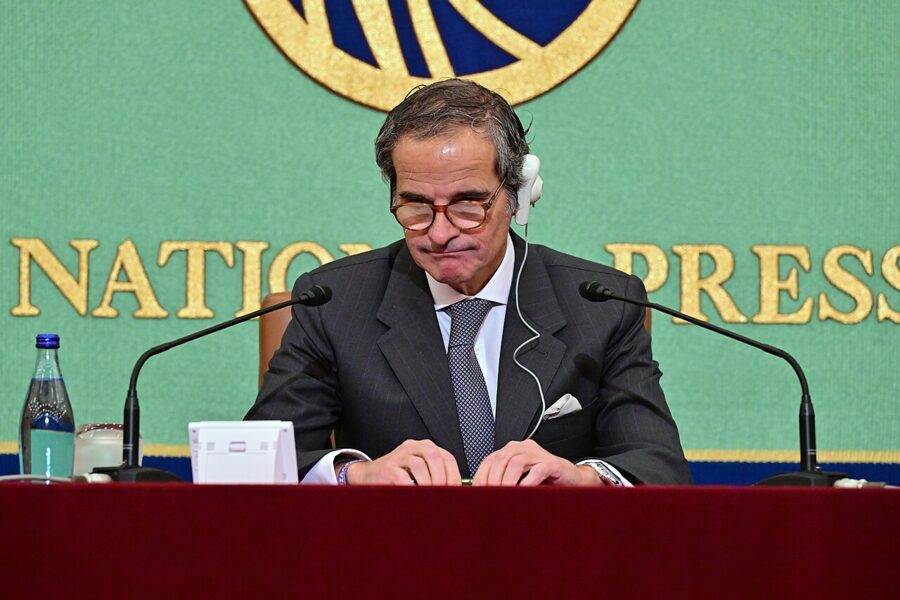

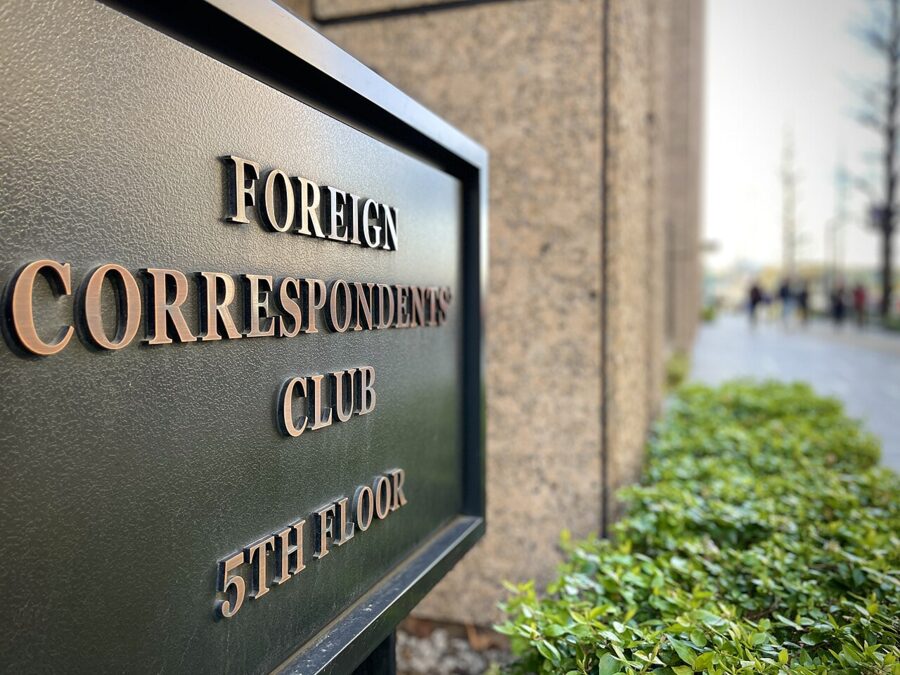
Outsiders built their own rooms. The Foreign Correspondents’ Club of Japan, founded in 1945, holds several press conferences a week in Marunouchi and streams most of them. Whistleblowers, dismissed commentators and plaintiffs often go there first, because the foreign press will run what the clubs leave out, and the domestic press will then report that it ran. The scientist Toshihide Tsuda took his findings on thyroid cancer after Fukushima there in 2015.
The weeklies: Bunshun, Shincho and the scoops the dailies follow
The shūkanshi (週刊誌, “weekly magazines”) are the press without a club. Shukan Shincho, from the literary publisher Shinchosha, began in 1956; Shukan Bunshun, from Bungei Shunju, in 1959. With no reporters in the ministries, they built their trade on what the clubs would not print, and their headlines run each week as advertisements in the very dailies they embarrass.
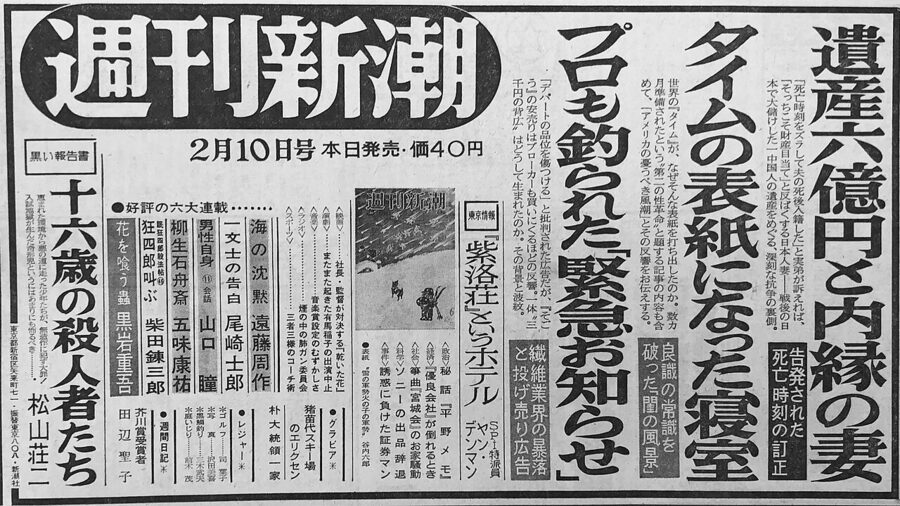
Their record is the best argument against the clubs. In 1974 the monthly Bungei Shunju published Takashi Tachibana’s study of Prime Minister Kakuei Tanaka’s money, which the dailies left alone until foreign reporters questioned Tanaka at the FCCJ; he resigned weeks later. In 1999 Shukan Bunshun began its series on Johnny Kitagawa’s abuse of boys in his agency, which newspapers and networks ignored until a BBC documentary in 2023 forced the reckoning told in Johnny’s. In 2016 Bunshun’s recordings ended the career of the economy minister Akira Amari.
The weeklies’ weaknesses mirror the clubs’. They pay for tips, lean on unnamed sources, lose libel suits and can be cruel to celebrities, and the Fuji correction handed critics a fresh example. I would not want to read Japanese politics without the weeklies, or trust them without a second source.
The other outsider is the party press. In November 2022 the Sunday edition of the Japanese Communist Party’s Shimbun Akahata (しんぶん赤旗) reported that Liberal Democratic Party (LDP) factions had not declared income from fundraising-party tickets. A law professor turned that into criminal complaints, prosecutors moved in late 2023, and the slush-fund scandal reshaped Japanese politics. The big dailies arrived a year after a party paper.

The secrecy law and the press-freedom rankings
The Tokutei Himitsu Hogo-hō (特定秘密保護法, Act on the Protection of Specially Designated Secrets) passed the Diet in December 2013 over street protests and came into force on 10 December 2014. It lets ministries classify defence, diplomatic, counter-espionage and counter-terrorism information in renewable five-year terms, and punishes leaks with up to ten years in prison. Article 22 protects news-gathering unless it breaks the law or uses “extremely improper” means; critics note that the government decides what is improper.
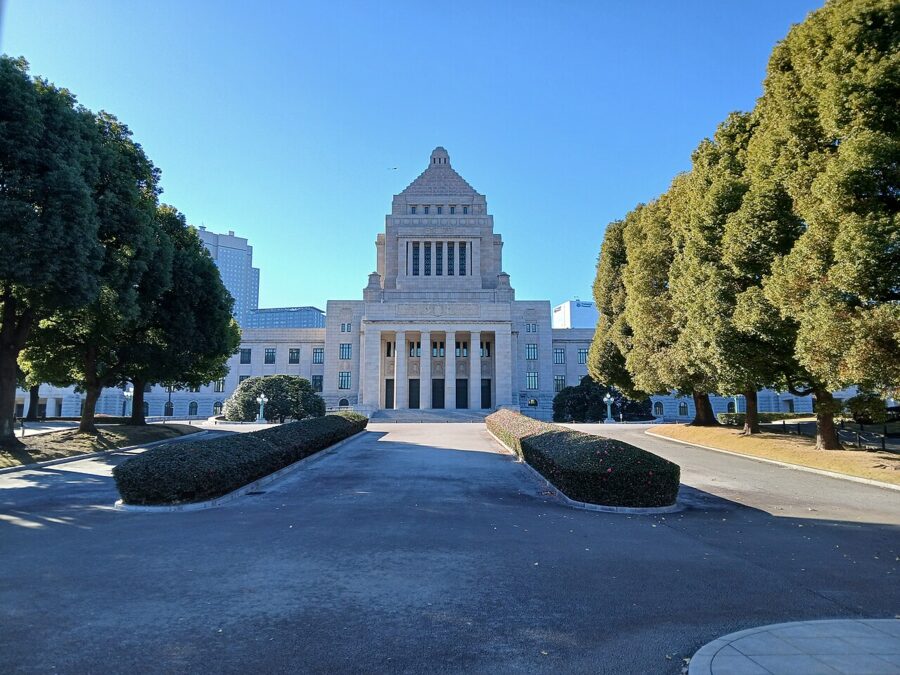
There were 382 designations at the end of 2014. The Cabinet Secretariat’s report of June 2026 counted 854 at the end of 2025, in 803,358 documents, with about 150,000 people cleared to handle them. As far as the public record shows, no journalist has been prosecuted under the law: proof the safeguards work, say its supporters, and proof the deterrent works, say its opponents.
The law is one reason Japan sits low in the World Press Freedom Index of Reporters Without Borders (RSF): in the top dozen around 2010, 72nd in 2016, and 62nd of 180 in May 2026, in RSF’s “problematic” band. RSF cites the secrecy law, the kisha clubs, government pressure and the shortage of women in senior newsroom jobs. In 2017 the UN special rapporteur David Kaye recommended repealing Article 4 of the Broadcast Act, which the government rejected.
The government’s answer is that press freedom is guaranteed by the constitution and respected in practice, and no journalist in Japan is in prison for their work, which is true. Critics of the index on the right add that it rests on questionnaires from a small number of respondents. Critics on the left reply that the problem is the quiet kind: sontaku (忖度), the anticipation of what the powerful would want, which leaves no fingerprints.
Yahoo!, YouTube and the masugomi years
Most Japanese now meet the news on a phone, usually through a portal that writes almost none of it. Yahoo! News, run by LY Corporation, licenses articles from hundreds of outlets and puts eight at a time in its “Topics” box; LINE News does the same inside the messaging app nearly every adult uses. In 2023 the Japan Fair Trade Commission warned that the platforms may be using superior bargaining power over what they pay publishers, a polite way of saying the papers write the news and the portals keep the money.

The Reuters Institute’s 2026 survey found 41% of Japanese trust most news most of the time, above the global average of 37%, with NHK the most trusted brand. Only 9% pay for news online. Beneath those numbers sits a word that took hold on social media in the 2010s: masugomi (マスゴミ), a pun turning masukomi (マスコミ, “mass communications”) into “mass garbage”.
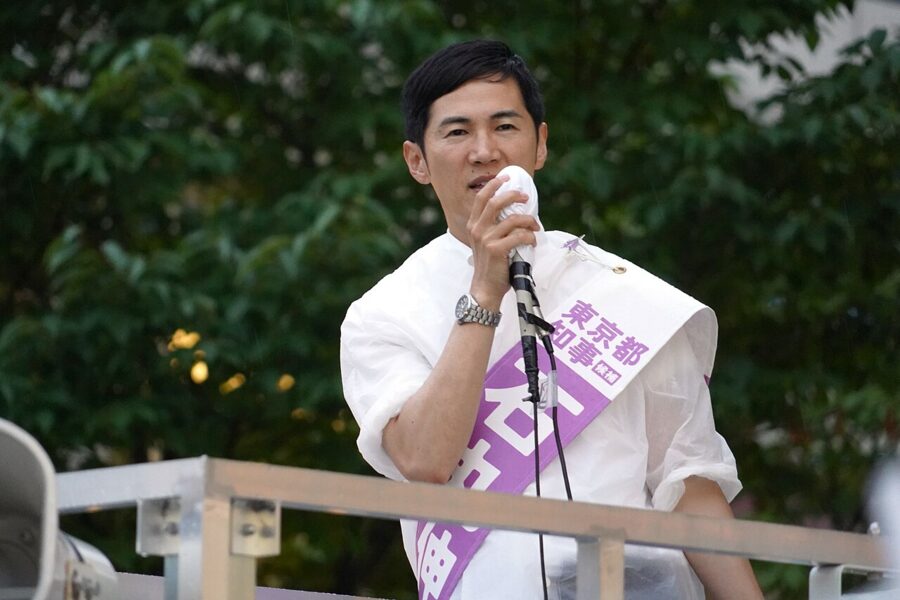
The word turned into votes in 2024. In Tokyo’s governor’s race that July, Shinji Ishimaru (石丸伸二), a former small-town mayor television barely covered, came second with about 1.66 million votes on the strength of YouTube clips. In November Hyogo’s governor, Motohiko Saito (斎藤元彦), who had lost a no-confidence vote over a whistleblower’s allegations and been covered for months as a disgrace, won re-election after supporters online recast him as a victim of the press.

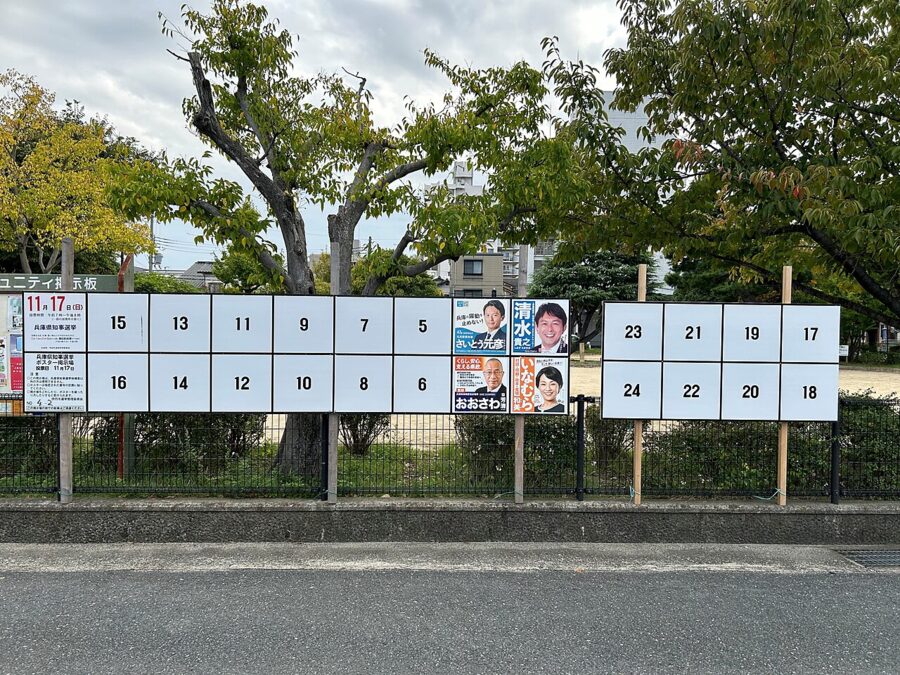
The parties learned. Sanseito took 14 seats in the House of Councillors in July 2025 on a campaign run largely in short videos, and in the February 2026 general election, which gave Takaichi’s LDP 316 of 465 seats, the party’s own campaign video passed 130 million views on YouTube. Broadcasters must treat candidates evenly under Article 4; the clips are bound by nothing of the kind, and a Nikkei investigation found anonymous creators accounted for 55% of election-video views.
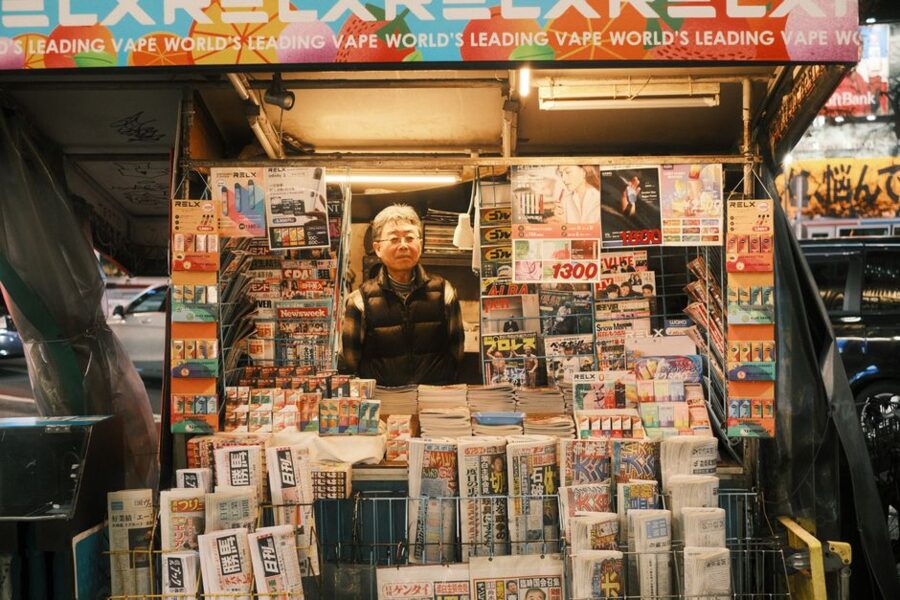
None of this has replaced the old media so much as changed its job. The scoops that drive the online argument still come mostly from a weekly, a daily or NHK; the clip-makers cut and comment. What has gone is the dailies’ hold on the agenda, and with it the deference that once let a company in trouble hold a press conference for the club alone.
Where to see it: Newspark, Yokohama
The place to see how it began is Newspark, the Japan Newspaper Museum, run by the publishers’ association in Yokohama, where Japan’s first daily appeared in 1871. Until 20 December 2026 it has a special exhibition, 1945 Shinbun Rimenshi (1945 新聞裏面史, “1945: the newspapers’ hidden history”), on the year the press passed from wartime censorship to occupation.
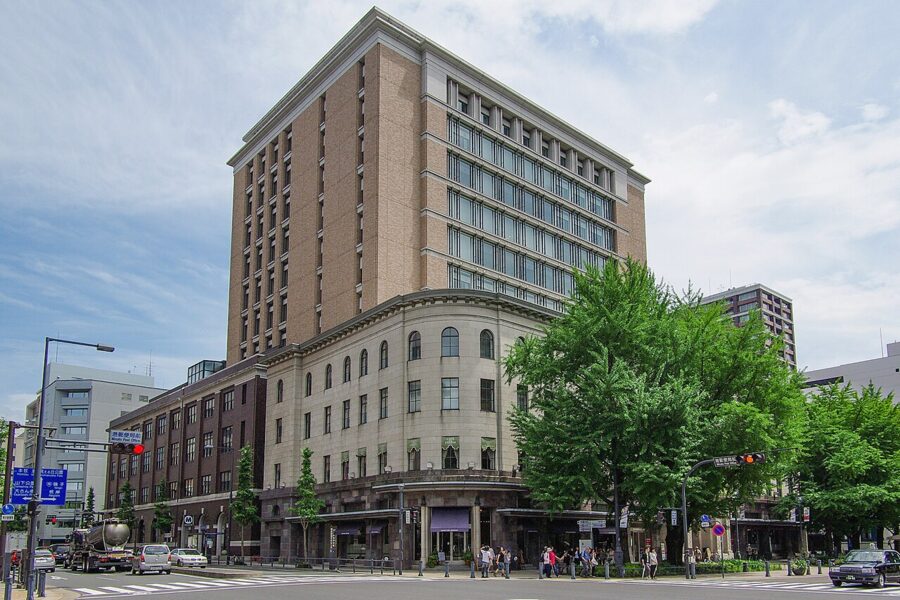

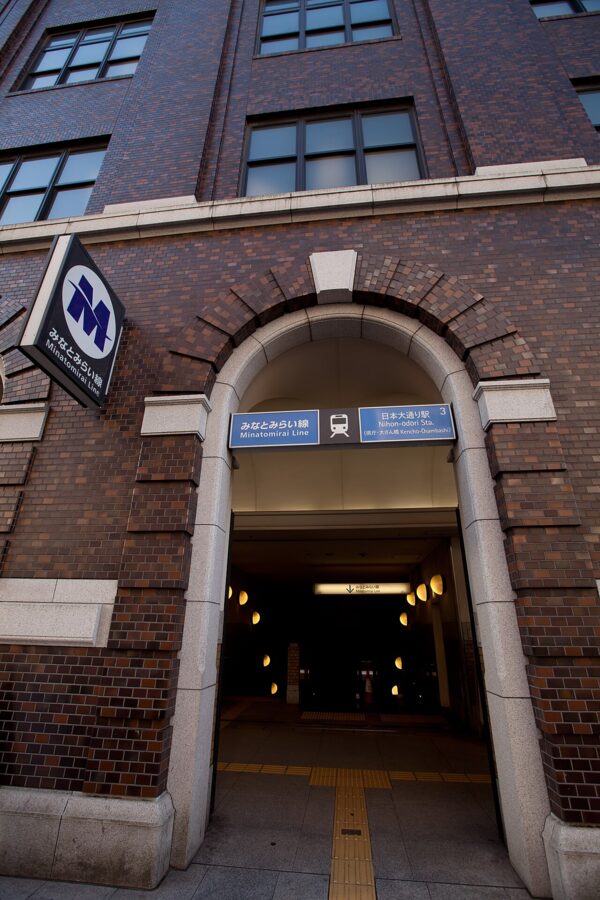
Newspark is at 11 Nihon-odori, Naka Ward, Yokohama, connected directly to Nihon-odori Station on the Minatomirai Line by exit 3, or about ten minutes’ walk from Kannai Station (JR Negishi Line and Yokohama Municipal Subway). It opens 10:00 to 17:00, last entry 16:30, and closes on Mondays (the next weekday when Monday is a holiday) and from 29 December to 4 January. Admission is ¥400 (about $2.60) for adults, ¥300 for university students and ¥200 for high school students; younger children go free (as of November 2026).

Buy a sports paper at the station on the way. If the front page is about a television company, check whose newspaper family it belongs to, then which weekly had the story first.