

Japan’s rainy season does not begin on a date. It begins on a hedge: the weather service announces that a region “appears to have entered tsuyu” (tsuyu-iri shita to miraremasu, 梅雨入りしたとみられます). In early September the Japan Meteorological Agency (JMA) goes back over the summer and corrects itself. For the Tokai region in 2026, the correction moved the end of the season from 20 July to 9 July, eleven days earlier than anyone in Nagoya had been told.
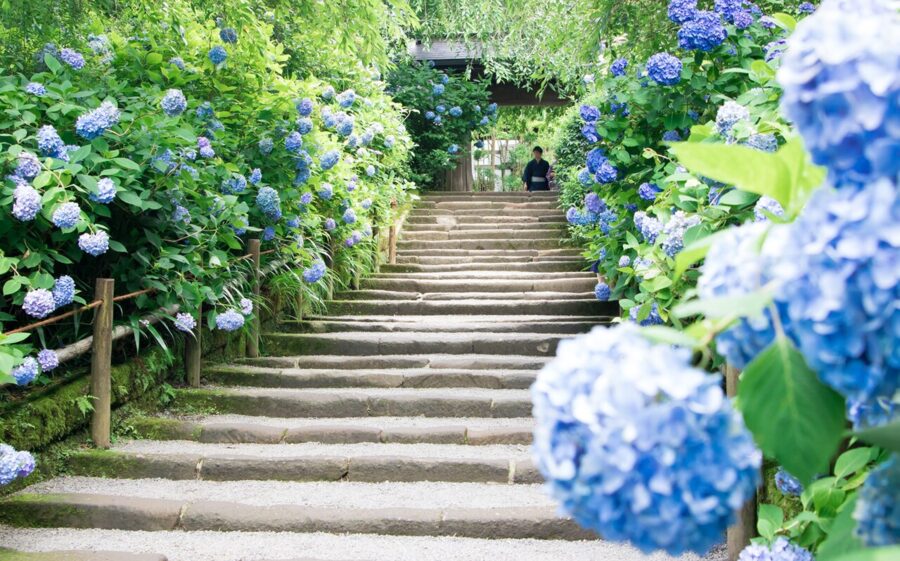
That gap is the character of tsuyu (梅雨): a season everyone can feel and nobody can pin to the day. It brings floods to Kyushu and hydrangeas to Kamakura, and it has its own dolls, its own umbrella etiquette and its own page in the haiku calendar.

In this article
- Plum rain or mould rain: the word
- The front, and how the agency calls it
- When it starts and ends, region by region
- Heavy rain, line storms and the new warning names
- Humidity, mould and the hotel room
- Umbrellas, bags and the stand by the door
- Teru teru bozu, the doll that asks for sun
- Hydrangeas and the haiku calendar
- Where the rain improves the view
Plum rain or mould rain: the word
The two kanji are plum (梅) and rain (雨), and they have two readings. Read tsuyu, they are the everyday word; read baiu, they are the term on a weather chart, as in baiu zensen (梅雨前線), the baiu front. The spelling was borrowed from Chinese, where meiyu names the same rains on the Yangtze.
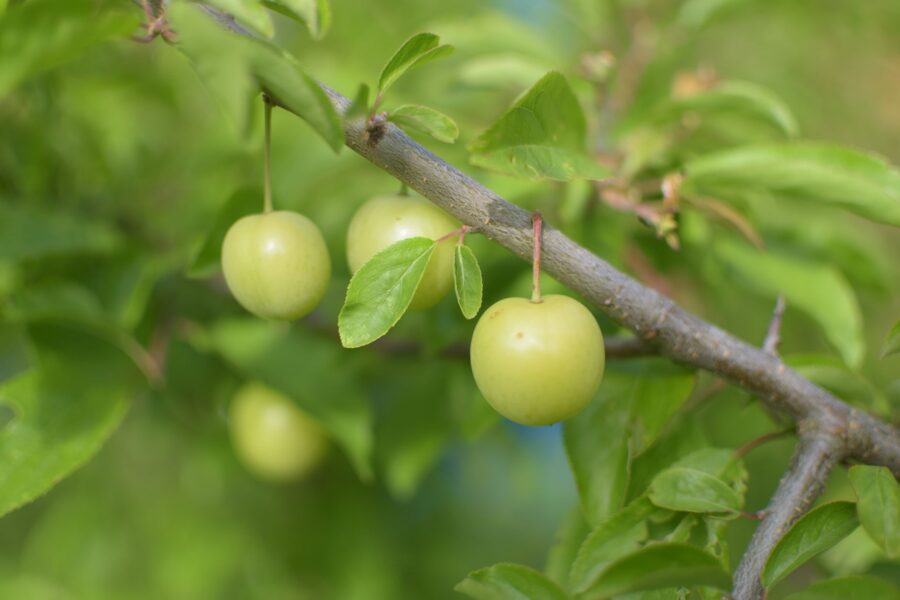
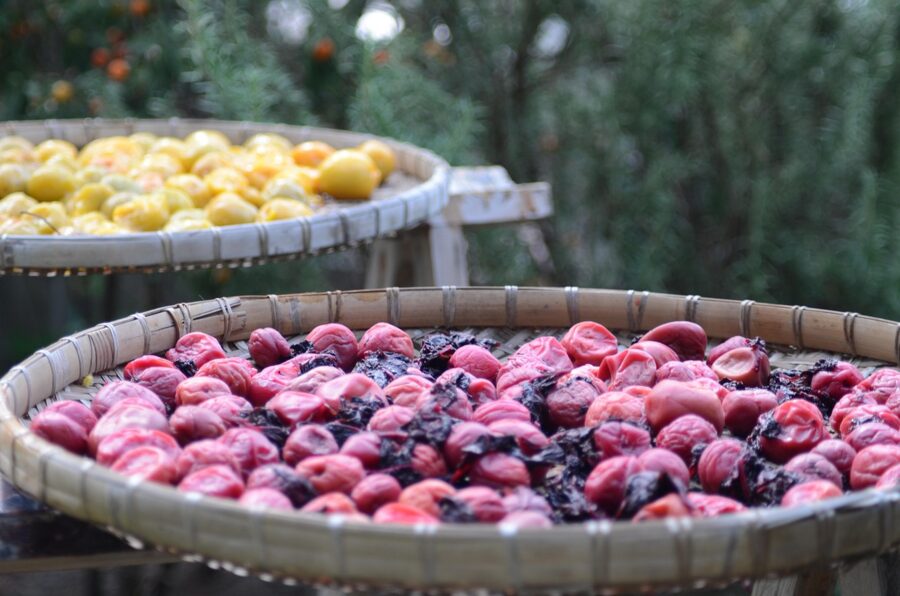
Why plum? The usual answer is that the rains fall as the plums ripen. The Japanese dictionaries give a second theory: the season was also written 黴雨, “mould rain”, because this is when everything goes mouldy, and neither can be proved. Tsuyu itself is traced either to 露 (tsuyu, dew) or to tsuiyu, an old verb for things going bad.
Baiu appears in the anthology Honchō Monzui, compiled around 1060. Older still is samidare (五月雨), “fifth-month rain”, found in the Kokinshū poetry anthology of the early tenth century. The fifth month is the old lunar one, roughly June, so samidare and tsuyu are the same rain under two calendars (the same shift that moves the moon-viewing nights of Jugoya).
The old calendar left one trap behind. Satsuki-bare (五月晴れ), “fifth-month clear weather”, originally meant a sunny break in the rains. Today it means a fine day in May, which dictionaries still flag as a drift. The almanac also keeps a fixed start for the season, nyūbai (入梅), around 11 June, whatever the weather is doing.
The front, and how the agency calls it
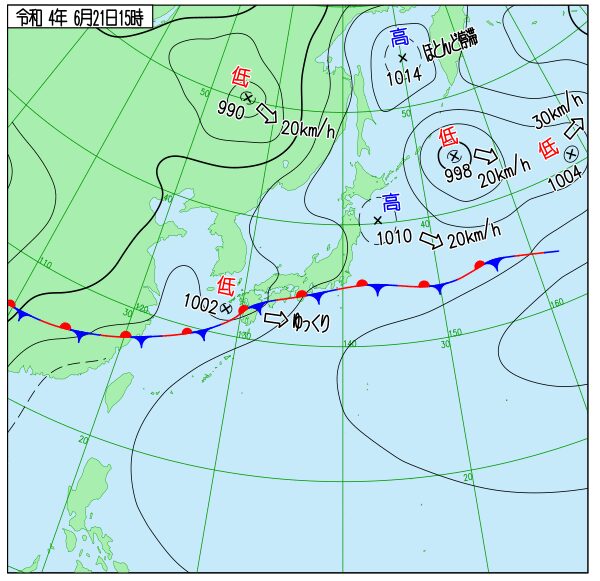
The mechanism is a stalemate. Cool, damp air from a high over the Sea of Okhotsk meets warm, wet air from the Pacific high, and where they meet a stationary front lies across the country for weeks. As the Pacific high strengthens it pushes the front north, so the season starts and ends first in Okinawa and last in Tohoku.
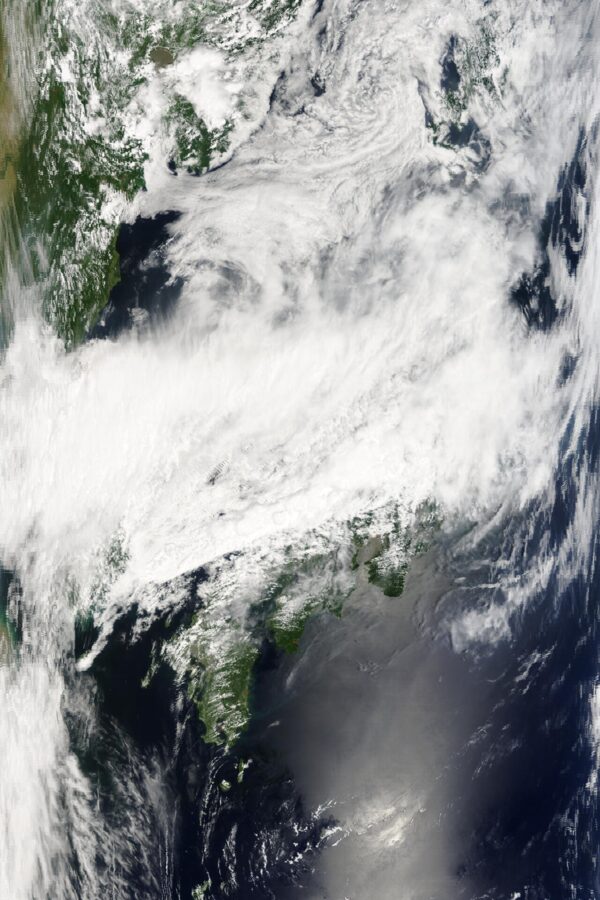
The JMA’s own definition is deliberately loose: a period of many rainy and cloudy days from late spring into summer. Rain from another cause still counts, so a season can be declared with no front on the chart.
On the day, forecasters judge from the weather so far and the outlook for the coming week that the switch has happened, mainly on the drop in sunshine. The change takes about five days, so the date given is its rough middle, always with goro (頃), “around”. In early September the agency reviews what happened and publishes the confirmed dates, a record that runs back to 1951.
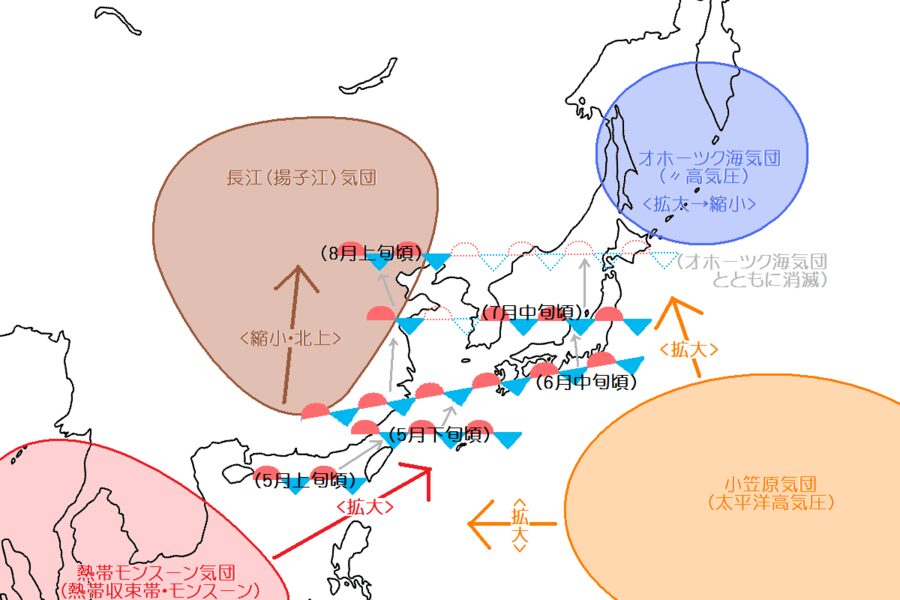
Japan is split into twelve regions for the purpose, and Hokkaido is not one of them: the front usually fades before it gets there, and the agency treats Hokkaido’s damp spells, called Ezo tsuyu, as too irregular to count. If a season has not clearly ended by risshū, the first day of autumn around 7 August, no end is announced; in 1993 none could be identified across most of the country.
When it starts and ends, region by region
Normal dates are the JMA’s averages for 1991–2020; the 2026 dates are the confirmed ones. “Kinki” includes Kyoto and Osaka, “Kanto-Koshin” Tokyo.
| Region | Normal start | Normal end | 2026 start | 2026 end |
|---|---|---|---|---|
| Okinawa | 10 May | 21 June | 4 May | 29 June |
| Amami | 12 May | 29 June | 3 May | 30 June |
| Southern Kyushu | 30 May | 15 July | 20 May | 12 July |
| Northern Kyushu (with Yamaguchi) | 4 June | 19 July | 2 June | 7 July |
| Shikoku | 5 June | 17 July | 2 June | 10 July |
| Chugoku | 6 June | 19 July | 2 June | 9 July |
| Kinki | 6 June | 19 July | 2 June | 9 July |
| Tokai | 6 June | 19 July | 2 June | 9 July |
| Kanto-Koshin | 7 June | 19 July | 2 June | 19 July |
| Hokuriku | 11 June | 23 July | 20 June | 3 August |
| Southern Tohoku | 12 June | 24 July | 20 June | 4 August |
| Northern Tohoku | 15 June | 28 July | 21 June | 3 August |
The 2026 season split the country. Kinki and Chugoku were told on 8 July that the rains had ended, about eleven days early, while Hokuriku and Tohoku entered late and stayed wet into August. Kanto-Koshin ended on its normal date but took 136% of its normal June and July rain.
The preliminary dates tell the other story. Kanto was declared on 7 June and has been moved back to 2 June; southern Kyushu, declared on 1 June, now starts on 20 May. In 2025 western Japan was out of the rains by 27 June, about three weeks early.
The wettest month depends on where you are. Tokyo’s is June, with a normal 167.8 mm; Kyoto’s July (223.6 mm) beats its June (199.7 mm), because the heaviest rain comes as the front stalls at the end. Sapporo averages 60.4 mm in June, which makes Hokkaido the dry choice for these weeks.
Heavy rain, line storms and the new warning names
The end of the season is the dangerous part. As the front stalls over western Japan in late June and July, the air feeding it is at its warmest and wettest, and many recent floods have come from one pattern: the senjō kōsuitai (線状降水帯), or linear rainband.
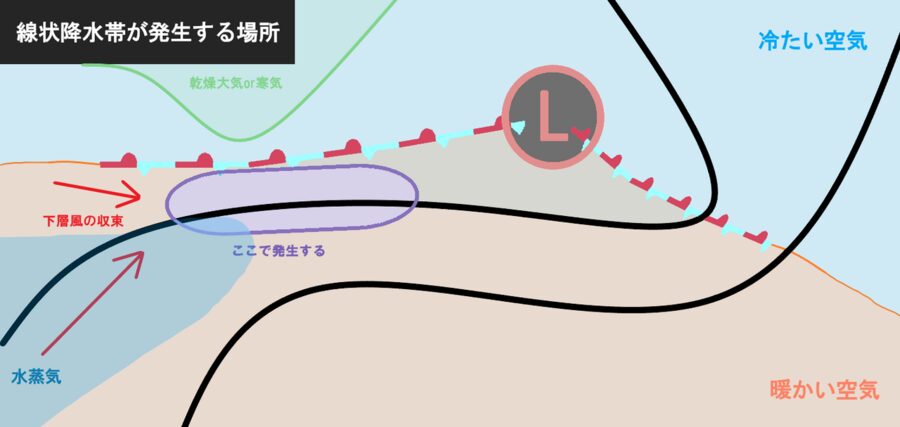

A line storm is a chain of thunderclouds forming one after another and parking over the same place for hours. The JMA’s test for the term is strict: at least 500 square kilometres with 100 mm or more of rain in three hours, two and a half times as long as it is wide, a peak of 150 mm or more, and flood or landslide risk already at the purple “danger” level. When it is met, the agency issues an urgent bulletin.
It also forecasts them, half a day ahead by prefecture and again when one looks likely within three hours. The agency is candid about the odds: about half of those short-notice alerts are followed by an actual line storm, with about an hour’s warning on average.
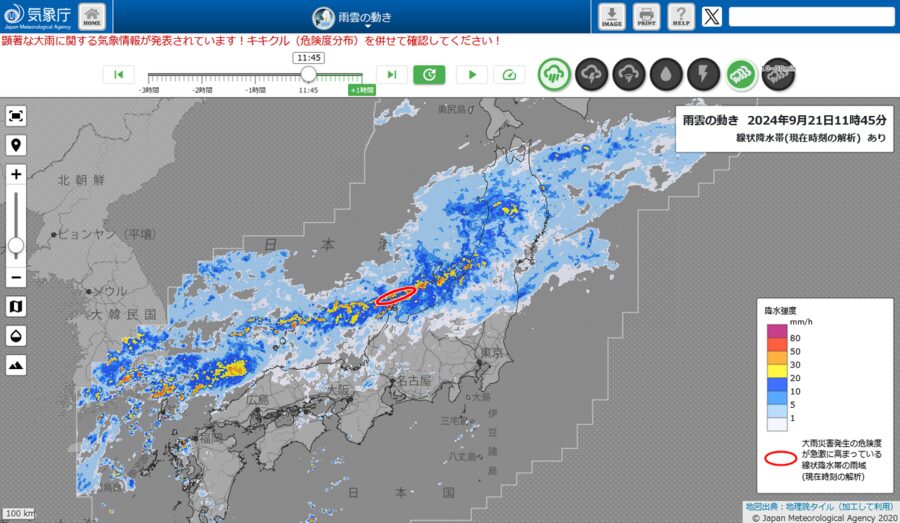

The warning names changed this year. Since 29 May 2026 they carry the number of the five-step alert scale, so the old heavy-rain warning is now the “Level 3 heavy-rain warning”. In brief, as of November 2026:
- Level 2, advisory (chūihō, 注意報): check where you would go.
- Level 3, warning (keihō, 警報): older people and anyone slow to move should leave areas at risk.
- Level 4, danger warning (kiken keihō, 危険警報): everyone leaves areas at risk of floods or landslides.
- Level 5, emergency warning (tokubetsu keihō, 特別警報): disaster is happening or about to; get to the safest place you can reach.
The JMA’s risk map, Kikikuru, colours the levels yellow, red, purple and black, and its guidance tells people to act on Level 4 without waiting for an evacuation order. For a visitor: an upper floor of a solid hotel is the place to sit out Level 3 and above, and a riverside walk or mountain shrine is not.
Humidity, mould and the hotel room
Most tsuyu days are just grey, warm and damp. Tokyo’s June averages 21.9°C and 75% humidity, mild in the morning and close by mid-afternoon, and the air that keeps the moss green gets into luggage too.
By the second week the mould theory of the name is easy to believe. Stuff wet shoes with newspaper, run the air conditioner on its dehumidifying setting (joshitsu, 除湿, usually marked “dry”), and use a coin laundry’s dryers. Keep any fine days, the tsuyu no naka-yasumi (梅雨の中休み) or “midway rest”, for plans outdoors.
Umbrellas, bags and the stand by the door
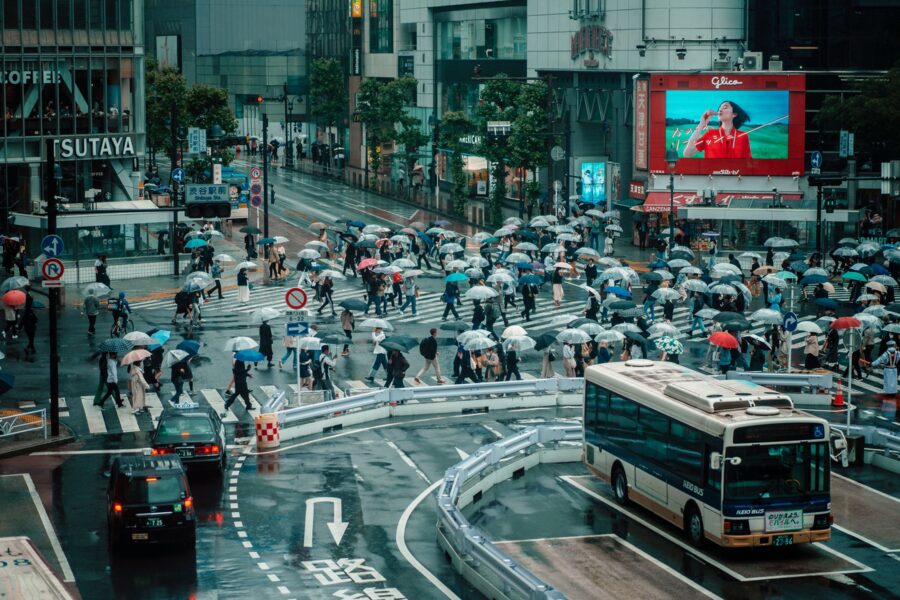
You need not pack an umbrella. Convenience stores sell clear vinyl ones by the door, which is also why so many end up forgotten on trains or left on street corners when the rain stops.
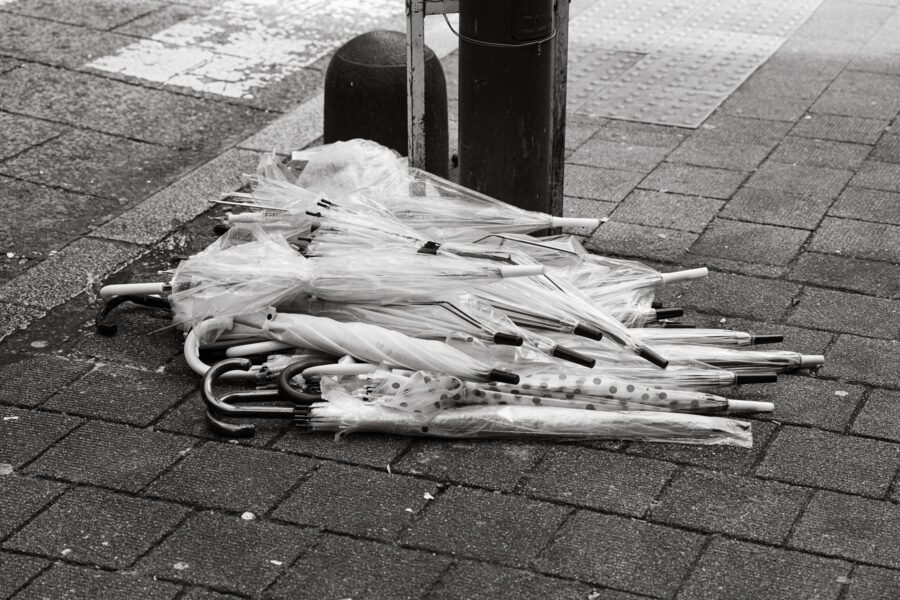
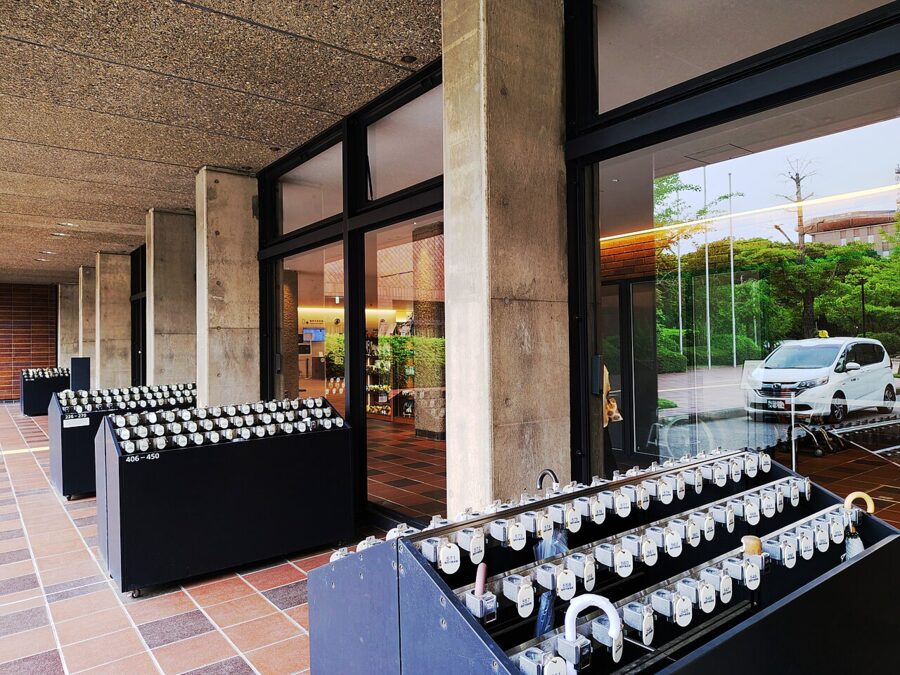
What to do with a wet umbrella indoors is one of the Japanese customs visitors notice at once. Shops, museums and restaurants keep an umbrella stand (kasa-tate, 傘立て) by the entrance, often with a lock and numbered key. Take the key and leave the umbrella; carrying it dripping through the building is the mistake.

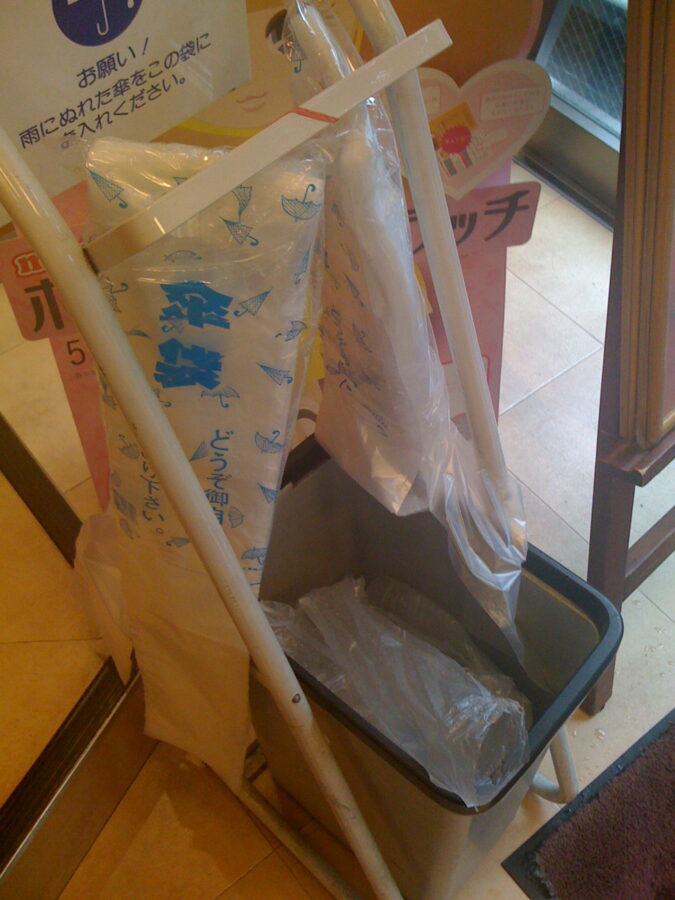
Where there is no stand, there is a sleeve: department stores and many shops put out long, thin plastic bags (kasa-bukuro, 傘袋) for the closed umbrella, with a bin for them by the exit. On trains and escalators, keep it furled and close.

Teru teru bozu, the doll that asks for sun
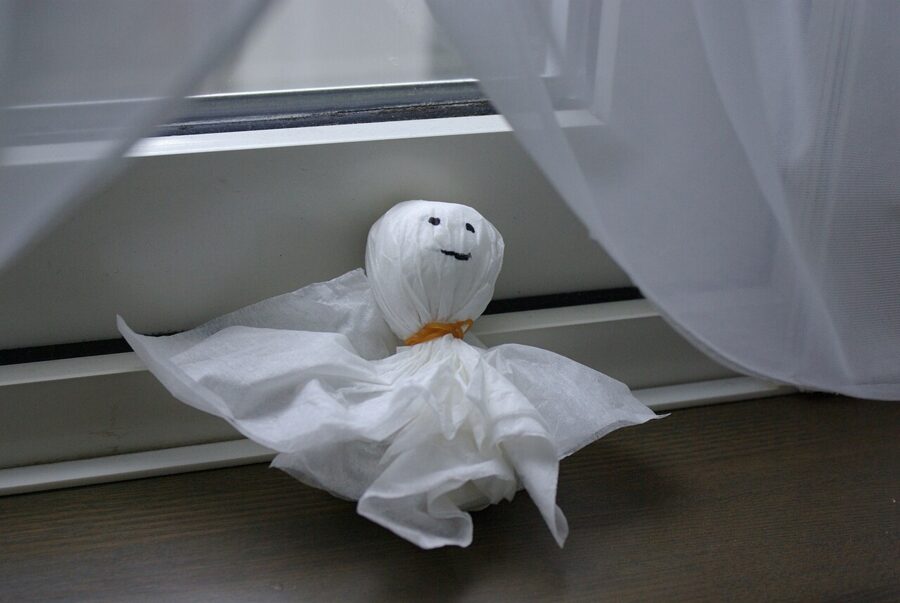
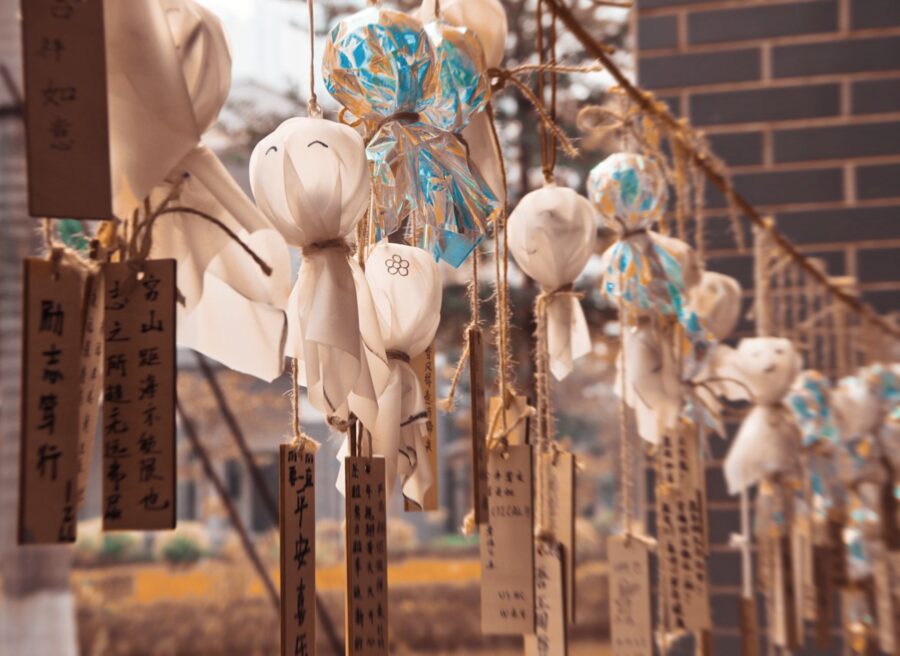
The season’s other object is a white doll at the window. A teru teru bōzu (てるてる坊主), roughly “shine-shine monk”, is a square of paper or cloth tied round a ball for a head, hung under the eaves the night before a school trip or sports day to ask for fine weather.
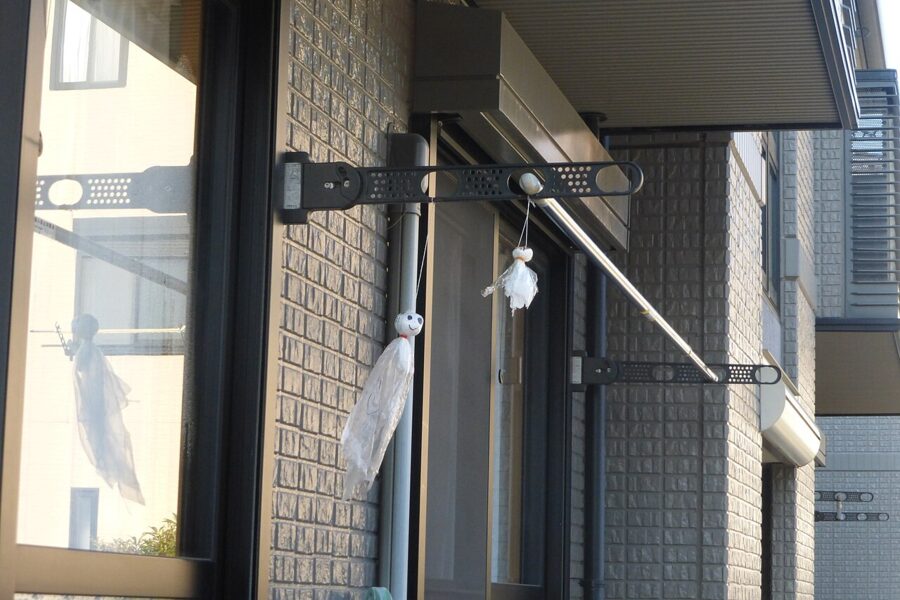
The custom is said to have come from China and was known in Japan by the mid-Edo period; a comic verse collection of 1750–1776 already jokes about one failing. When it worked, the doll was given its eyes in ink, or had sake poured over its head and was floated down a river.

The nursery song most children learn, by Kyoson Asahara, dates from 1921. Its first verse promises the doll a golden bell if tomorrow is fine; its last threatens to cut off its head if it rains.
Hydrangeas and the haiku calendar
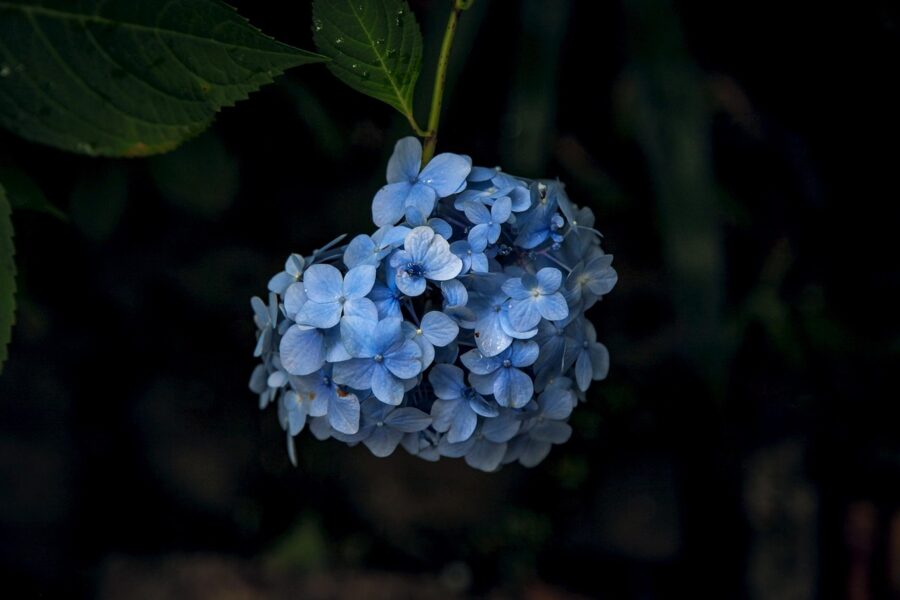
In the haiku calendar, tsuyu is a summer season word, and it brings a family of others with it: hashiri-zuyu (走り梅雨), the early rains before the season proper; karatsuyu (空梅雨), a dry rainy season; tsuyu-zamu (梅雨寒), the chilly days inside it; tsuyu-ake (梅雨明け), the end. Ajisai (紫陽花), the hydrangea, is the season’s flower the way cherry blossom is spring’s.
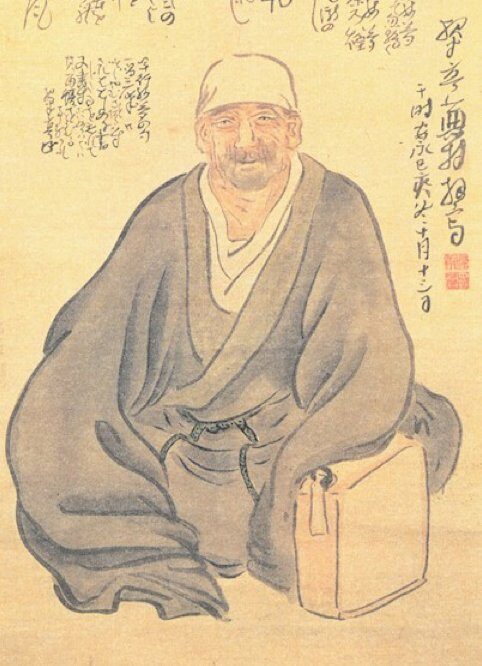
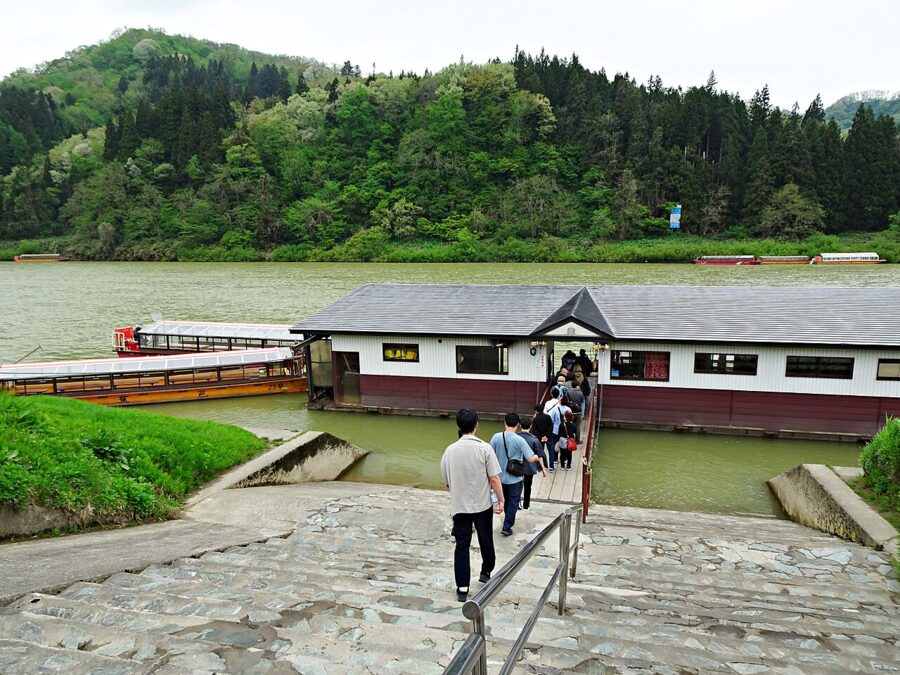
The best-known rainy-season haiku uses the older word. Matsuo Bashō wrote it on his northern journey of 1689, beside the Mogami River in what is now Yamagata:
五月雨をあつめて早し最上川
Gathering up the rains of the fifth month: how fast it runs, the Mogami.
Yosa Buson’s answer, a lifetime later, turns the swollen river into a threat: samidare ya / taiga wo mae ni / ie niken, “Summer rains: two houses facing the great river.” I would read the pair as the whole season, the force of the water and the people living beside it.

Where the rain improves the view
The places best in tsuyu are the ones planted for it: hydrangeas need water, moss needs shade and damp. The crowds know this, so the advice for all four below is the same: go on a weekday, at opening time, and in actual rain.
Meigetsu-in, Kita-Kamakura
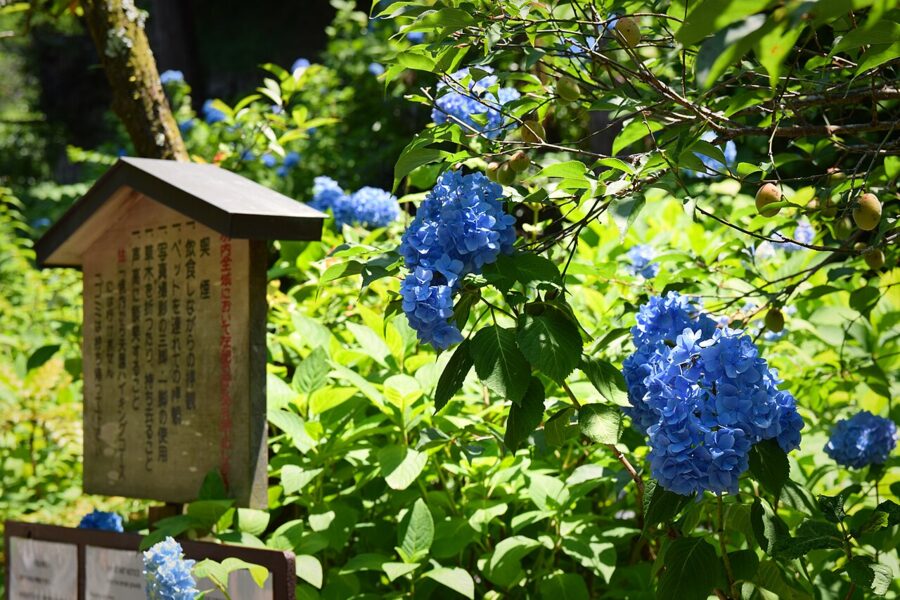
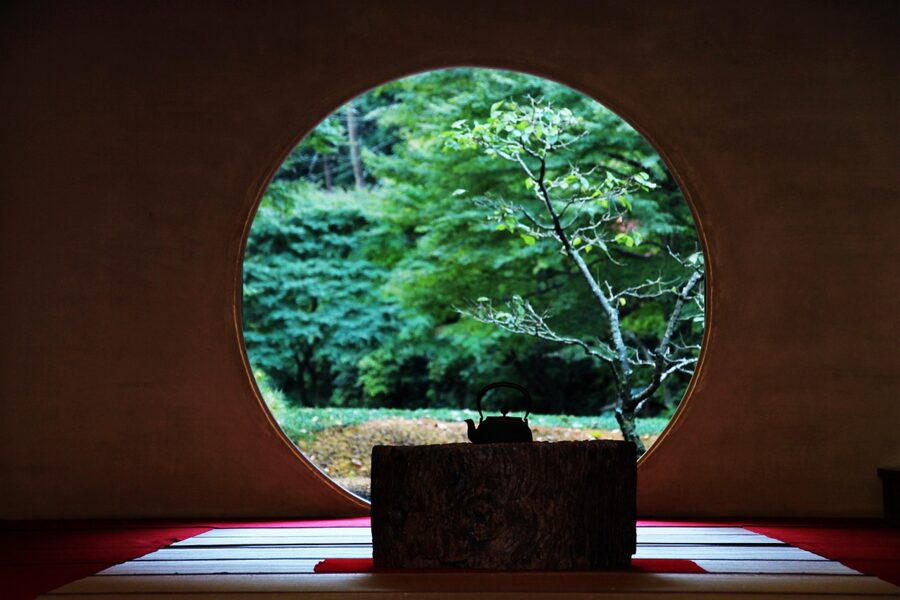
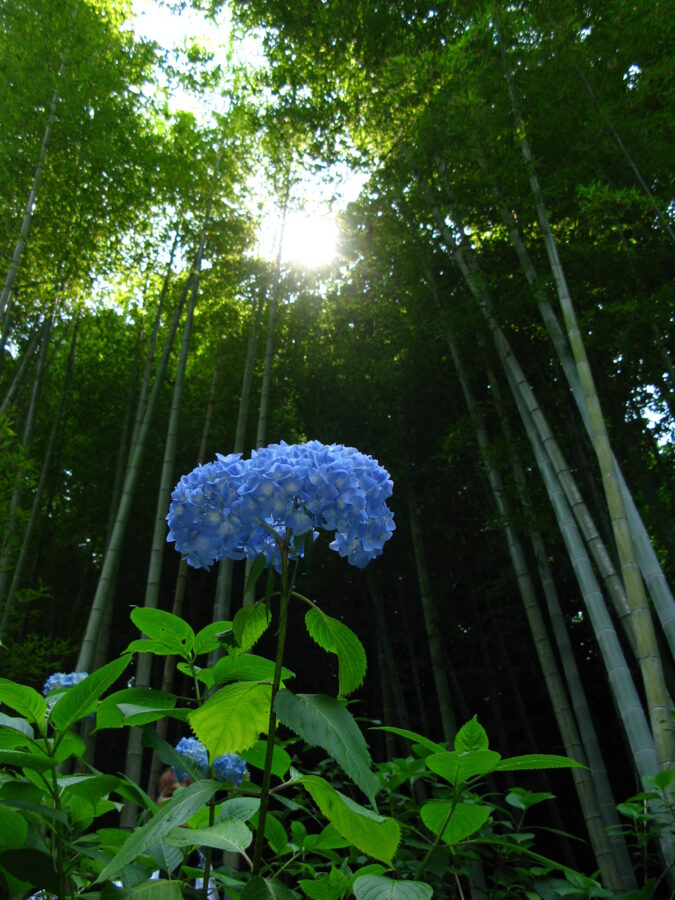
Meigetsu-in is called ajisai-dera, the hydrangea temple, and its hydrangeas are mostly one shade of blue, so in mid-June the whole slope reads as a single colour, known as “Meigetsu-in blue”. Inside the main hall, a round window looks out on the rear garden.

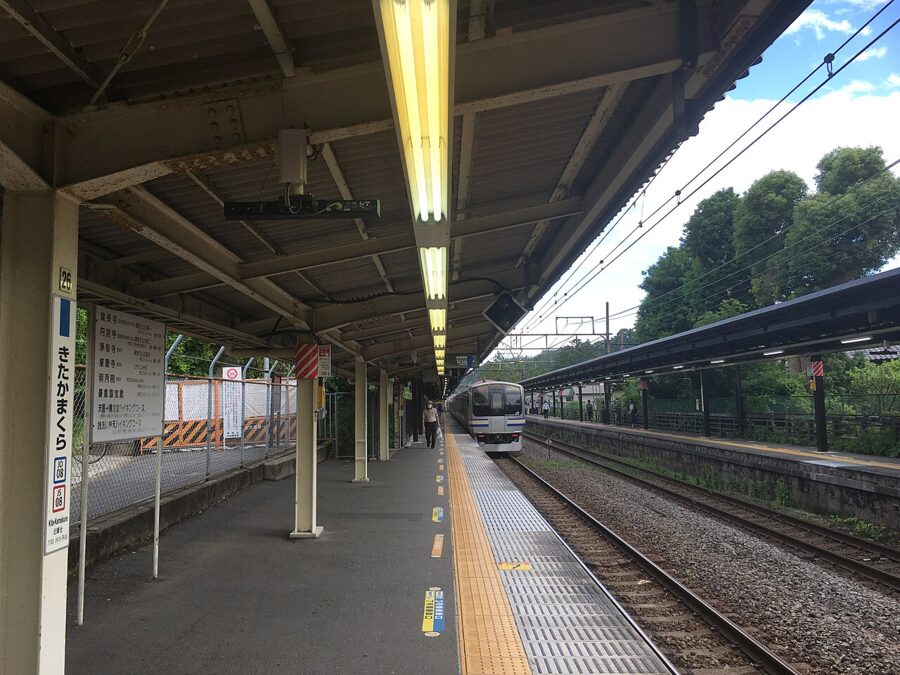
In June 2026 the temple opened 8:30 to 17:00, with last entry at 16:30, and charged ¥500 (about $3.30) for adults and ¥300 (about $2) for children. It is about ten minutes’ walk from JR Kita-Kamakura Station on the Yokosuka Line.

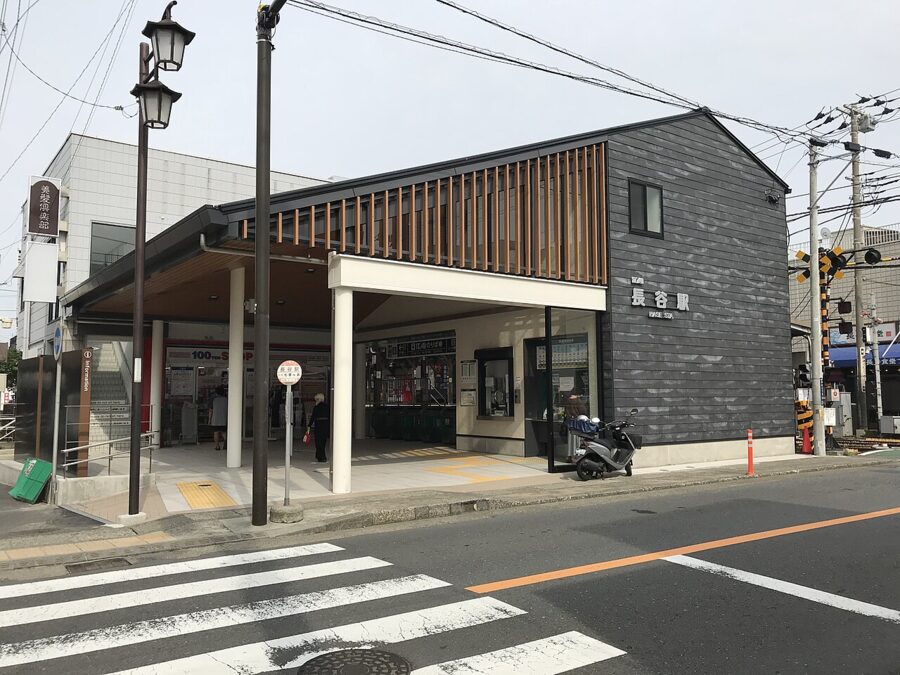
Hase-dera, Kamakura
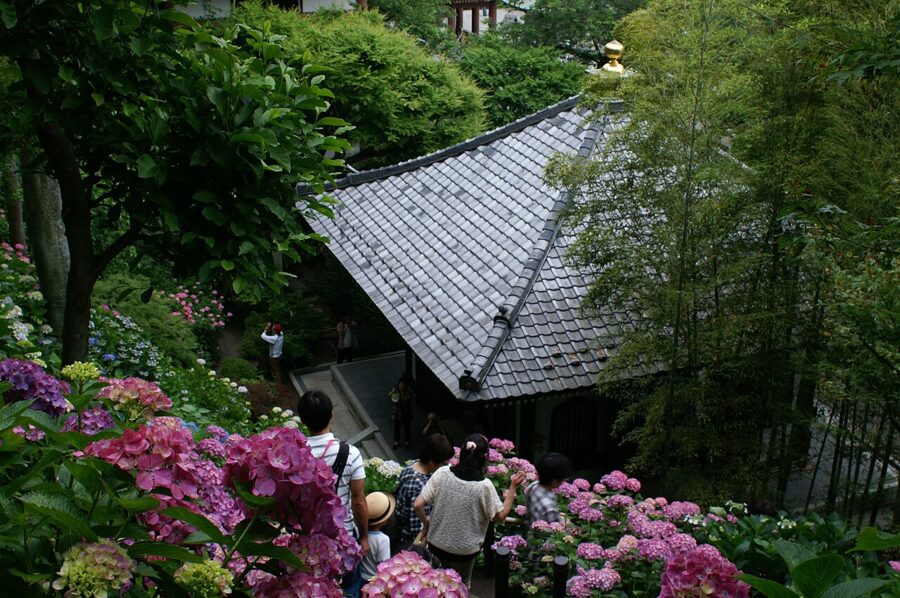
Hase-dera, across town, is a temple of the eleven-headed Kannon, whose wooden statue stands 9.18 metres tall. Its hydrangeas are on the hillside path above the halls: about 2,500 plants of some 40 varieties, with Sagami Bay below. The temple has even named a new variety of its own, Hase no Inori, “Hase’s prayer”.
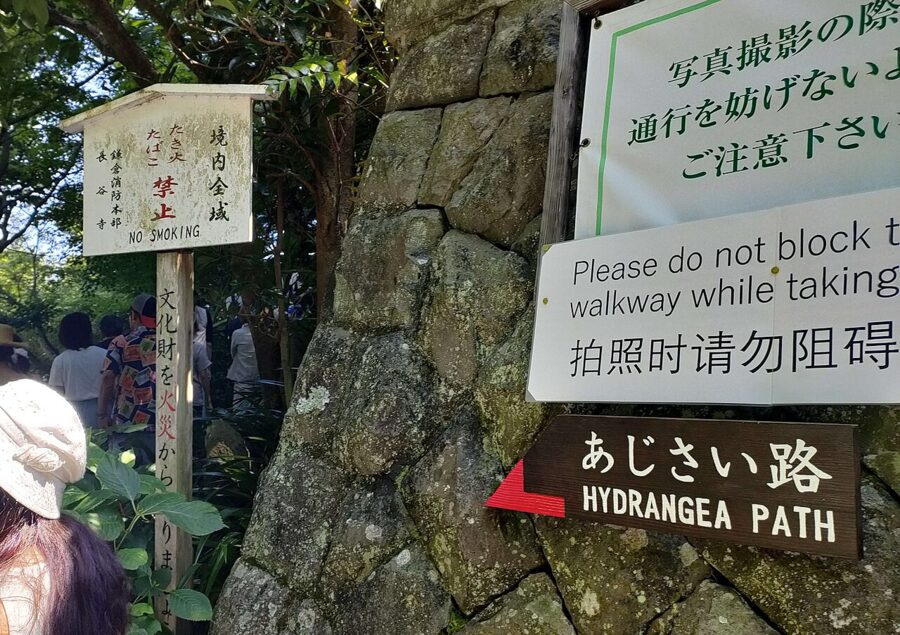

Admission is ¥400 (about $2.70) for adults and ¥200 for primary-school children, and from April to June the temple’s hours run 8:00 to 17:00 for entry, closing at 17:30 (as of November 2026). In June the path has a separate timed ticket, booked online through the temple’s site; terms change yearly, so check in May. The plants are pruned straight after the season, by 6 July in 2026.

Hase Station on the Enoden line is five minutes’ walk away; from Kita-Kamakura, take the Yokosuka Line one stop to Kamakura and change.

Mimuroto-ji, Uji
Mimuroto-ji, in the hills behind Uji south of Kyoto, is the tenth temple on the Saigoku pilgrimage and has the largest planting: about 20,000 hydrangeas under tall cedars. In 2026 the garden stayed open until 5 July.
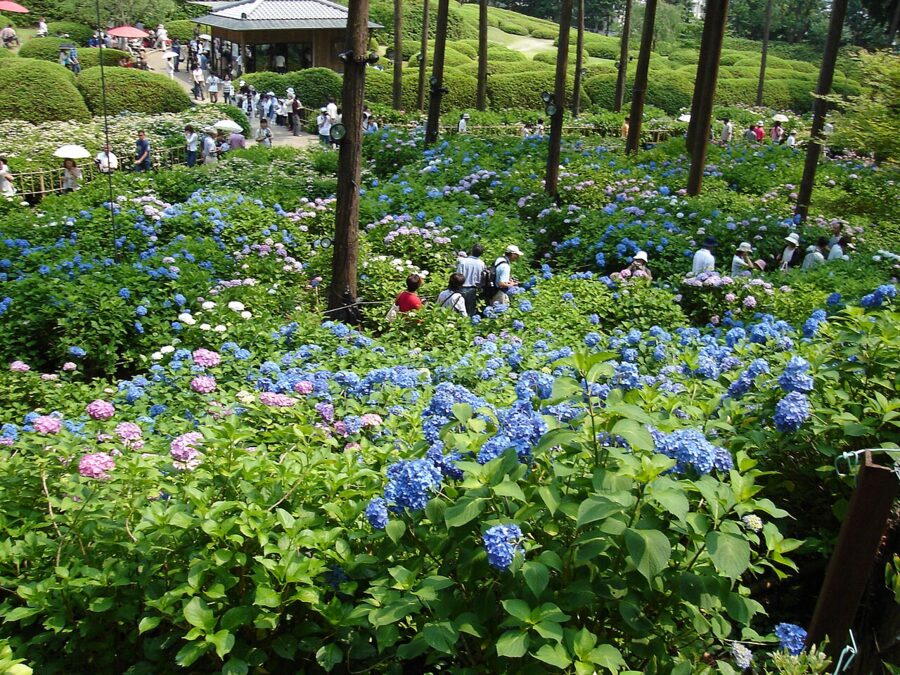

As of November 2026 the temple lists its hours as 8:30 to 15:10, with the gates shut completely at 16:00, and admission at ¥1,000 (about $6.70) for adults and ¥500 for children. One rule matters most in this season: the temple closes whenever a weather warning is in force. It is a 15-minute walk from Mimurodo Station on the Keihan Uji Line, and the temple asks visitors to come by train on June weekends.

Saiho-ji and the moss
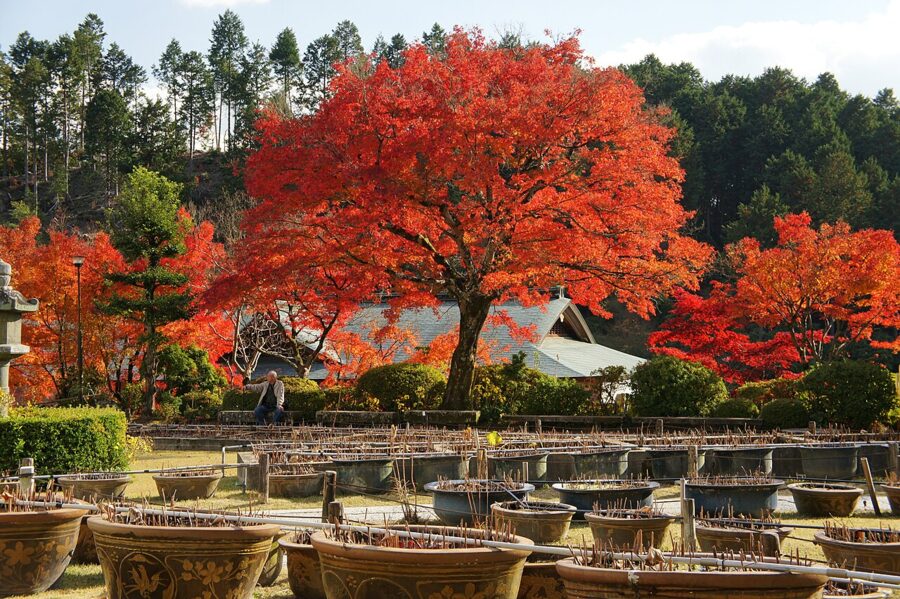
Saihō-ji in western Kyoto, known as Kokedera, the moss temple, is the opposite of a hydrangea crowd. Its pond garden under the trees is carpeted in moss and looks its best in rain, when the green deepens. I know of no better place in Kyoto to see what wabi-sabi looks like as a garden.
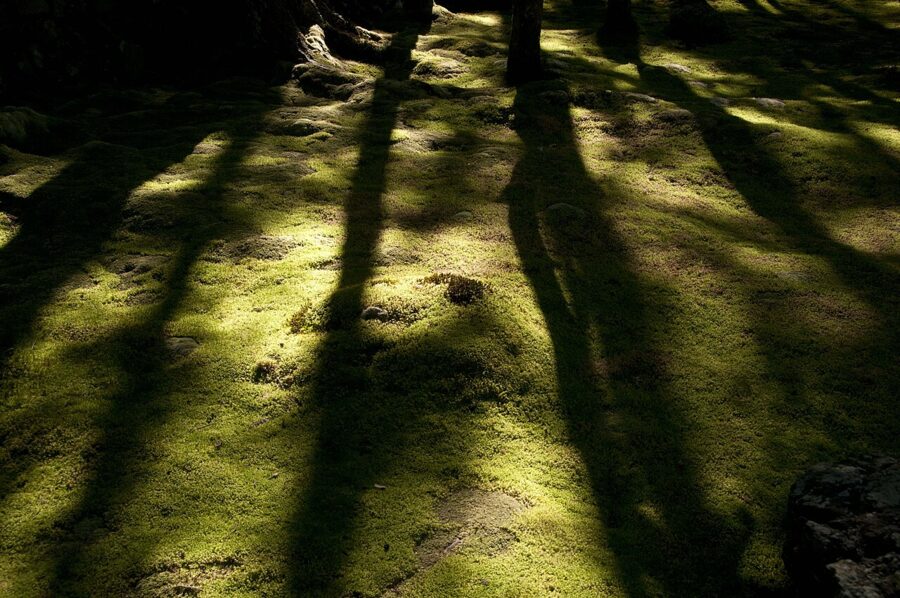

Nobody walks in. Since 1977 the temple has admitted visitors only by advance application, online or by return postcard up to the day before, and the visit begins with copying a sutra, about an hour in all. The Koke-dera/Suzumushi-dera stop on Kyoto Bus is three minutes’ walk; Hankyu’s Kamikatsura Station is about fifteen.
Next June the announcements will come again, region by region, with the same careful to miraremasu on the end. Take them as the agency means them, as a forecast that will be checked in September, and if the word from Kamakura is that Meigetsu-in’s blue is out, go on the wettest weekday morning you can find.