
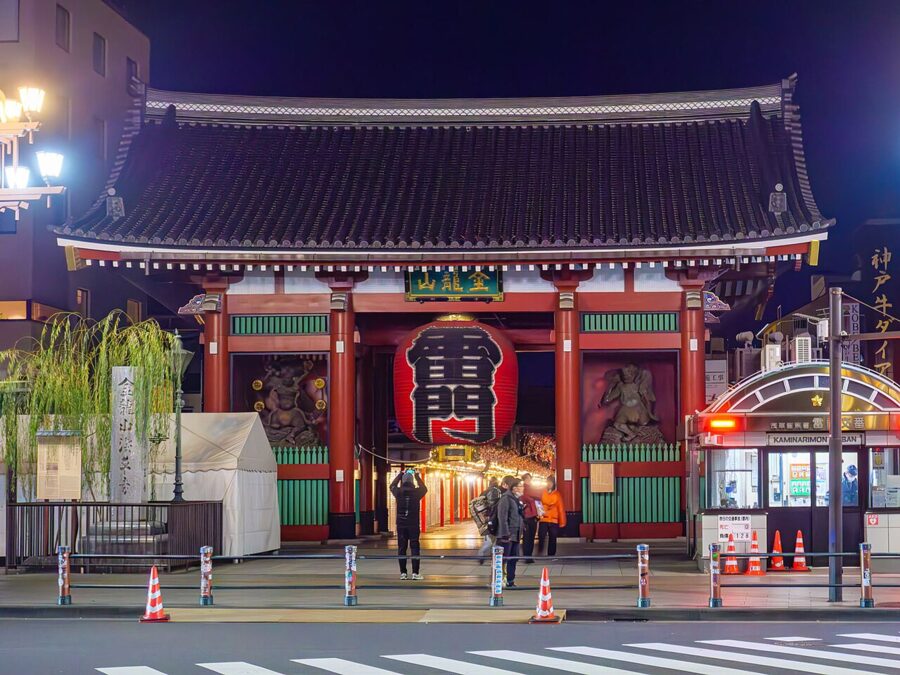

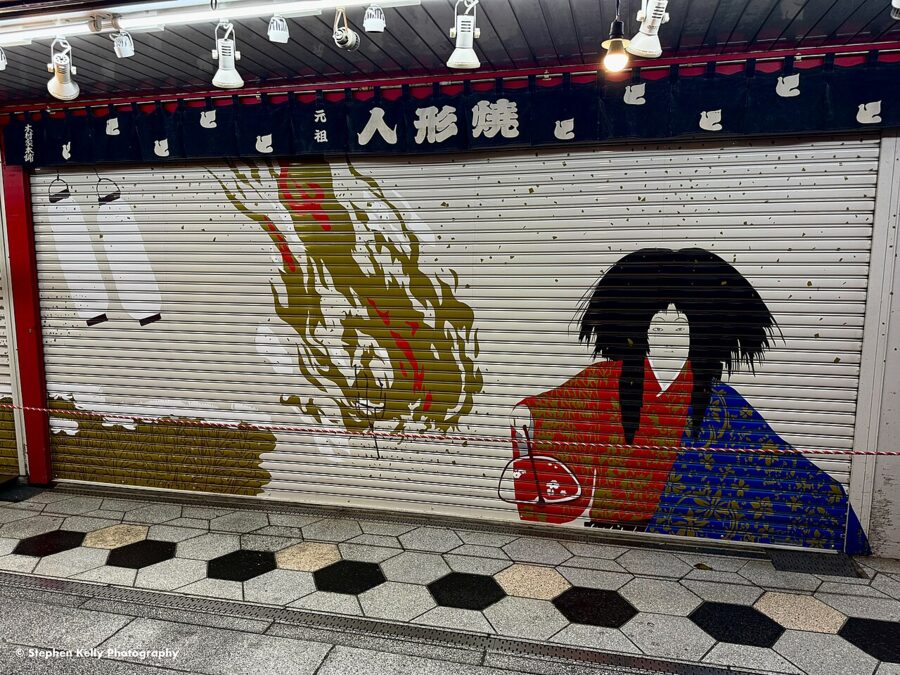
At six in the morning Nakamise is a corridor of painted shutters. The stalls that will sell rice crackers and folding fans to thousands of people by noon are locked behind roller doors, and the stone paving belongs to joggers, sweepers and the first people praying at the hall on their way to work. The hall itself opens at 6:00. By ten the street is a shuffle, and most people who visit Asakusa (浅草) see nothing else.
They do it in an afternoon: the red gate, the shopping street, the temple, a photograph from the bridge. That route is the standard introduction to the old Tokyo neighbourhoods of the low city, and a fair one. The rest of Asakusa lies further in: the streets behind the temple, the theatre district that was the capital’s playground for half a century, the kitchen-supply street to the west and the river to the east.

Asakusa is not a city but a district of Taito ward, on the west bank of the Sumida River. It is the most visited corner of shitamachi, Edo’s “low city” of merchants and craftsmen, and almost everything in it began with one temple.

In this article
Kaminarimon, Nakamise and Senso-ji
The gate and the lantern
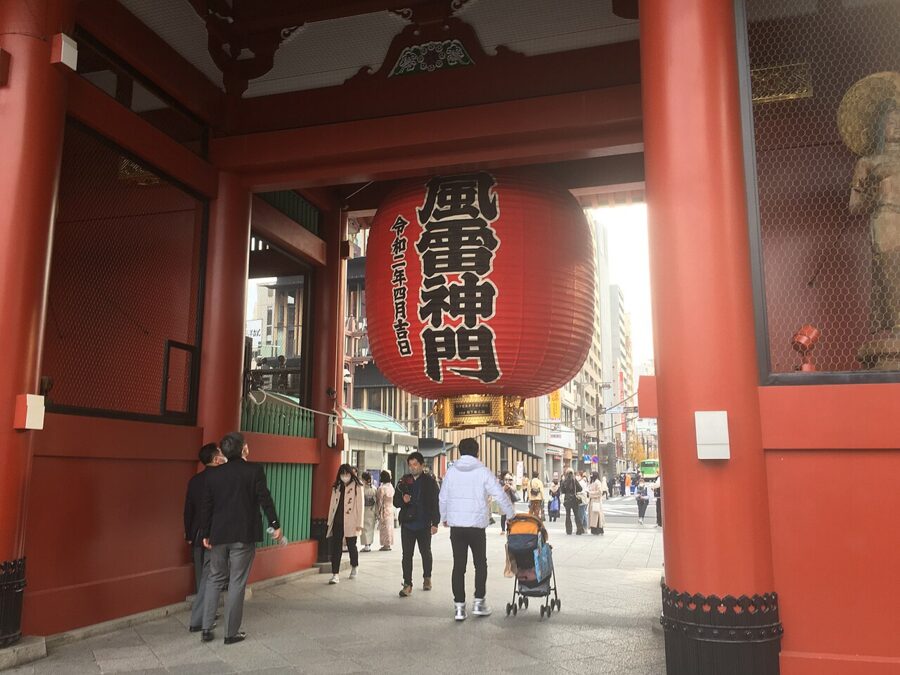
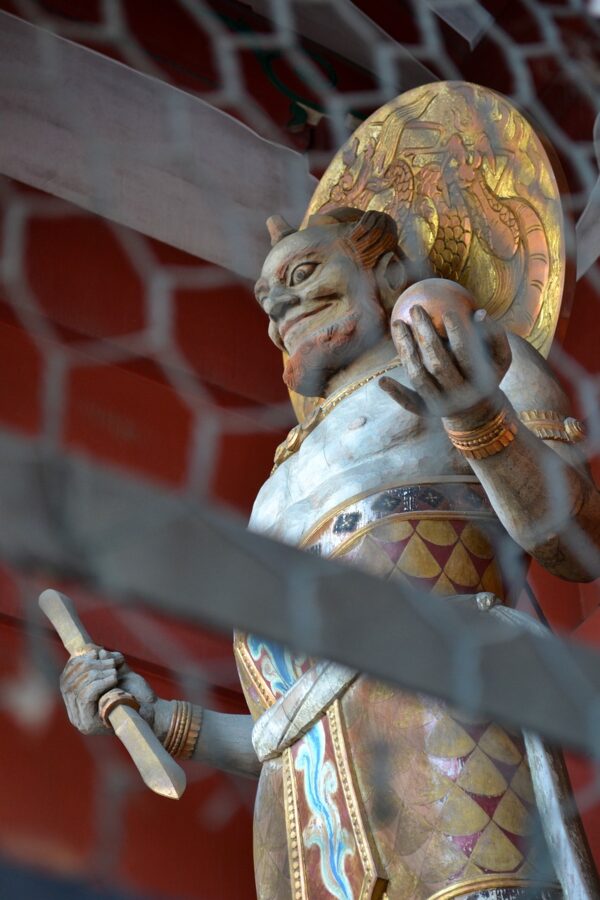
Kaminarimon (雷門), the “Thunder Gate”, is the outer gate of Senso-ji (浅草寺). Its formal name is Fūraijinmon, after the wind god Fūjin and the thunder god Raijin in its side bays. Nobody knows when people dropped the wind god, but by the early nineteenth century a comic verse already called him a lodger at the Thunder Gate.
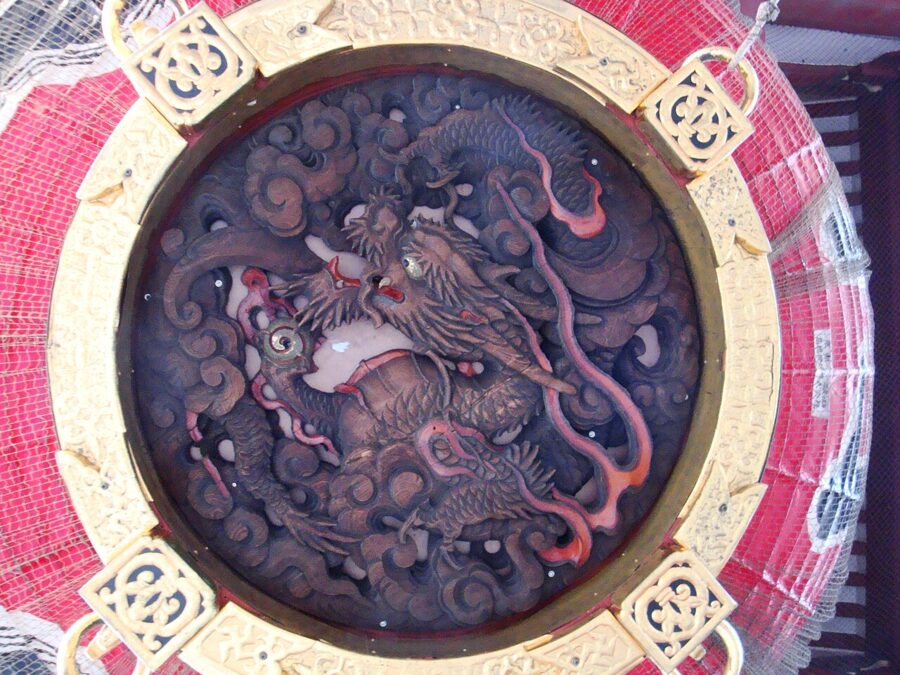
The temple’s history of the gate is a list of fires: 1642, 1767 and 1865, the last leaving the site empty for 95 years. The present concrete gate was paid for by Konosuke Matsushita, founder of the company now called Panasonic, and opened on 1 May 1960. The temple gives the lantern as 3.9 metres high, 3.3 metres wide and about 700 kilograms.

The statues are older than the gate. In 1865 only the heads of Fūjin and Raijin were saved; new bodies were carved in 1874, and for the 1960 rebuilding the temple credits the president of Tokiwado, a maker of the puffed-rice sweet kaminari okoshi, with having them repaired and repainted.
What Nakamise sells
Nakamise (仲見世) runs about 250 metres from Kaminarimon to the second gate, Hozomon. In the temple’s account, around 1685 it let local people set up stalls along the approach in return for sweeping the grounds, which makes this one of the oldest shopping streets in Japan.
The buildings are younger. The stalls were rebuilt in brick in 1885 and, after the 1923 earthquake, in red-painted concrete in 1925; the overhead cables went underground in 1994, which is why the view to Hozomon is so clean.
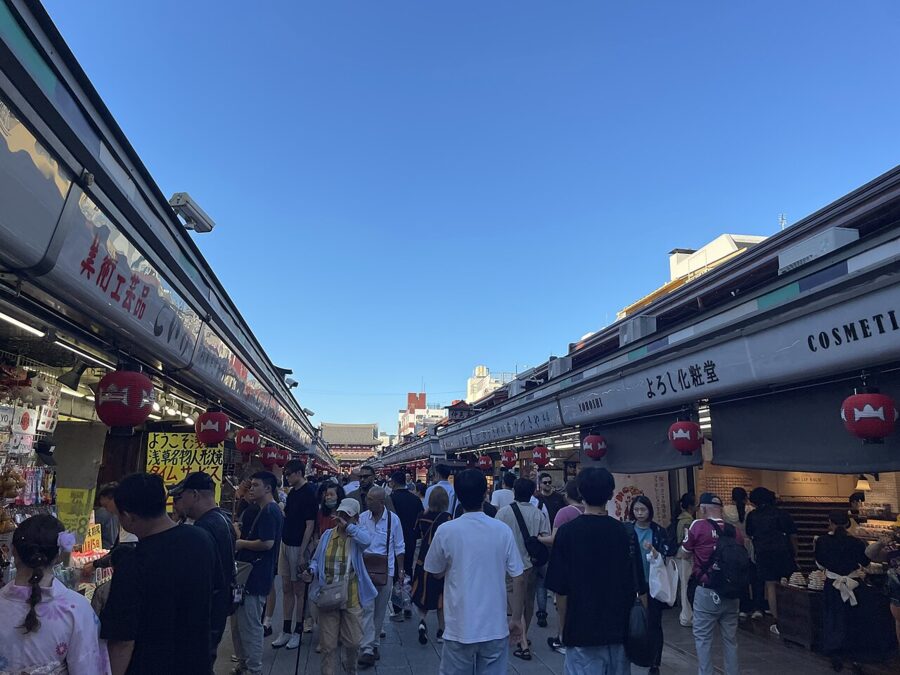

In the Edo period this stretch sold toys, sweets and souvenirs, and it still does. The edible ones are the reason to stop. Ningyō-yaki (人形焼) are small sponge cakes filled with bean paste, baked in iron moulds shaped like the pagoda or the lantern. Kaminari okoshi (雷おこし) are bars of puffed rice bound with syrup, named for the gate.
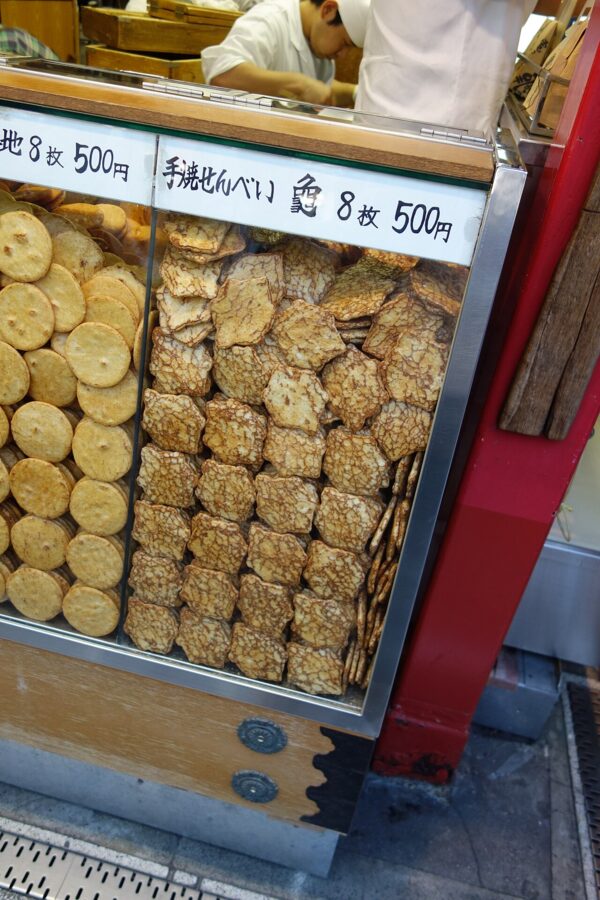
And senbei (煎餅), soy-glazed rice crackers, are still grilled in front of you at a few counters. The rest is fans, wigs for festival dancers and plastic swords. I would skip most of it and shop in the side streets, where it is quieter.

The temple and the net
Senso-ji’s founding story, as the temple tells it, begins on the river at dawn on 18 March 628. Two fishermen, the brothers Hinokuma Hamanari and Takenari, kept drawing a small statue up in their net instead of fish. A local headman, Haji no Nakatomo, recognised it as Kannon, the bodhisattva of mercy, and enshrined it. Since 645, when a monk was told in a dream not to show it, the statue has been kept hidden.
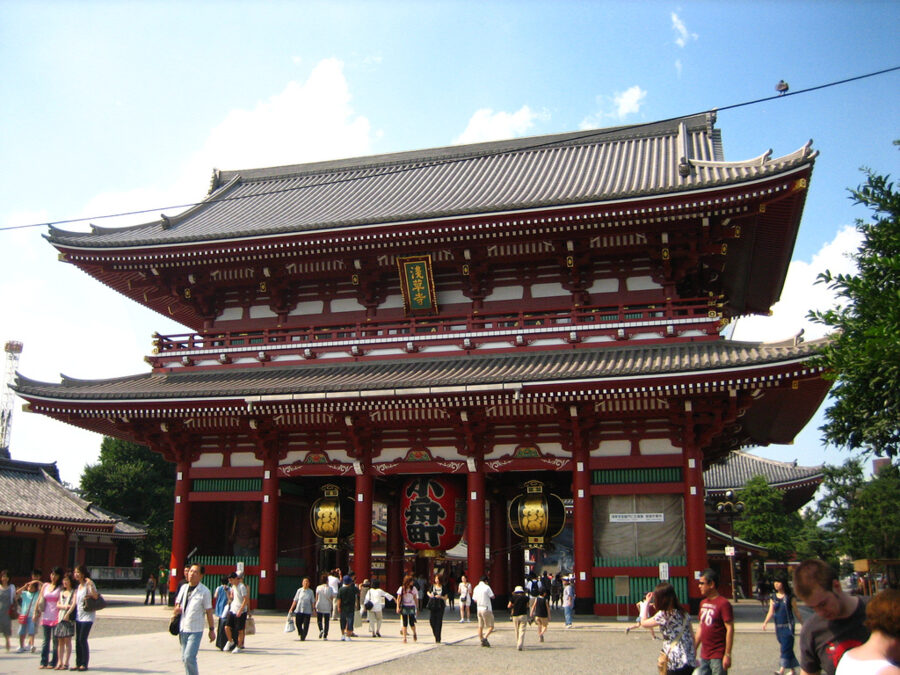

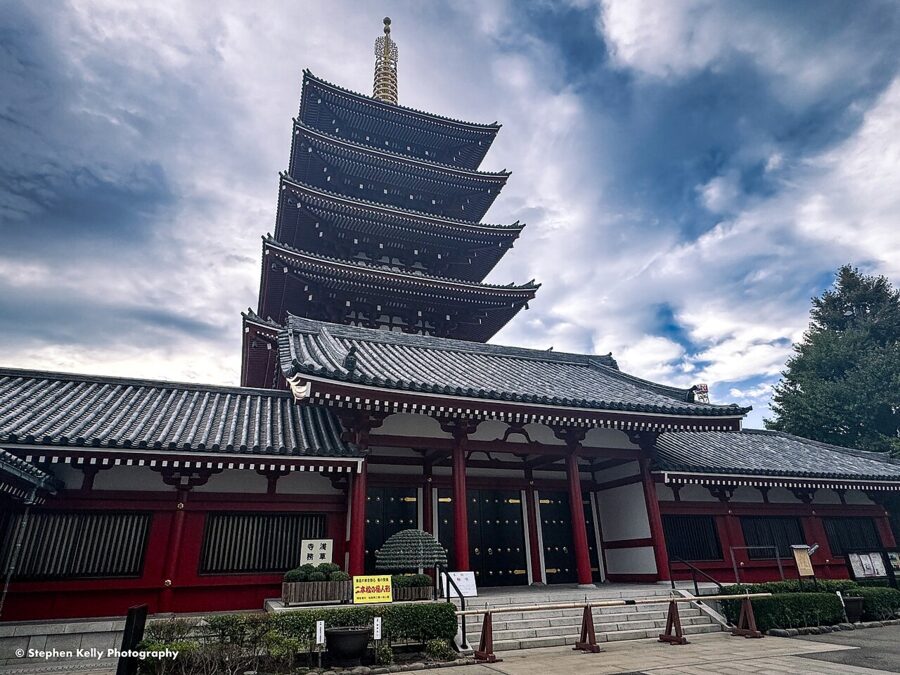
What you see is postwar. The air raid of 10 March 1945 burned the main hall, the gate and the pagoda, and the temple rebuilt them in concrete: the main hall in 1958, Hozomon in 1964 and the pagoda in 1973. That rebuilding belongs to the story of Japan since 1945 as much as to the temple’s.
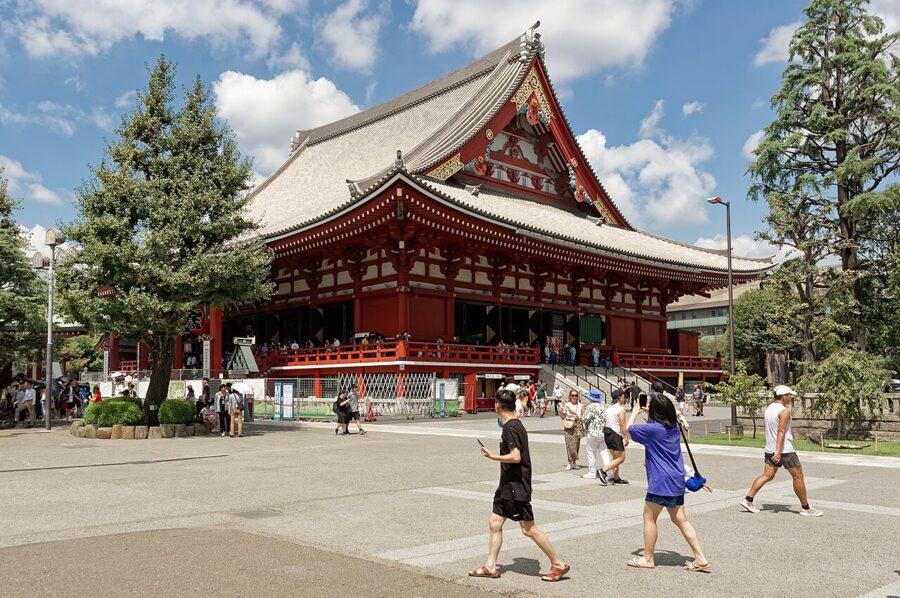

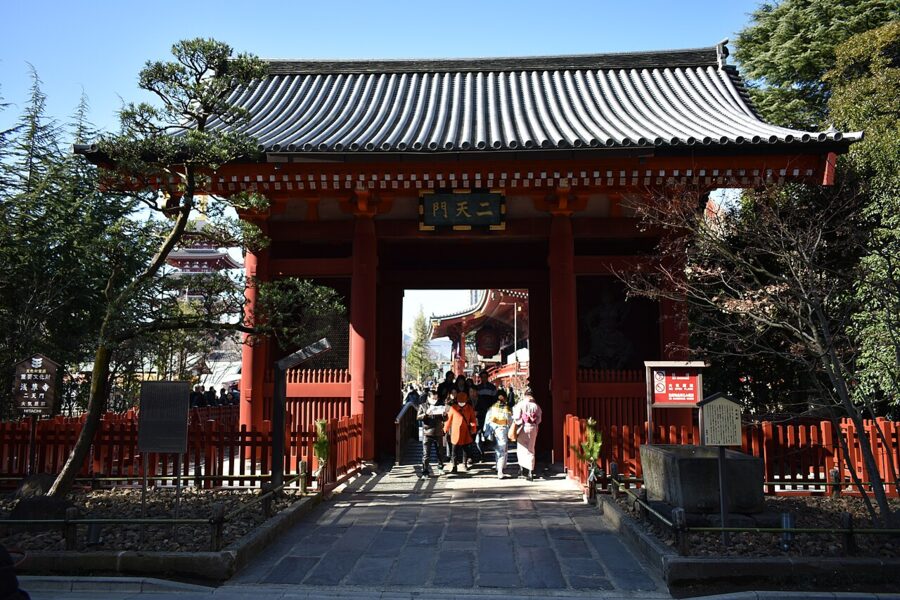
Two buildings survived. Nitenmon, the east gate, is an Important Cultural Property, and so is the hall of Asakusa Shrine beside it. If you want to see Asakusa before concrete, those two are it.

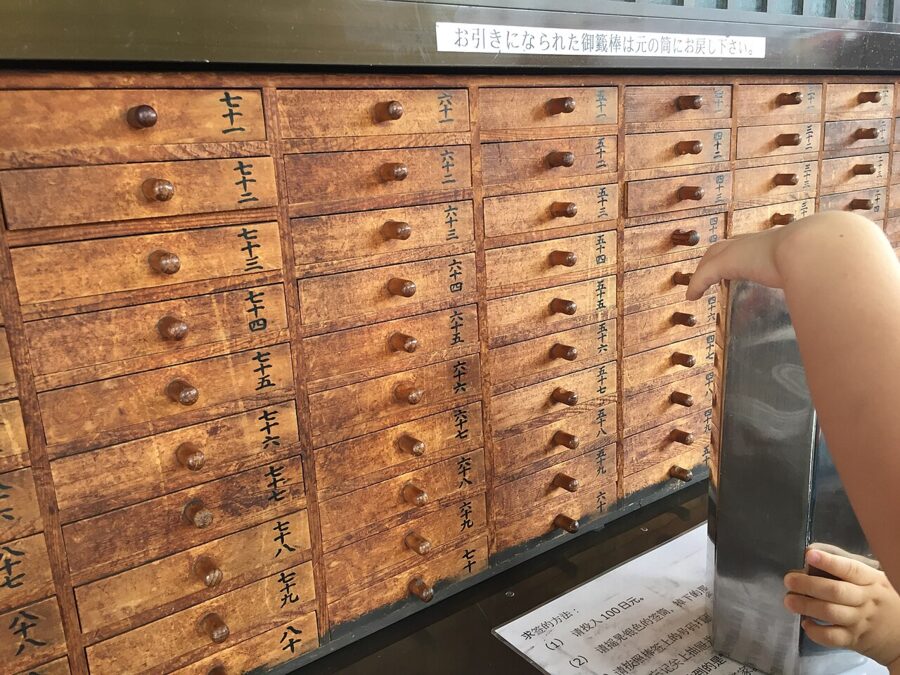
The rituals are simple. Rinse your hands at the water pavilion, waft smoke from the great incense burner over yourself, then drop a coin and pray at the hall. To the side you can shake a metal cylinder for a numbered stick and take your fortune, an omikuji (おみくじ), from the matching drawer. If it is a bad one, the custom is to tie it to the rack and leave the bad luck behind.


Asakusa Shrine and the Sanja Matsuri
Just east of the main hall, Asakusa Shrine (浅草神社) honours the three men of the founding story, and locals call it Sanja-sama, “the three shrines”. Its hall was given by the third shogun, Tokugawa Iemitsu, and by the shrine’s own account has come through fires, the 1923 earthquake and the war intact.
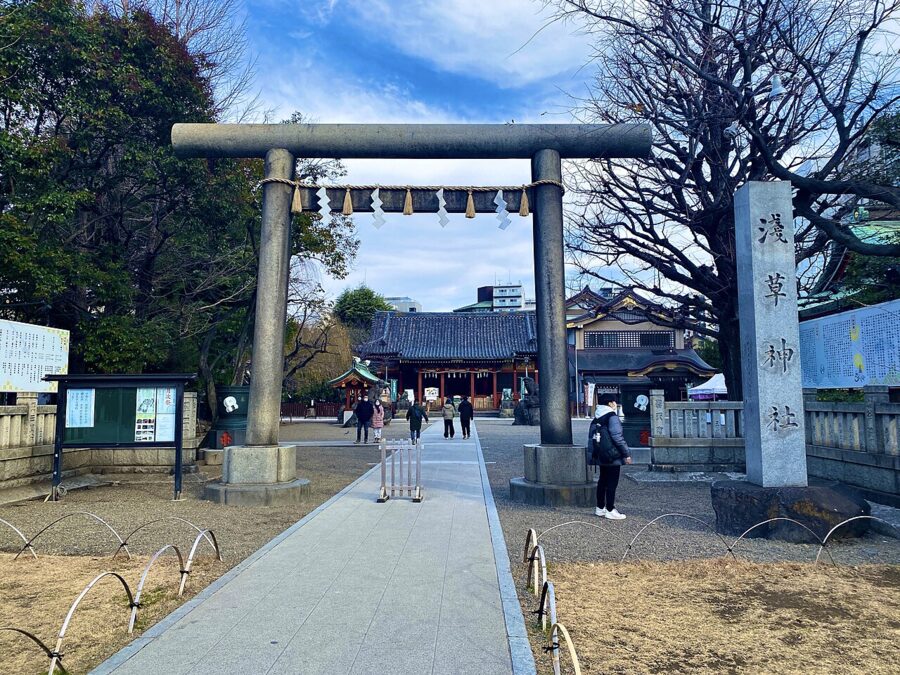

Each May the shrine takes over the district. The Sanja Matsuri (三社祭) runs on the Friday, Saturday and Sunday around the third Saturday of the month, and the shrine counts about 1.8 million people over the three days. By that rule the 2027 festival falls on 14–16 May; the shrine confirms the dates each spring.
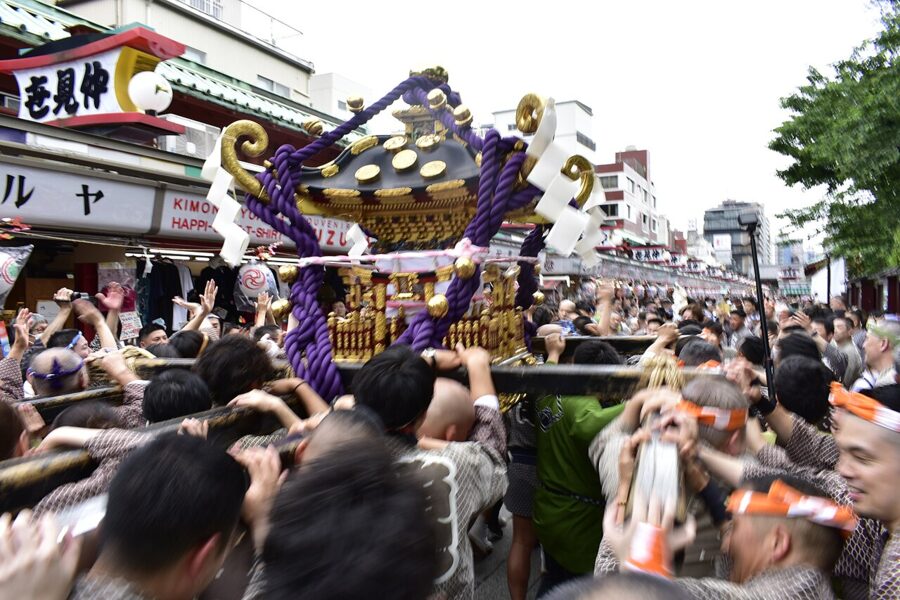
Friday brings a procession of musicians, geisha and dancers. On Saturday about a hundred neighbourhood mikoshi (神輿), portable shrines, are blessed and carried through the 44 parish districts. Sunday belongs to the shrine’s three great mikoshi, carried out at dawn and brought back after dark.
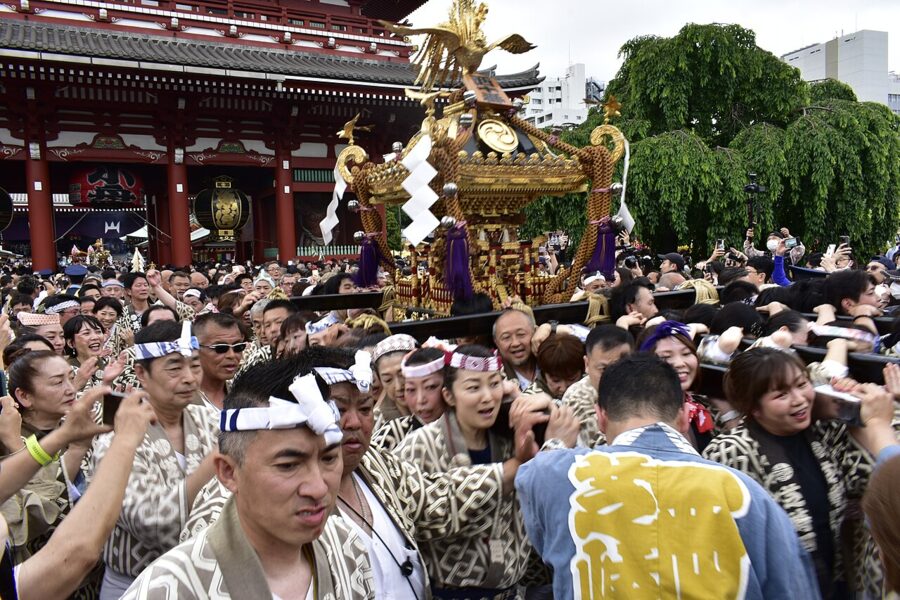

The festival began on the water, as a boat procession on the Sumida that the shrine dates to 1312. It is coming back: for the 1,400th anniversary of the statue’s appearance, the shrine plans a funatogyo (舟渡御), a river procession of the mikoshi, for 17–19 March 2028, schedule subject to change.

Early, late and in the rain
The temple grounds never close. The main hall opens at 6:00 (6:30 from October to March) and closes at 17:00, while the Nakamise stalls open mid-morning and shut in the early evening. Between those hours is the crowd.
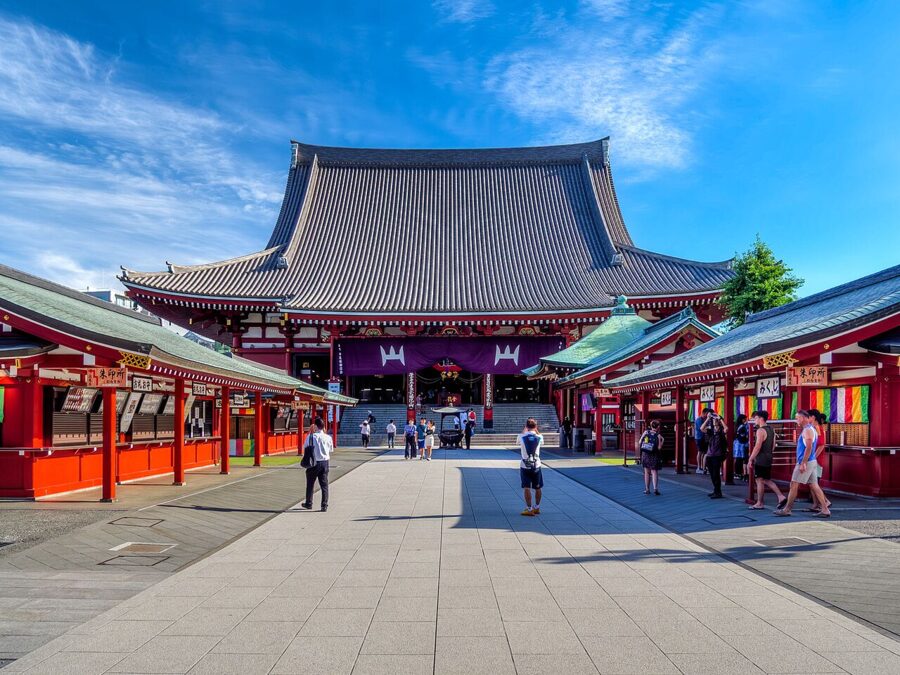

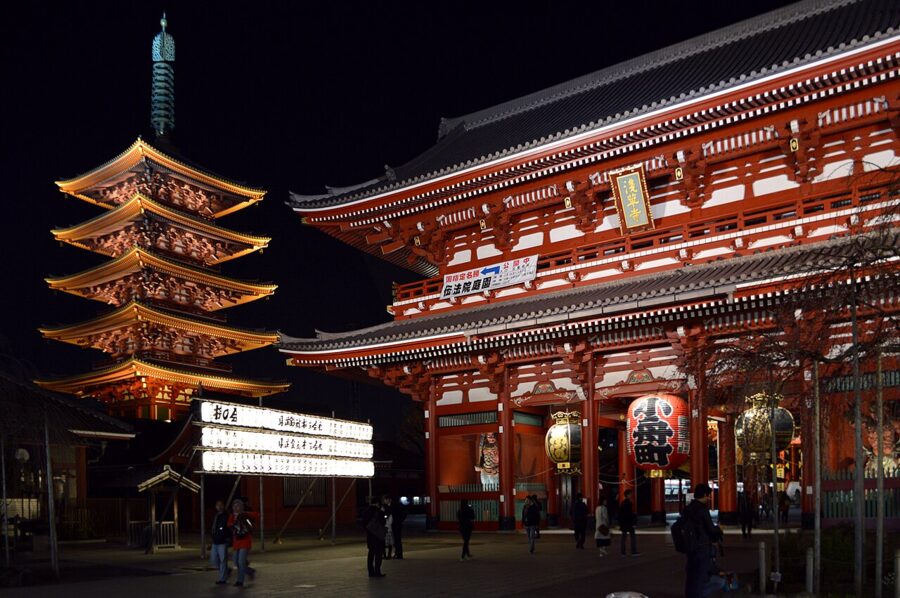
So come at either end. After dark the shops are shuttered, but the temple lights the hall, pagoda and gates every night from sunset until about 23:00. That answers the question people ask most about Asakusa at night: yes, go.
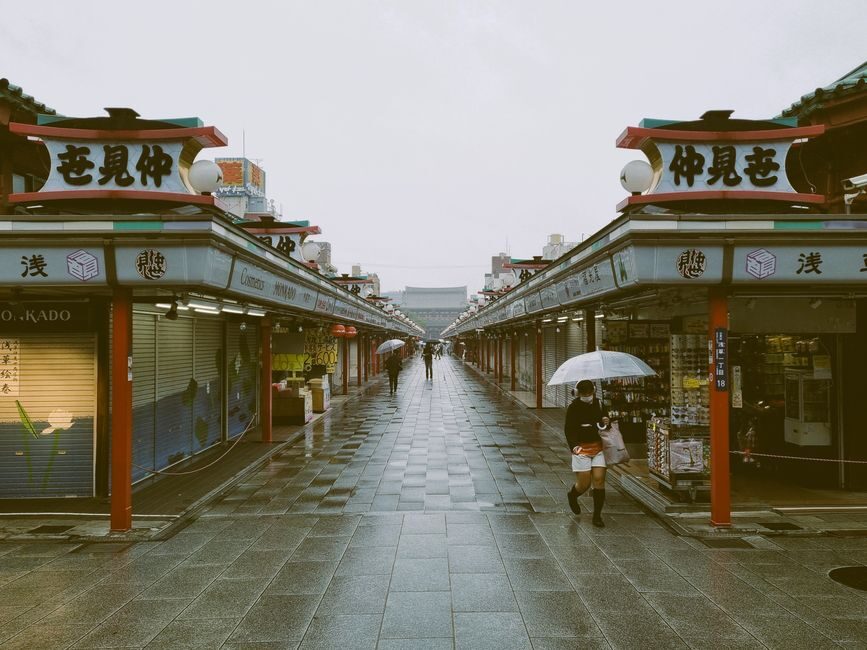
The third time is in the rain. In tsuyu, the early-summer rainy season, a wet weekday morning thins Nakamise to a few umbrellas.
Behind the gate
Denboin-dori
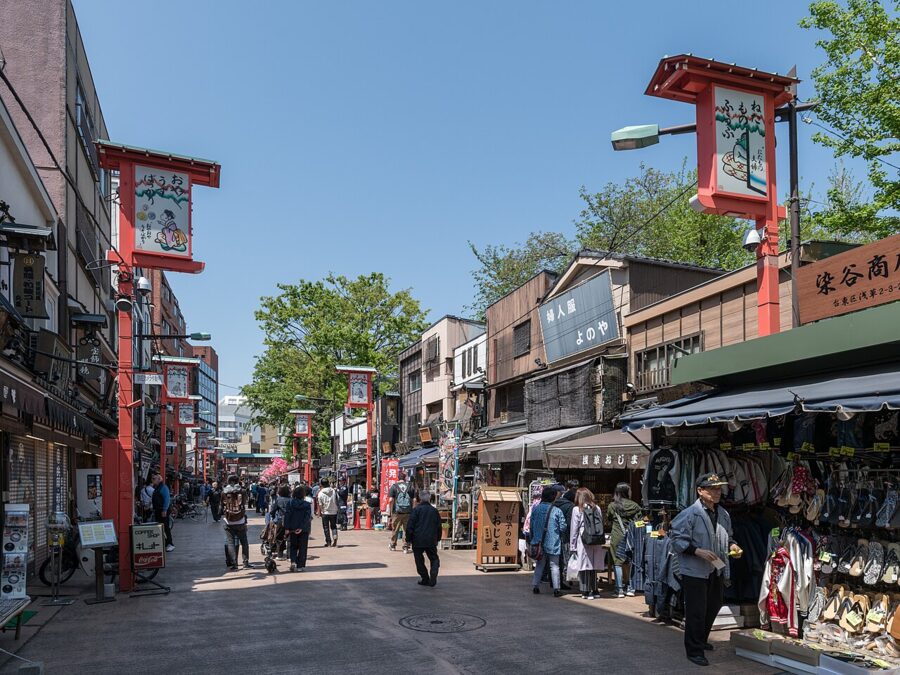
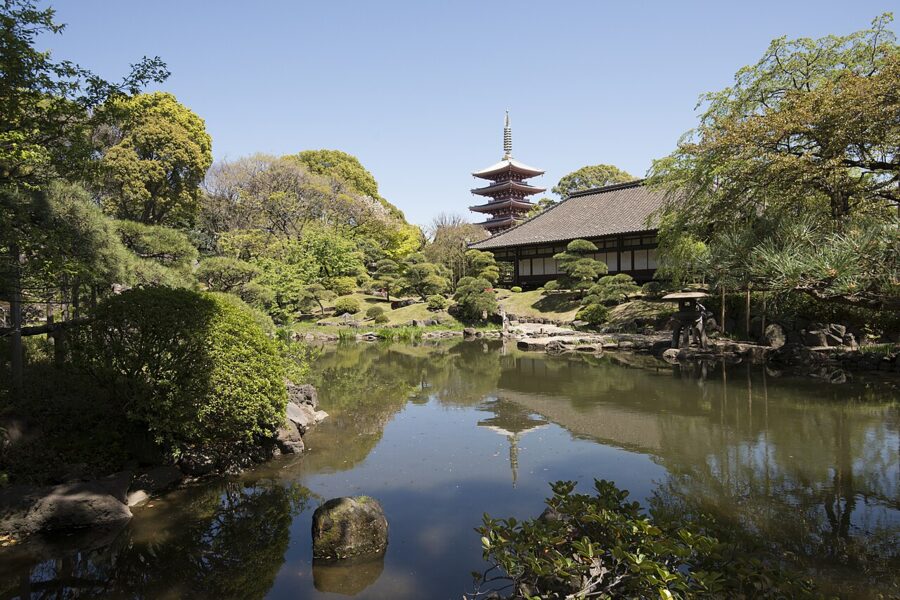
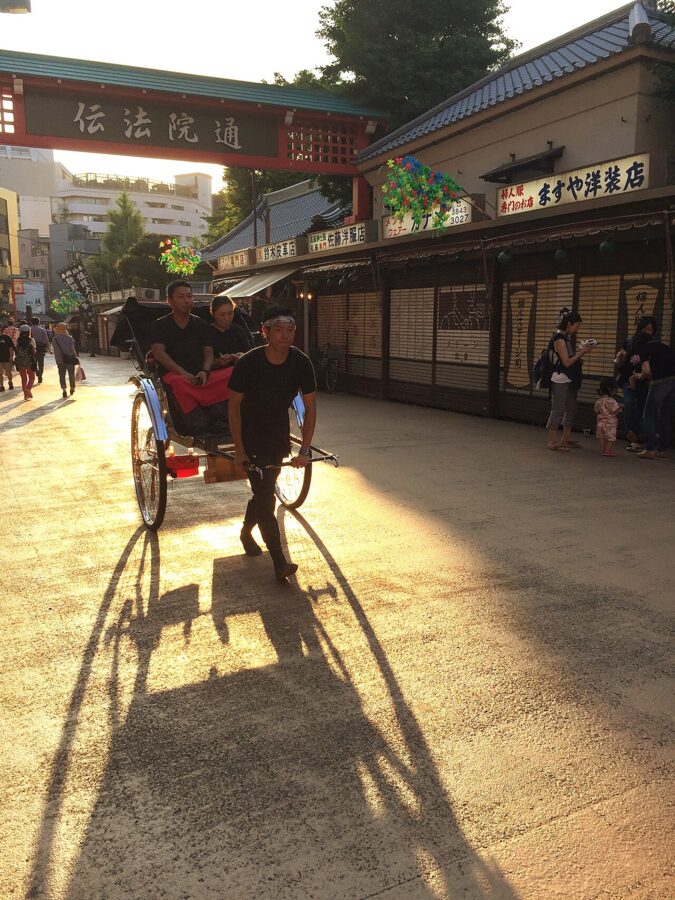
Halfway up Nakamise, a street crosses it. Denboin-dori (伝法院通り) is named for Denbō-in, the temple’s head residence behind the wall on its north side, whose garden became a national Place of Scenic Beauty in 2011. The shops have Edo-style fronts and painted shutters, and the walk west to Rokku takes five minutes.


Hoppy Street
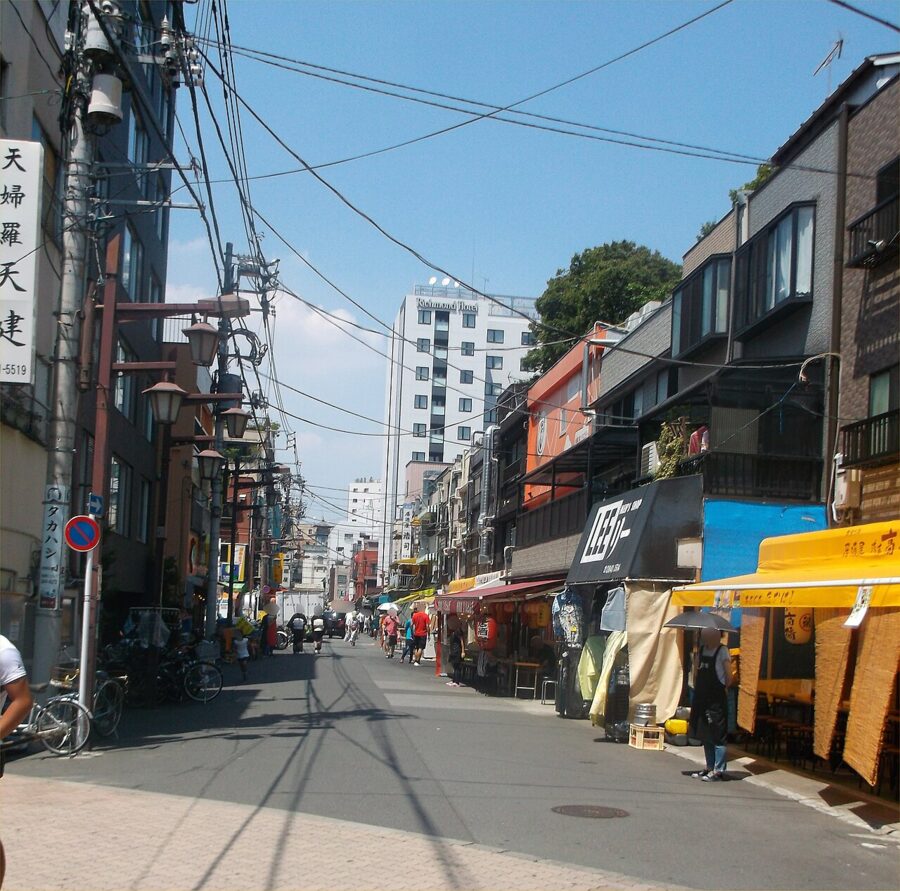
West of the temple, between the precinct and Rokku, is a short street of open-fronted bars. Its official name is Koen-Hondori, but nobody uses it: it is Hoppy Street (ホッピー通り), after the drink, or Nikomi Street, after the stew.
Hoppy was launched in 1948 as a substitute for beer, then a luxury: a malty soft drink of 0.8% alcohol that you top up with shōchū. Nikomi (煮込み) is offal simmered for hours in miso or soy. Together they make the cheapest good evening in central Tokyo, and the street fills from late afternoon.

Rokku: the theatre street
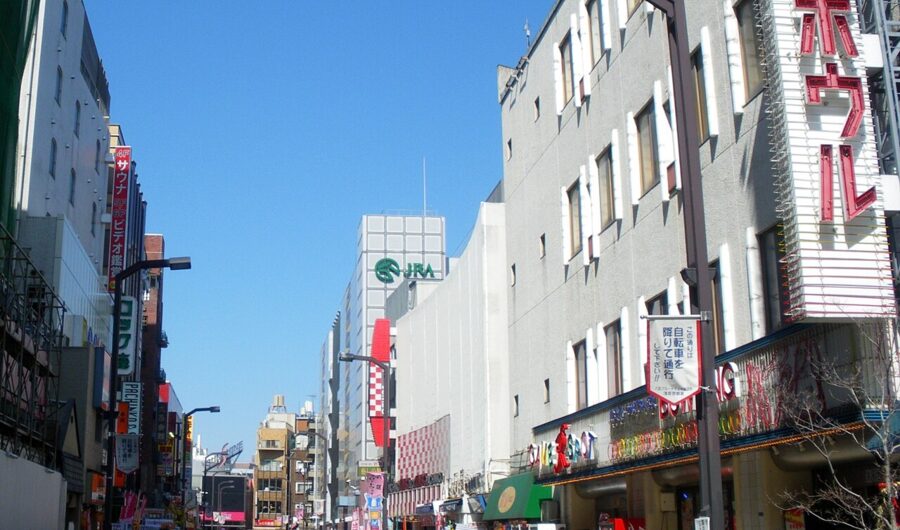
In 1884 the government laid out the temple grounds as Asakusa Park and numbered its districts. The sixth, Rokku (六区), became the show district: theatres, music halls, freak shows and, from 1903, the Denkikan, Japan’s first permanent cinema.
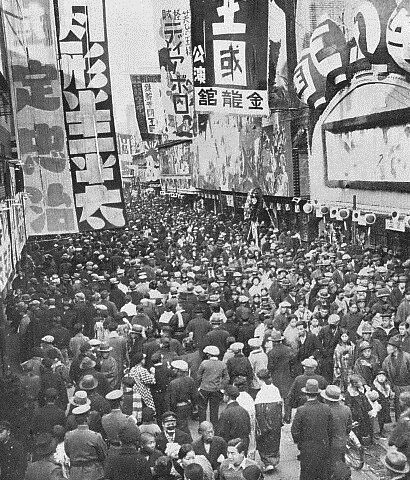
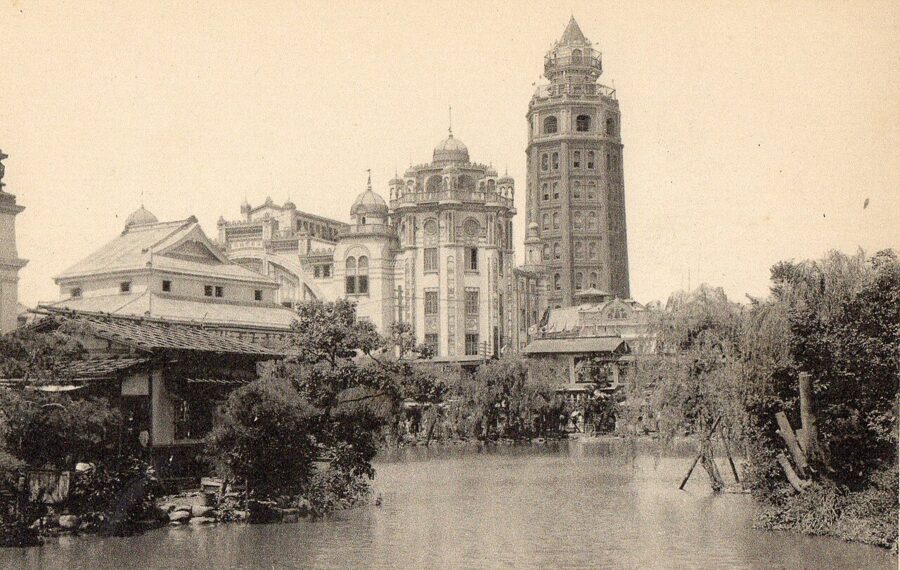
For half a century this was the most famous street in Japan. Beside it stood the Ryōunkaku, a twelve-storey brick tower of 1890 with the country’s first electric lift, until the earthquake of 1 September 1923 broke it in two. In the late 1910s the Asakusa Opera, cheap operetta in translation, made stars of its singers, and comedians who later filled Japanese television learned their trade here.
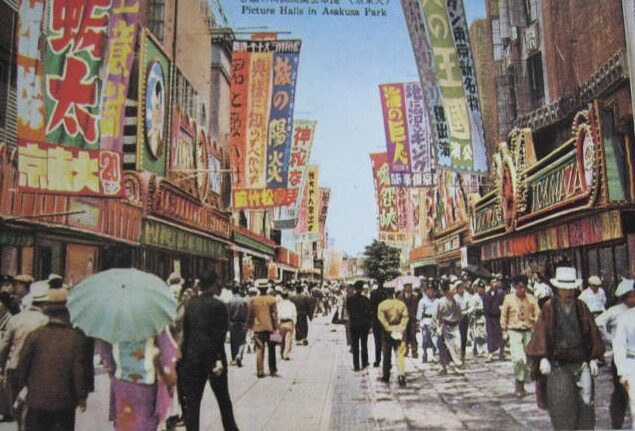
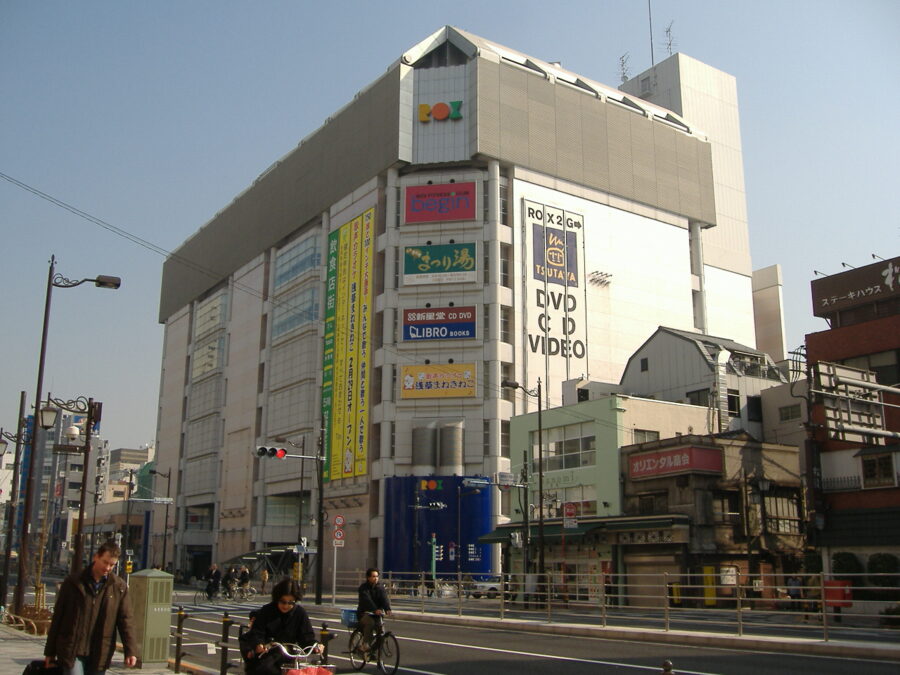
Television ended it. After the 1964 Olympics the young went west to Shinjuku and Shibuya, and Rokku’s theatres became bowling alleys and a supermarket. Its last five cinemas closed in September and October 2012. Today the street is Rokku Broadway, with hotels, pachinko and a discount store, and the old cinema sites carry the Asakusa ROX buildings.

One stage still works every day of the year. Asakusa Engei Hall (浅草演芸ホール) is a yose (寄席), a variety theatre for rakugo storytellers, double acts, jugglers and paper cutters, programmed in alternating ten-day runs by the two rakugo associations. Shows run 11:40–16:30 and 16:40–21:00, and as of November 2026 an adult ticket costs ¥3,500 (about $22), falling to ¥2,500 (about $16) after 18:00 and ¥2,000 (about $13) after 19:00.
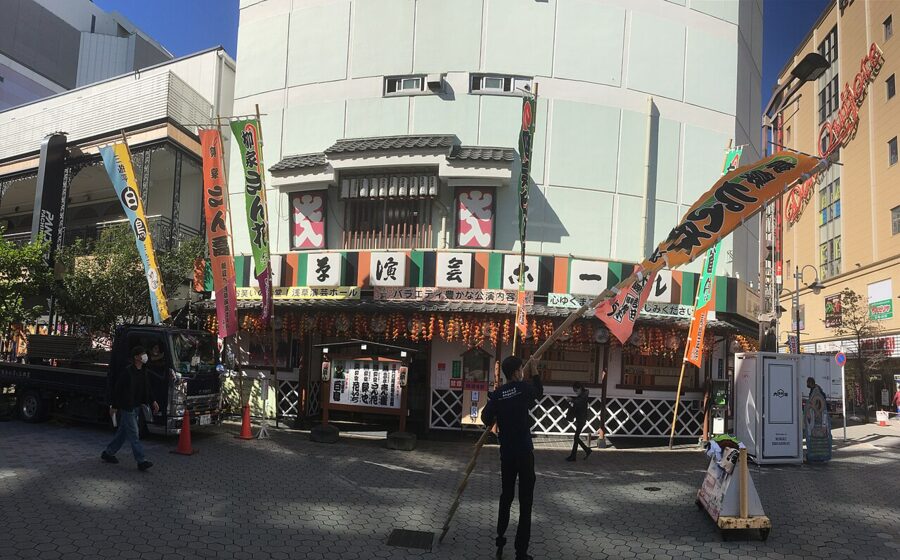

You will not follow the rakugo without good Japanese, and I would still go. The physical acts need no language, and watching a storyteller hold a hall with a fan and a hand towel is worth an hour of anybody’s time.

Hanayashiki, since 1853
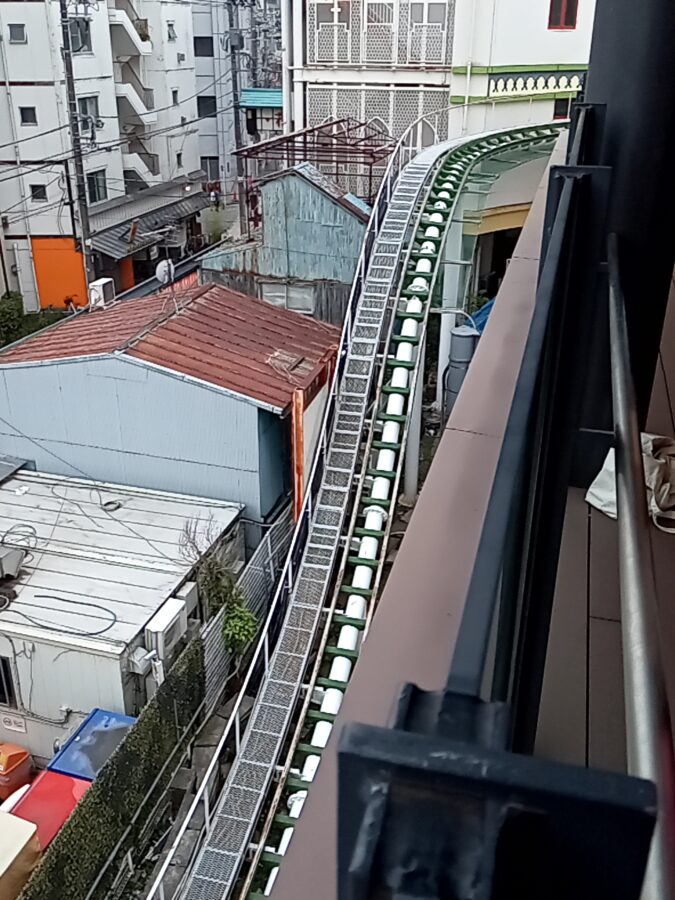
North of Rokku, squeezed between houses, is the oldest amusement park in Japan. Asakusa Hanayashiki (浅草花やしき) opened in 1853 as a flower garden, set up by a Sendagi nurseryman, Morita Rokusaburō, to show peonies and chrysanthemum figures. It became one of the country’s leading zoos in the 1920s, sold its animals in the 1930s, was demolished in the war and came back with rides.
Its roller coaster opened in 1953 and is the oldest operating in Japan. Entry costs ¥1,600 (about $10) for adults as of November 2026, with rides at ¥100 (about $0.60) a ticket. The park opens 10:00–18:00, varying by season, and the coaster is closed for inspection from 30 November to 11 December 2026. For small children it is a good morning; for adults, ride the coaster and leave.
Kappabashi and the old shops
Kitchen town
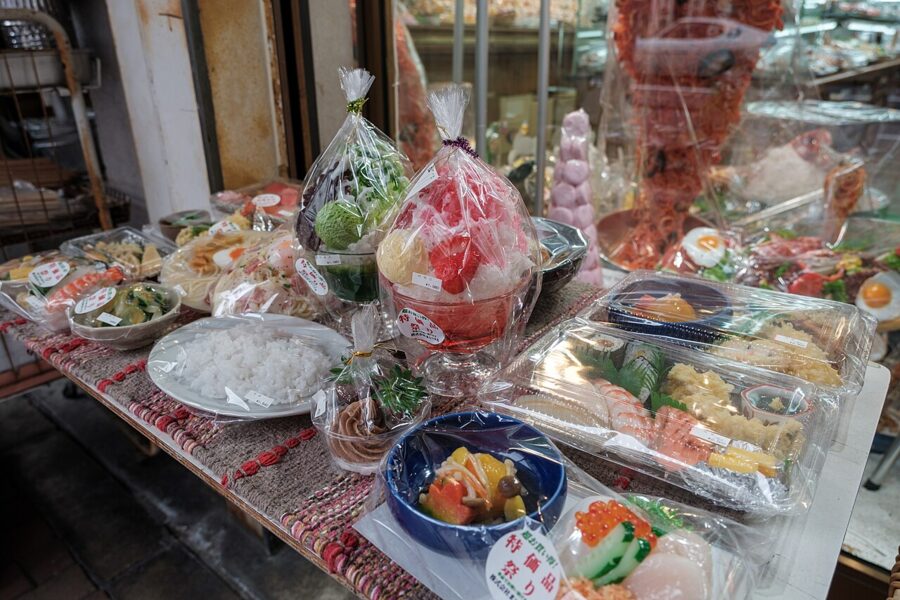
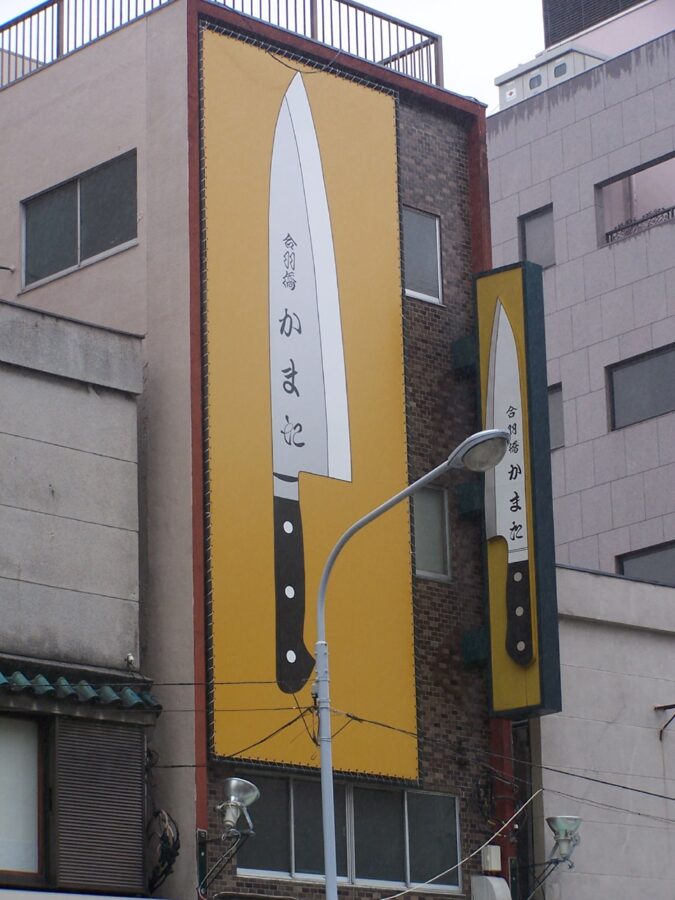
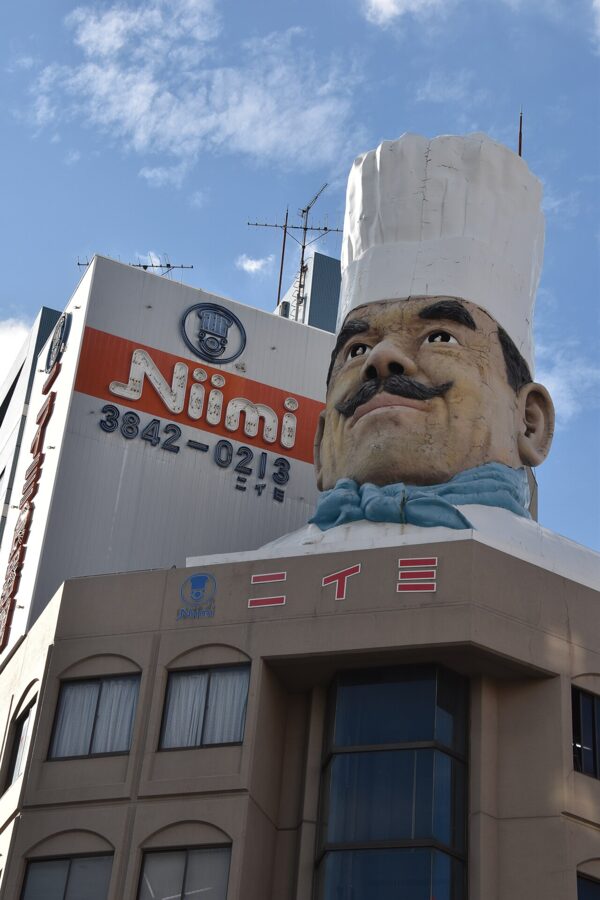
Ten minutes’ walk west of the temple, beyond Kokusai-dori, Kappabashi Dougu Street (かっぱ橋道具街) runs about 800 metres and sells almost everything a restaurant needs except fresh food: knives, pots, lacquer bowls, lanterns, noren curtains and the plastic food that fills restaurant windows. Tool and second-hand dealers set up here in the 1910s.
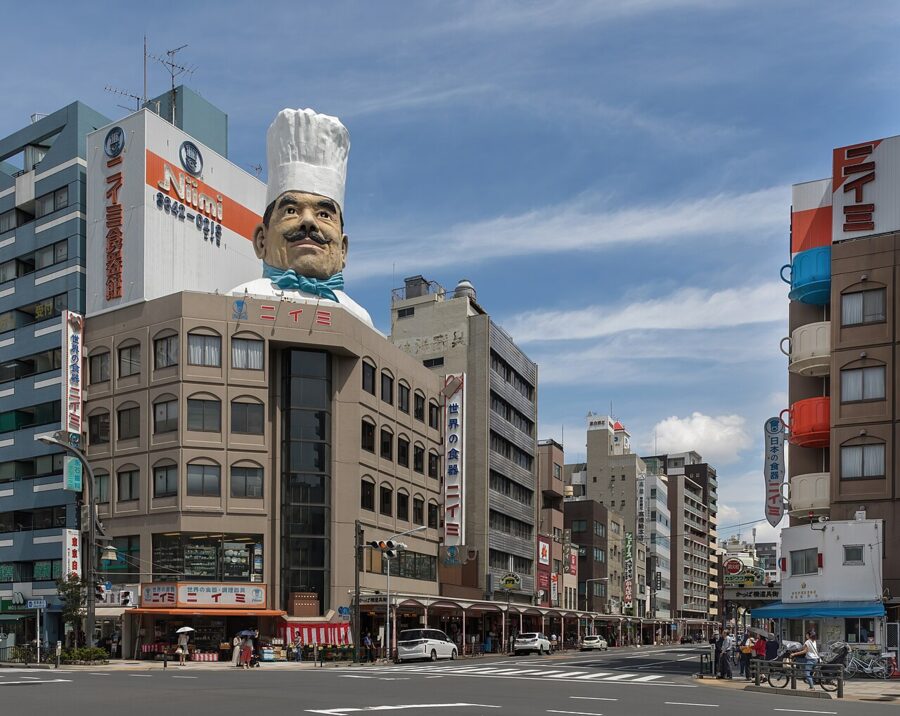

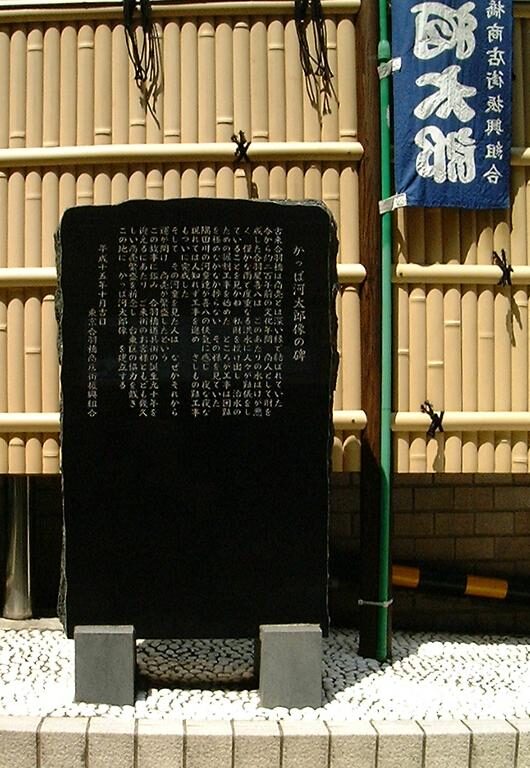
There are two stories for the name. In one, poor samurai of a nearby domain dried the rain capes, kappa, that they made on the side along a bridge here. In the other, a raincoat dealer called Kappaya Kihachi paid to drain the flood-prone ground in the early nineteenth century, helped by the kappa of folklore, the river imps. The street association lets you pick.

Nearly every shop sells single items to the public. The plastic food makes a better souvenir than anything on Nakamise. For a cook, the knife shops are the point: you can hold the knife before you buy it, which no website allows.


Come on a weekday: the association says about seventy per cent of its shops close on Sundays and public holidays. Each October the street holds the Kappabashi Dougu Matsuri, a week of sales that ran from 6 to 12 October in 2026.

Kamiya Bar, Fujiya and a bag of senbei
By Azumabashi, at Asakusa 1-1-1, Kamiya Bar (神谷バー) has poured drink since 1880 and serves Denki Bran, the brandy cocktail its founder created in 1882. Its 1921 building is a registered tangible cultural property, and the bar keeps a price table for a glass: 7 sen in 1910, ¥260 in 1997 (about $1.60 at today’s rate).
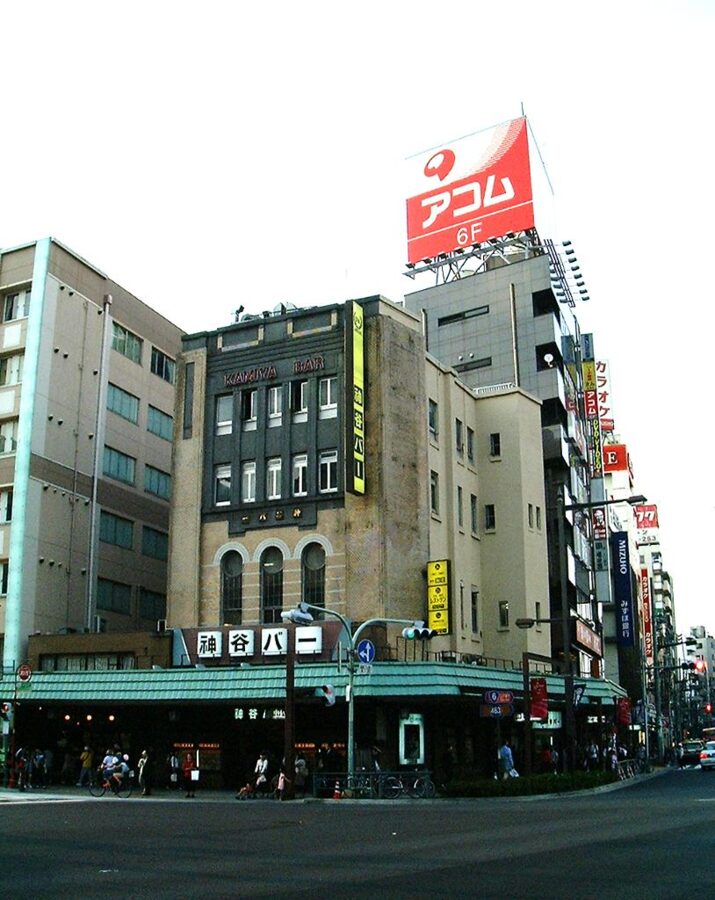

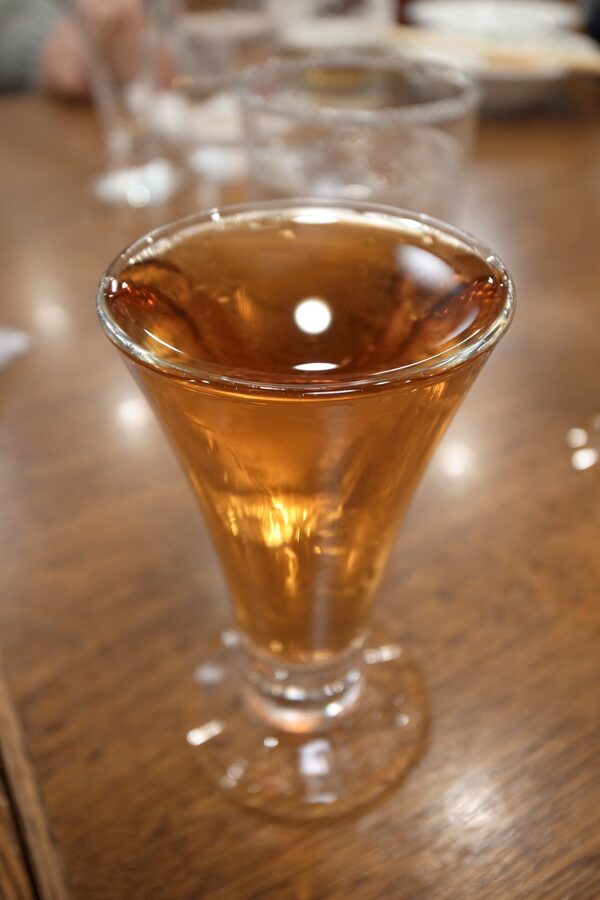
As of November 2026 it opens 11:00–20:00 with last orders at 19:30, and closes on Tuesdays and two Mondays a month. Today’s Denki Bran is 30% alcohol and the “Old” 40%. Order one of each, and do not try to keep pace with the regulars.

Back towards the temple, at Asakusa 2-2-15, Fujiya (ふじ屋) has sold tenugui (手ぬぐい), thin cotton hand towels, since 1946. Three generations of the Kawakami family have drawn its designs, dyed by the chūsen method so the pattern shows on both sides; the Tokyo Metropolitan Government’s profile in February 2026 counted about 120 in stock. It opens 11:00–17:00 and closes on Thursdays.
For senbei, follow your nose. If you can see someone turning the crackers and brushing on the soy, buy one there and then. A tenugui and a bag of crackers weigh almost nothing, and they are the two Asakusa souvenirs nobody regrets.
If you can see someone turning the crackers and brushing on the soy, buy one there and then.
Down to the river
Azumabashi and the flame
Walk east from Kaminarimon and you reach the Sumida at Azumabashi (吾妻橋), first bridged in 1774. Across the water stand the Asahi headquarters and the gold sculpture that Tokyo has a ruder name for, officially the Flamme d’Or.
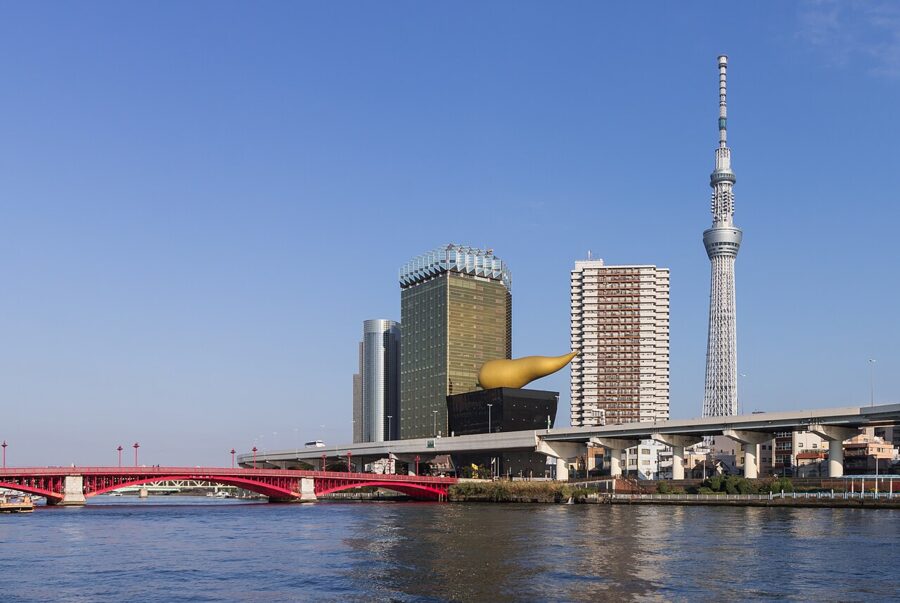

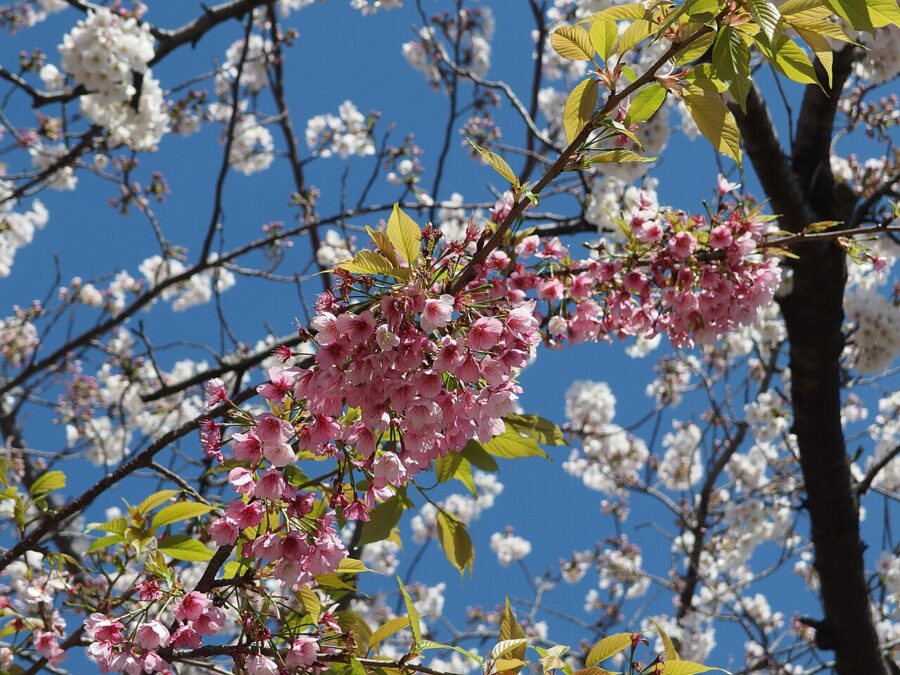
Upstream, Sumida Park runs along both banks under cherry trees, one of the city’s great places for hanami in late March and a quiet path by the water the rest of the year.

The water bus
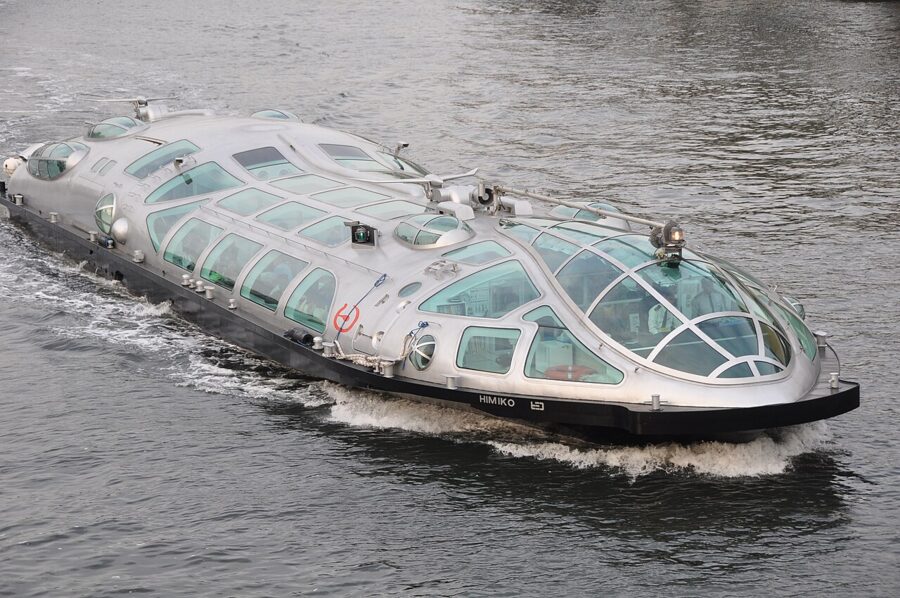
The pier at the west end of Azumabashi is the start of the river’s best cheap outing. Tokyo Cruise lists, as of November 2026, about 35 minutes to Hama-rikyu, the old shogunal garden on the bay, for ¥1,180 (about $7.40), and about an hour to Odaiba Seaside Park on the Himiko or Emeraldas for ¥2,000 (about $13).

Take the Hama-rikyu boat. It passes under a dozen bridges and lands inside the garden, which you leave on foot towards Shiodome and Ginza. It cannot be booked: tickets are sold only from the machine at the Asakusa pier, and in November and December 2026 it leaves at 11:40 and 14:20.
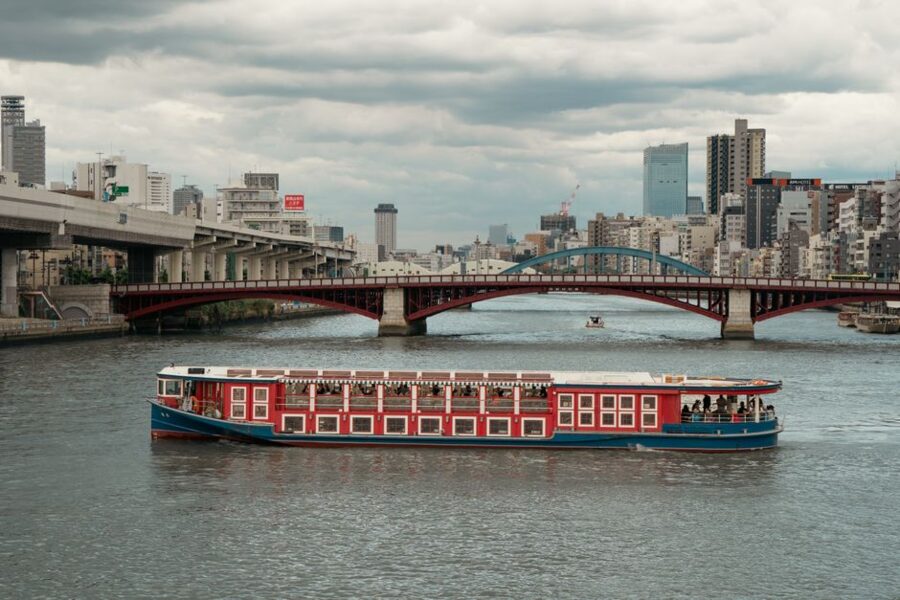
The Tokyo Mizube Line, the Tokyo Metropolitan Park Association’s boats, restarted its Asakusa to Odaiba cruise on 17 October 2026, mainly Wednesday to Sunday, on the Raiden, a new vessel built to carry supplies up the rivers after an earthquake.
Walking to the Skytree
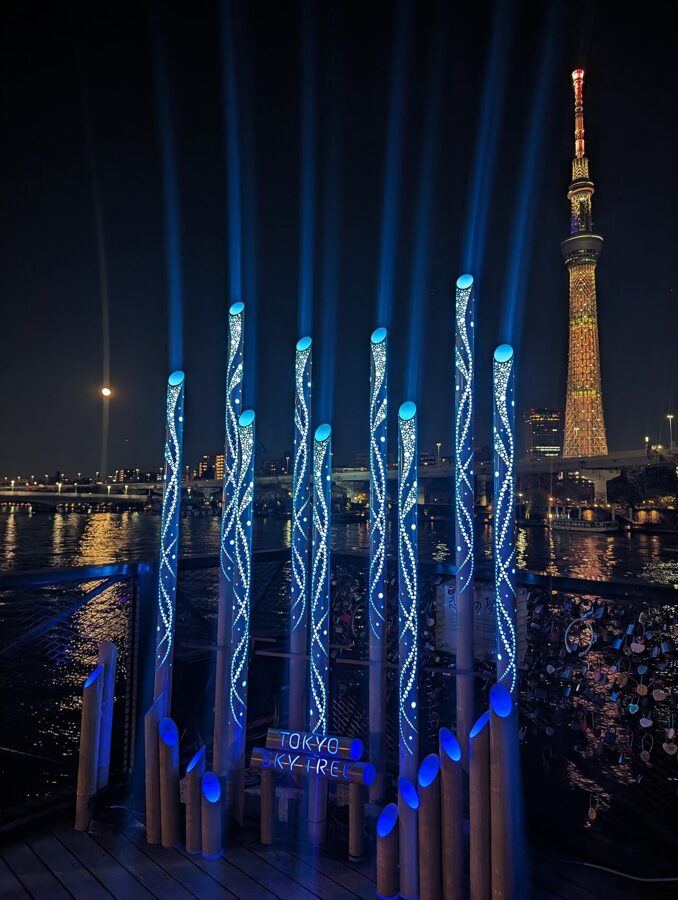
The Tokyo Skytree is about 1.5 kilometres from Kaminarimon, and the walk beats the train. Cross on the Sumida River Walk, the footway on the Tobu railway bridge just upstream of Azumabashi, then follow the shops of Tokyo Mizumachi along the canal. Allow twenty minutes.

Getting there and when to go
Asakusa Station is served by the Tokyo Metro Ginza Line, the Toei Asakusa Line (exit A4 for the temple) and the Tobu Skytree Line. The Tsukuba Express has a separate Asakusa station to the west, nearer Rokku. For Kappabashi, Tawaramachi on the Ginza Line is closer. The eighth-floor terrace of the Asakusa Culture Tourist Information Center, opposite Kaminarimon, gives a free view up Nakamise from 9:00 to 22:00.

| Place | Hours (as of November 2026) | Cost |
|---|---|---|
| Senso-ji main hall | 6:00–17:00 (6:30 October to March); grounds always open; lit to about 23:00 | Free |
| Asakusa Shrine office | 9:00–16:00 weekdays; to 16:30 weekends and holidays | Free |
| Asakusa Engei Hall | 11:40–16:30 and 16:40–21:00 daily | ¥3,500; less after 18:00 |
| Hanayashiki | 10:00–18:00, varies; last entry 30 minutes before | ¥1,600 plus rides |
| Kamiya Bar | 11:00–20:00; closed Tuesdays and two Mondays a month | Per drink |
| Fujiya | 11:00–17:00; closed Thursdays | |
| Kappabashi | About 70% of shops close Sundays and holidays | |
| Water bus to Hama-rikyu | 11:40 and 14:20 (November–December 2026) | ¥1,180 |
My day: the temple at seven, Denboin-dori and Kappabashi mid-morning, the river before lunch, the Engei Hall in the afternoon and Hoppy Street when the light goes. Avoid Nakamise at weekend middays and Kappabashi on Sundays. Then walk back up Nakamise after eight, when the shutters are down again and the paintings are out.