
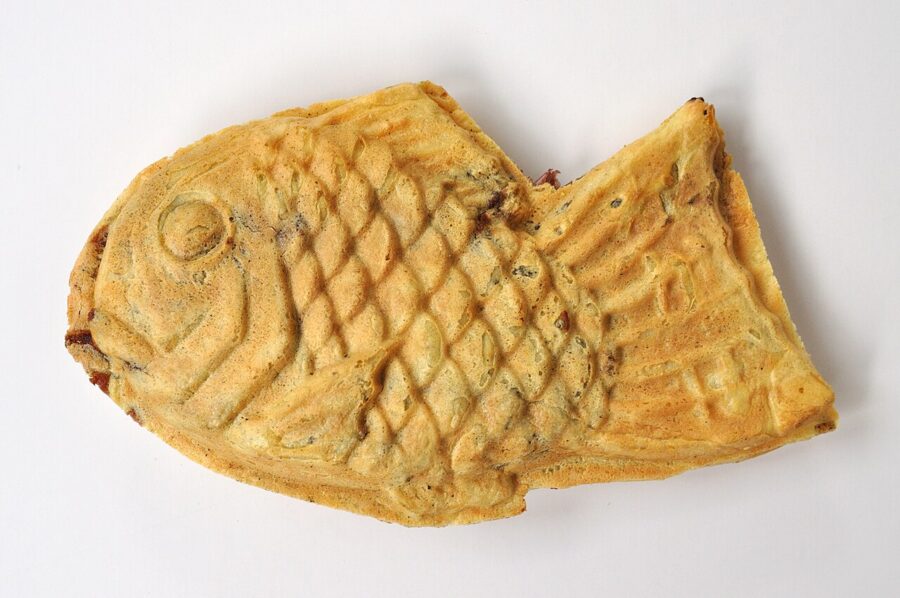
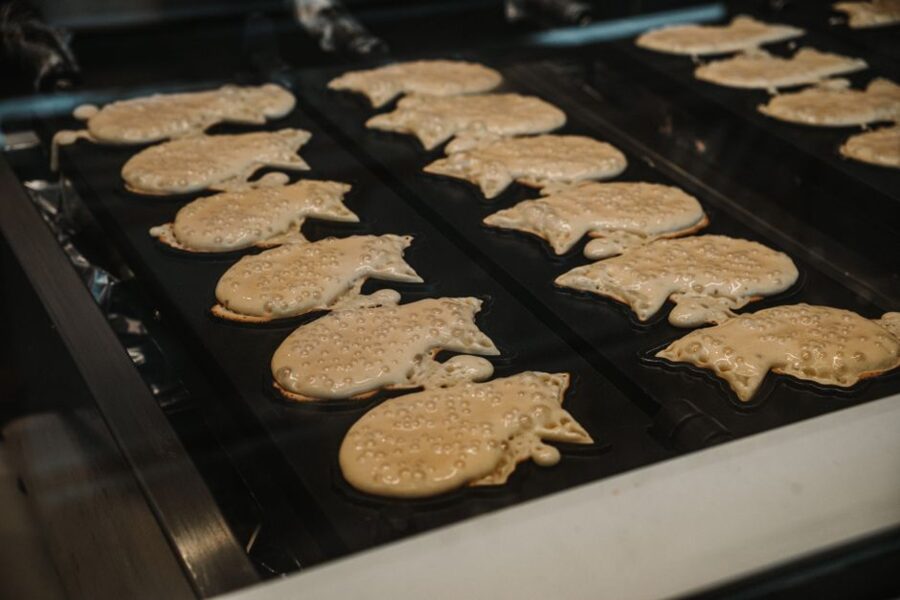
A single taiyaki iron weighs more than two kilograms. At Tokyo’s three oldest taiyaki makers the bakers turn dozens of them over the flame all afternoon, one fish to each iron, and that is why you queue. A few streets away a chain shop pours a dozen fish onto one hot plate, and nobody queues there at all.
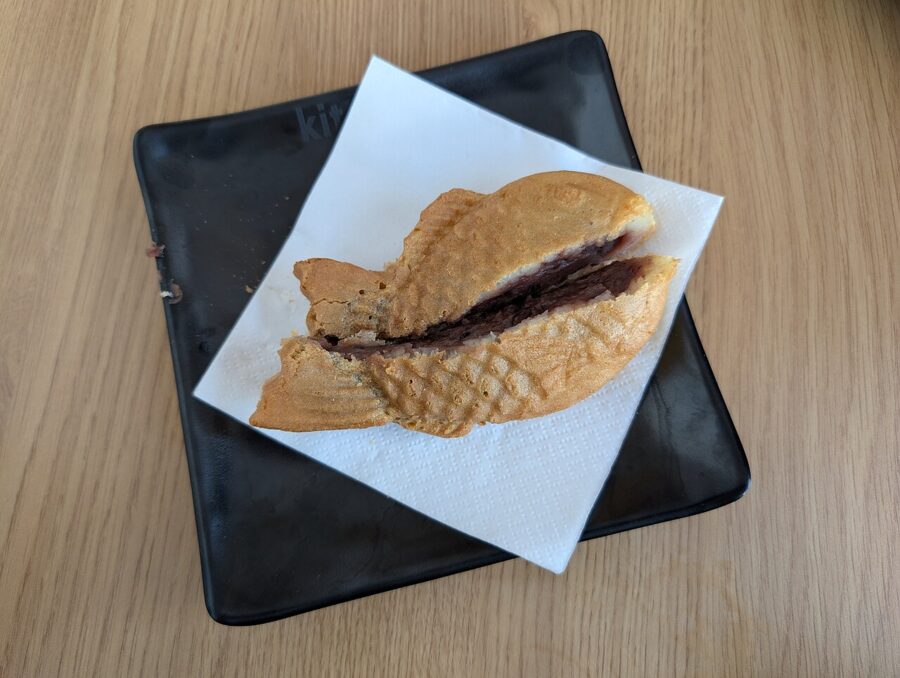
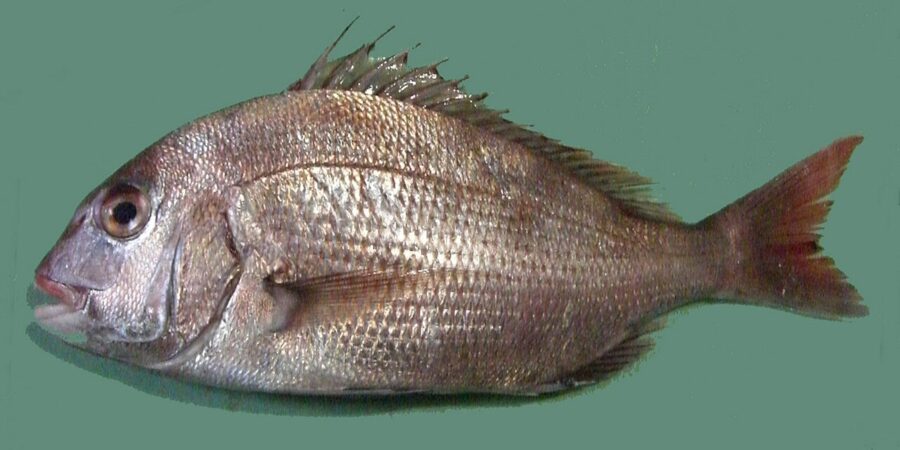
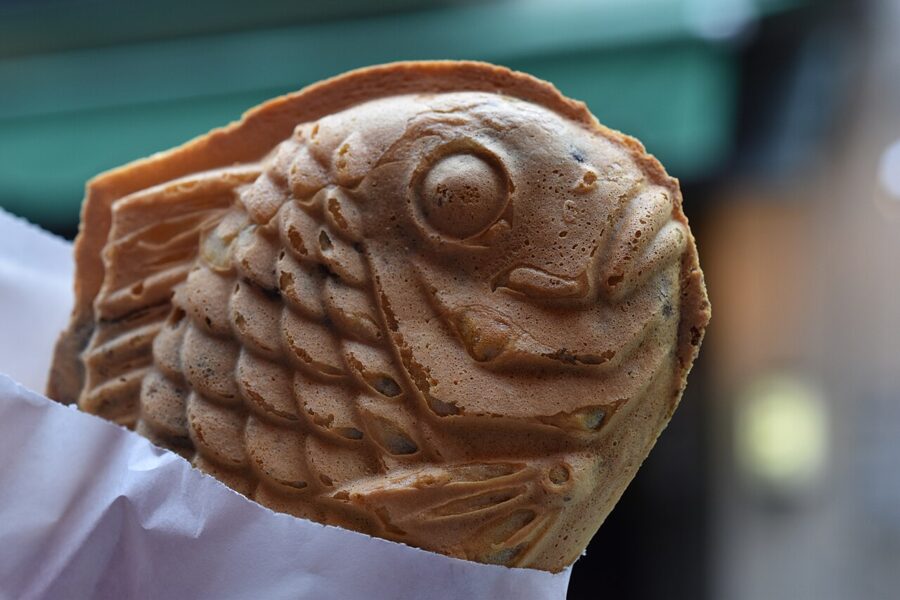
Taiyaki (鯛焼き) means “baked sea bream”. It is a cake of wheat batter baked around a filling, traditionally sweet red bean paste, in a mould shaped like a fish: crisp outside, soft against the paste, sold hot in a paper sleeve for a little more than a can of coffee. It belongs to the street more than the tea room, and it has fans who argue over it the way other people argue over coffee beans.

In this article
What a taiyaki is, and why a sea bream
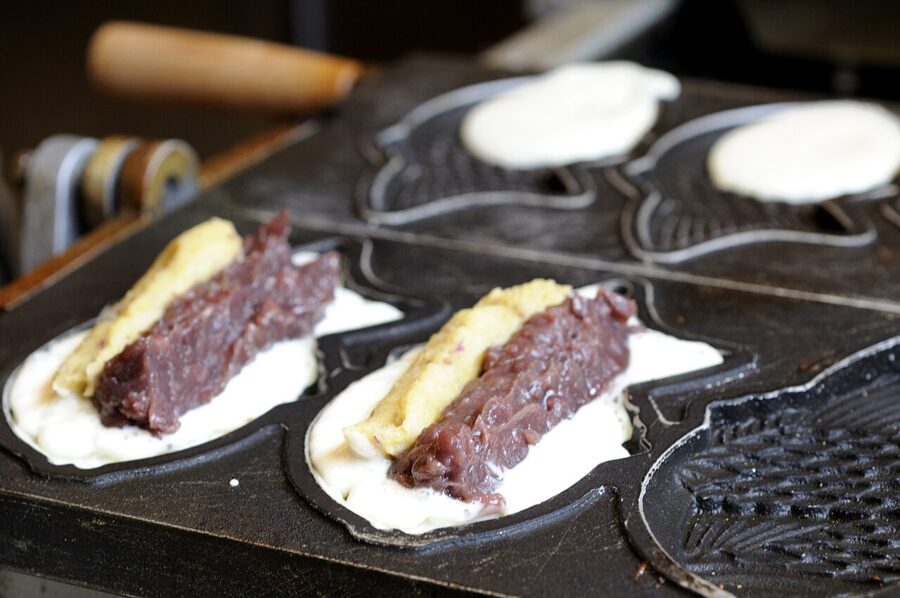
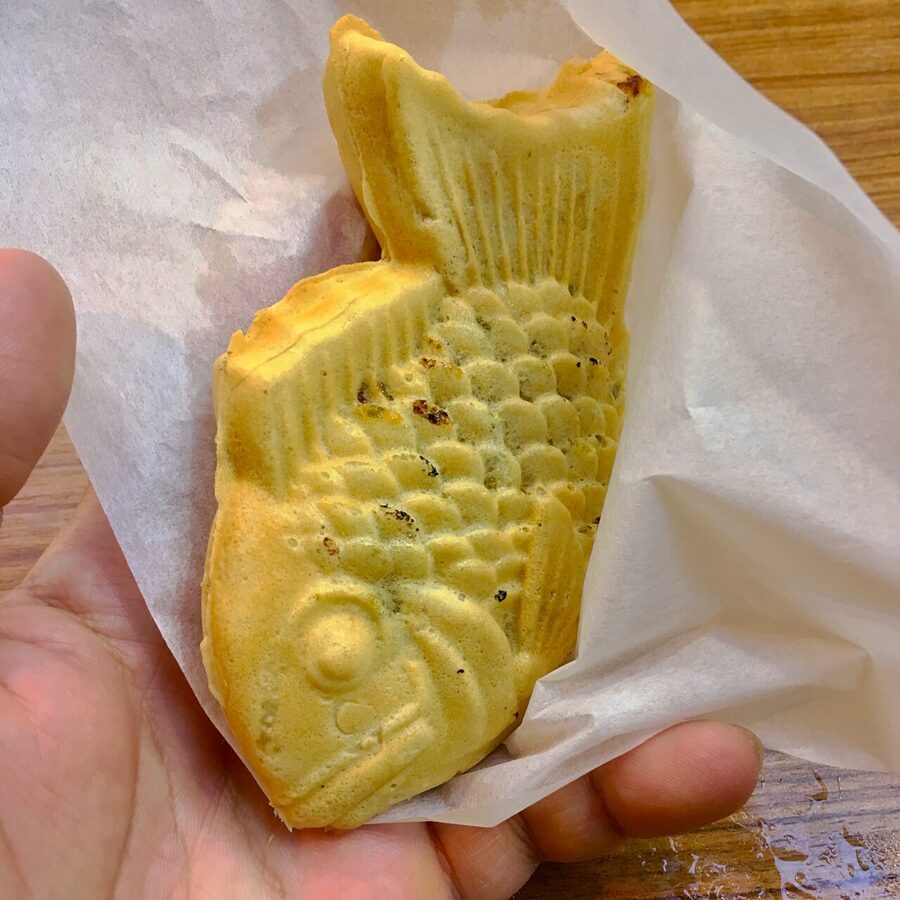
The batter is simple: wheat flour, water, sugar, often egg, and a raising agent. The classic filling is anko (餡子), azuki beans cooked with sugar until they collapse into a paste. A spoon of batter goes into one half of the mould, a lump of paste on top, more batter to close it, and the two halves of the iron meet. A few minutes later the fish comes out with its scales and eye printed on the crust.
The fish is the point. Tai (鯛), the red sea bream, is the fish of celebration in Japan, partly for the pun in medetai (めでたい, “auspicious”) and partly for its colour, red and white being the colours of good news. A whole bream with head and tail on, okashira-tsuki (尾頭付き), is served at weddings and at New Year. For a long time it was also a fish many families could afford only on such days.
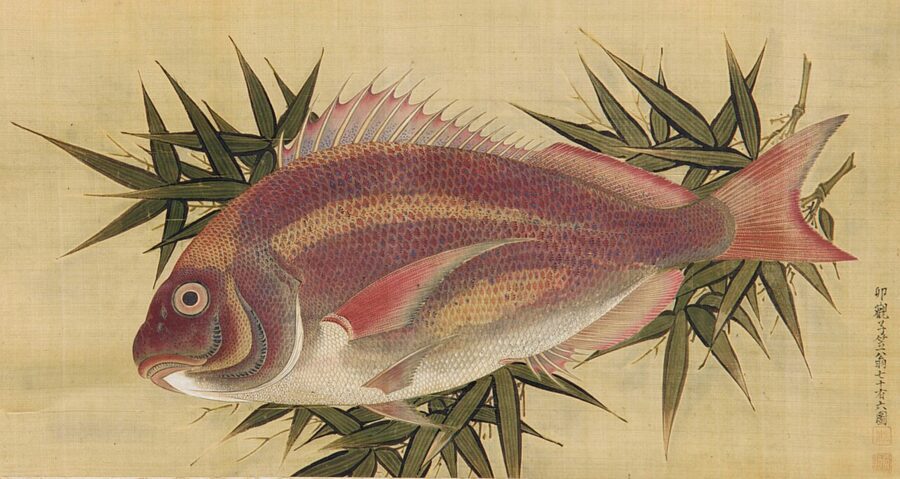
A taiyaki turns that luxury into a joke you can afford. The fish costs a couple of hundred yen, it is handed over hot, and it carries the same lucky shape as the bream on the wedding table. I suspect that is most of its charm: it is a sweet that flatters the person buying it.

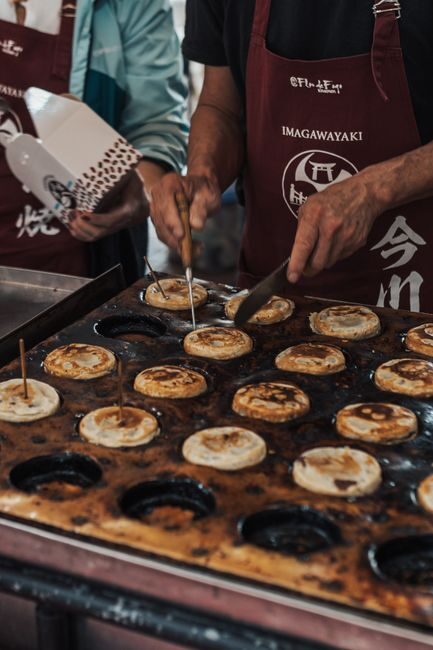
Taiyaki has an older, rounder cousin. Imagawayaki (今川焼), the same batter and bean paste baked in a drum-shaped mould, takes its name from Imagawabashi, a bridge in Kanda where street sellers sold it in the late Edo period. It also goes by ōban-yaki and taiko-yaki depending on where you buy it. Nipponica, the Shogakukan encyclopedia, lists taiyaki among its shaped variants, which is exactly what it is.
Who first made a fish of it is less certain. The word turns up in a Yomiuri Shimbun article in 1911, and the oldest maker still trading, Naniwaya Sohonten, dates its founding to 1909. It calls itself the original, and no older taiyaki maker survives to argue.
Tennen and yoshoku: one iron, or a plate of many
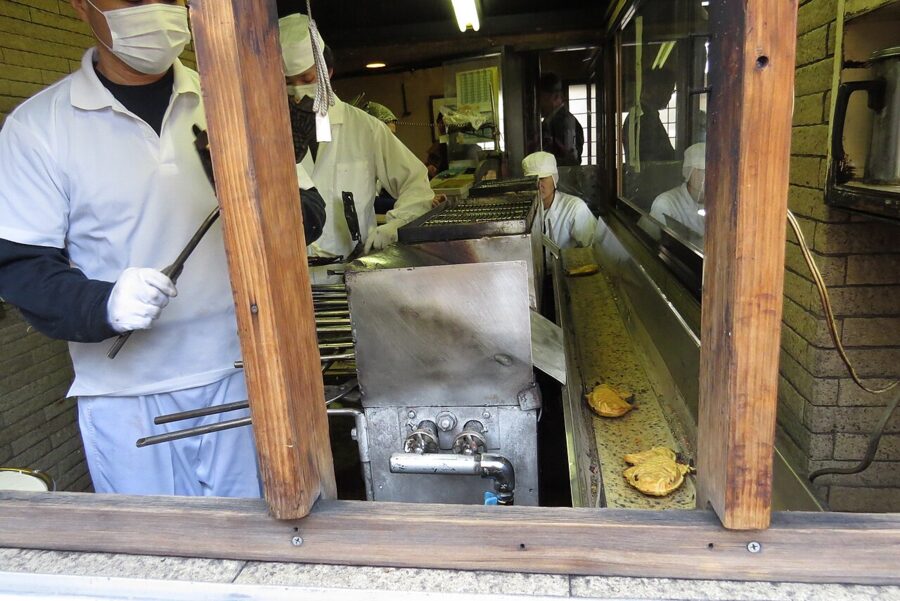
Japanese bakers split taiyaki by the way they are cooked. Itchō-yaki (一丁焼き), also called ippon-yaki, means one fish in one cast-iron mould on the end of long handles, turned by hand over the flame. Renshiki-yaki (連式焼き) means a hinged plate that bakes a row of fish, or several rows, at once.
Fans have better names for them. In the 1990s the photographer Yasuhiko Miyajima (宮嶋康彦) began calling single-mould taiyaki tennen (天然, “wild-caught”) and plate-baked ones yōshoku (養殖, “farmed”), and the joke stuck so well that some shops now advertise tennen-mono on their signs. Nobody uses the terms to mean the fish is fresher. They mean the fish was made one at a time.
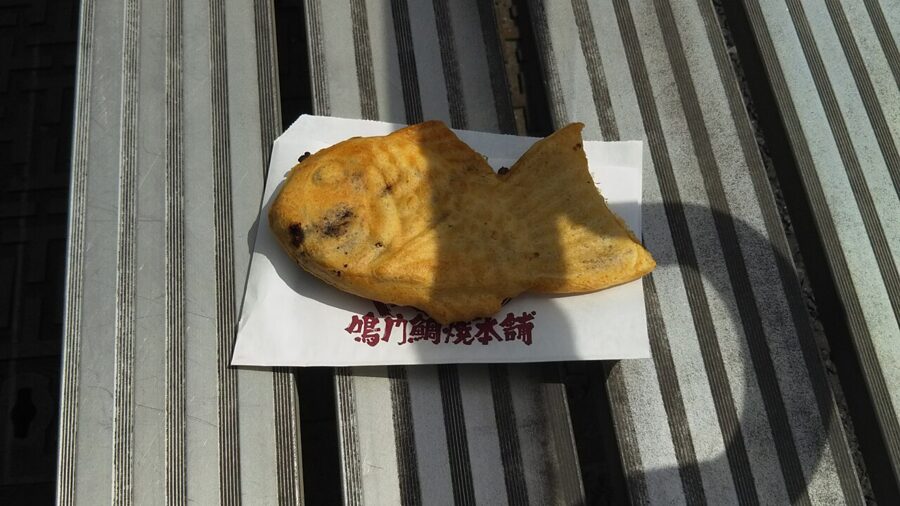

The difference is in the crust. A single iron can be heated hard and fast, so the batter can be poured thin: the skin comes out crisp and slightly blistered, with a flat ring of overflow around the edge that the baker trims off. Each fish gets its own attention, and a good baker shifts each iron towards or away from the heat as it browns. A plate has to treat every fish the same, which favours a thicker, softer, more cake-like batter that forgives uneven heat.
Nobody uses the terms to mean the fish is fresher. They mean the fish was made one at a time.
That is why fans care. A tennen fish is mostly paste wrapped in a thin shell; a yōshoku fish is closer to a filled pancake. Neither is wrong, and plenty of people prefer the softer one. But the irons are heavy, the work is slow, and the number of shops willing to do it keeps falling, so the queues form outside the ones that still do.
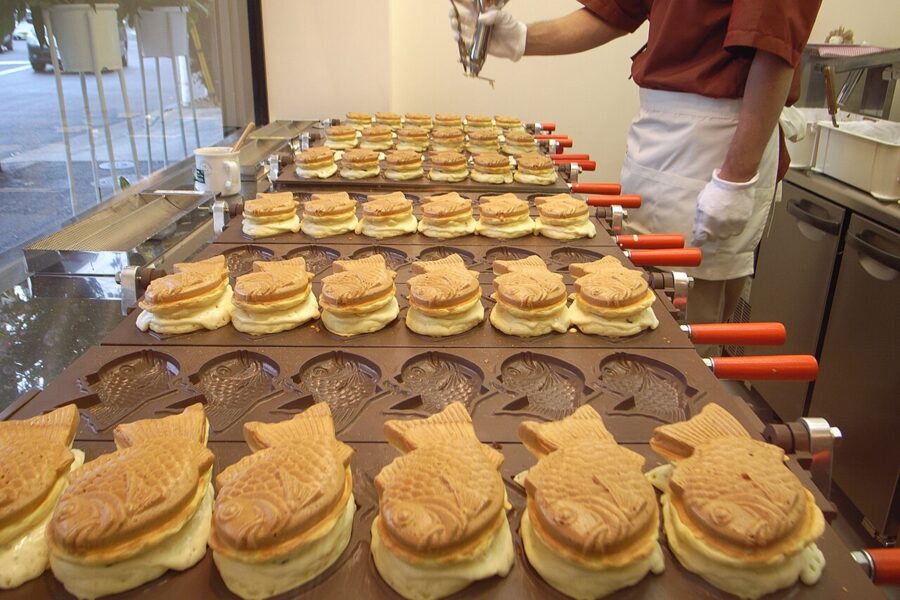

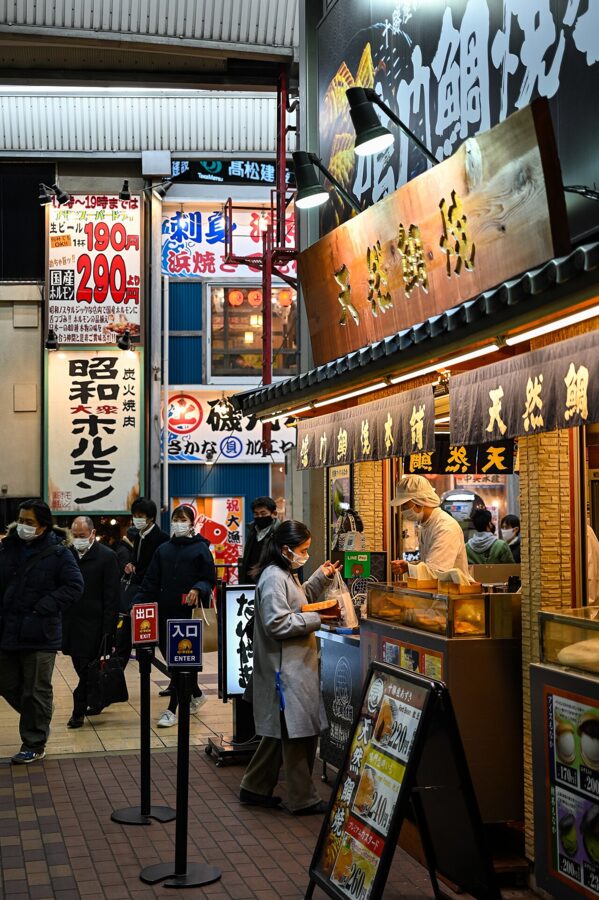
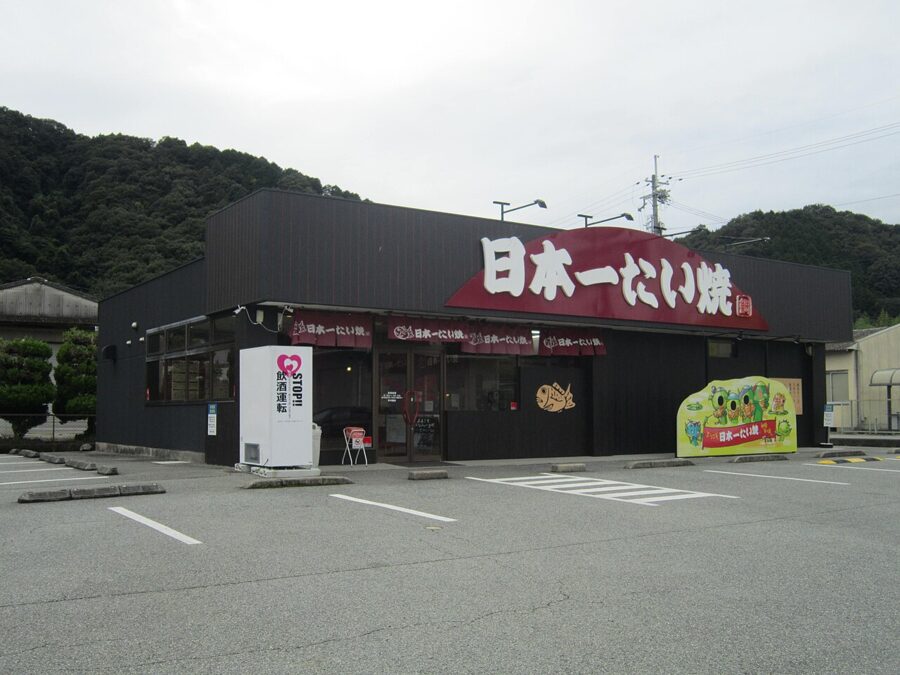
Who still bakes tennen? In Tokyo, the three old shops below, a scattering of neighbourhood makers and, more surprisingly, chains. Naruto Taiyaki Honpo bakes every fish in a single iron, and so does Nippon Ichi Taiyaki, the roadside chain from Fukuoka known for its giant fish signboards.


Tokyo’s big three
Tokyo food writers speak of the taiyaki gosanke (たい焼き御三家), the city’s big three: Naniwaya Sohonten in Azabu-Juban, founded in 1909; Yanagiya in Ningyocho, founded in 1916; and Wakaba in Yotsuya, which dates its taiyaki to 1953. None is a branch of another. All three bake one fish per iron and fill the paste close to the tail.
| As of autumn 2026 | Naniwaya Sohonten | Yanagiya | Wakaba |
|---|---|---|---|
| Founded | 1909 | 1916 | 1953 |
| Address | 1-8-14 Azabu-Juban, Minato | 2-11-3 Nihonbashi-Ningyocho, Chuo | 1-10 Wakaba, Shinjuku |
| Nearest station | Azabu-juban (Namboku, Oedo) | Ningyocho (Hibiya, Toei Asakusa), 1 min | Yotsuya (JR Chuo), 4 min |
| Hours | 11:00–19:00 | 12:30–18:00 | Mon–Fri 9:00–19:00, Sat 9:00–18:30, holidays 9:00–18:00 |
| Closed | Tuesdays, third Wednesday | Sundays, public holidays | Sundays |
| One taiyaki | ¥200 (about $1.30) | ¥200 | ¥250 (about $1.70) |
Naniwaya Sohonten, Azabu-Juban
The oldest of the three sells its fish from a takeaway window on the Azabu-Juban shopping street, with a café upstairs. You give your order, are told roughly when to come back, and go for a walk. Takeaway taiyaki were ¥200 each in reports from 2025 and 2026, and the counter keeps the hours in the table above, as of October 2026. Azabu-juban Station on the Namboku and Oedo lines is a few minutes’ walk away.
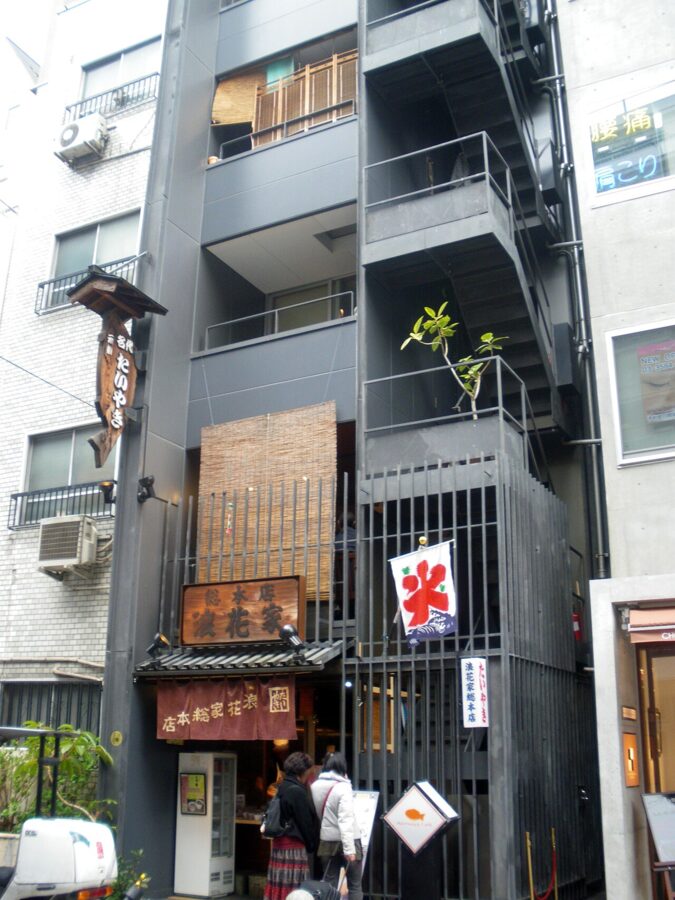

Yanagiya, Ningyocho
Yanagiya (柳屋) opened in 1916 (Taisho 5) and stands on Amazake Yokocho, the short shopping street in Nihonbashi-Ningyocho named after a sweet rice drink once sold at its corner. It is a takeaway counter and nothing more: no seats, no card machine, one line of bakers working single irons behind the window. The crust is thin and well browned, the paste generous.
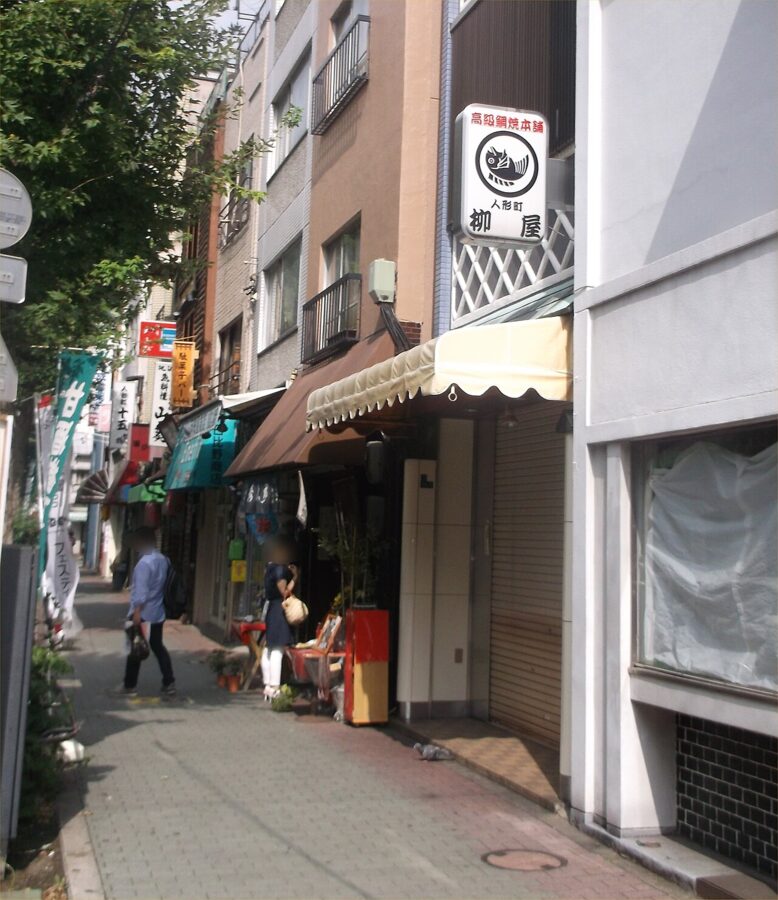

As of June 2026 a taiyaki cost ¥200, up from ¥180 (about $1.20) in 2024, and the shop opened 12:30–18:00, closed on Sundays and public holidays. Customers in 2025 reported waits of about twenty minutes on a weekday afternoon with ten people ahead, and up to half an hour on a busy day. The same counter sells aisu monaka (アイス最中), ice cream in a wafer shell, in red bean or vanilla, also ¥200.
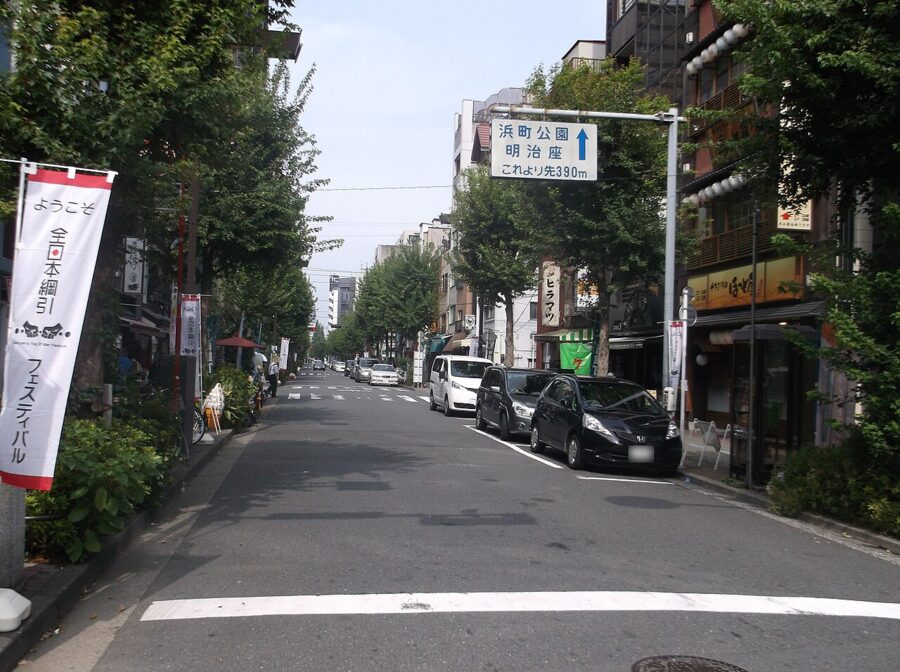

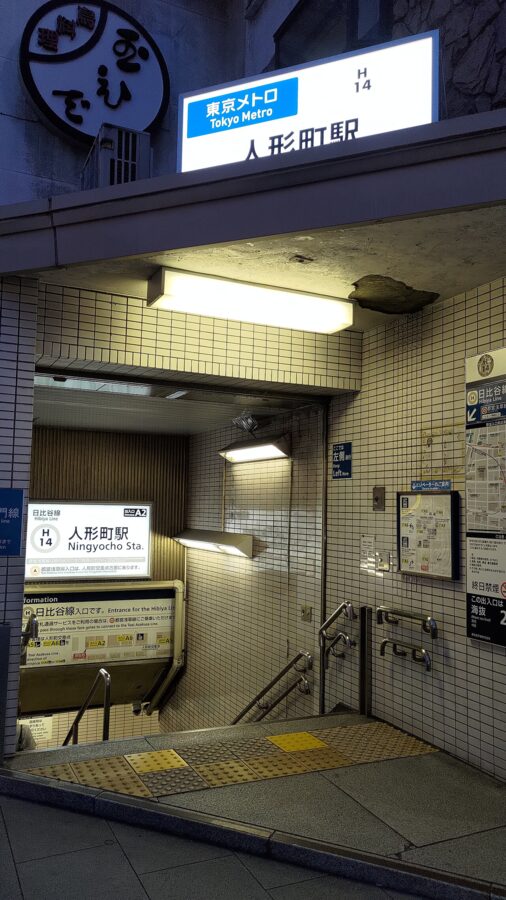
Getting there: Ningyocho Station (Tokyo Metro Hibiya Line and Toei Asakusa Line) comes up at the Ningyocho crossing, where Amazake Yokocho begins. Yanagiya is about a minute’s walk along it. Weekday evenings after 17:00 are often quieter; one Saturday customer in 2025 waited twenty minutes at three in the afternoon.

Wakaba, Yotsuya
Taiyaki Wakaba (たいやき わかば) sits on a side street in the Wakaba district of Shinjuku, a few minutes from Yotsuya Station, and it has the longest hours of the three: open from nine in the morning. Its fame goes back to the drama critic and novelist Tsuruo Ando (安藤鶴夫), who praised the shop’s fair dealing in a newspaper in the lean years after the war, when a fish full of paste to the tip of its tail was a small luxury.
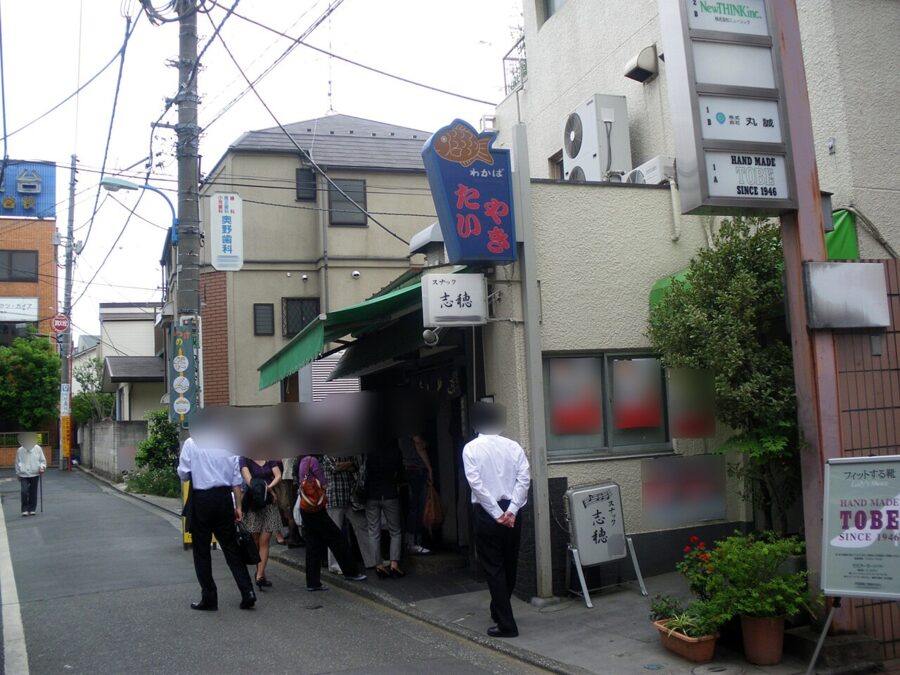

The paste is tsubushi-an (つぶし餡), crushed beans with their skins, cooked from Hokkaido azuki and lightly salted, so it tastes of beans first and sugar second. The baker adjusts the heat iron by iron, which leaves the thin edges crisp and the thick middle slightly chewy, and every fish is trimmed with scissors before it reaches the counter. You can eat in at the same price.

Prices: ¥250 a fish from 1 September 2026, up from ¥210 (about $1.40), cash only. Hours as of October 2026 are in the table above; the shop is closed on Sundays. The JR Chuo Line’s Yotsuya Station is about four minutes away on foot, and Yotsuya-sanchome on the Marunouchi Line about nine.
Anko, custard and everything since
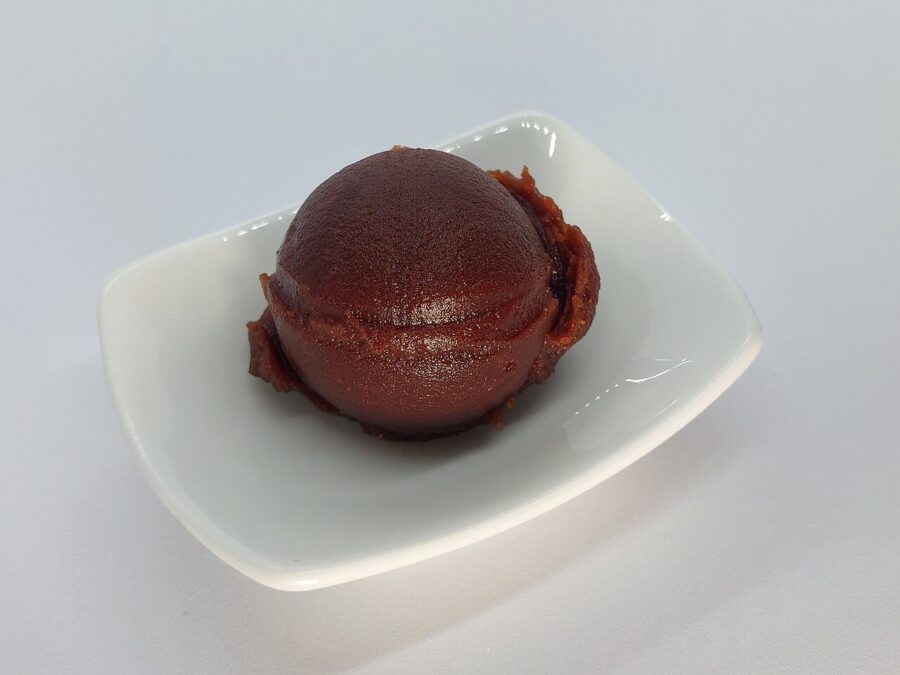
Anko comes in two main kinds. Tsubu-an (粒あん) keeps the beans whole or crushed, skins and all; koshi-an (こし餡) is pushed through a sieve until it is smooth and dark. Naniwaya and Wakaba both use the coarse kind, made from Hokkaido azuki. Some chains offer both, and people who grew up on one tend to find the other slightly wrong.

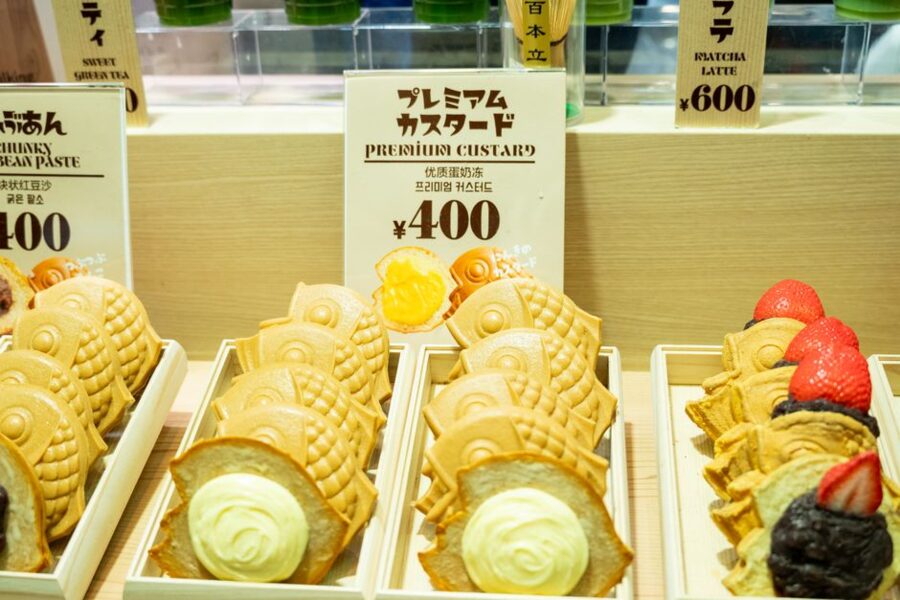
Custard cream is the usual second filling, sold almost everywhere taiyaki are. After that the list depends on the season and the shop: chocolate, sweet potato, matcha cream, white bean paste, mochi with the paste, and savoury fish filled with cheese, curry or sausage. In the late 2000s a craze for white taiyaki, made with tapioca or rice flour in a batter that barely browns, spread across Japan and then faded nearly as fast.
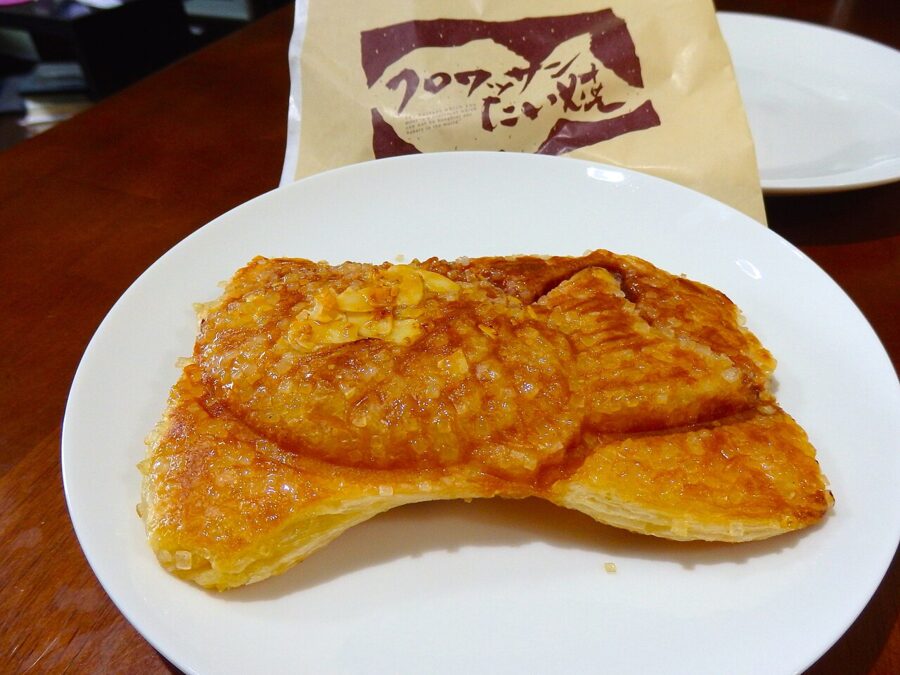
Of the chains, the one with the longest reach belongs to Hotland, the company behind the Tsukiji Gindaco takoyaki chain. Its taiyaki shops, Gin no An (銀のあん), began selling croissant taiyaki in 2013: croissant dough baked in a fish mould with butter, so the crust flakes and shatters. As of November 2026 a seasonal croissant taiyaki cost ¥302 (about $2) to take away, and Gin no An’s thin-skinned taiyaki ¥237 (about $1.60).


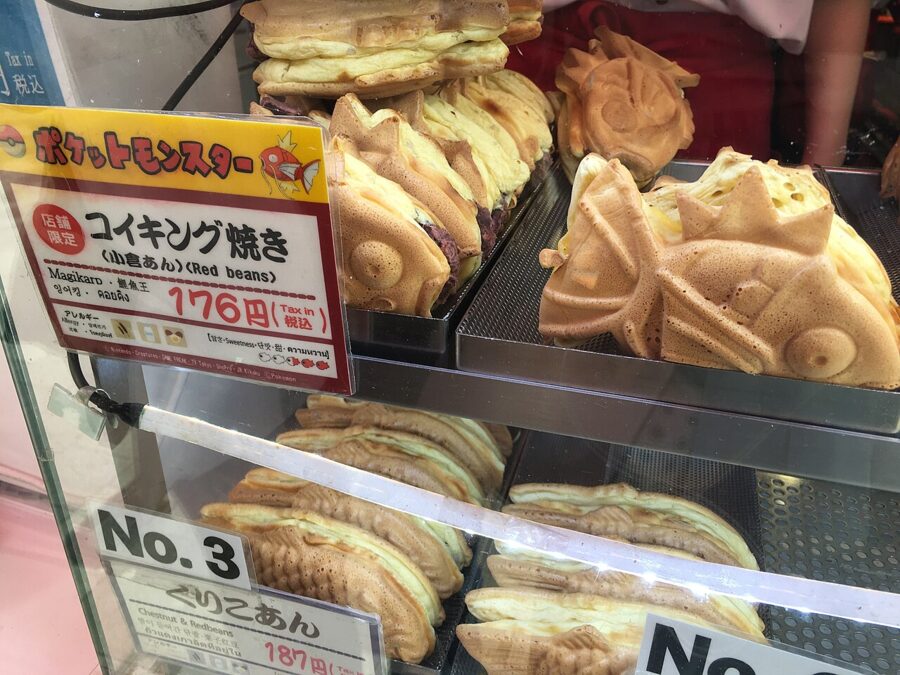
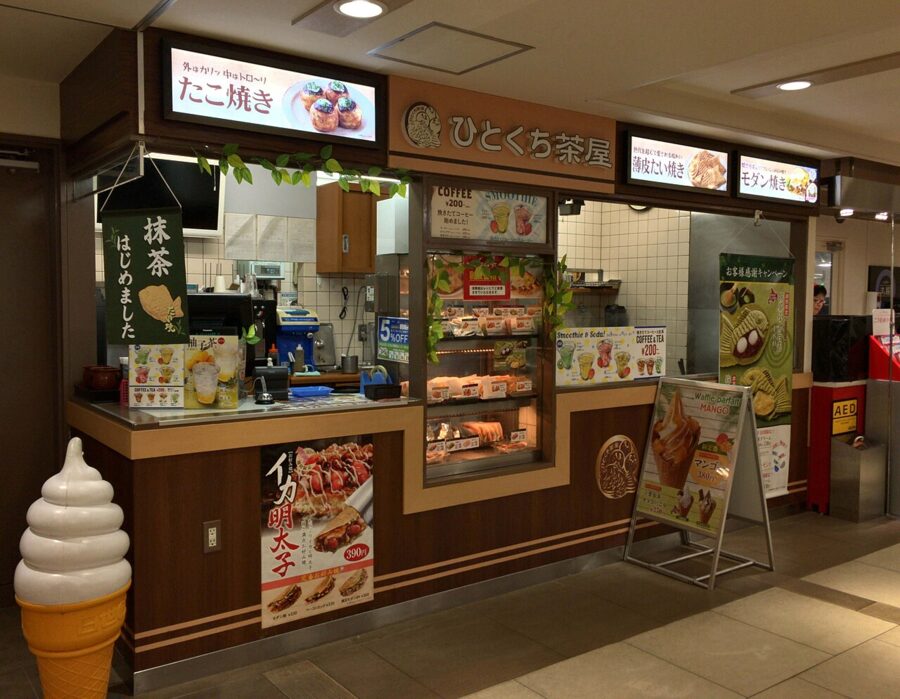
Yokohama Kurikoan (横浜くりこ庵) is a separate chain, run by Kuriko, a company founded in 1951, with stands across the Tokyo area. It is the place for novelty: flavours limited to one branch or one holiday week, and Pokémon tie-ins that swapped the bream for another fish. Beyond those two, taiyaki come from dozens of small chains in station buildings and supermarkets, usually beside a takoyaki griddle.

Head or tail first, and the song
Every taiyaki eater is asked which end goes first. The best numbers come from J-Town Net, which ran an online vote by prefecture from 11 November 2016 to 16 January 2017. Of 673 votes, 443 were for the head and 158 for the tail; 64.2% of Tokyo voters and 73.3% of Osaka voters started at the head, and only 6.5% said they did not care.
The head-first case is practical: the head holds the most paste, and the thin tail stays crisp longest, so you finish on crunch. The tail-first camp keeps the best for last, and some argue it is kinder to the fish. I side with the majority, for the crunch at the end.
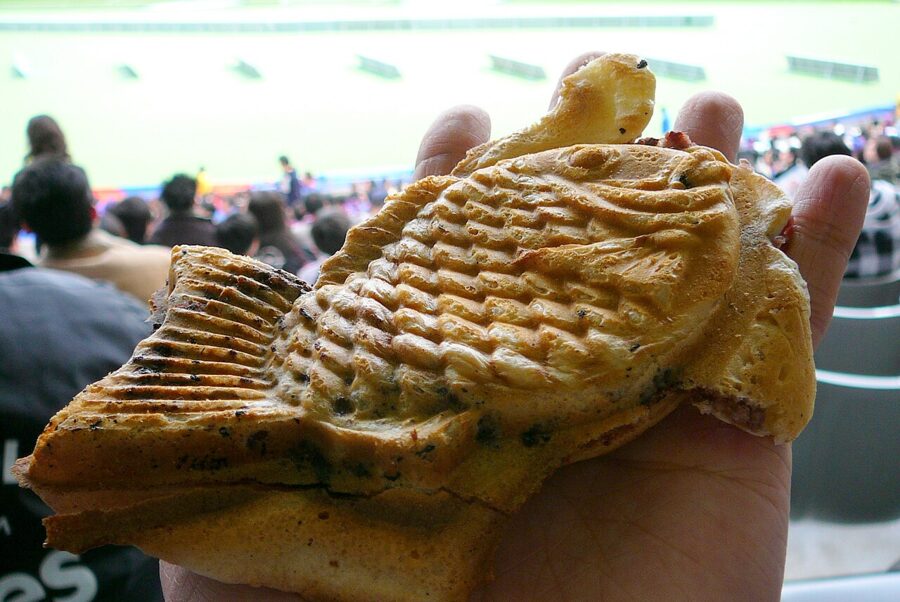

Then there is “Oyoge! Taiyaki-kun” (およげ!たいやきくん, “Swim! Taiyaki-kun”), the 1975 children’s song that is still the best-selling single on Oricon’s charts. Its hero is a taiyaki sick of being baked on the same iron plate every day, who runs away to the sea. By the fans’ terms he is a farmed fish, which may be why he wanted out. Naniwaya’s family says the cartoon shopkeeper who appeared with the song on television was modelled on its third-generation owner.
How to eat one well, and two shops in an afternoon
Eat it standing up, outside the shop, within a few minutes of it leaving the iron. A paper bag traps steam, and steam is what turns a crisp crust soft; if you are carrying fish home, leave the bag open.
Reheating works better than you would expect. A few minutes in a toaster oven brings back the crust, which is what Naniwaya itself suggests; a microwave leaves it limp. Naniwaya’s owner also says the paste tastes sweetest very hot, and that a fish left a minute or two shows the beans better.
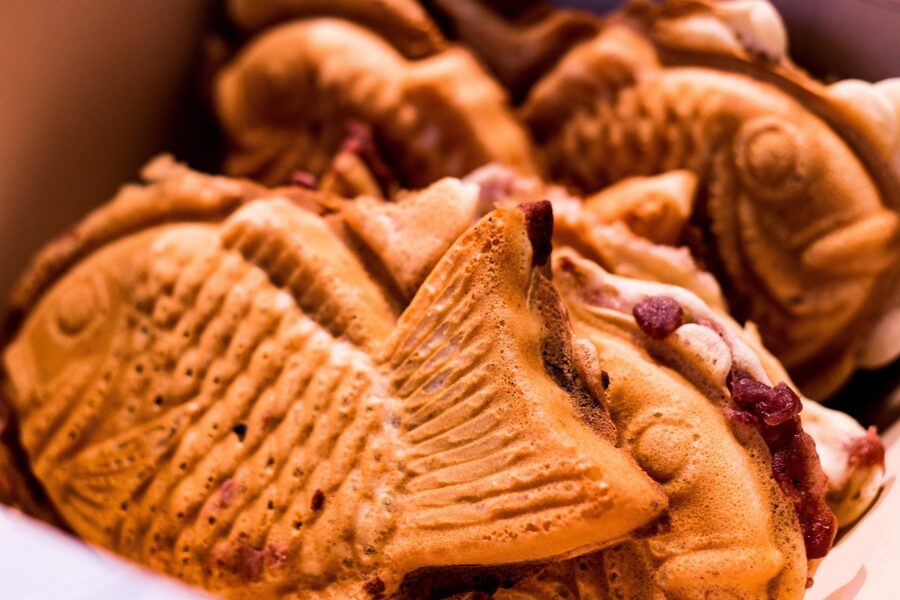
If you want to compare, two of the big three fit easily into one afternoon, and all three into a long day. Wakaba opens at 9:00, Yanagiya at 12:30, and Naniwaya stays open until 19:00, so that is the order. Avoid Sundays, when two of the three are shut, public holidays (Yanagiya) and Tuesdays (Naniwaya). That leaves Monday, Wednesday to Friday and Saturday, minus the third Wednesday of each month.
- Morning, Wakaba. JR Chuo Line to Yotsuya, then four minutes on foot. In early April, take your fish to the cherry blossoms along the Sotobori moat, a short walk from the station.
- Early afternoon, Yanagiya. Take the Marunouchi Line to Ginza and change to the Hibiya Line for Ningyocho: about half an hour, door to door.
- Late afternoon, Naniwaya. Stay on the Hibiya Line to Roppongi, then about fifteen minutes on foot, mostly downhill, to the Azabu-Juban shopping street. Order before you wander off.
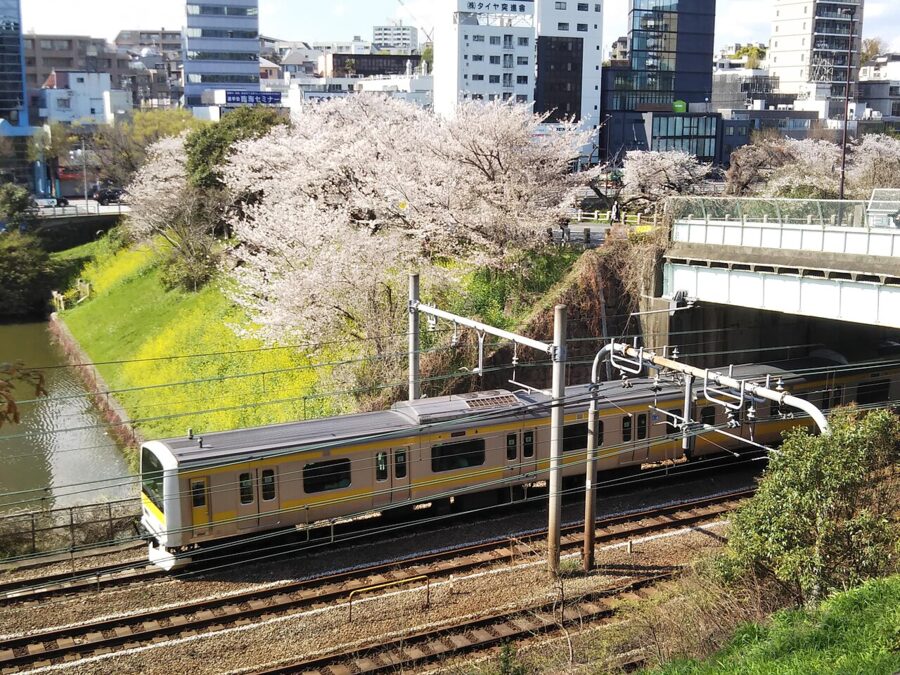

Eat the three fish in the order you buy them and the differences are easy to taste: Wakaba’s saltier, bean-heavy paste, Yanagiya’s thin, crisp crust, Naniwaya’s paste packed out to the tail. Each one comes off an iron that weighs more than two kilograms, turned by someone who has been doing it all day. That is the price of a ¥200 fish, and it is cheap.