
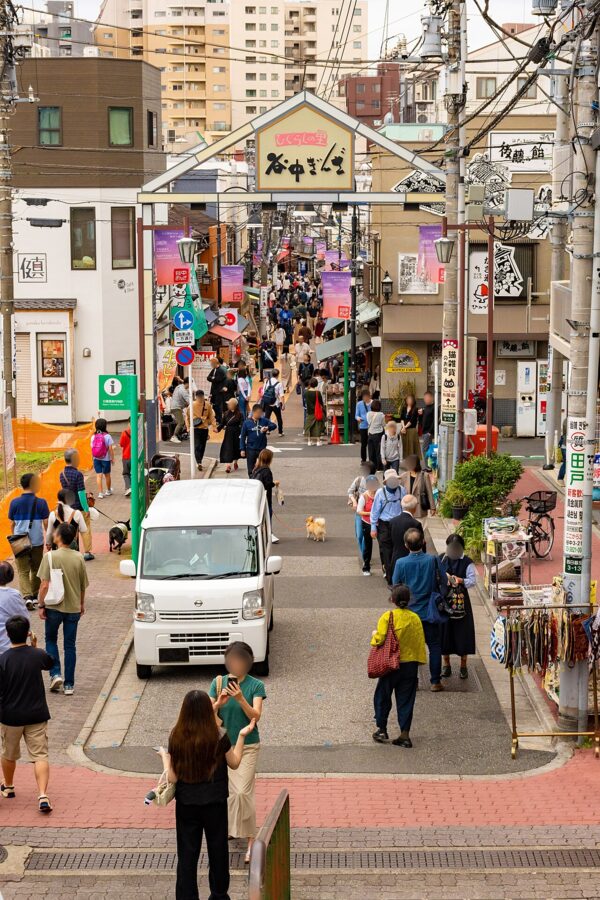
At four o’clock on a clear November afternoon the sun sits low at the far end of Yanaka Ginza, and the shoppers on the steps above it stop to look. The steps are called Yuyake Dandan (夕やけだんだん), roughly “sunset stairs”, and below them about sixty shops line a street only 170 metres long. Somebody is usually frying croquettes, and somebody is usually photographing a cat that has seen it all before.
Tokyo works like that: a city of 14 million that you only really know one street at a time. The capital is split into 23 special wards, each with its own mayor and assembly, but an older map underneath matters more. Shitamachi (下町), the “low city”, was the merchants’ and craftsmen’s Edo on the flat land by the Sumida River and the bay. The yamanote (山の手), the “high city”, was the hills to the west, where the samurai had their estates.
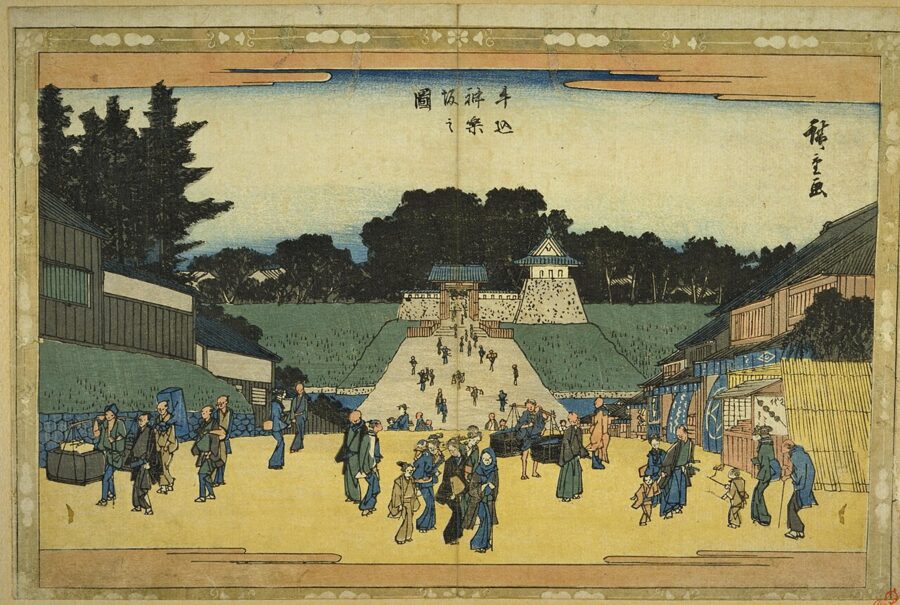
Yanaka sits on the edge of the Ueno hills yet everyone calls it shitamachi; Ebisu and Jiyugaoka grew up on twentieth-century railway lines and belong to neither. Here are seven neighbourhoods worth an afternoon each, with the station, a route of two or three hours, one old shop or landmark and the best time to go.
In this article
Asakusa and the Sumida riverbank
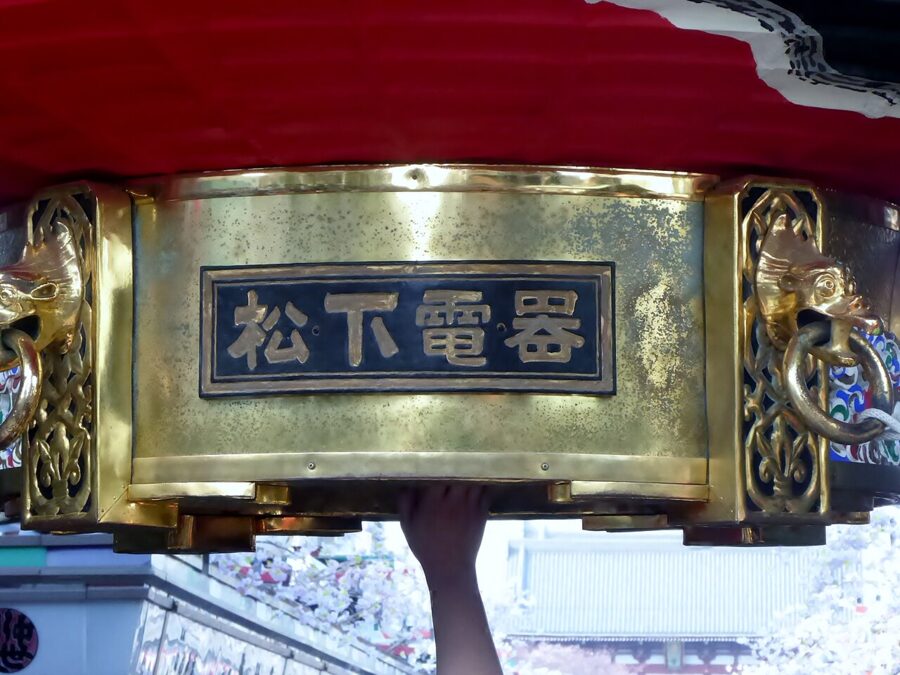
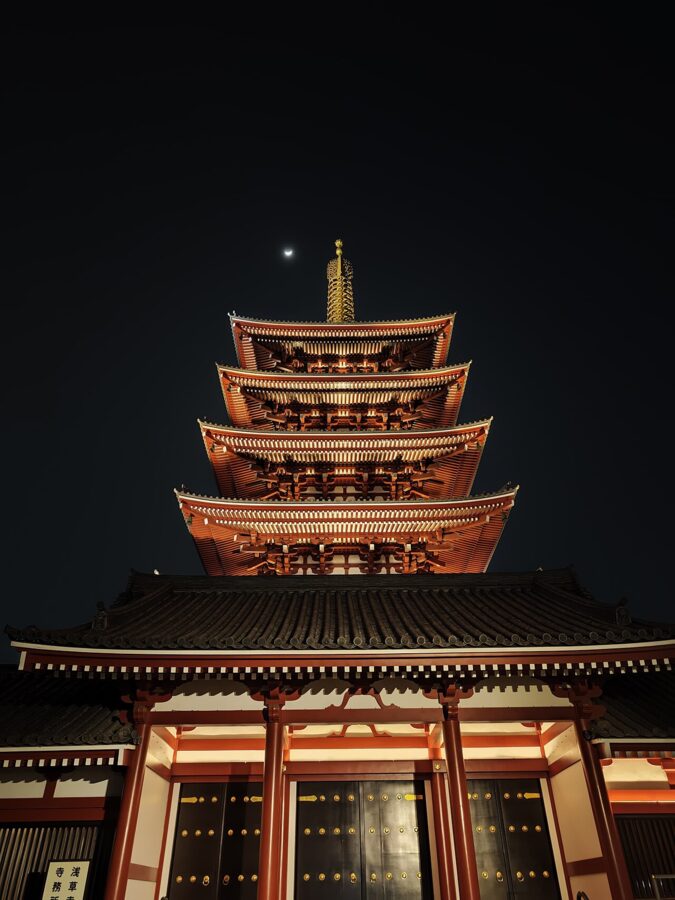
Asakusa is the shitamachi everybody has seen. Its centre is Senso-ji (浅草寺), whose own history dates the finding of its Kannon statue to the early morning of 18 March 628, when, in the temple’s telling, fishermen drew it from the river in their net. The red gate at the front, Kaminarimon, burned in 1865 and stood empty for 95 years until the present one went up in 1960. Its great lantern is 3.9 metres tall and weighs about 700 kilograms.
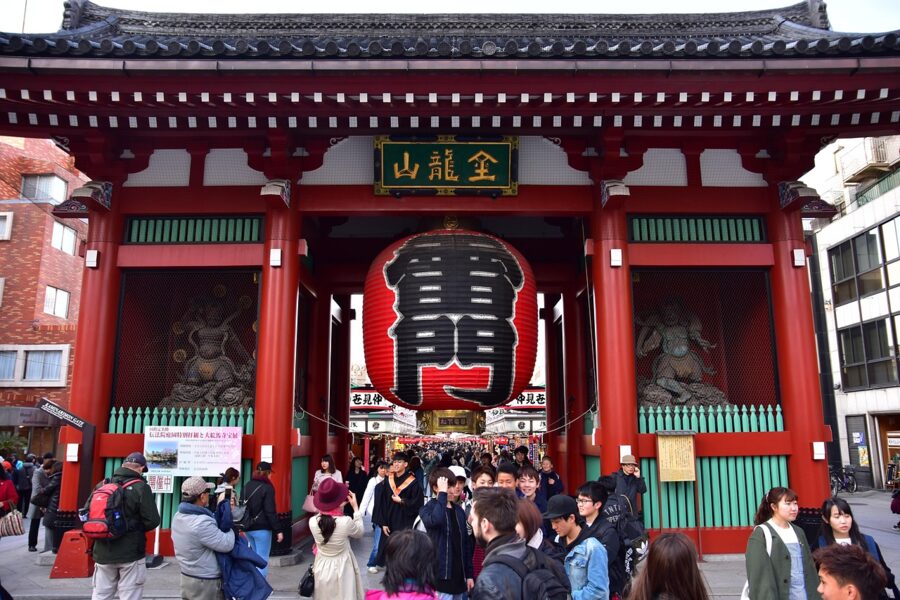
Through the gate, Nakamise (仲見世) runs about 250 metres to the second gate, Hozomon, with souvenir and snack stalls on both sides. By midday at a weekend it is a shuffle rather than a walk. The trick is to come in mid-afternoon, see the main hall before it closes, and stay on for the evening.
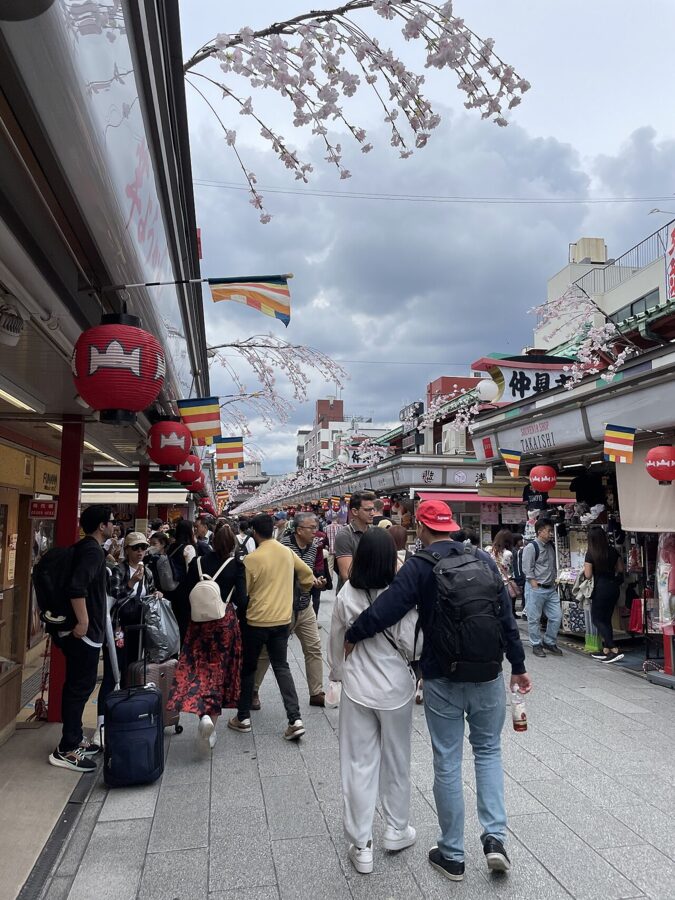

An afternoon route
Start at Asakusa Station and walk under Kaminarimon and up Nakamise to the main hall. As of November 2026 the hall opens at 6:00 (6:30 from October to March) and closes at 17:00. Coming back, turn into Shin-Nakamise, the covered arcade that crosses Nakamise, for Yagenbori (やげん堀), founded in 1625 and still blending shichimi tōgarashi (七味唐辛子), the seven-spice chilli mix, to your taste at the counter. As of November 2026 its main shop opens 10:00 to 18:00.

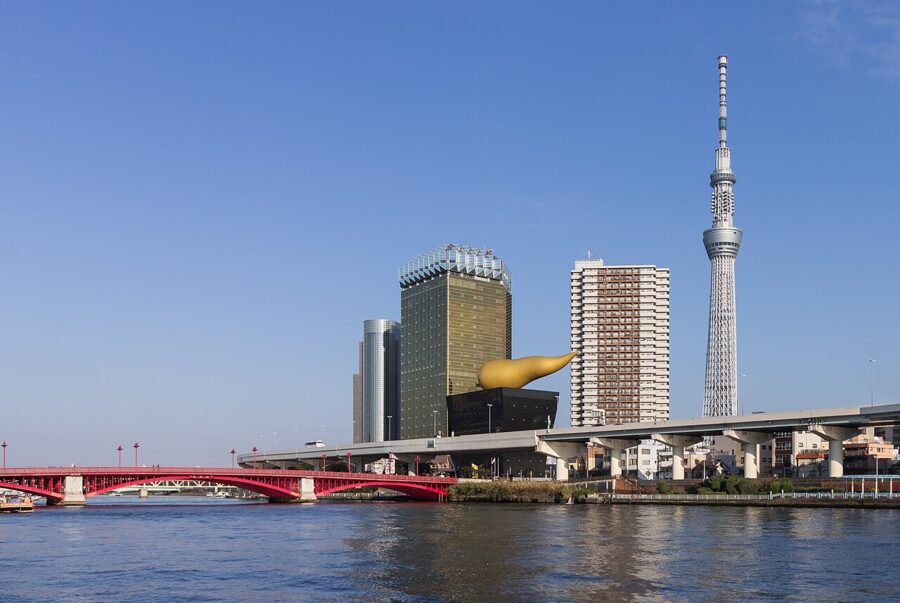
Then walk east along Kaminarimon-dori to the river, and out onto Azumabashi. From the bridge you look across the Sumida to the black hall of Asahi’s headquarters and the gold Asahi flame on its roof, with Tokyo Skytree behind. Upstream, Sumida Park runs along both banks under cherry blossoms; in late March it is one of the city’s great picnic grounds, and in November simply a quiet path by the water.

The old shop: Kamiya Bar
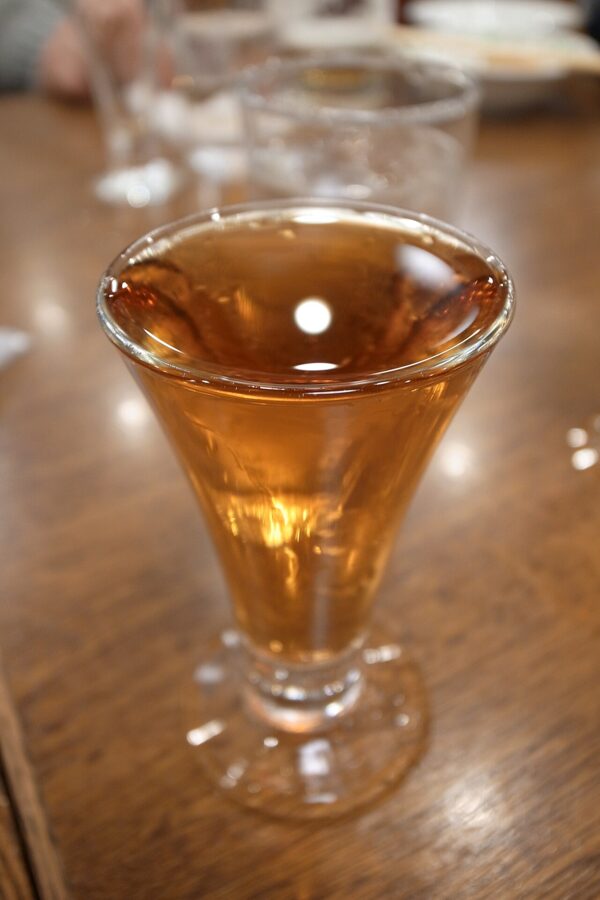
On the corner by the bridge, at Asakusa 1-1-1, stands Kamiya Bar (神谷バー). Kamiya Denbei started the business in 1880 selling drink by the glass, made a brandy cocktail from 1882 that became Denki Bran, “electric brandy”, and took the name Kamiya Bar in 1912. The name borrowed the glamour of electricity, then new, and the jolt of 45% alcohol. Today’s version is 30%, made of brandy, gin, wine, curaçao and herbs in proportions that are still a secret.
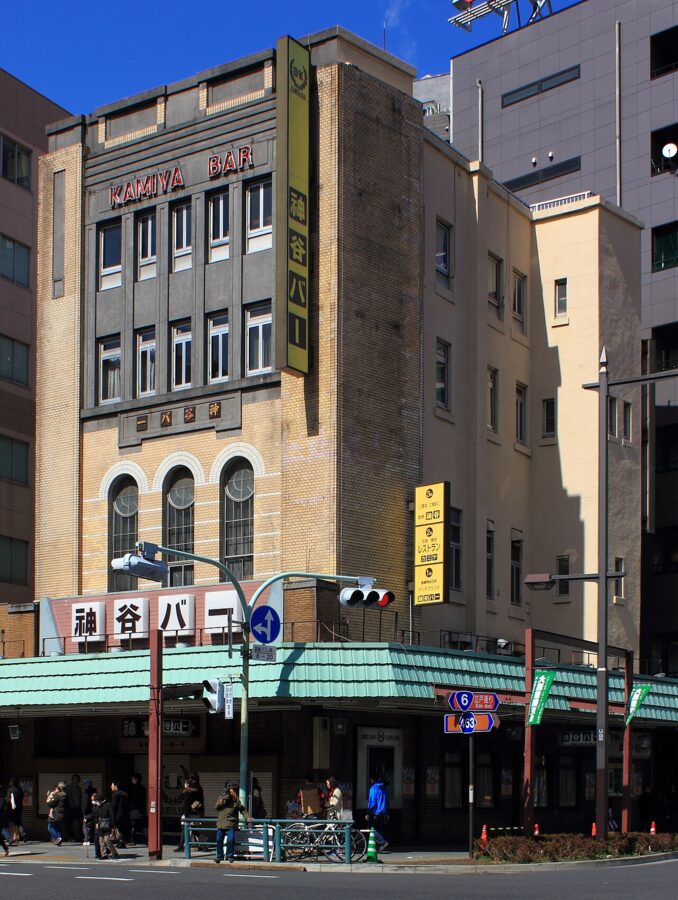

The building dates from 1921 and was registered as a cultural property in 2011. As of November 2026 the bar opens 11:00 to 20:00 (last orders 19:30) and closes on Tuesdays and on two Mondays a month. It is noisy, cheap and full of people on their way home from work, which is exactly the point. Order a Denki Bran and a draught beer to put it out.

Station: Asakusa (Ginza Line, Toei Asakusa Line, Tobu Skytree Line); the Tsukuba Express station of the same name is a separate one to the west. Best time: a weekday, arriving about 14:30 and ending on the bridge at dusk, with the temple lit on your way out.
Oshiage and Mukojima, under the Skytree
Across the river, the wards east of the Sumida are where shitamachi still looks like itself. The tower and its streets are a long story in themselves; this is the short version. Oshiage burned in 1923 and again in March 1945; just north, the lanes of Kyojima missed the second fire and keep their wooden terraced houses. Mukojima, upriver, was the far bank that Edo crossed over to for temples, teahouses and cherry trees.
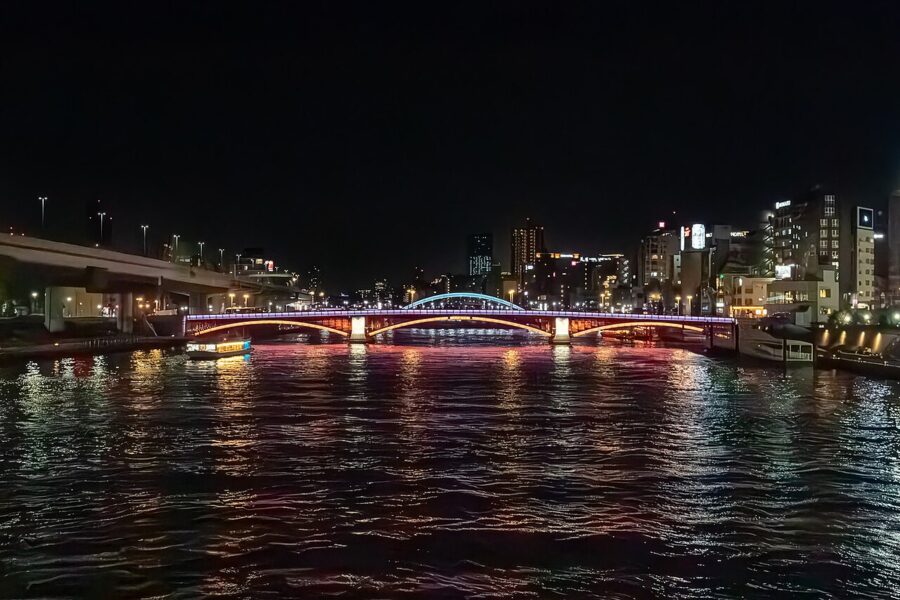

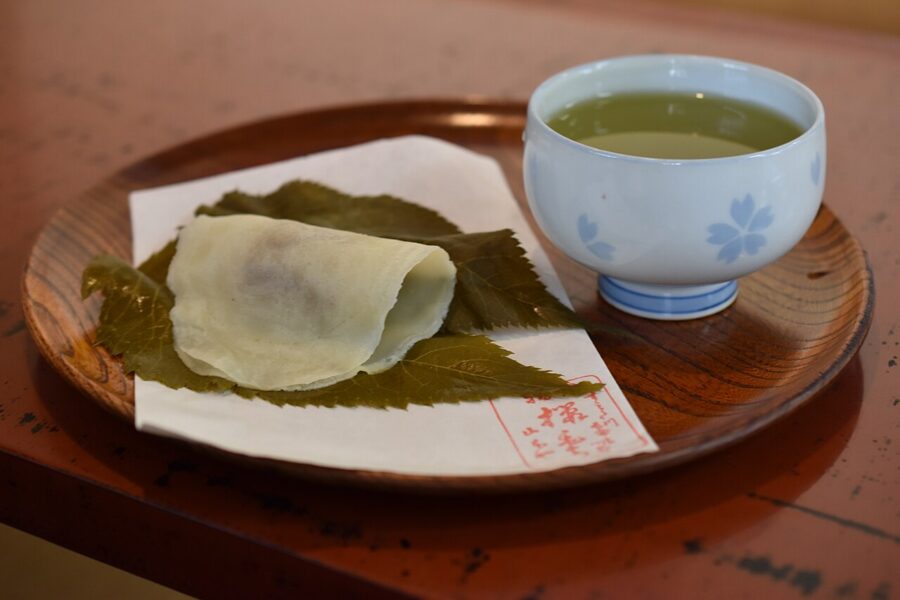
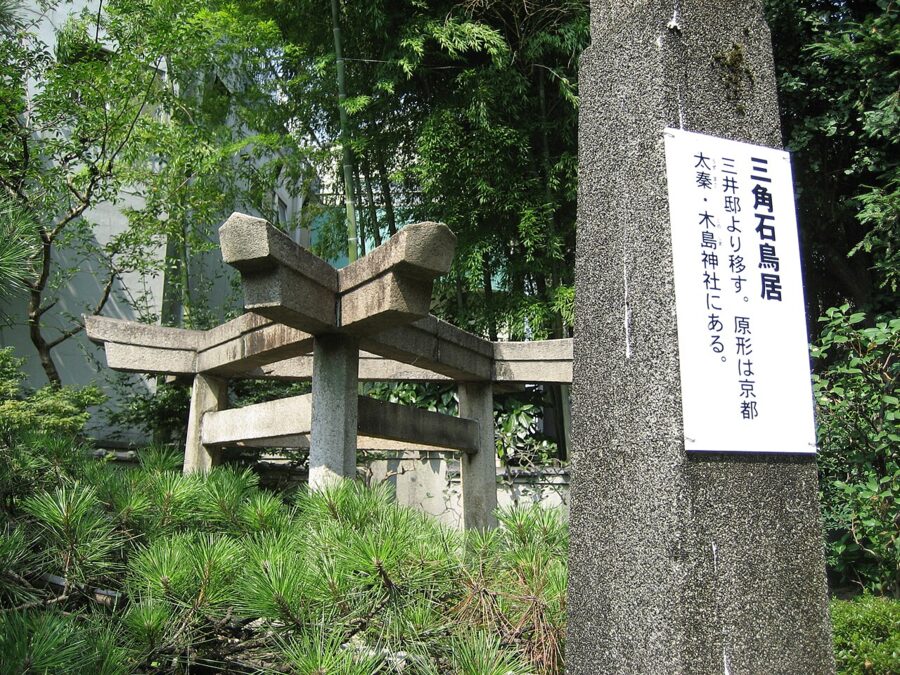
For an afternoon, cross from Asakusa on the Sumida River Walk, then follow the river north along the Mukojima bank. Stop at Mimeguri Shrine with its three-legged torii, and at Yamamotoya by Sakurabashi, which has sold Chomeiji sakuramochi, rice cakes wrapped in salted cherry leaves, since 1717. Finish at Mukojima-Hyakkaen, the merchant’s garden, which costs ¥150 (about $1).

Stations: Oshiage or Tokyo Skytree for the tower; Higashi-Mukojima for the garden; Hikifune for Kyojima. Best time: as of November 2026 Yamamotoya closes on Mondays and Tuesdays, so go Wednesday to Sunday and finish at the tower after dark.
Yanaka and the old temple streets
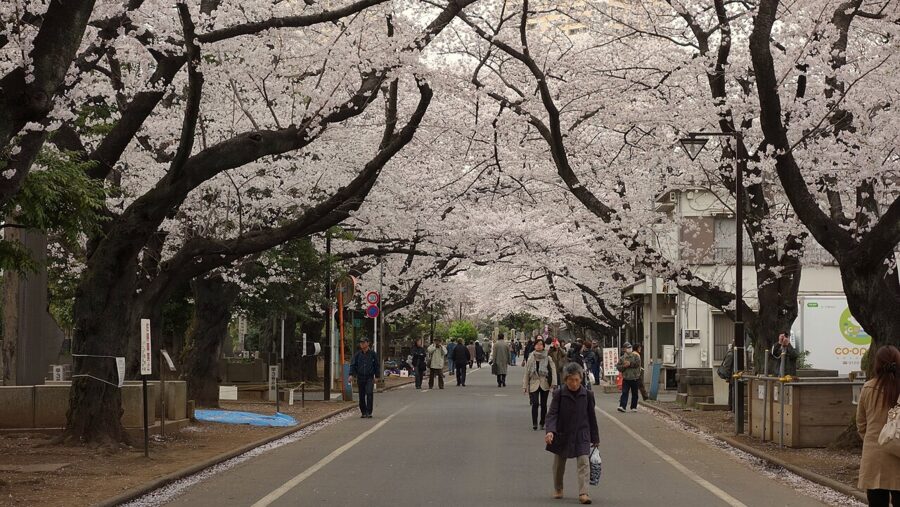
Yanaka is a teramachi (寺町), a temple town, with a temple on almost every corner and a great cemetery in the middle. It sits on firm high ground at the edge of the Ueno hills, and that is a large part of why it looks old. Much of it escaped the fires of 1923 and 1945, and the lanes between the temples are still the width of a handcart.

The firm ground was an argument people made at the time. Isetatsu (いせ辰), a publisher of chiyogami, woodblock-printed decorative paper, lost almost all its blocks in the fires of 1923 and recut about a thousand designs. In 1942, by the family’s own account, the fourth-generation owner moved the shop to Yanaka so that the next earthquake would find it on solid ground. The shop, at Yanaka 2-18-9, opens every day of the year, because he did not want anyone who had travelled a long way to find it shut.
An afternoon route
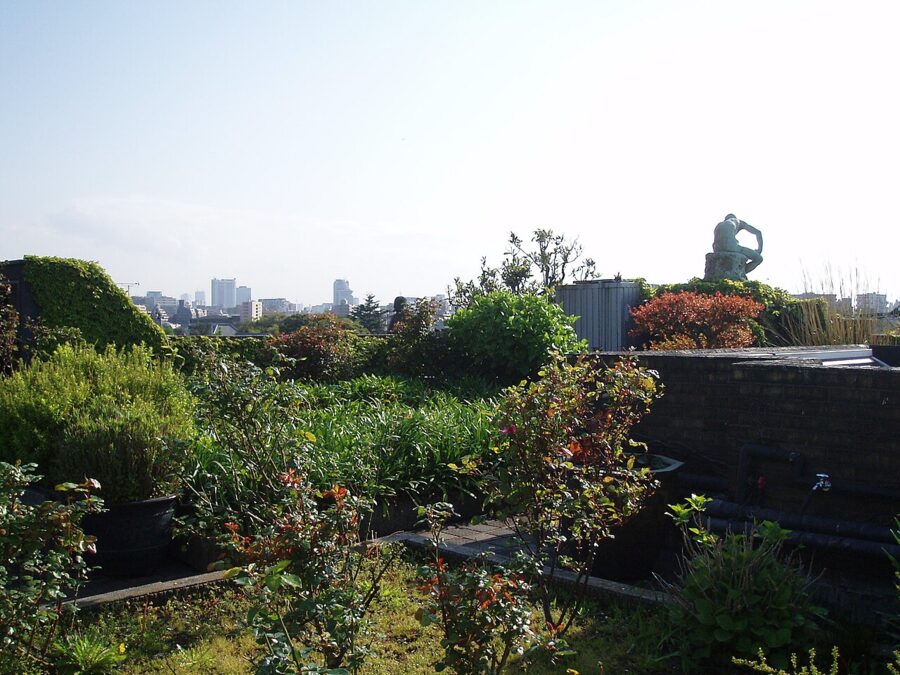
Leave Nippori Station by the west exit and walk straight into Yanaka Cemetery. Turn south-west through the temple lanes to the Asakura Museum of Sculpture, the house and studio of the sculptor Fumio Asakura. As of November 2026 it opens 9:30 to 16:30 (last entry 16:00), closes on Mondays and Thursdays and between exhibitions, and costs ¥500 (about $3.30).

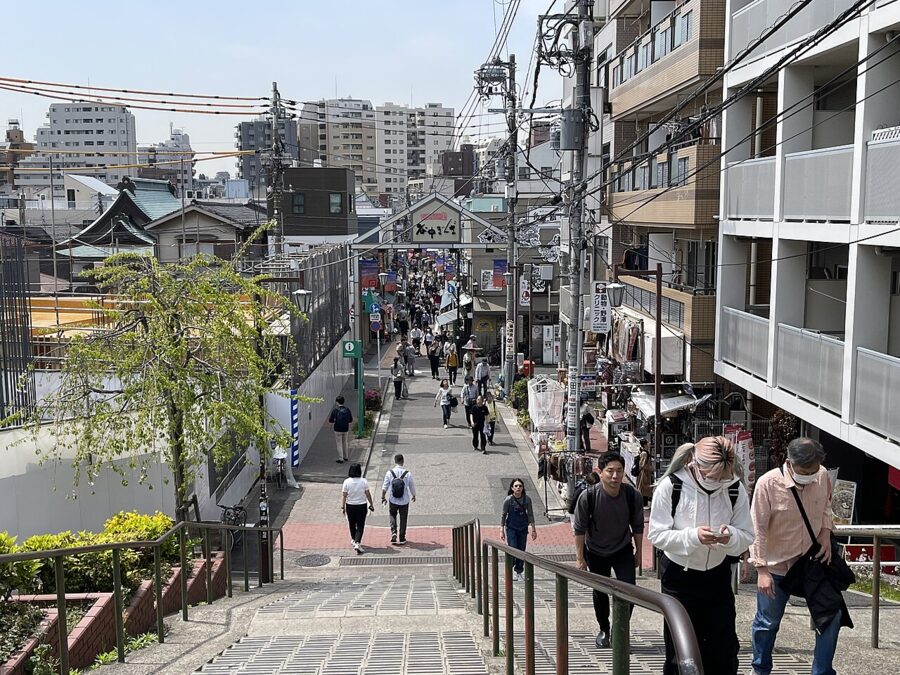
From the museum, walk north to the top of Yuyake Dandan and down into Yanaka Ginza. The shopping street’s association counts about sixty shops on its 170 metres, mostly old family businesses selling meat, vegetables, fish, sake, clothes, pottery and tea. Its 2018 survey counted around 10,000 people on a weekday and 14,000 at weekends, against about 8,000 in 1991.

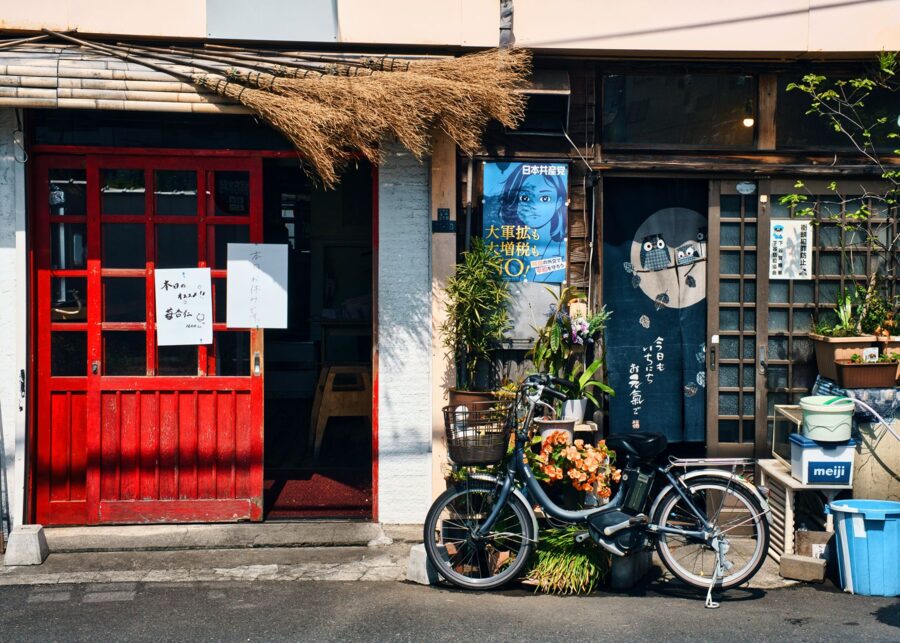
The cats are partly real and partly carved. Yanaka built its name as a cat town on the strays among the temples and graves, and in 2008 the shopping street put up carved wooden cats along its length. You will still meet live ones in the cemetery and on the steps; they belong to the neighbourhood, so leave them be. From the far end of the street it is five minutes to Sendagi Station, and Isetatsu is five minutes from its Dangozaka exit.
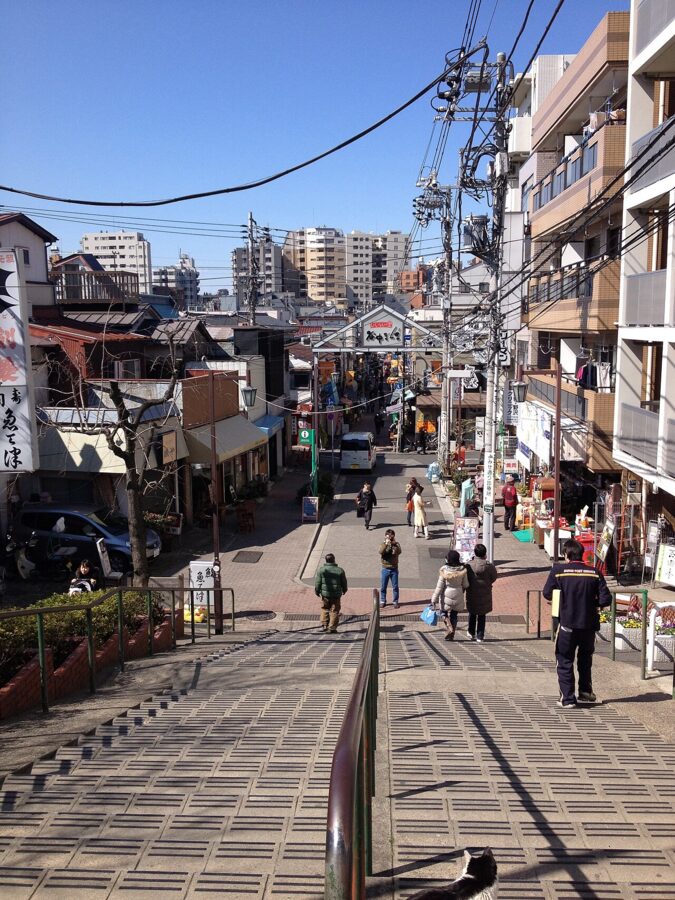

In December 2025 the business weekly Toyo Keizai reported that a seven-storey apartment building beside Yuyake Dandan, due for completion in May 2026, would block part of the sunset that gave the steps their name.
Yanaka looks old partly because it sits on firm ground, and its shopkeepers knew it.
Stations: Nippori (JR Yamanote and Joban lines, Keisei, Nippori-Toneri Liner), west exit, five minutes to Yanaka Ginza; Sendagi (Chiyoda Line), five minutes from the other end. Best time: a weekday afternoon, but not a Monday or Thursday if you want the museum.
Kagurazaka: stone lanes and the old geisha district
Kagurazaka (神楽坂) is a slope in the high city, climbing from the outer moat at Iidabashi. The name means “kagura slope”, after shrine music heard on it; the shopping street’s own notes admit nobody knows which shrine’s. In the Meiji era Ozaki Koyo and Tsubouchi Shoyo worked here and Natsume Soseki’s circle met here, and the slope is still full of publishers and printers.
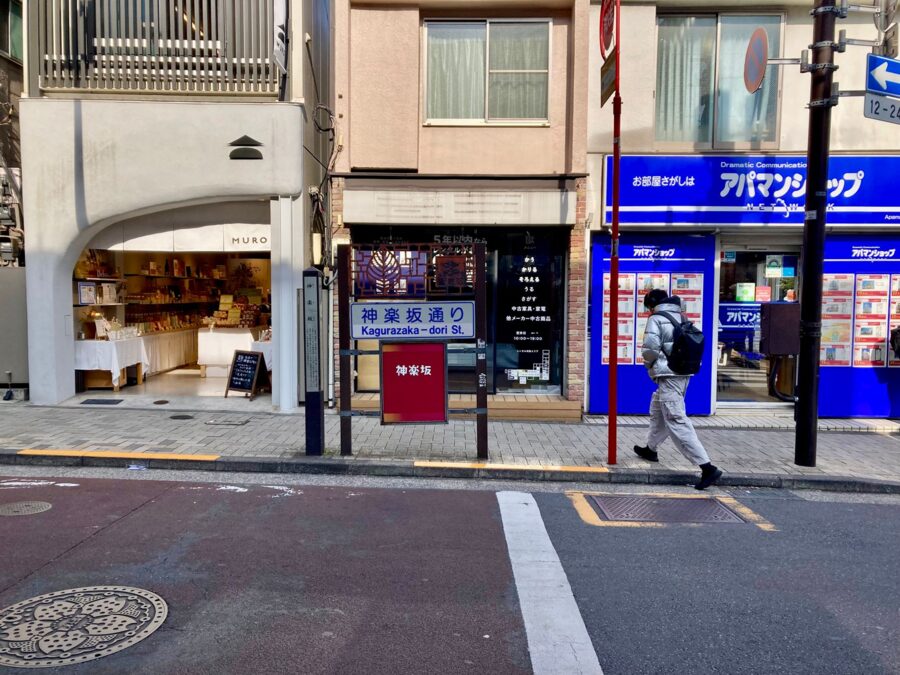
It is also one of Tokyo’s surviving hanamachi (花街), “flower towns”, where geisha work. By the shopping street’s count there are five ryotei (料亭), the formal restaurants where geisha entertain, and about 25 geisha, all in the Tokyo Kagurazaka Kumiai. The ryotei still keep to ichigen-san okotowari (一見さんお断り), no first-time guests without an introduction, one of the older Japanese customs still kept to the letter. Outsiders can see the geisha dance at the yearly Kagurazaka Odori, whose fortieth special performance ran on 24 and 25 April 2026.

An afternoon route
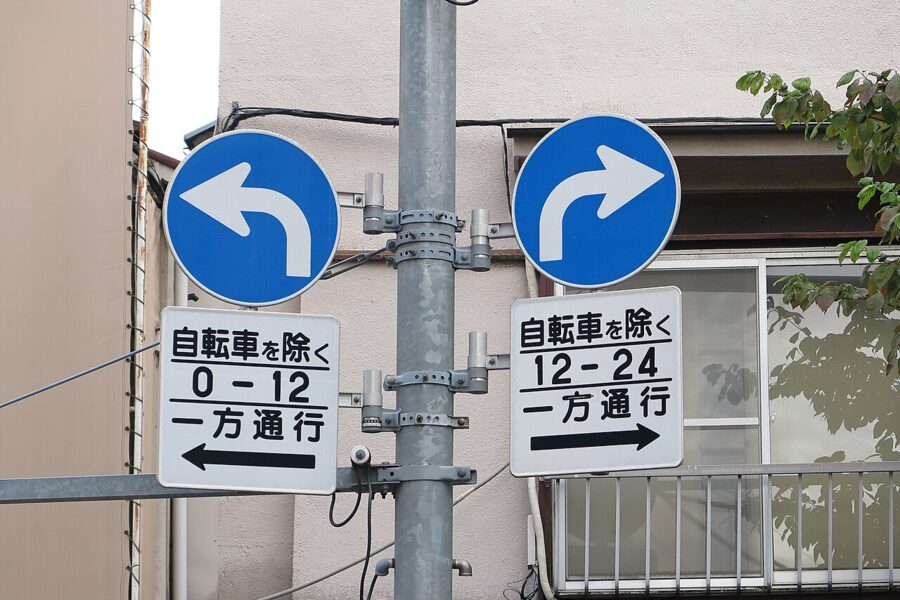
Come after lunch. The shopkeepers ask visitors to take care in the lanes in the mornings, because Kagurazaka is, in their words, traditionally a late-rising town. From JR Iidabashi, cross the moat and start up Kagurazaka-dori. Watch the traffic: under the Ushigome Police rules, the street is one-way downhill until noon and uphill after it, and on Sundays and holidays it closes to cars from noon to 19:00.

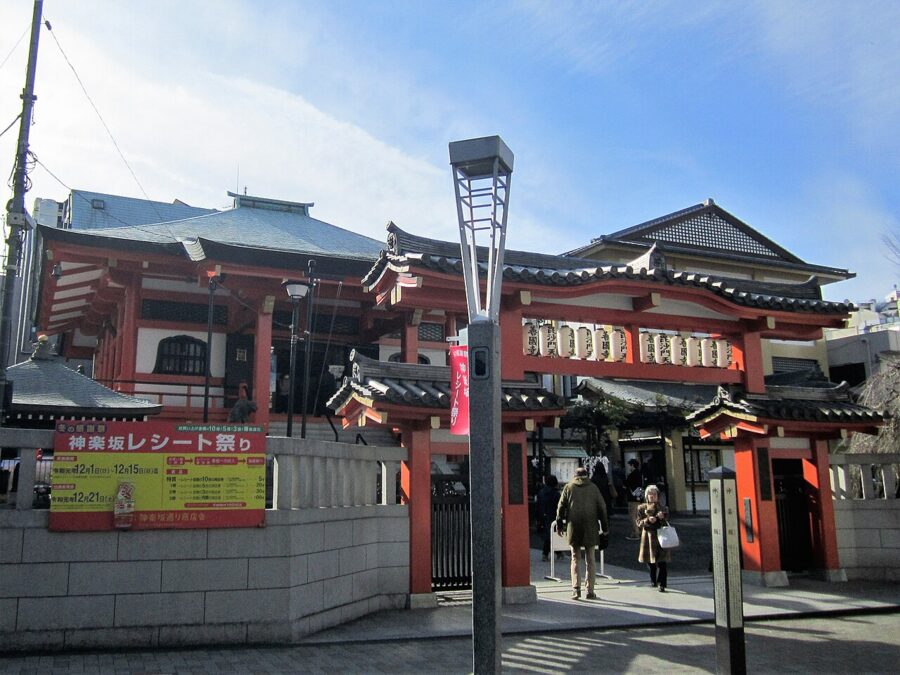
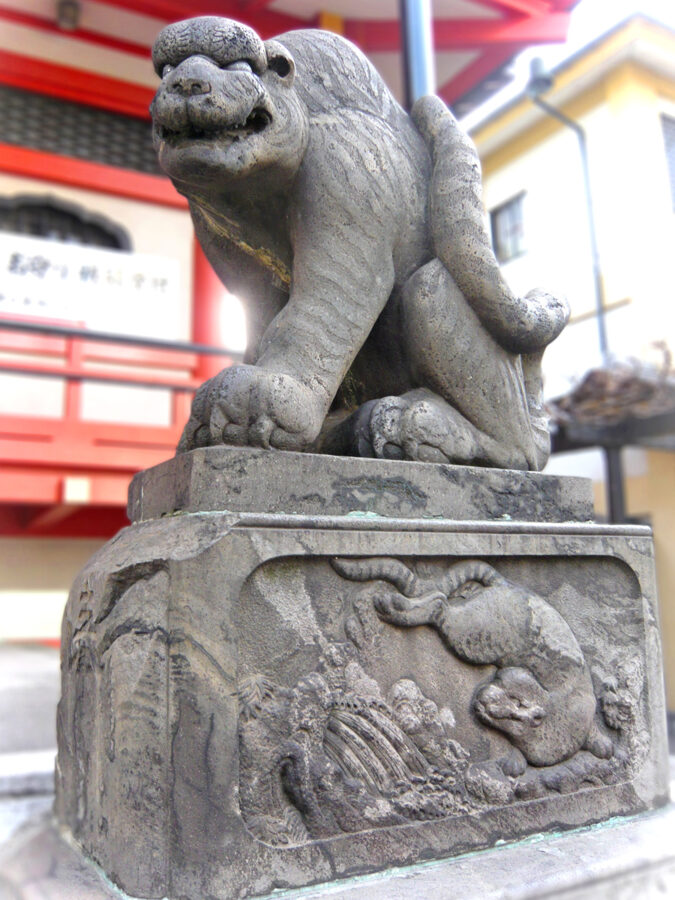
Halfway up is Bishamonten Zenkokuji (善國寺), founded in 1595 and on this street since the eighteenth century. In Edo it was one of the city’s three great Bishamonten temples, and its statue of the god is shown only on the first tiger day of January, May and September. In 2026 those days fell on 4 and 16 January, 4 May and 1 September.

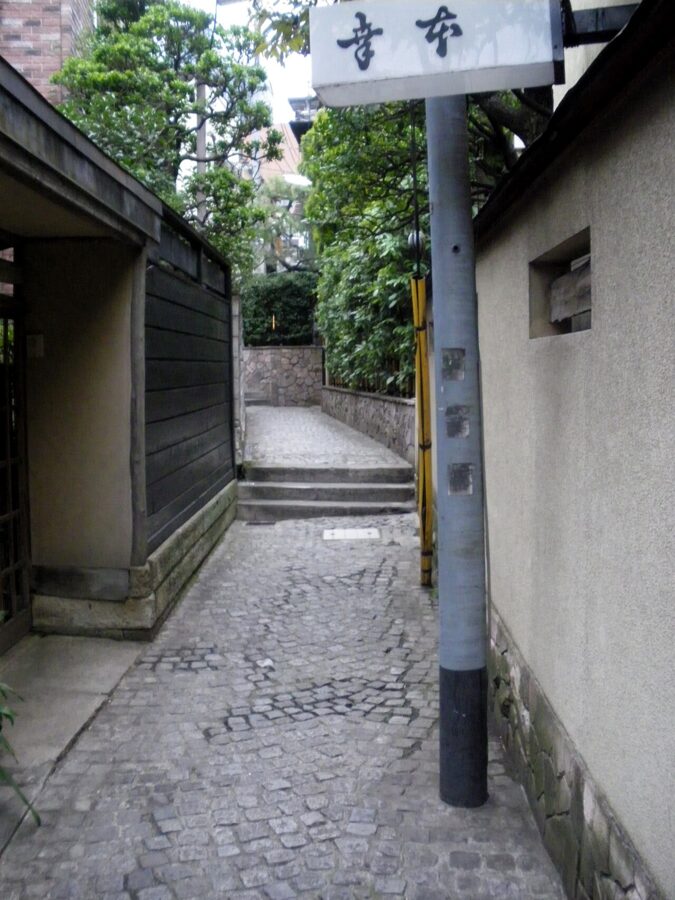
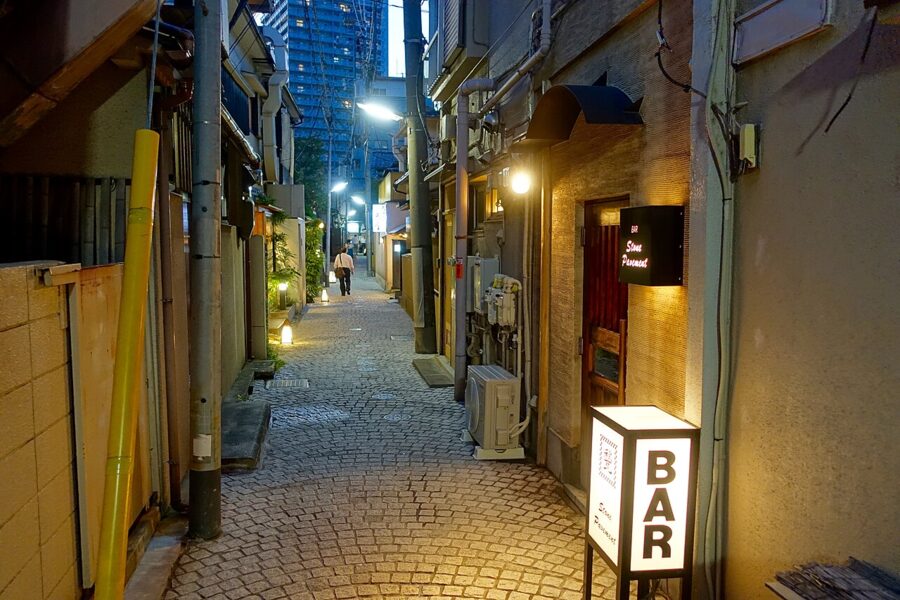
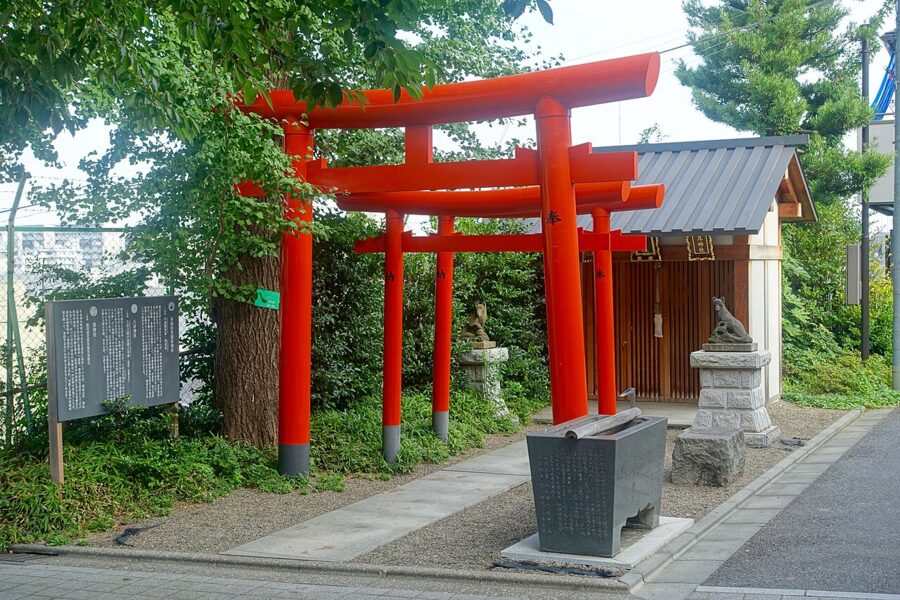
Behind and around the temple are the stone lanes, the yokochō (横丁). Hyogo Yokocho is the best kept: stone paving, black wooden walls and the kind of ryokan where, as the street’s notes put it, writers still stay for weeks to finish a book. Kakurenbo Yokocho, “hide-and-seek lane”, is said to be named for the way anyone you followed into it could vanish round a corner. Walk them quietly; people live behind those walls.

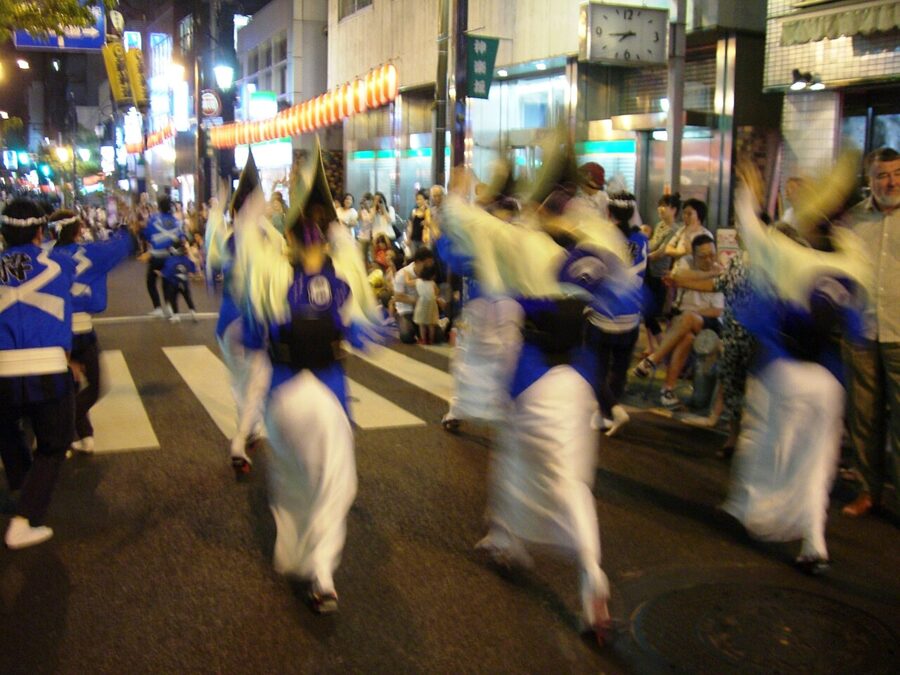
End at the top of the slope at Akagi Shrine, whose main hall was rebuilt in glass and timber to a design by Kengo Kuma, then go back down to the lanes for dinner. Two last things: smoking is banned on Shinjuku’s ward roads, the lanes included, and the big street party is the Kagurazaka Matsuri in late July, with a hōzuki (ground-cherry) market and Awa Odori dancers, held for the 52nd time in 2026.
Stations: Iidabashi (JR Chuo-Sobu Line; Tozai, Yurakucho and Namboku lines; Toei Oedo Line) at the bottom; Kagurazaka (Tozai Line) at the top; Ushigome-Kagurazaka (Oedo Line) to one side. Best time: late afternoon into the evening, any day.
Azabu-Juban and its shotengai
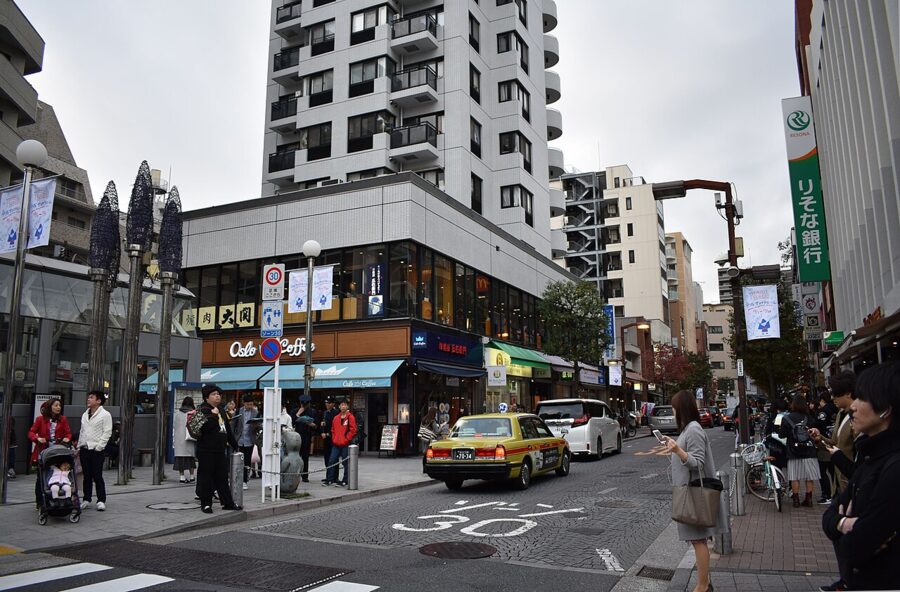
Azabu-Juban is the odd one out: a low-rise shōtengai (商店街), a neighbourhood shopping street, in a ward of embassies and towers. It stayed that way partly because it had no station until 2000. Its best-known shop is Naniwaya Sohonten, which has baked taiyaki one fish at a time since 1909.

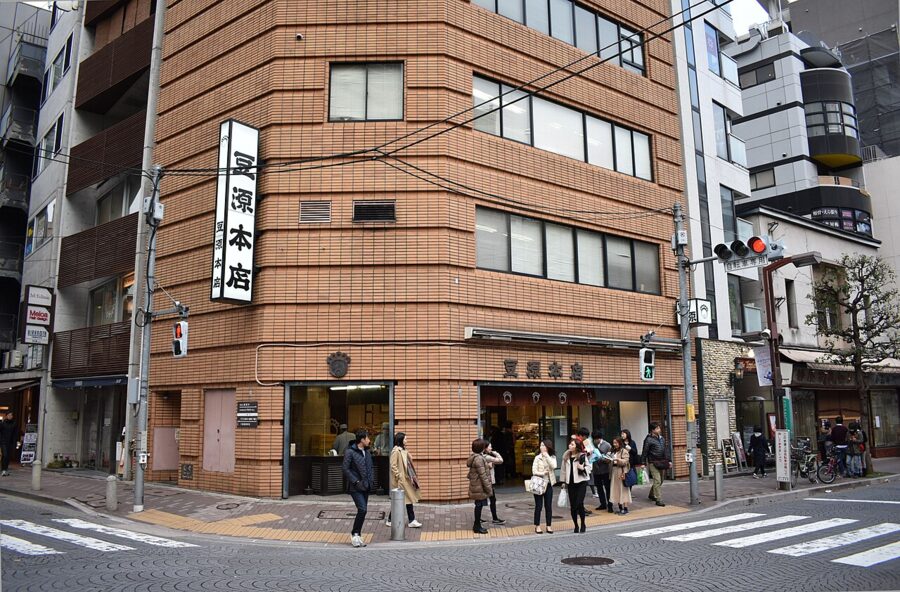
A few doors along is the other old name. Mamegen (豆源) was founded in 1865 and sells coated beans and rice crackers from its main shop at Azabu-Juban 1-8-12; on Sundays it sells kusuke, broken pieces, cheaply. As of November 2026 the shop’s own listing gives shortened hours of 10:00 to 18:30 and closes on some Tuesdays.

An afternoon route
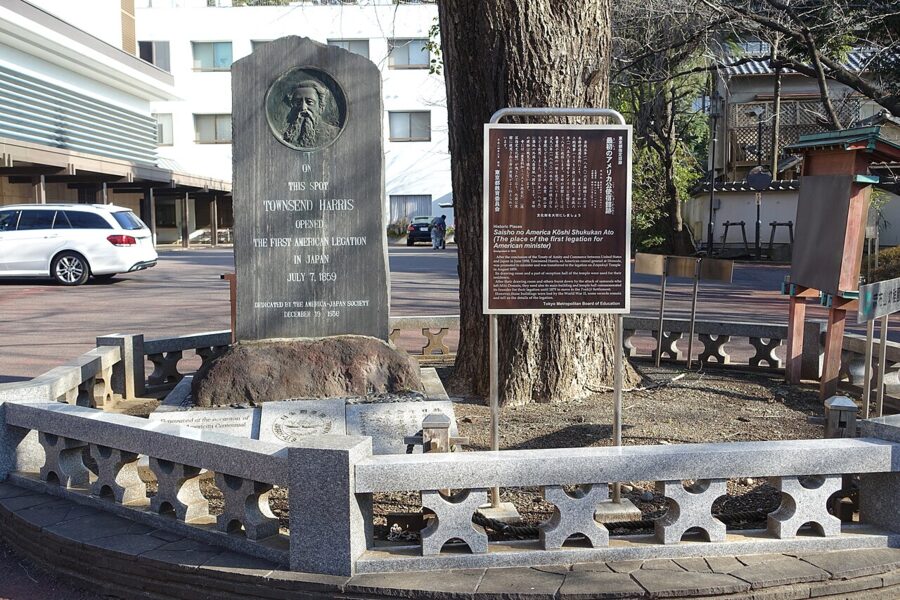
Come up from exit 4 into the shopping street, buy a taiyaki and a bag of beans, then walk up the hill to Zenpukuji (善福寺) in Moto-Azabu. Temple tradition dates it to 824. In 1859 it became the first American legation in Japan, where Townsend Harris lived, until a fire in 1863 sent the legation to Yokohama.
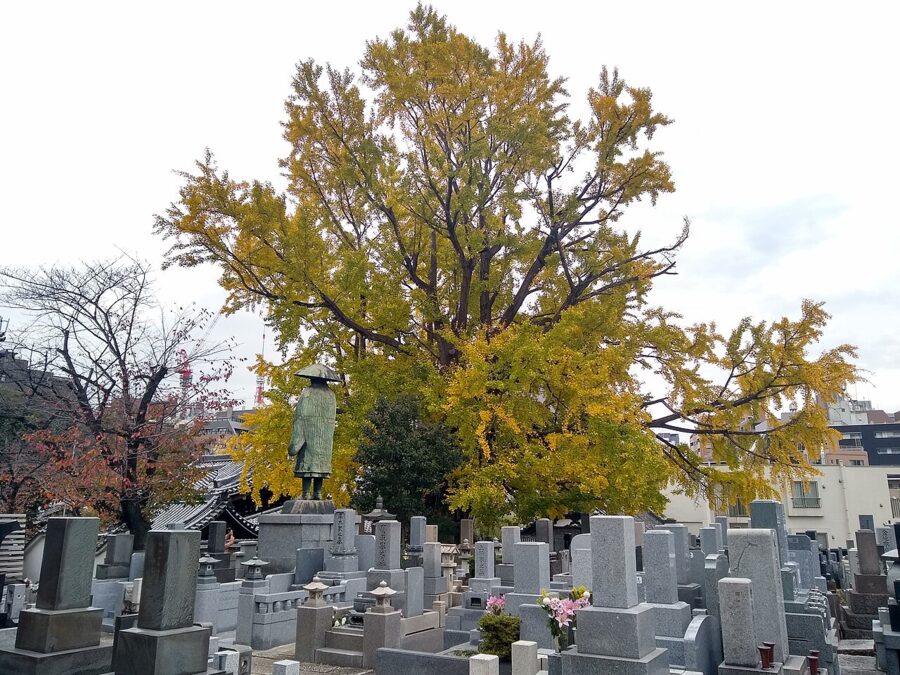
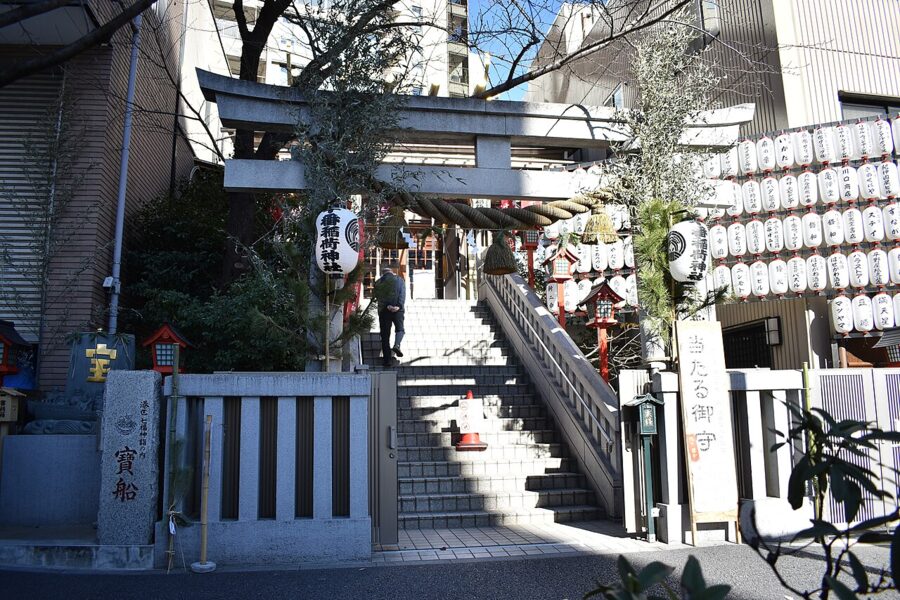
Its great ginkgo, the sakasa ichō (逆さイチョウ) or “upside-down ginkgo”, is a national natural monument and turns gold in late November. Back down the hill, finish at Juban Inari Shrine by exit 7, where the shopping street held its Tori-no-Ichi market on 19 November 2026.

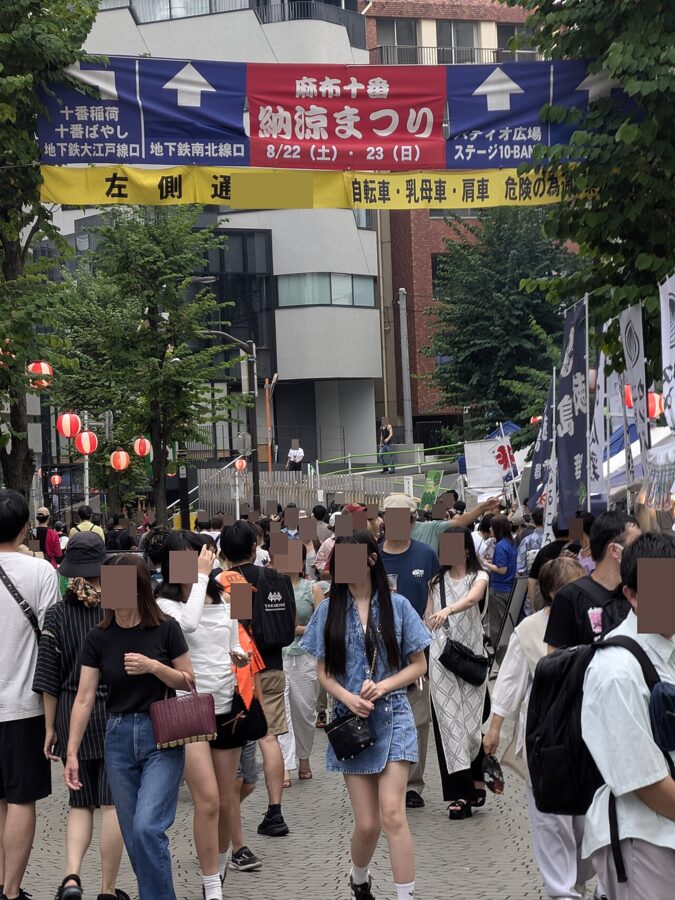
The street’s biggest weekend is the Noryo Matsuri, a summer festival of food stalls. Station: Azabu-juban (Namboku and Oedo lines), exit 4 for the shopping street, exit 7 for the shrine. Best time: a weekday afternoon in late November, not a Tuesday.
Jiyugaoka: the hill that named itself
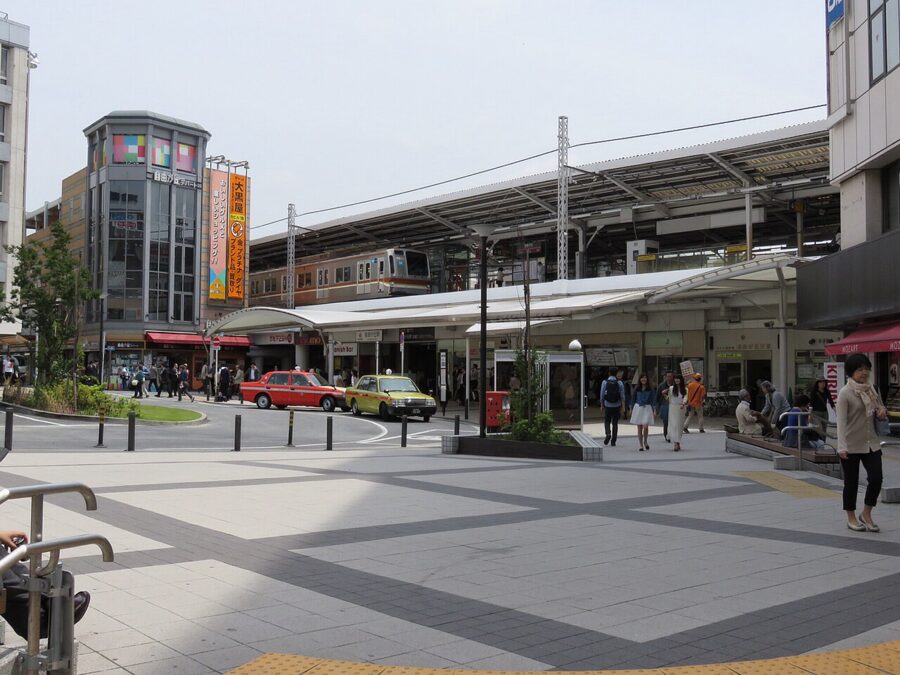
The western neighbourhoods are younger and calmer, where Tokyoites go for coffee and cake rather than temples. Jiyugaoka, in Meguro, was farmland called Yabata until the Tokyu Toyoko Line opened in August 1927 with a station called Kuhonbutsu, after a temple nearby. That November Kishie Tezuka founded a progressive school, Jiyugaoka Gakuen, “freedom hill school”, on the slope above.
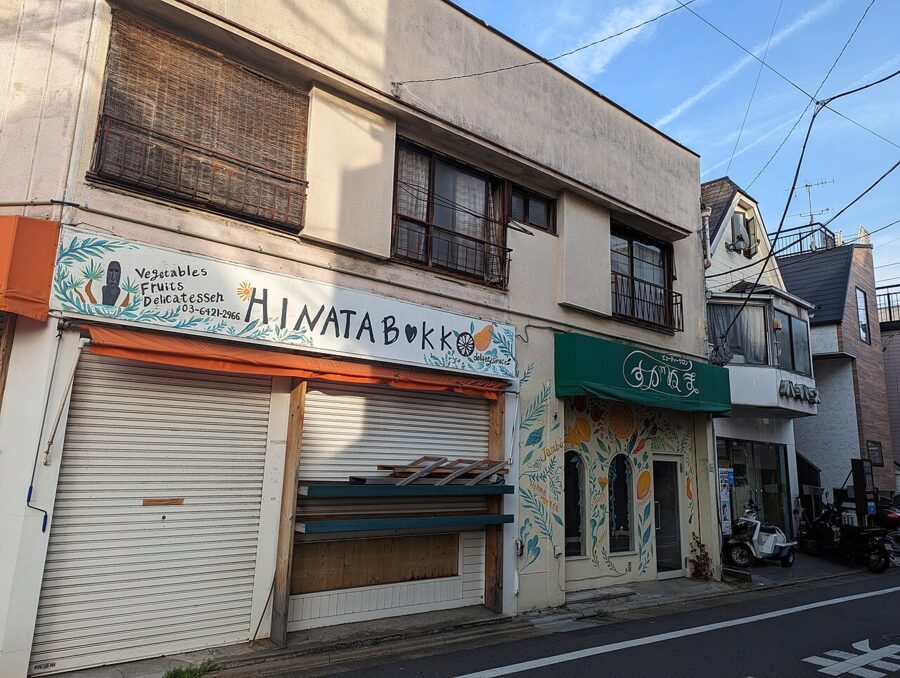
In 1929 a second line put a new Kuhonbutsu Station at the temple’s gate, and the first needed a new name. According to Meguro City’s history, the railway had settled on Fusuma (衾), until residents led by the dancer Baku Ishii lobbied for “Jiyugaoka”. They won, the area took the name in 1932, and it has sold freedom as a lifestyle ever since.

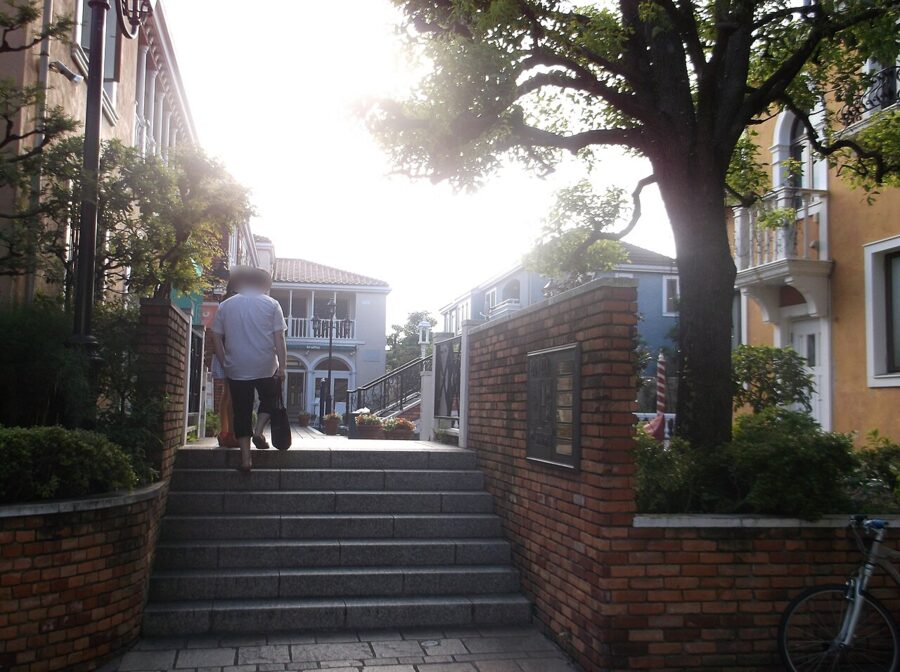
The shop that sums it up is Mont St. Clair, the patisserie of the pastry chef Hironobu Tsujiguchi. As of November 2026 the shop opens 11:00 to 18:00 and closes on Wednesdays, and its café salon shuts after 30 November until about April 2027, so buy cakes to take away.

An afternoon route
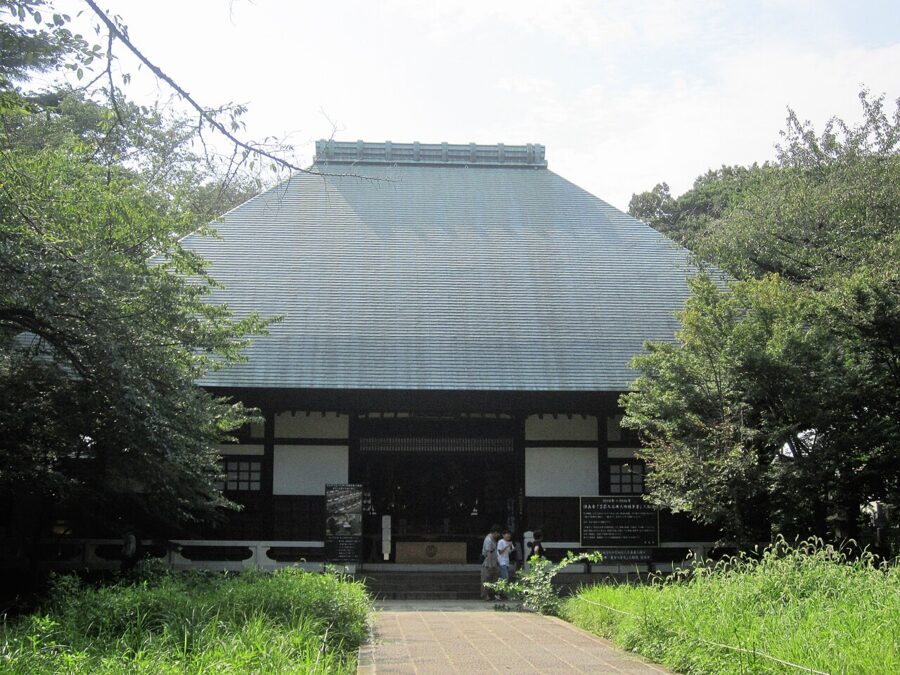
Walk the lanes around Jiyugaoka Station, pick up cakes and take the Oimachi Line one stop to Kuhombutsu. Joshinji (浄真寺), the temple behind the station’s old name, keeps nine statues of Amida Buddha in three halls, three to a hall, one for each of the nine grades of rebirth in the Pure Land.

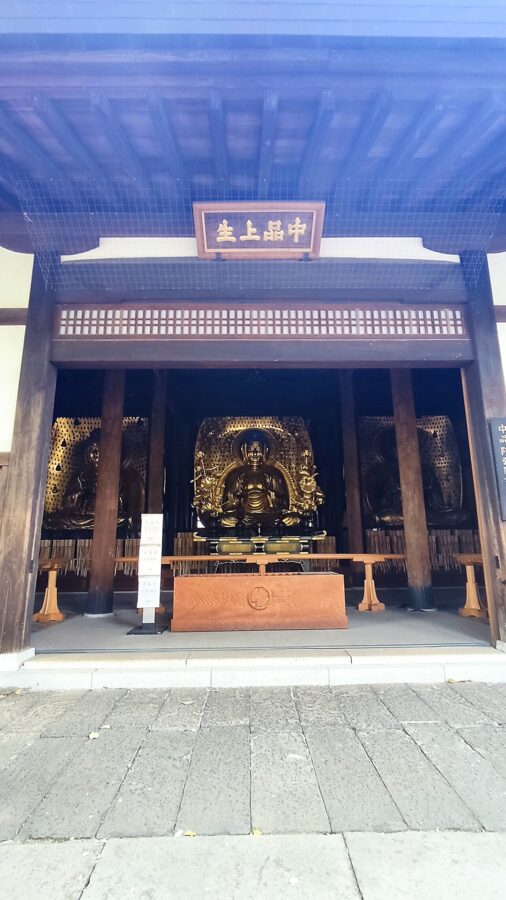

Station: Jiyugaoka (Tokyu Toyoko and Oimachi lines), about eight minutes from Shibuya by Toyoko Line express; Kuhombutsu (Oimachi Line) for the temple. Best time: a weekday, not a Wednesday, ending at the temple before dark.
Ebisu: a station named after a beer
Ebisu is the only neighbourhood here named after a drink. Until the late nineteenth century the land between Shibuya and Meguro was fields with no name of its own. In 1889 a brewery for Yebisu beer was built on the Meguro side, a freight stop opened on the railway to carry the beer away, and the stop took the beer’s name. The district and the passenger station followed.
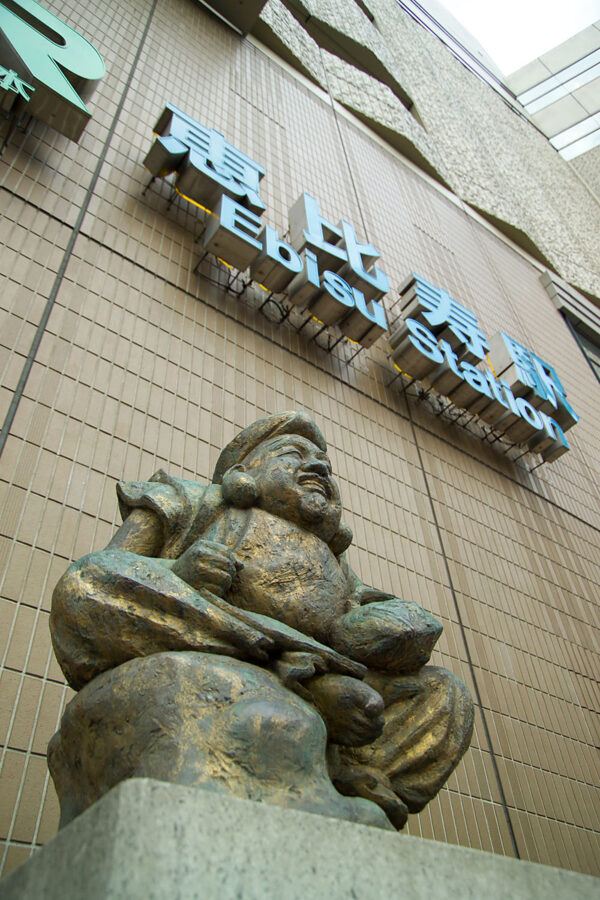
The brewery closed and, on 8 October 1994, Yebisu Garden Place opened on its site: an office tower, a hotel, shops and a red-brick plaza, one of the first big mixed developments in central Tokyo. From the east exit of Ebisu Station a covered moving walkway takes you most of the way.
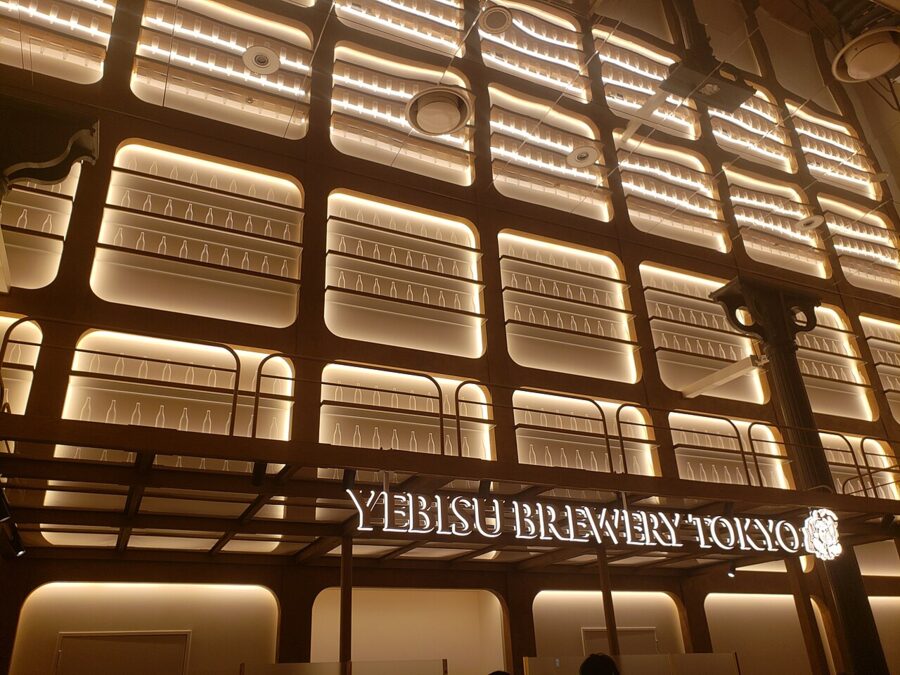
The landmark: YEBISU BREWERY TOKYO
Beer is brewed here again. Sapporo, which owns the brand, runs YEBISU BREWERY TOKYO inside Garden Place, with a small brewery, a museum of the brand’s history and a taproom. As of November 2026 it opens 12:00 to 20:00 on weekdays and 11:00 to 19:00 at weekends and on holidays, and closes on Tuesdays.
The guided tour, YEBISU the JOURNEY, takes about 45 minutes with a tasting and costs ¥2,000 (about $13) for adults; it is in Japanese only and must be booked ahead. A glass in the taproom costs ¥1,200 (about $8).
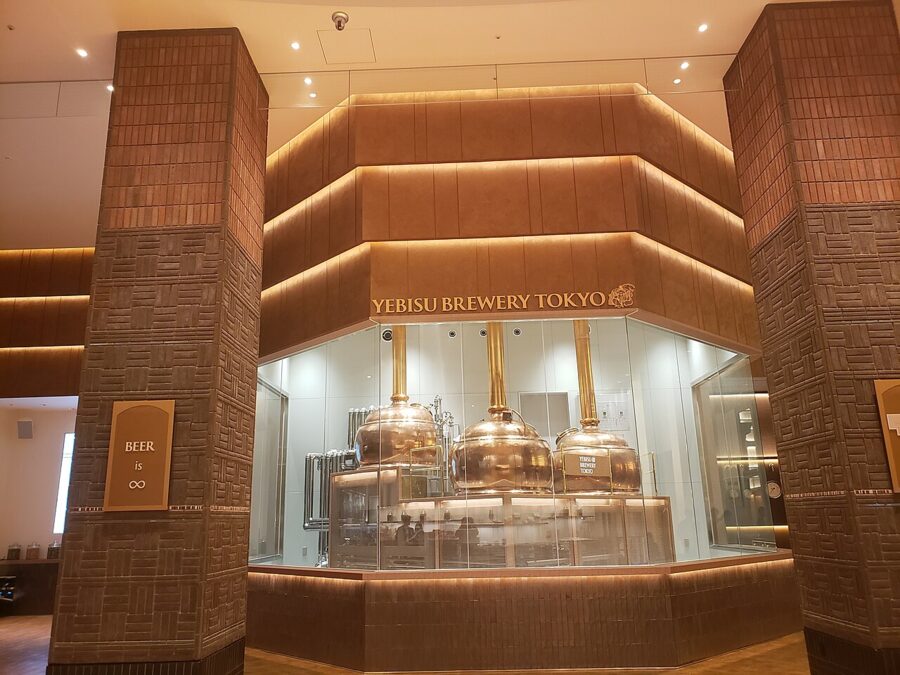
For the rest of the afternoon, walk west under the tracks to Ebisu’s back streets of bars and small restaurants, or carry on to Daikanyama and Naka-Meguro. Station: Ebisu (JR Yamanote, Saikyo and Shonan-Shinjuku lines; Hibiya Line). Best time: any day but Tuesday, from late afternoon, when the offices empty and the bars fill.
Which one for what
If you have one afternoon and have never been, take Asakusa and walk across to the Skytree. After that, it depends what you came for.
| Neighbourhood | Ward | Station | Go for | Avoid |
|---|---|---|---|---|
| Asakusa | Taito | Asakusa | Senso-ji, Kamiya Bar, the river at dusk | Weekend middays |
| Oshiage and Mukojima | Sumida | Oshiage, Higashi-Mukojima | Skytree, sakuramochi, riverbank | Mondays and Tuesdays |
| Yanaka | Taito | Nippori, Sendagi | Temples, cemetery, old shops | Mondays and Thursdays (museum) |
| Kagurazaka | Shinjuku | Iidabashi, Kagurazaka | Stone lanes, dinner | Mornings |
| Azabu-Juban | Minato | Azabu-juban | Taiyaki, beans, the ginkgo | Tuesdays |
| Jiyugaoka | Meguro | Jiyugaoka | Cake, boutiques, Joshinji | Wednesdays |
| Ebisu | Shibuya | Ebisu | Beer, evening bars | Tuesdays (brewery) |
As for where to sleep, Asakusa and Ebisu are the two with plenty of hotels. Asakusa is cheaper and quieter at night; Ebisu is better placed for the west side and livelier after dark.
Whichever you pick, come back to Yanaka once, on a weekday at about four in the afternoon. Stand at the top of Yuyake Dandan, look down the street to the west, and wait for the cat to notice you.