
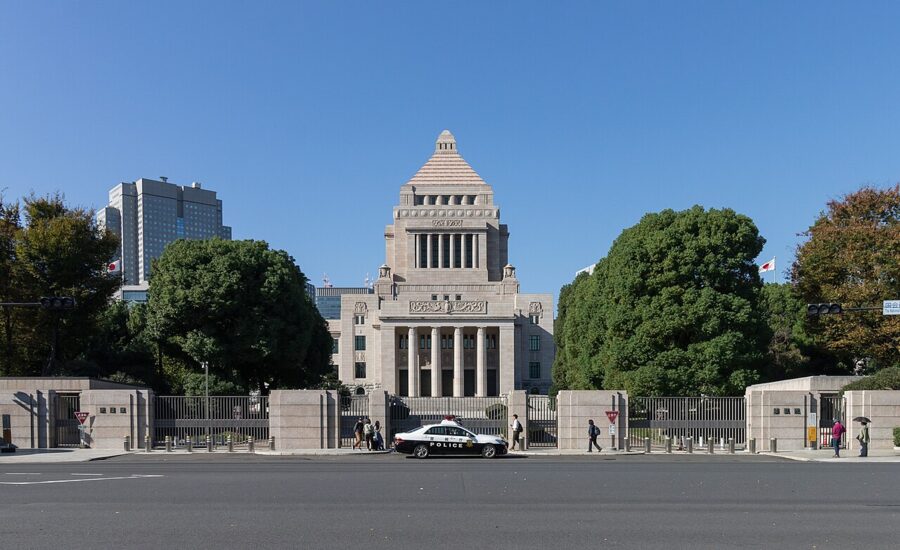

On the night of 8 February 2026 the Liberal Democratic Party won 316 of the 465 seats in the House of Representatives, more than any Japanese party had taken since the war. Fifteen months earlier it had lost its majority over a fundraising scandal. Four months earlier its coalition partner of twenty-six years had walked out.
It won those seats with 49.1% of the constituency vote and 36.7% of the list vote, according to the Ministry of Internal Affairs and Communications. That gap between votes and seats is the first thing to understand about Japanese politics. The second is that one party has governed for all but about four years since 1955, and the third is that its grip has always depended on partners, rivals inside its own ranks, and families who pass seats down like shops.

In this article
- A constitution written in 1946 and never amended
- Two houses, two ways of voting
- How a prime minister is chosen
- The LDP: the 1955 system and its factions
- Partners and opponents
- Governors, assemblies and three places that matter
- Money, families and the scandal cycle
- Where things stand, November 2026
- Seeing it for yourself
A constitution written in 1946 and never amended
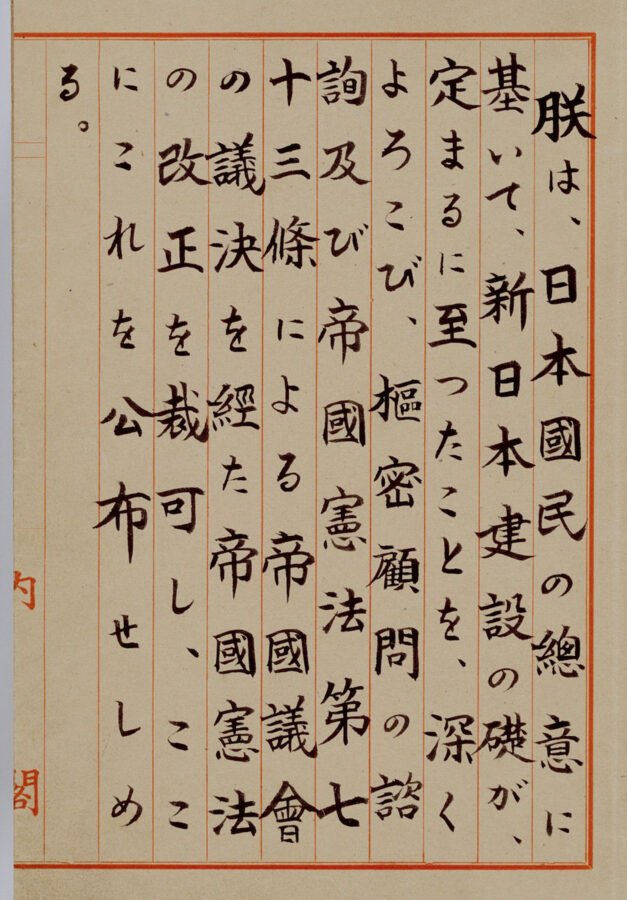
The Constitution of Japan (日本国憲法, Nihon-koku Kenpō) was promulgated on 3 November 1946 and took effect on 3 May 1947, both now public holidays. Officials of the American occupation drafted its first version, and it passed through the last Imperial Diet as an amendment of the Meiji Constitution. Conservatives have called it an imposed text ever since; its defenders answer that the Diet debated and changed it, and that voters have kept it for nearly eighty years.
Article 1 makes the emperor “the symbol of the State and of the unity of the people”, with no powers related to government. Emperor Naruhito opens Diet sessions, appoints the prime minister the Diet has chosen and dissolves the lower house, but each act is the cabinet’s decision made in his name. Article 9 renounces war, and the argument over how far it binds the Japan Self-Defense Forces (SDF) runs through every security debate, including the one over the 2015 security laws.
Article 41 calls the Diet “the highest organ of state power”. The prime minister must be a Diet member, and a lower-house vote of no confidence forces the cabinet to resign or call an election within ten days. No article has ever been amended: Article 96 asks for two-thirds of each house and then a majority in a national referendum, and no government has had both houses lined up for it.
How a bill becomes law
Almost every law that passes starts in a ministry. Officials draft it, the Cabinet Legislation Bureau checks it, and before the cabinet will submit it the LDP’s policy council and General Council review it behind closed doors. That party vetting, jizen shinsa (事前審査, “prior examination”), is where most of the real bargaining happens.
In the Diet a bill goes to a committee and then the floor in each house in turn. If the upper house rejects it, the lower house can pass it again with two-thirds of the members present. On the budget, treaties and the choice of prime minister the lower house’s vote stands even without that majority.
Two houses, two ways of voting
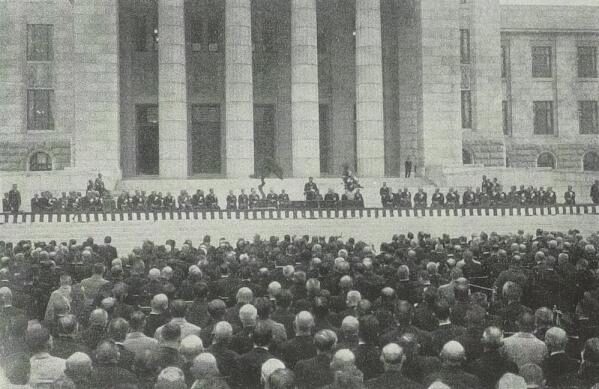
The House of Representatives (衆議院, Shūgiin) has 465 members: 289 from single-member districts and 176 from party lists in eleven regional blocks. A candidate may stand in both, and a district loser can be revived from the list, ranked by the sekihairitsu (惜敗率), the “narrow-loss ratio” of his vote to the winner’s. Anyone with less than a tenth of the district vote cannot be revived.
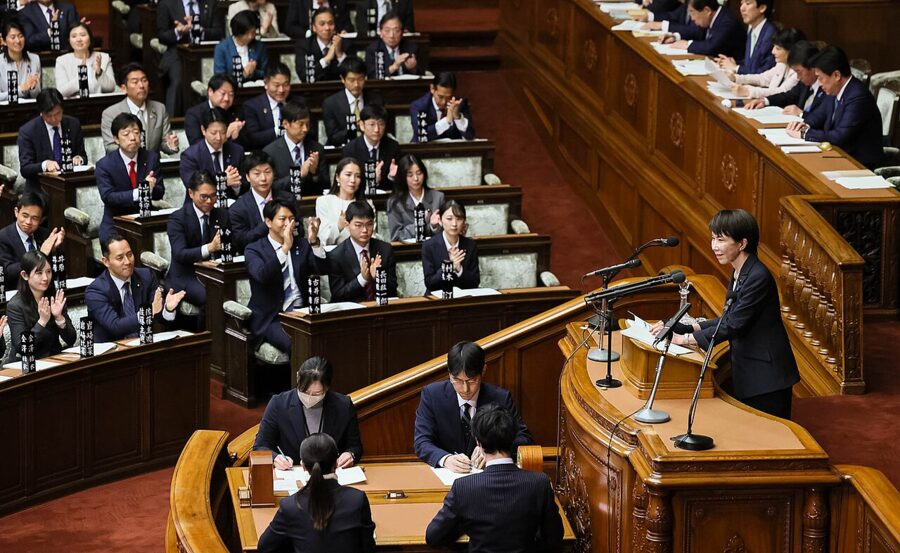
Terms are four years, but a full term is rare because the prime minister can dissolve the house when the timing looks good. Takaichi did so on 23 January 2026, sixteen days before polling day, one of the shortest campaigns since the war.
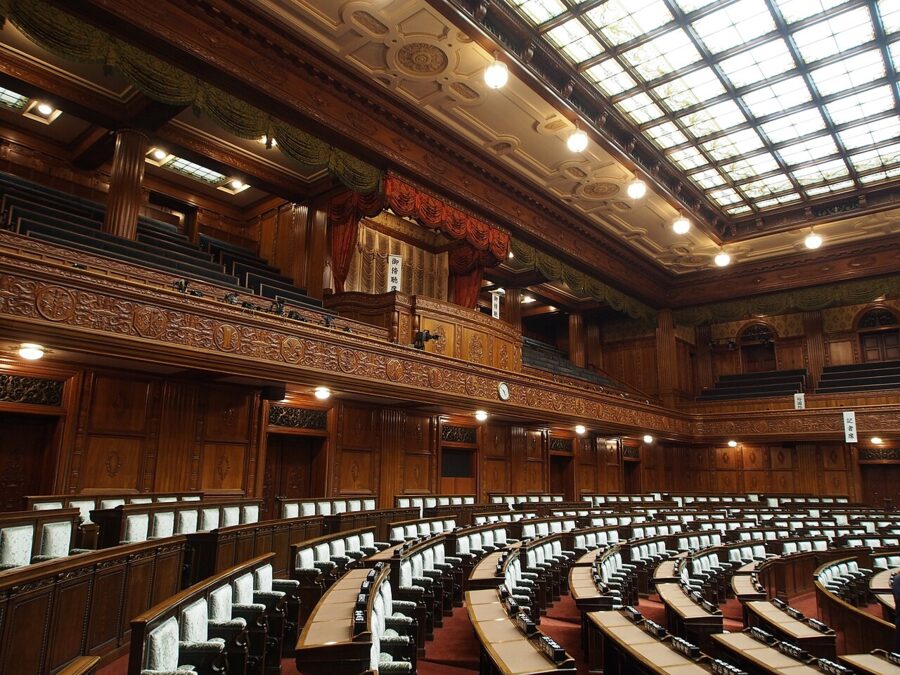

The upper house (参議院, Sangiin), the House of Councillors, has called itself the Senate in English since August 2026. Its 248 members serve fixed six-year terms, and half are elected every three years: 74 from prefectural constituencies and 50 from a national list on which voters may write a party or a candidate’s name. It cannot be dissolved, so a government that loses it, as the LDP did in July 2025, must live with that until the next round.
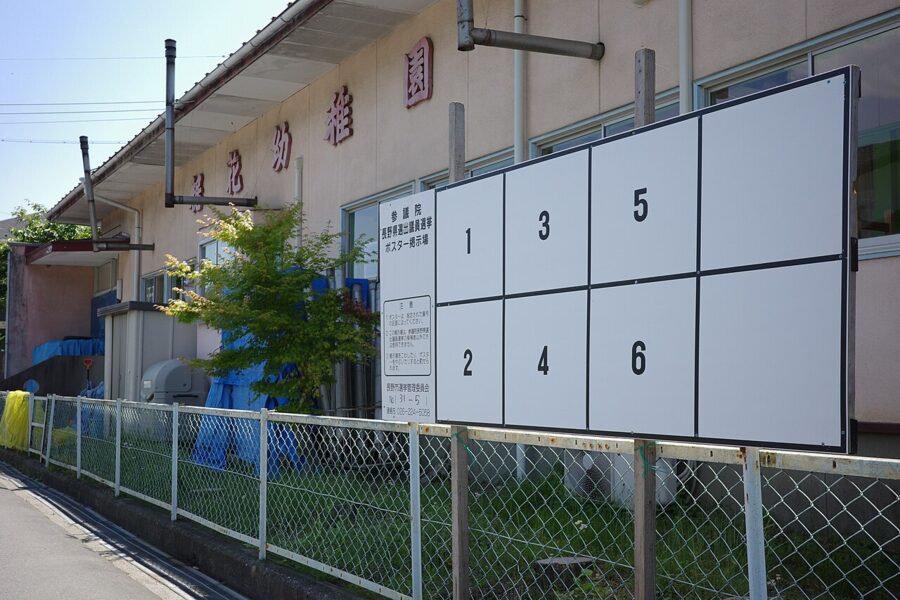

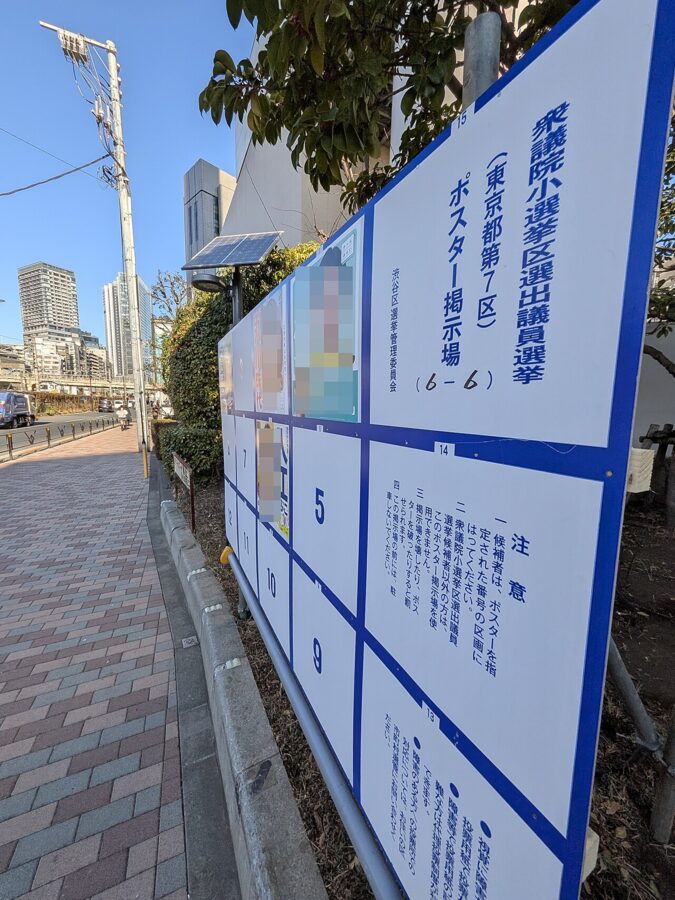
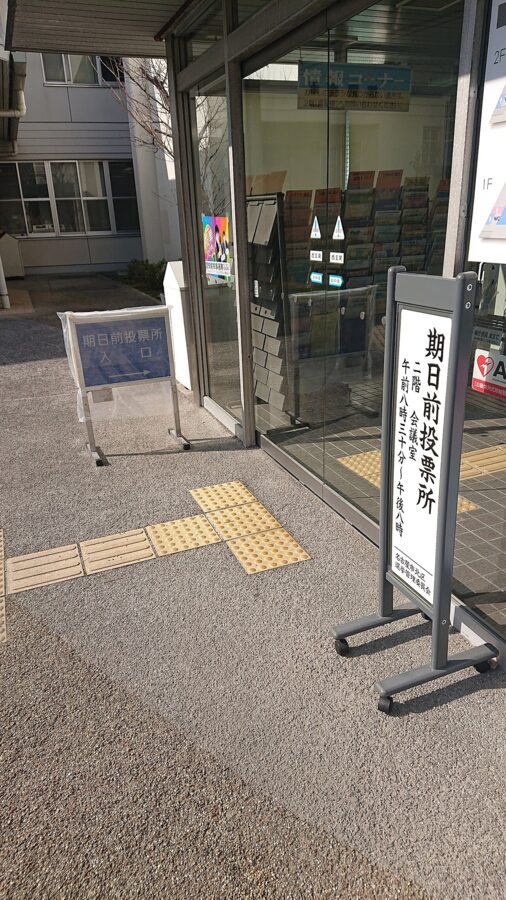
Since July 2016 anyone aged 18 or over can vote, down from 20. Turnout was 56.26% in the February 2026 general election and 58.51% in the July 2025 upper house election, according to the ministry’s turnout record. Campaign law is strict and old-fashioned: no door-to-door canvassing, fixed numbers of posters and leaflets, and an official campaign of twelve days for the lower house and seventeen for the upper.

How a prime minister is chosen
On paper the Diet chooses. Each house votes, and if they disagree the lower house prevails. In practice the decision is made a few hundred metres away at the LDP headquarters, because for most of the postwar period the party’s president has been the person the lower house would elect.
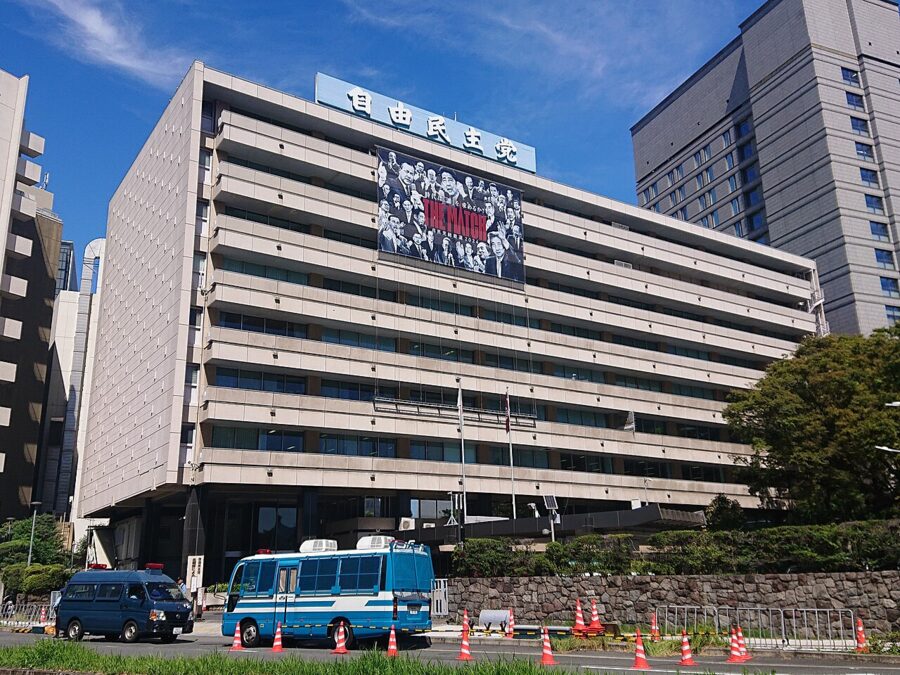

An LDP president serves three years. In the first round the party’s Diet members cast one vote each, and the same number of votes is shared out according to rank-and-file members’ ballots. If no one has a majority, the top two go to a runoff in which the Diet members vote again and each of the 47 prefectural chapters casts one vote. In October 2025 that runoff gave Takaichi 185 votes to Shinjiro Koizumi’s 156.

Winning the party is not always enough. Six days later Komeito, the LDP’s partner since 1999, left the coalition, leaving the LDP well short of a majority in both houses. Takaichi signed a coalition deal with the Japan Innovation Party (日本維新の会, Nippon Ishin no Kai) on 20 October and became the first woman prime minister the next day.
Her term as party president is the remainder of her predecessor’s, so the LDP must hold its next leadership election by September 2027. The powers of the office and the list of holders are covered under the prime minister of Japan.
The LDP: the 1955 system and its factions
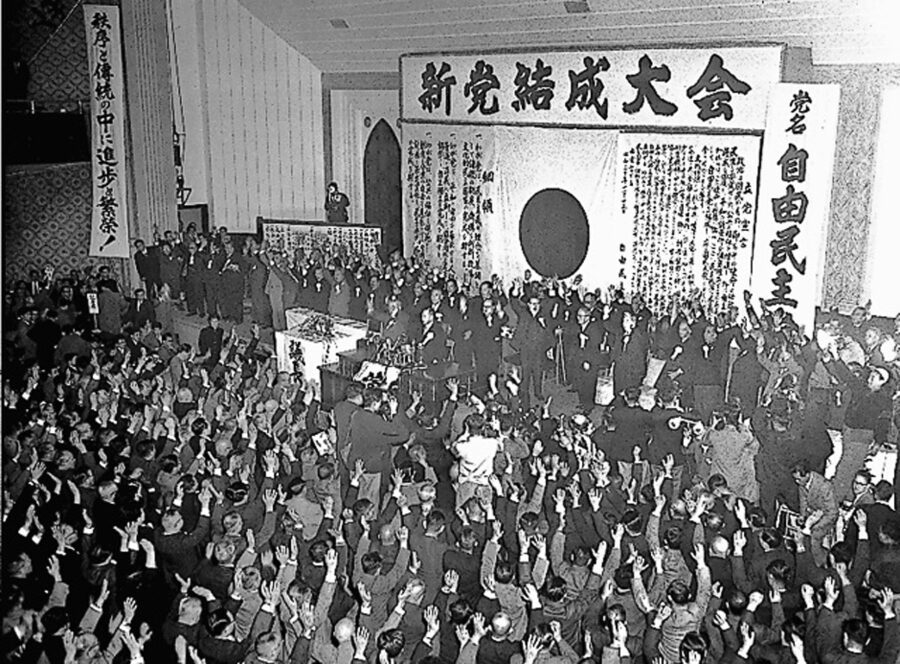
The Liberal Democratic Party (LDP) was founded on 15 November 1955 by merging the two main conservative parties, a month after the Japan Socialist Party’s two wings had reunited. A permanent conservative government facing a Socialist opposition about half its size is still called the 55-nen taisei (55年体制), the “1955 system”. Its first prime minister was Ichiro Hatoyama, whose grandson would end the party’s rule fifty-four years later.
The factions (派閥, habatsu) made a single party behave like a coalition. Before 1994 lower-house districts elected three to five members each, so LDP candidates ran against each other, and each needed a patron. Factions raised the money, shared out cabinet posts and delivered blocs of votes in leadership races. Prime ministers rose and fell as the factions realigned, not as voters decided.
Prime ministers rose and fell as the factions realigned, not as voters decided.
The end came from the money. In late 2023 it emerged, and Tokyo prosecutors went on to confirm, that the Abe faction, the party’s largest, and others had kept hundreds of millions of yen from fundraising-party tickets off their books, much of it paid back to members as kickbacks. In January 2024 Prime Minister Fumio Kishida dissolved his own faction; the Abe, Nikai and Moriyama factions followed, and the Motegi faction became a “policy group”.
Only Taro Aso’s group kept going. I would read that as the end of factions as bank accounts, not as the end of factional politics; the networks are older than the name.
The two interruptions
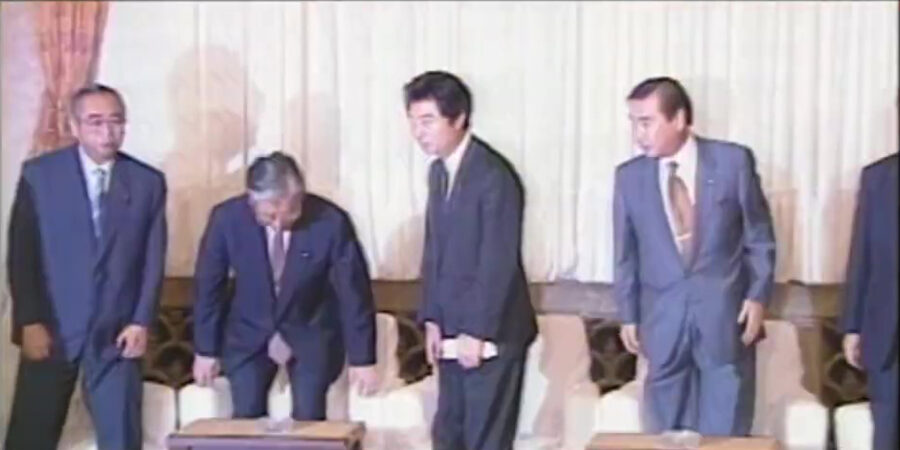
The LDP has been out of power twice. In 1993 defectors led by Ichiro Ozawa and Tsutomu Hata split the party, it lost its majority in July, and an eight-party coalition under Morihiro Hosokawa took office on 9 August. Its lasting work was the 1994 reform that created today’s mixed electoral system and public funding for parties. By June 1994 the LDP was back, in an improbable alliance with its old Socialist enemies.

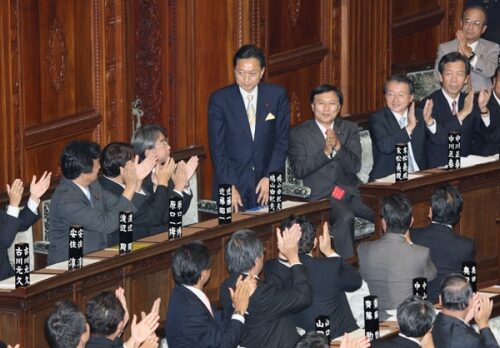
On 30 August 2009 the Democratic Party of Japan (DPJ) won 308 seats and Yukio Hatoyama became prime minister. Three prime ministers in three years, a broken promise over the Futenma air base in Okinawa and the handling of the 2011 Tohoku earthquake left the party wrecked. Shinzo Abe brought the LDP back in December 2012 and stayed nearly eight years; with his first term he served 3,188 days, the longest on the Kantei’s own record.

Partners and opponents
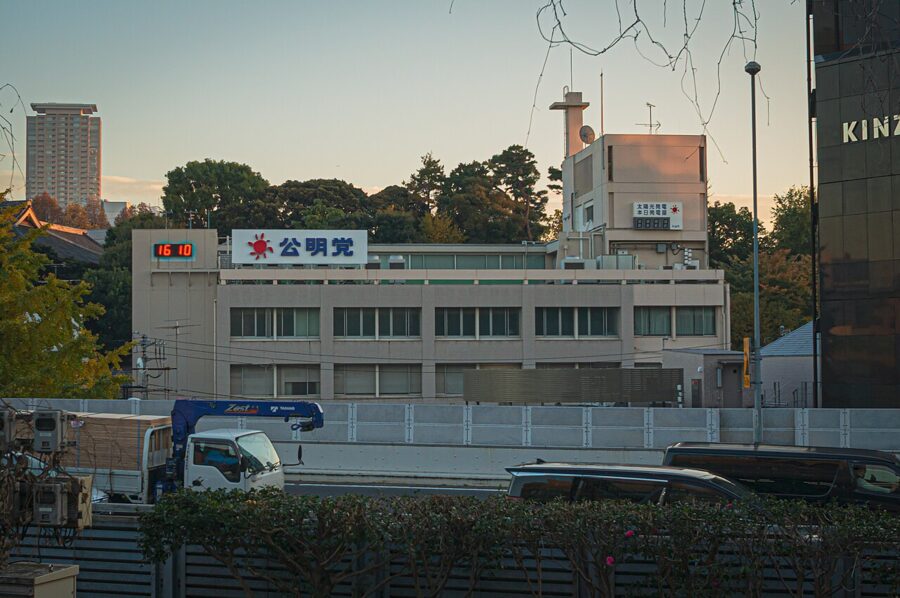
For twenty-six years the partner was Komeito (公明党), backed by the lay Buddhist organisation Soka Gakkai. It joined the government in 1999 and, apart from the DPJ years, stayed until October 2025. Ten or twenty thousand disciplined Komeito votes could carry an LDP district candidate, in return for LDP support for Komeito’s own candidates and a brake on constitutional change. It left over political money, saying the LDP had neither dealt with the slush-fund scandal nor limited corporate donations.

The new partner, the Japan Innovation Party (Ishin), grew out of a regional party founded in Osaka in 2010. Its price for the October 2025 deal included fewer lower-house seats and a second capital that it hopes will be Osaka. It stayed outside the cabinet until the September 2026 reshuffle, when Hiroshi Nakatsuka became its first minister and the internal affairs minister was given the second-capital plan, according to the Kantei’s cabinet list.
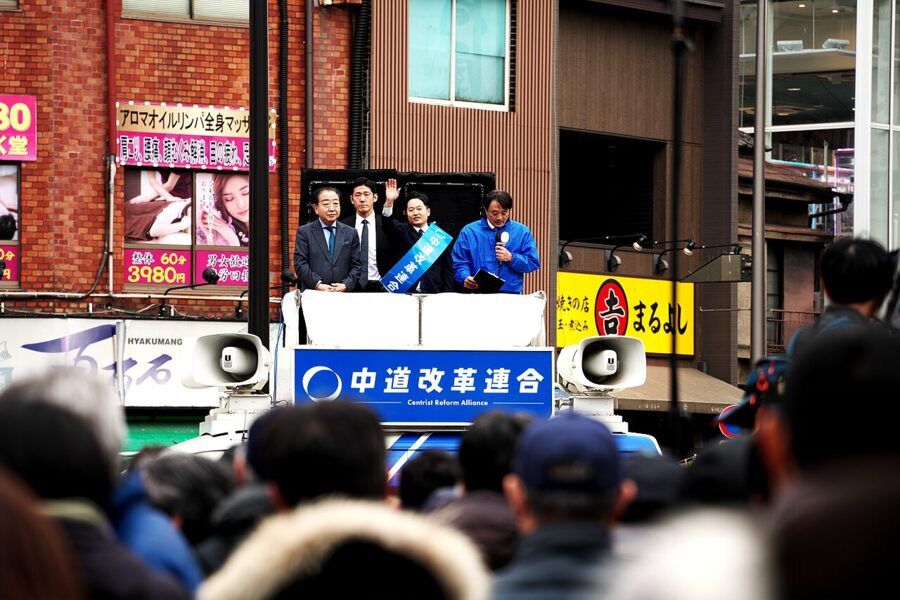
In mid-January 2026 the Constitutional Democratic Party of Japan (CDP) and Komeito merged their lower-house members into a new party, the Centrist Reform Alliance (中道改革連合, Chūdō Kaikaku Rengō). Voters punished it: 49 seats against the 167 its members had held, the first time since the war that the second party fell below fifty. Both co-leaders, Yoshihiko Noda and Tetsuo Saito, resigned, and on 13 February the party chose Junya Ogawa by 27 votes to 22.

The rest of the map has filled in from the edges. The Democratic Party for the People (DPP) under Yuichiro Tamaki campaigns on take-home pay and tax cuts. Sanseito, led by Sohei Kamiya, runs on “Japanese First” and limits on foreign residents and land purchases; its critics call that xenophobic, and Kamiya says it is about rules, not people. Team Mirai, the AI engineer Takahiro Anno’s party of digital government, won eleven seats, while the Japanese Communist Party (JCP) is down to four.
Is Japan left or right? Its governing party has always been conservative, and Takaichi stands on that party’s right on defence, immigration and the imperial succession. The last two elections moved the chamber further right, with Sanseito and Ishin gaining and the centre-left shrinking.
The two houses by party, November 2026
| Parliamentary group | House of Representatives (465) | Upper house (248) |
|---|---|---|
| Liberal Democratic Party | 315 | 100 |
| Japan Innovation Party (Ishin) | 36 | 19 |
| Centrist Reform Alliance | 47 | – |
| Constitutional Democratic Party | – | 39 |
| Komeito | – | 21 |
| Democratic Party for the People | 28 | 25 |
| Sanseito | 15 | 15 |
| Team Mirai | 11 | 2 |
| Japanese Communist Party | 4 | 7 |
| Others and independents | 8 | 18 |
| Vacant | 1 | 2 |
Lower house: the House of Representatives’ group list as of 28 September 2026. Upper house: its group list as of 22 November 2026. Groups can include independents who sit with a party.
Governors, assemblies and three places that matter
Each of the 47 prefectures elects a governor and an assembly separately, on four-year terms, and so does each of roughly 1,700 cities, towns and villages. Lawyers call it nigen daihyō-sei (二元代表制), “dual representation”: a local executive with its own mandate, closer to an American governor than a British council leader. Most local races fall together in the unified local elections; the next round is in April 2027.
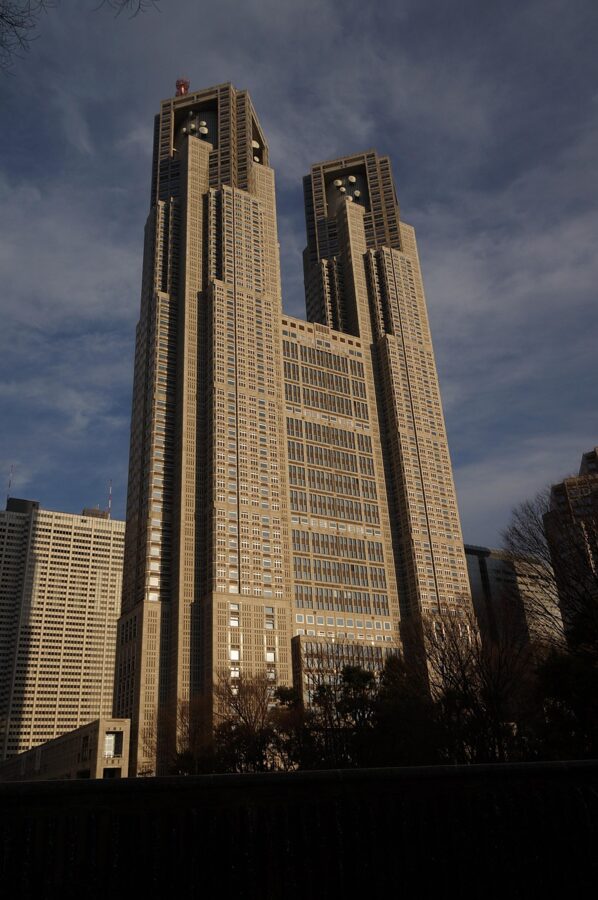
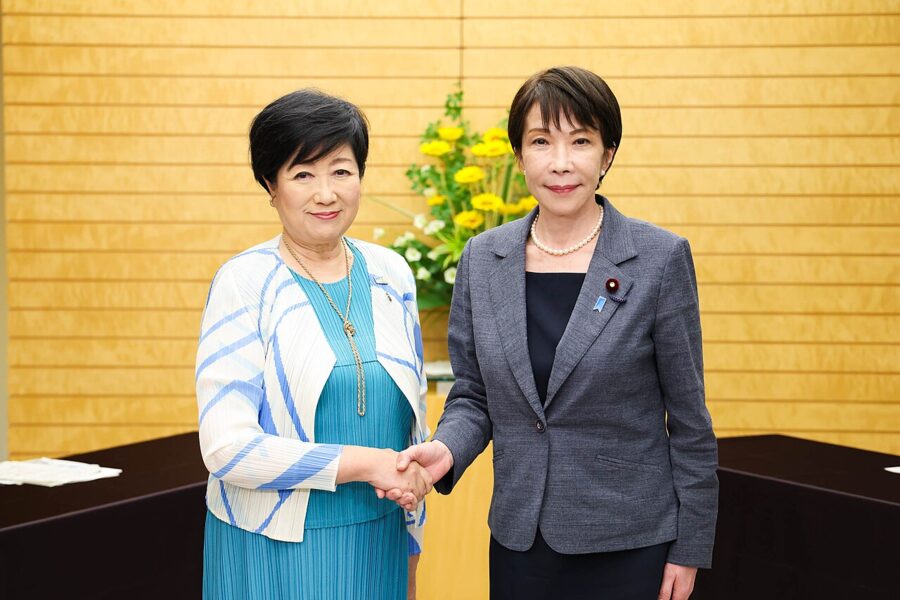
Yuriko Koike (小池百合子) has governed Tokyo since 2016 and is in a third term that runs to 2028. She has spent her career in and out of the LDP, and her regional party, Tomin First no Kai, came first in the June 2025 metropolitan assembly election. She works with LDP governments on most things while keeping enough distance to run against the party when it suits her.

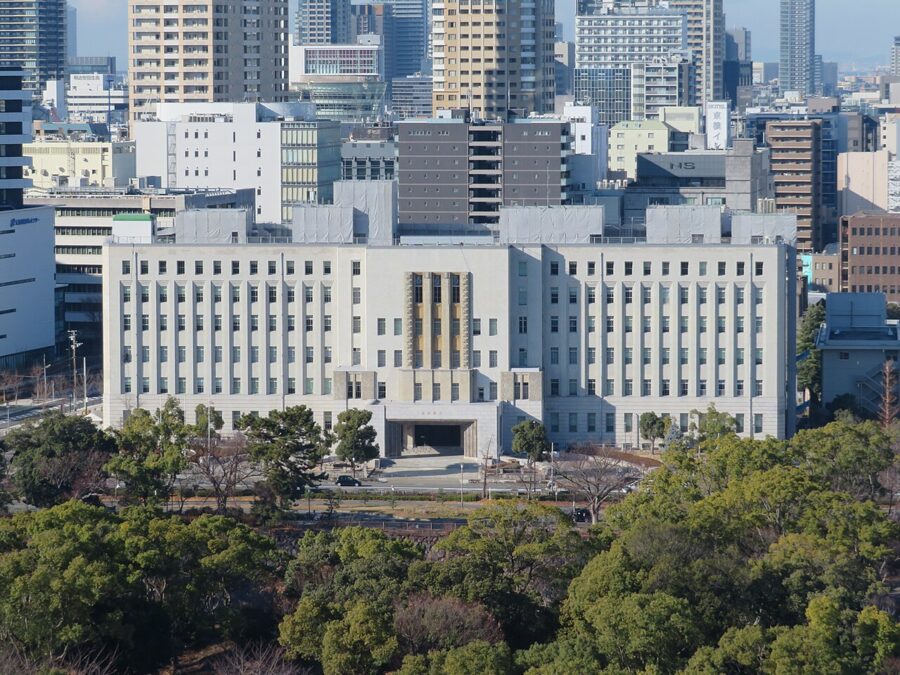
Osaka is Ishin’s home ground. Governor Hirofumi Yoshimura and the city’s mayor, Hideyuki Yokoyama, resigned in January 2026 to fight new elections on general-election day, seeking a mandate for a third referendum on the Osaka Metropolis Plan after narrow defeats in 2015 and 2020. Yoshimura was re-elected with 83.2% of the vote. The plan is now tied to the national argument over a second capital.

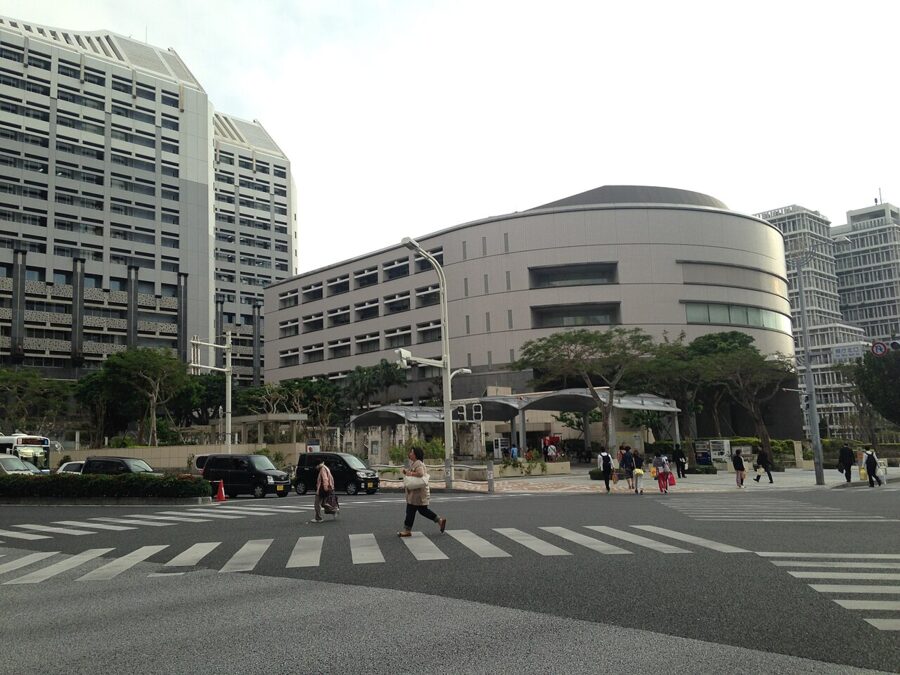
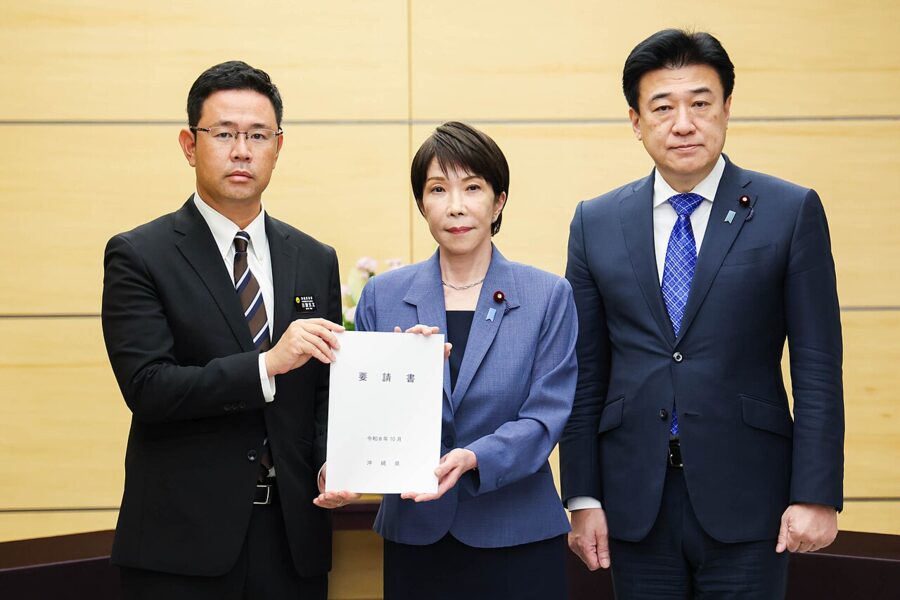
Okinawa, which hosts most of the land used exclusively by US forces in Japan, had elected governors opposed to a new Marine Corps airfield at Henoko since 2014. On 13 September 2026 that ended. Genta Koja, 42, a former deputy mayor of Naha backed by the LDP, Ishin, the DPP, Sanseito and the Conservative Party of Japan, beat the incumbent Denny Tamaki with 423,124 votes, a record for the office.
Koja accepts the relocation, which Kyodo News called the prefecture’s first such turn in twelve years. He is also the first governor born after Okinawa’s return to Japan in 1972.



Money, families and the scandal cycle
A Japanese candidate needs three rhyming things, jiban, kanban and kaban: the organised vote, the known name and the bag of money. All three can be inherited, which is why so many Diet members, and most LDP prime ministers before Takaichi, are the children or grandchildren of politicians. Hereditary politics runs through the kōenkai (後援会), the support association a retiring member hands to an heir.

Every generation has had its money scandal. Kakuei Tanaka was arrested in 1976 over Lockheed bribes, the Recruit shares affair brought down Noboru Takeshita’s cabinet in 1989, and the Sagawa Kyubin affair helped split the LDP in 1993. The reforms that followed brought public funding for parties, set by law at ¥250 (about $1.60) per resident a year, and a ban on corporate donations to individual politicians, though not to parties.
Ticketed fundraising parties fill the gap, and they were at the heart of the 2023–2024 scandal. The 2024 amendment of the Political Funds Control Act lowered the threshold for naming a ticket buyer from over ¥200,000 (about $1,300) to over ¥50,000 (about $320). Banning corporate donations outright is the argument that broke the LDP–Komeito coalition and that the LDP–Ishin agreement left for later.
Akira Amari resigned as economy minister in January 2016 over cash taken by his office, and Abe’s ratings rose anyway. Abe’s own trouble came over his supporters’ invitations to the government’s cherry-blossom viewing party.
The press sits inside the system. Ministries and parties brief reporters through members-only press clubs, and broadcasters are licensed under a law requiring “political fairness”. Takaichi, as internal affairs minister in 2016, told the Diet that a station which repeatedly broke that rule could in principle be taken off the air, a remark that returns whenever press freedom does. Traffic runs the other way too: Akiko Ikuina, once of the idol group Onyanko Club, now sits in the upper house, one of many recruits from the entertainment industry.
Where things stand, November 2026
The arithmetic is lopsided. With Ishin the government holds about three quarters of the lower house, enough to override the upper house on any bill. In the upper house the LDP and Ishin have 119 of the 246 sitting members, short of a majority. That is why the DPP matters: on 12 November the three parties jointly submitted a bill to cut 31 list seats from the lower house, merge the Chugoku and Shikoku blocks and change how list seats are shared out.
The bill went to the lower house’s political reform committee on 17 November, as NHK reported that day. Its backers call it keeping the promise of a 10% cut. The JCP’s paper Akahata argues that it cuts only the seats small parties depend on, and that it would leave a seat empty when a party runs out of list candidates instead of passing it on, as happened to LDP seats in several blocks in February.
The session runs to 12 December. The government is also preparing a cut in the consumption tax on food paired with income-linked support payments, a bill the finance minister, Satsuki Katayama, has been named to carry. Relations with China have been cold since Takaichi’s Diet answer about a Taiwan emergency; in a poll NHK published on 10 November, 52% approved of her government’s stance and 39% did not.
The LDP must choose a president by September 2027, after the unified local elections in April. Half the upper house is next elected in July 2028, and the lower house chosen in February 2026 has until February 2030.
Seeing it for yourself
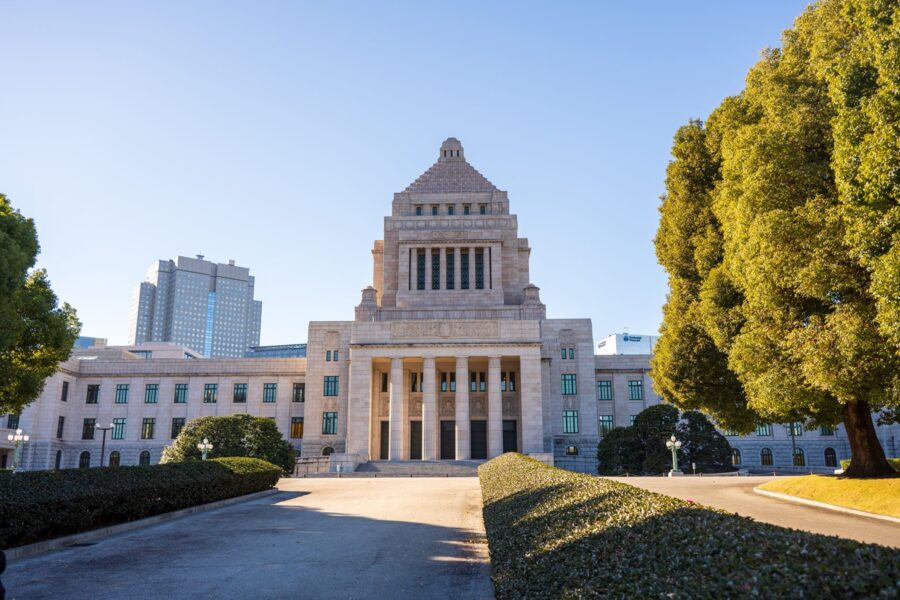
The upper house runs guided tours on weekdays, except public holidays and the New Year break, on the hour from 9am to 4pm, lasting about an hour. Groups of nine or fewer need no booking: you join at the visitors’ entrance beside the upper house’s west service gate. Tours stop from an hour before a plenary sitting until it ends, according to the upper house tour page (as of November 2026).
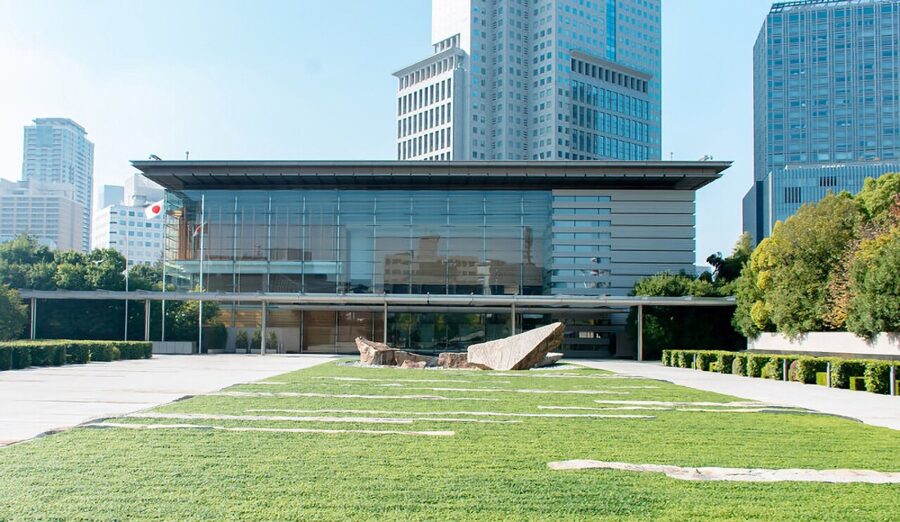
The route takes in the chamber, the emperor’s room, the central hall and the front garden. The nearest station is Nagatacho Station (Yurakucho, Hanzomon and Namboku lines), exit 1, about three minutes’ walk; Kokkai-gijidomae Station (Chiyoda and Marunouchi lines), exit 1, is about six. The Kantei and the LDP headquarters are each a few minutes from the gate, which is the shortest explanation of Japanese politics there is.